

 en
 Español
 русский
 中文简体

Advanced Elevator Landing Door Solutions for Safe, Efficient, and Modern Buildings
Content
- 1 Understanding the Role of an Elevator Landing Door
- 2 TO-M012: A Practical Solution for Contemporary Elevator Projects
- 3 Advantages Compared with Basic or Poorly Integrated Alternatives
- 4 Engineering Features That Influence Door Performance
- 5 Manufacturing Strengths Supporting Product Reliability
- 6 Application Areas for the TO-M012 Landing Door
- 7 Performance Comparison Framework
- 8 Installation and Commissioning Considerations
- 9 Maintenance Recommendations
- 10 Environmental and Operational Considerations
- 11 Why Manufacturer Integration Matters
- 12 Procurement Checklist for TO-M012
- 13 Quality Assurance from Design to Delivery
- 14 Safety as the Primary Design Principle
- 15 Frequently Asked Questions
- 15.1 What is TO-M012?
- 15.2 Can TO-M012 be used for passenger elevators?
- 15.3 Is the product suitable for hospital elevators?
- 15.4 Can the landing door be used for cargo or car elevators?
- 15.5 What finishes are available?
- 15.6 How does an elevator landing door improve safety?
- 15.7 What information is needed for a quotation?
- 15.8 How should the door be maintained?
- 15.9 Can the landing door be customized?
- 15.10 Does the manufacturer provide international support?
- 15.11 What makes an integrated manufacturer advantageous?
- 16 Conclusion
- 17 References
- 18 Product: TO-M012
Elevator landing doors are among the most visible and important components of a vertical transportation system. They form the protective boundary between the elevator shaft and each building floor, support the safe movement of passengers and goods, and contribute significantly to the appearance, comfort, and operating efficiency of an elevator installation. The TO-M012 elevator landing door is designed for projects that require dependable performance, coordinated architectural appearance, and compatibility with modern elevator systems.
Although a landing door may appear simple from the outside, its performance depends on the accurate coordination of many elements. Door panels, frames, sills, hangers, rollers, locks, safety contacts, drive components, protective finishes, and installation interfaces must operate together with consistent precision. A small deviation in alignment can result in noise, vibration, poor closing performance, premature wear, or unnecessary maintenance. For this reason, the quality of a landing door depends not only on its visible design but also on engineering, material selection, manufacturing accuracy, inspection, installation guidance, and after-sales support.
TO-M012 is part of the elevator landing door product range offered by Tenau Elevator (China) Co., Ltd. The product is suitable for elevator projects where reliable floor access protection, smooth operation, durable construction, and coordinated design are essential. It can be considered for passenger elevators, panoramic and observation elevators, hospital elevators, home and villa elevators, cargo elevators, car elevators, high-speed elevator projects, and other vertical transportation applications, subject to project-specific technical confirmation.
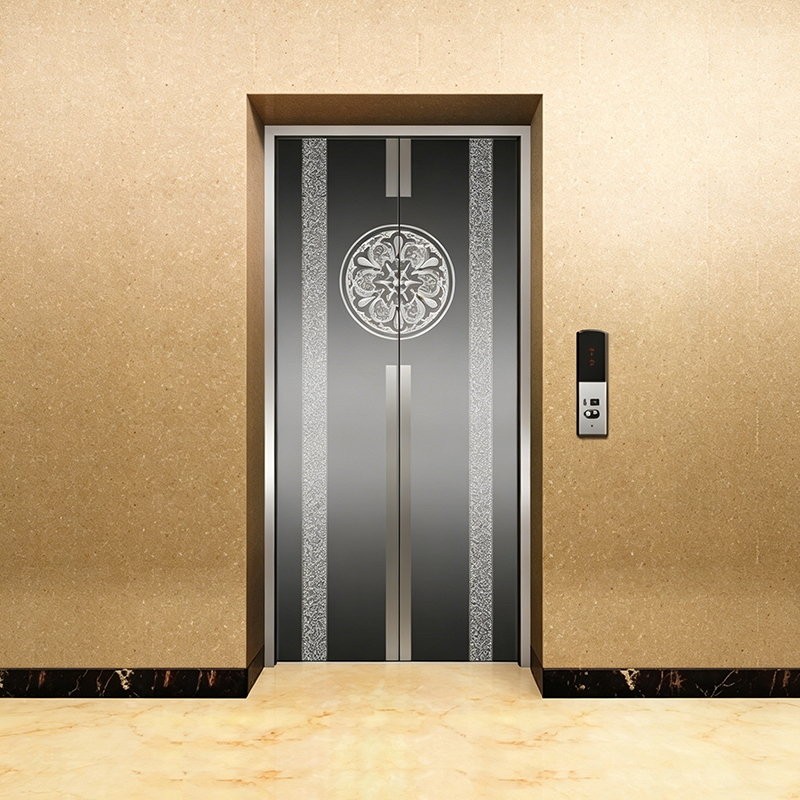
TO-M012
Understanding the Role of an Elevator Landing Door
An elevator landing door is installed at each landing served by an elevator. It remains closed when the elevator car is not correctly positioned at that floor and opens when the elevator car arrives and the control system authorizes access. The landing door works together with the car door, door operator, locking mechanism, elevator controller, safety circuit, and shaft protection system.
The most important responsibility of a landing door is to prevent people or objects from entering the hoistway when the elevator car is absent. This function requires a secure locking arrangement and reliable electrical monitoring. The door must remain closed and locked until the control system confirms that the elevator is properly positioned and the opening sequence is safe. During normal operation, the door must also close fully and maintain sufficient contact with the frame and sill.
Landing doors contribute to several additional objectives:
• Protecting passengers from access to the elevator shaft.
• Supporting smooth and quiet elevator operation.
• Maintaining a clean and consistent appearance throughout the building.
• Withstanding repeated opening and closing cycles.
• Limiting the spread of smoke and drafts within the shaft area, where applicable to the project design.
• Providing suitable access for maintenance and inspection.
• Coordinating with the dimensions and operating requirements of the elevator car.
• Supporting accessibility requirements through suitable clear opening dimensions and operating speed.
Because landing doors operate every time an elevator stops at a floor, they are exposed to frequent mechanical movement. They can also be affected by dust, construction debris, trolley impacts, cleaning equipment, temperature changes, humidity, and building settlement. A well-designed door therefore needs a balance of structural strength, mechanical precision, maintainability, and aesthetic quality.
TO-M012: A Practical Solution for Contemporary Elevator Projects
The TO-M012 model is positioned as an elevator landing door solution for projects that need the essential qualities of a modern landing door without compromising architectural flexibility. Its value is not limited to the door panel itself. The product is part of a coordinated elevator solution supported by engineering, manufacturing, installation, and service capabilities.
For project owners, developers, architects, and elevator contractors, the selection of a landing door should be based on more than initial purchase price. A suitable door can reduce installation complications, support dependable elevator availability, simplify future maintenance, and create a consistent appearance across different building levels. TO-M012 can support these objectives when its dimensions, finishes, operating configuration, fire and safety requirements, and interface details are confirmed during the project design stage.
The product can be adapted to different building environments through project-specific configuration. Depending on the elevator design, the landing door may be coordinated with center-opening or side-opening arrangements, selected clear widths, landing sill requirements, frame details, and surface finishes. The exact configuration should be determined by the elevator layout, local regulations, shaft conditions, and the requirements of the complete elevator system.
A major advantage of using a purpose-designed landing door is that it can be engineered as part of the elevator rather than treated as an unrelated architectural item. This approach helps coordinate the landing door with the car door, door operator, controller, shaft layout, and safety circuit. It also gives the manufacturer greater control over the relationship between mechanical and electrical components.
Key Product Strengths
TO-M012 is suitable for applications that emphasize the following performance characteristics:
Reliable access protection: The landing door is designed to support the safety function that separates the building landing from the elevator shaft. Its locking and monitoring interfaces must be integrated with the overall elevator safety system.
Consistent movement: Properly engineered door components help the panels travel along a controlled path, reducing unnecessary friction, impact, and vibration during opening and closing.
Durable construction: Landing doors require materials and assemblies that can withstand repeated use. The overall structure should resist deformation and maintain alignment during the service life of the elevator.
Design coordination: The landing door is one of the most visible elevator elements on every floor. A well-finished panel and frame can complement commercial, residential, healthcare, transportation, hospitality, and industrial interiors.
Maintenance accessibility: Practical access to adjustment points, fasteners, locking parts, and operating components can help service personnel complete inspections and repairs efficiently.
System compatibility: The door can be specified in coordination with the elevator car, door operator, controller, landing entrances, and building interfaces.
Advantages Compared with Basic or Poorly Integrated Alternatives
Elevator landing doors from different sources may look similar, but their performance can differ considerably. Low-cost or poorly integrated alternatives may use inconsistent materials, limited adjustment capability, weak protective finishes, or insufficient quality control. These shortcomings can become visible only after installation and repeated operation.
A professionally engineered product offers several advantages over a basic landing door assembly.
Better Mechanical Coordination
A landing door must work in coordination with the car door. If the two systems do not share compatible dimensions, movement timing, locking interfaces, or operating forces, the result may be repeated door faults. An integrated elevator manufacturer can evaluate these relationships during system design. This can reduce the risk of fitting problems that may occur when the door is sourced independently without full knowledge of the elevator package.
More Consistent Manufacturing
Door panels and frames need consistent dimensions across every floor. Inconsistent fabrication can create differences in gaps, panel position, sill height, and frame alignment. Automated production lines and controlled manufacturing procedures can improve repeatability and reduce variation from one component to another.
Improved Long-Term Appearance
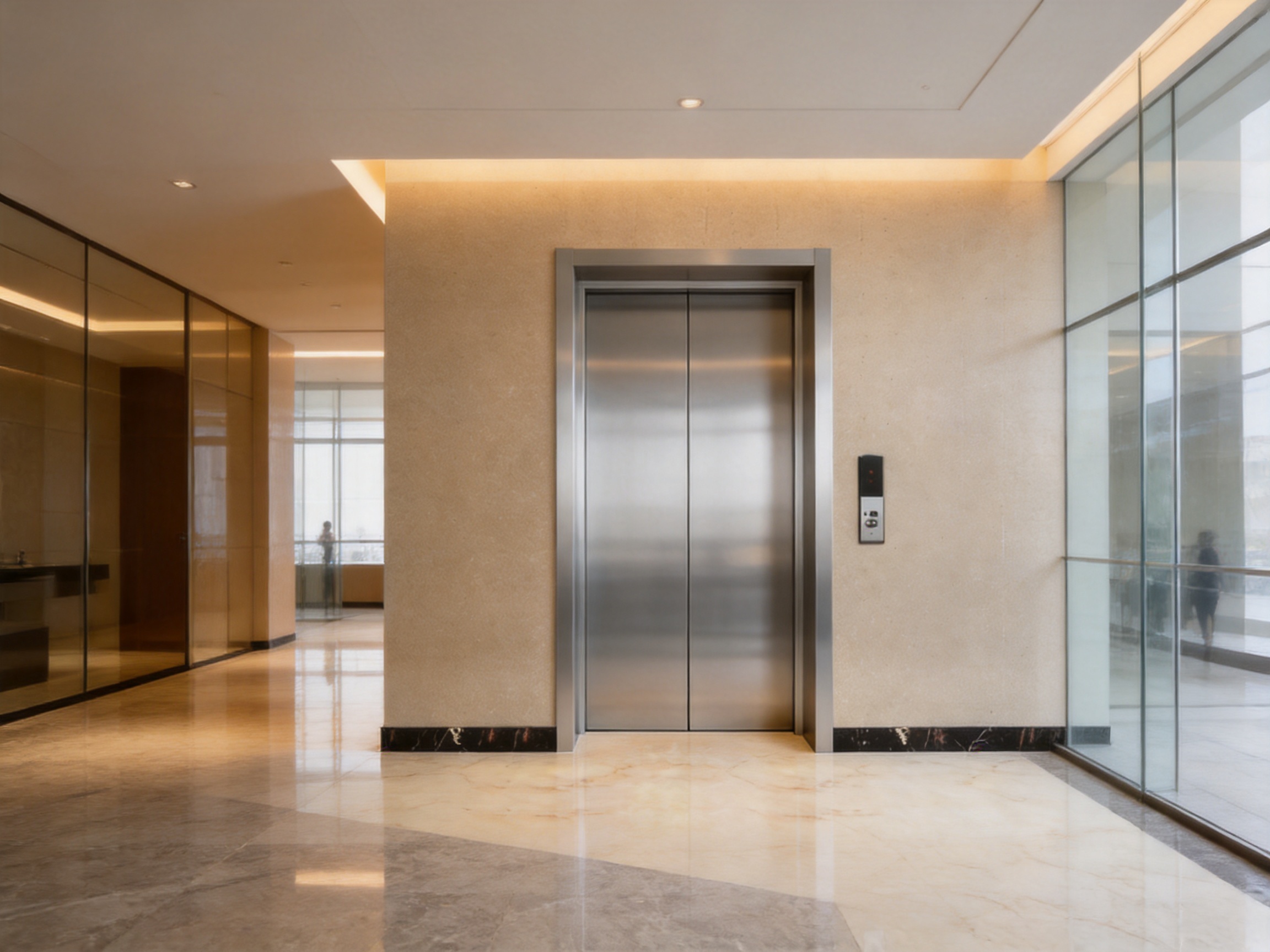
Elevator doors are subject to fingerprints, cleaning chemicals, contact with luggage, carts, and general daily use. Appropriate surface preparation and finishing can help maintain a professional appearance. A consistent finish also helps ensure that doors installed on different floors look like part of the same architectural scheme.
Reduced Installation Risk
A landing door is easier to install when its interface dimensions, mounting points, component identification, and adjustment procedures are clearly defined. Manufacturing experience in complete elevator systems allows the supplier to provide more coordinated technical documentation and support for installation teams.
More Predictable Maintenance
Doors that use standardized components and accessible adjustment points are generally easier to inspect and service. Predictable maintenance can reduce the time required to diagnose door faults and help building operators plan preventive service rather than relying only on emergency repairs.
Engineering Features That Influence Door Performance
The performance of TO-M012 depends on the combined quality of its mechanical, electrical, and structural features. The following areas are especially important when evaluating a landing door for a new installation or modernization project.
Door Panels and Structural Stability
Door panels must remain sufficiently rigid during repeated movement. Excessive flexing can affect the contact between the panel and frame, alter the position of safety edges or locks, and create noise. Structural stability is also important when doors are exposed to accidental contact from luggage, carts, or cleaning equipment.
The selection of panel material and reinforcement should reflect the application. A passenger elevator in an office building may prioritize appearance and quiet movement, while a cargo elevator or car elevator may require greater resistance to impact and heavier service conditions. Hospital elevators may require surfaces that are easy to clean and suitable for a controlled healthcare environment. The final construction should therefore be selected according to the intended duty and local requirements.
Guide Shoes, Rollers, and Sills
The lower guide area influences the smoothness and stability of door movement. Door sills must be correctly positioned and secured so that the panels remain aligned as they move. Guide shoes or rollers should maintain the required relationship between the panel and sill while allowing controlled travel.
Accumulated dust and debris can interfere with movement, especially at the sill. A practical maintenance plan should include regular cleaning, inspection of guide surfaces, and checking for damage or loose fasteners. Good installation accuracy is equally important because a misaligned sill can place unnecessary loads on the door system.
Hangers and Moving Components
Door hangers support the moving panels and transfer the operating force into the door assembly. Their design must account for panel weight, opening frequency, acceleration, deceleration, and the expected service environment. Rollers and bearings should operate smoothly and remain properly adjusted.
In a well-maintained system, moving components should not require excessive force to open or close. Excessive resistance can increase wear on the door operator and create an uneven operating cycle. During commissioning, the installation team should check panel alignment, travel resistance, closing speed, and the final closed position.
Locking and Safety Interfaces
The landing door lock is a critical safety component. The lock must physically secure the door and provide a reliable electrical signal to the elevator control system. The elevator should not be permitted to run unless the required landing door conditions have been confirmed.
Locking components should be inspected according to the applicable elevator safety standard and local authority requirements. The lock, contact, keeper, and associated wiring must be protected from accidental adjustment and should remain accessible for authorized maintenance personnel. Because safety requirements vary between markets, the final lock configuration and certification documentation must be confirmed for each project.
Door Operator Coordination
Although the door operator is often associated with the elevator car, its movement controls the opening and closing of the landing door through the coupling arrangement. The door panels must respond consistently to the operator without excessive impact at the end of travel.
Appropriate acceleration and deceleration profiles contribute to passenger comfort, noise control, and component life. The system should also include suitable reopening behavior if an obstruction is detected. Exact operating parameters depend on the elevator controller, door operator, clear opening, panel weight, and applicable regulations.
Manufacturing Strengths Supporting Product Reliability
Tenau Elevator (China) Co., Ltd. describes itself as a comprehensive elevator manufacturer integrating design, research and development, manufacturing, marketing, installation, and after-sales service. This integrated structure is relevant to landing door quality because the manufacturer can evaluate the product across its entire life cycle rather than treating production as an isolated activity.
The company operates in Nanxun, Zhejiang Province, within the wider Shanghai-Nanjing-Suzhou-Hangzhou economic region. Its manufacturing base supports the production of passenger elevators, freight elevators, escalators, moving walks, and related elevator products. The company also develops solutions for low-speed, medium-speed, high-speed, and ultra-high-speed elevator applications.
For a landing door, the benefits of a broad manufacturing platform include access to engineering resources, production equipment, quality systems, supply chain management, testing capability, and technical service personnel. This is particularly valuable when a project includes several elevator types or requires customized entrance dimensions and finishes.
Industry 4.0 Manufacturing
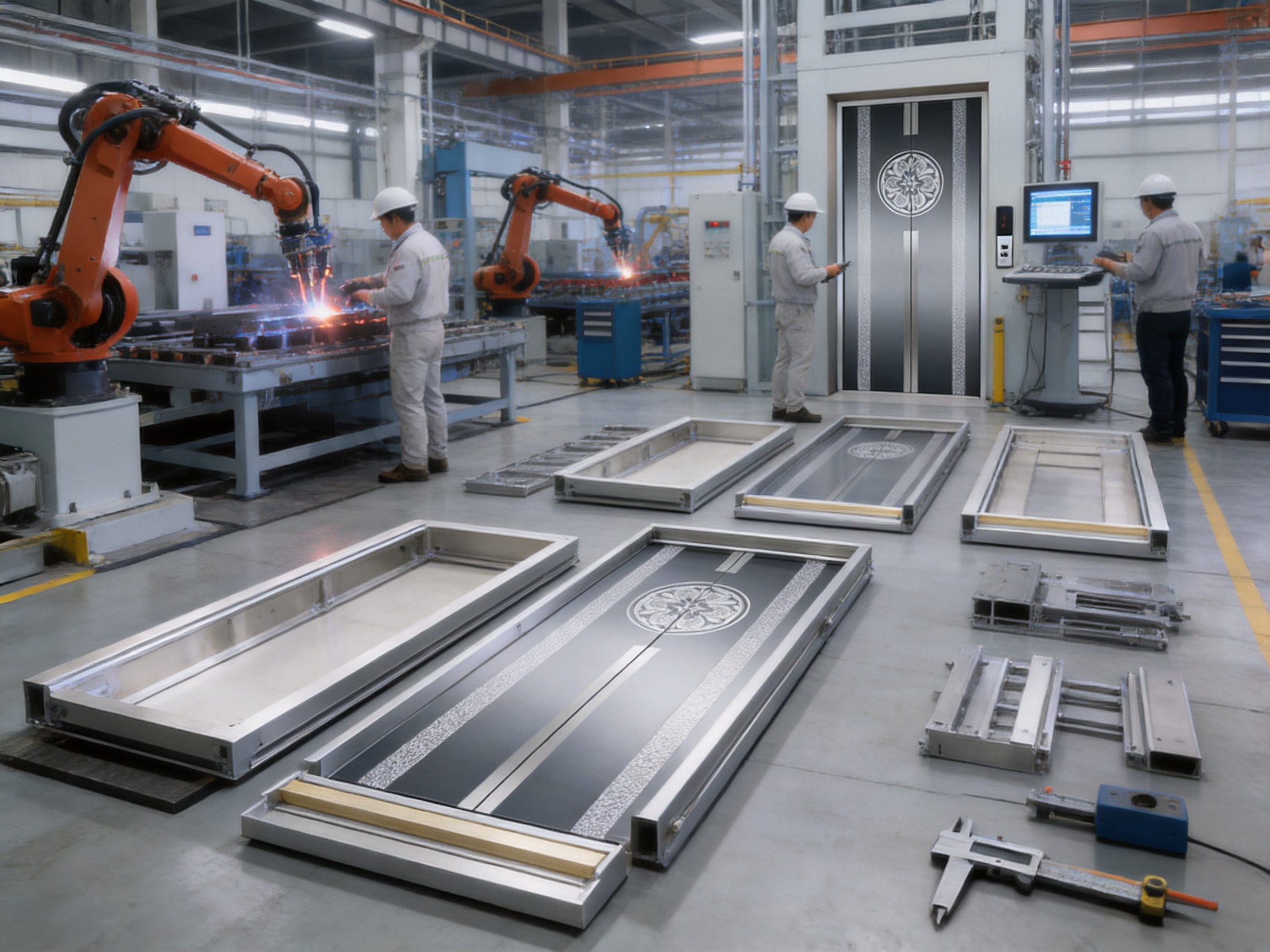
Tenau reports the use of German Industry 4.0 intelligent manufacturing concepts, automated production lines, big data, and Internet of Things technology. In practical terms, these capabilities can support better production traceability, process monitoring, equipment management, and information exchange between engineering and manufacturing activities.
For landing door production, digital manufacturing methods may be applied to drawing management, cutting, forming, welding, surface treatment, assembly, and inspection. The objective is to reduce avoidable variation and establish more consistent production records. Automated equipment can improve repeatability in operations that require stable positioning and controlled dimensions.
Automation does not eliminate the need for skilled personnel. Instead, it allows technicians and engineers to focus more effectively on process control, quality review, equipment calibration, and product improvement. The strongest manufacturing results generally come from combining automated production with experienced supervision and documented inspection procedures.
Closed-Loop Quality Control
Tenau also identifies a full closed-loop quality control system as part of its manufacturing approach. A closed-loop process connects design requirements, incoming material inspection, production controls, assembly inspection, functional testing, final release, customer feedback, and corrective action.
This approach is important because door performance is affected by many stages of production. A high-quality panel may still fail to perform correctly if the frame is inaccurate, the lock is poorly adjusted, the finish is damaged, or the final assembly is not inspected. Closed-loop quality management helps ensure that problems are recorded, analyzed, corrected, and prevented from recurring.
Management and Certification Framework
The company states that it complies with ISO9001, ISO14001, and OHSMS18001 standards. These standards relate broadly to quality management, environmental management, and occupational health and safety management. They provide a structured framework for documenting processes, controlling risks, evaluating performance, and promoting continual improvement.
Certification of a management system does not replace product-specific testing or local elevator approval. However, it can indicate that the manufacturer has established formal procedures for managing production and organizational responsibilities. Buyers should request the applicable certificates, inspection records, product drawings, and conformity documents during the procurement process.
Application Areas for the TO-M012 Landing Door
The TO-M012 landing door can be considered for a range of elevator applications. The exact specification should always be confirmed against the building type, duty cycle, environmental conditions, elevator capacity, speed, door opening, local regulations, and required certification.
Passenger Elevators
Passenger elevators in residential buildings, offices, hotels, shopping centers, and public facilities require doors that combine safety, smooth movement, attractive appearance, and regular-duty durability. In these buildings, the landing door is part of the interior design and is viewed by passengers on every floor.
For passenger applications, attention should be given to opening width, accessibility, operating noise, panel finish, protective film during construction, and resistance to routine contact. Coordinated finishes can help create a consistent appearance from the main entrance to upper floors.
Panoramic and Observation Elevators
Panoramic and observation elevators often place greater emphasis on architectural integration. The landing door must complement glass, metal, stone, lighting, and other design features around the elevator entrance. The visible frame and panel proportions should be coordinated with the overall cabin and landing design.
Where transparent or highly reflective materials are used elsewhere in the elevator, the landing door finish should be selected carefully to avoid unwanted visual contrast. Technical considerations remain equally important, since aesthetic design must not interfere with locking, inspection, maintenance, or safe operation.
Hospital Elevators
Hospital elevators may experience frequent operation, high traffic, movement of beds, medical equipment, and cleaning activity. Landing doors used in healthcare environments should be specified with appropriate durability, cleanability, impact resistance, and hygiene considerations.
Wide openings and smooth operation may be important for beds and equipment. Door movement should be controlled to support safe passage and minimize abrupt impact. The final design must also account for the hospital’s cleaning procedures and any special requirements for surface materials or protection.
Home and Villa Elevators
Home and villa elevators often require a compact and visually coordinated solution. The landing door may be integrated into a residential interior where noise, appearance, and space efficiency are especially important. The selection should be coordinated with the home’s doors, wall finishes, flooring, and available shaft dimensions.
Residential use can involve lower traffic than a commercial elevator, but the safety requirements remain essential. The landing door must still prevent unsafe access to the shaft and must be installed, adjusted, and maintained by qualified personnel.
Cargo and Car Elevators
Cargo elevators and car elevators are exposed to heavier loads and more demanding operating conditions. The landing door may encounter contact from pallets, vehicles, hand trucks, forklifts, or other equipment. In these applications, the panel construction, sill arrangement, protective finish, and surrounding wall interface require careful consideration.
A landing door for heavy-duty service should not be selected solely on the basis of appearance or standard passenger elevator dimensions. The project team should provide information about load type, vehicle dimensions, impact risk, traffic frequency, environmental exposure, and cleaning requirements so that the manufacturer can recommend a suitable configuration.
High-Speed Elevators
High-speed elevator projects place greater demands on door timing, alignment, sealing behavior, vibration control, and overall system coordination. The landing door must work with the car door, control system, shaft environment, and operating profile of the high-speed elevator.
At higher speeds, small installation errors may become more noticeable through vibration or noise. Precision manufacturing, careful commissioning, and systematic inspection are therefore especially important. The final product selection should be based on the complete high-speed elevator design rather than on the landing door alone.
Performance Comparison Framework
The following table provides a practical framework for comparing a professionally engineered landing door such as TO-M012 with a basic, poorly integrated, or inadequately documented alternative. It is intended as a procurement guide rather than a substitute for project-specific technical specifications.
| Evaluation Area | Professionally Engineered Landing Door | Basic or Poorly Integrated Alternative | Project Benefit |
|---|---|---|---|
| System compatibility | Designed and coordinated with the elevator car, operator, controller, and safety circuit | May require extensive field modification or uncertain interface adaptation | Lower installation risk and more predictable commissioning |
| Dimensional consistency | Supported by controlled drawings, production processes, and inspection | Greater possibility of variation between panels, frames, or floors | Improved alignment and consistent appearance |
| Safety interface | Locking and monitoring features can be reviewed as part of the complete elevator system | Safety interfaces may be unclear or difficult to integrate | Better support for regulatory compliance and maintenance |
| Surface quality | Finishing requirements can be defined and controlled during production | Finish may be inconsistent or less resistant to daily use | Longer-lasting architectural appearance |
| Maintenance | Components and adjustment points can be documented for service teams | Limited documentation or difficult access to critical parts | Faster inspection and troubleshooting |
| Customization | Configuration can be coordinated with building type and elevator duty | Limited options or modifications made after delivery | Better fit for passenger, hospital, cargo, or residential applications |
| Quality management | Supported by formal quality, environmental, and safety management systems | Process controls may be less transparent | Greater confidence in production consistency |
Installation and Commissioning Considerations
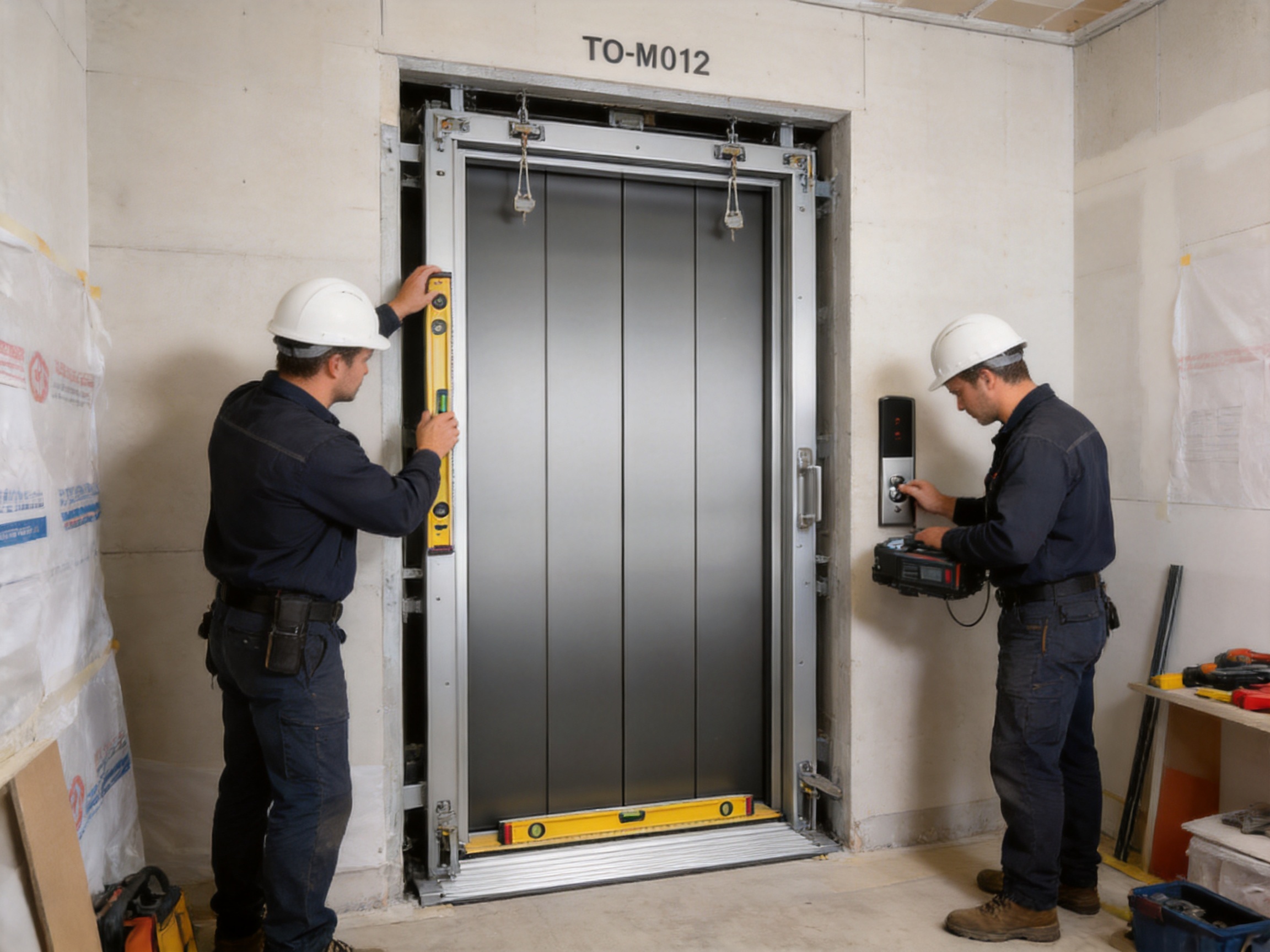
Even a high-quality landing door can perform poorly if it is installed incorrectly. Installation should be carried out by qualified elevator professionals using approved drawings and procedures. The shaft opening, wall construction, sill support, frame position, panel alignment, and electrical interfaces should be checked before final adjustment.
Preparing the Landing Opening
The opening should match the approved dimensions and tolerances. The surrounding structure must be capable of supporting the entrance assembly and resisting movement during door operation. Any damage, excessive unevenness, or interference around the opening should be corrected before the frame is installed.
Positioning the Frame
The frame should be positioned accurately in relation to the finished floor, shaft centerline, car entrance, and adjacent wall surfaces. Incorrect frame positioning can cause uneven gaps, poor visual alignment, and increased stress on the operating components.
Installing the Sill
The sill must be level, securely fixed, and aligned with the car sill. Differences in height or position can affect wheelchair access, trolley movement, and door panel travel. The area beneath the sill should be protected from movement and should not allow loose debris to interfere with the guide system.
Adjusting the Door Panels
After the panels are installed, the technician should check vertical alignment, panel gaps, closing contact, travel resistance, and the final closed position. The panels should move without scraping or excessive noise. Any adjustment should follow the manufacturer’s approved procedure.
Testing the Lock and Safety Circuit
The landing door lock and electrical contact must be tested as part of the complete elevator safety circuit. The elevator should not run when a landing door is open or unlocked. The technician should also confirm that the door cannot be opened from the landing when the car is not correctly positioned, except through authorized emergency or rescue procedures.
Final Operational Testing
Commissioning should include repeated opening and closing cycles, operation at different floors, inspection of the coupling between the car and landing door, obstruction detection, emergency behavior, and verification of noise and vibration. Test results should be recorded in the project documentation.
Maintenance Recommendations
Preventive maintenance is essential for preserving the safety and performance of an elevator landing door. Maintenance intervals should be based on the manufacturer’s instructions, local regulations, traffic intensity, environmental conditions, and the building’s operating profile.
Routine maintenance may include cleaning the sill and guide area, checking panel alignment, inspecting hangers and rollers, examining the lock and contact, checking fasteners, reviewing wiring, and confirming that the door closes fully. Unusual sounds, delayed closing, repeated reopening, uneven movement, or visible damage should be investigated promptly.
Cleaning should use methods and materials compatible with the door finish. Abrasive products, excessive water, and unsuitable chemicals may damage surfaces or affect mechanical components. In hospitals and other sensitive environments, the cleaning procedure should be coordinated with the surface material and the facility’s hygiene policy.
Landing doors should not be modified by unauthorized personnel. Drilling new holes, changing lock components, removing protective parts, or altering door operator settings can compromise safety and may invalidate approvals or warranties. All repairs and adjustments should be performed by trained elevator technicians.
Environmental and Operational Considerations
Door selection should reflect the conditions in which the elevator will operate. Indoor office use is different from a parking structure, industrial facility, coastal building, hospital, or open-sided transportation terminal. Humidity, dust, salt, temperature changes, chemical exposure, and mechanical impact can all influence material and finish selection.
Tenau identifies environmental protection as part of its corporate mission and reports an ISO14001 environmental management framework. In manufacturing, environmental management may include resource control, waste reduction, process monitoring, responsible material handling, and compliance with applicable environmental requirements. For customers, these systems can support more transparent procurement and sustainability evaluation.
Energy consumption is often associated primarily with the elevator drive and door operator, but landing door quality can still influence system efficiency. Correct alignment and low-friction movement reduce unnecessary resistance. Reliable closing behavior can also reduce repeated door cycles and avoid service interruptions. The greatest benefit comes from treating the landing door as part of an efficiently designed elevator system.
Why Manufacturer Integration Matters
Purchasing an elevator landing door from a company that also designs and manufactures complete elevator systems can simplify technical coordination. The manufacturer understands the relationships between landing entrances, car doors, controllers, traction or drive systems, safety circuits, and building interfaces.
Tenau’s product scope includes passenger elevators, freight elevators, escalators, moving walks, elevator parts, cabin interiors, and high-speed elevator solutions. This broad portfolio indicates experience across different transportation requirements. A customer working on a mixed-use development, transportation facility, industrial complex, or multi-building project may benefit from dealing with a supplier that can coordinate multiple vertical transportation products.
Integrated manufacturing can also support project customization. The supplier may be able to review architectural drawings, provide entrance recommendations, coordinate technical dimensions, support installation, and respond to service questions after commissioning. This reduces the number of separate parties responsible for resolving interface issues.
Tenau states that it exports products to many countries and regions. International projects require attention to local codes, documentation, voltage conditions, language requirements, shipping arrangements, site installation practices, and authority approval. Customers should discuss these requirements early so the landing door configuration and documentation can be prepared correctly.
Procurement Checklist for TO-M012
Before ordering TO-M012 for a specific project, the buyer should prepare and confirm a complete technical schedule. Important information may include:
• Building type and elevator application.
• Number of landings and landing door quantity.
• Elevator capacity and rated speed.
• Clear opening width and height.
• Center-opening or side-opening arrangement.
• Door panel configuration and frame dimensions.
• Finished floor levels and sill requirements.
• Required surface material and color.
• Environmental conditions and expected traffic intensity.
• Fire, smoke, accessibility, and safety requirements.
• Local standards and authority approval procedures.
• Electrical interface requirements.
• Packaging, delivery, storage, and installation conditions.
• Spare parts and maintenance documentation.
• Warranty terms and after-sales service arrangements.
The project team should also request approved drawings and confirm whether the proposed landing door has been evaluated for the intended elevator type. A product suitable for a standard passenger elevator may require additional review before it is applied to a high-speed, hospital, cargo, or car elevator.
Quality Assurance from Design to Delivery
Quality begins before production. Engineers must define the door dimensions, material requirements, operating interfaces, safety features, and installation method. These requirements should be translated into controlled drawings, bills of materials, work instructions, inspection plans, and test procedures.
During production, incoming materials should be checked against approved requirements. Formed or welded parts should be inspected for dimensional accuracy and structural quality. Surface treatment should be monitored for coverage, adhesion, consistency, and protection from damage. Assemblies should be checked for correct component installation, fastener security, and operating movement.
Before dispatch, the landing door package should be reviewed for quantity, identification, packaging condition, drawings, accessories, and project-specific components. Proper packaging is important because panels and finished surfaces can be damaged during transportation or storage. Protective measures should remain in place until the building environment is ready for final installation.
Customer feedback after installation is also valuable. Information from elevator technicians and building operators can reveal opportunities to improve installation instructions, component durability, adjustment procedures, packaging, or service support. This is the practical meaning of a closed-loop quality process: product information continues to improve after delivery.
Safety as the Primary Design Principle
The appearance of an elevator landing door is important, but safety must remain the first priority. Every landing entrance must prevent unsafe access to the shaft and must operate correctly under normal, emergency, inspection, and maintenance conditions.
Customers should verify that the complete elevator installation complies with the applicable national and local regulations. Product documentation should identify the relevant technical requirements, permissible applications, inspection procedures, and limitations. The door should be installed and maintained only by qualified professionals.
Safety also includes protection against misuse. Building owners should ensure that passengers do not force doors open, place objects in the sill, block closing movement, or use landing entrances for purposes outside their design. In cargo and car elevator environments, operating procedures should address vehicle positioning, load securing, pedestrian control, and impact prevention.
Frequently Asked Questions
What is TO-M012?
TO-M012 is an elevator landing door model intended for use at elevator floors. It provides the entrance barrier between the building landing and the elevator shaft and is designed to work with the elevator car door, locking system, control system, and related components.
Can TO-M012 be used for passenger elevators?
It can be considered for passenger elevator projects, subject to confirmation of the required dimensions, operating configuration, finishes, safety requirements, and local approvals. The final selection should be made according to the complete elevator design.
Is the product suitable for hospital elevators?
TO-M012 may be evaluated for hospital elevator applications where suitable durability, cleanability, opening dimensions, and operating performance are required. Hospital projects should provide the manufacturer with information about bed traffic, equipment movement, cleaning procedures, and hygiene expectations.
Can the landing door be used for cargo or car elevators?
It may be considered for heavy-duty applications after technical review. Cargo and car elevators can experience greater impact and loading conditions than standard passenger elevators, so the panel construction, frame, sill, protective finish, and operating configuration must be confirmed for the intended duty.
What finishes are available?
The available finish should be confirmed with Tenau for the specific project. Finish selection may depend on the building design, environmental exposure, cleaning requirements, impact risk, and desired appearance.
How does an elevator landing door improve safety?
The landing door prevents access to the shaft when the elevator car is not safely positioned at the floor. Its locking and electrical monitoring interfaces work with the elevator safety circuit to help ensure that the elevator does not operate under unsafe landing-door conditions.
What information is needed for a quotation?
A quotation normally requires the number of landings, clear opening dimensions, opening direction, elevator capacity and speed, building type, finish requirements, environmental conditions, applicable standards, delivery location, and installation expectations. Detailed drawings are useful for confirming the interface with the shaft and car door.
How should the door be maintained?
Maintenance should be performed by qualified elevator technicians. It normally includes cleaning the sill, checking alignment and movement, inspecting rollers and hangers, testing the lock and electrical contact, examining fasteners, and reviewing the complete safety circuit. The manufacturer’s maintenance instructions and local regulations should be followed.
Can the landing door be customized?
Customization may be possible for dimensions, opening arrangement, finish, frame details, and system interfaces. All customization must be reviewed and approved by the manufacturer because changes can affect safety, structural performance, installation, and certification.
Does the manufacturer provide international support?
Tenau states that it exports elevator products to many countries and regions and provides design, manufacturing, installation, and after-sales capabilities. International customers should confirm the available local service arrangements, documentation, spare parts support, and authority approval requirements before placing an order.
What makes an integrated manufacturer advantageous?
An integrated manufacturer can coordinate the landing door with the elevator car, door operator, controller, safety circuit, shaft, and architectural requirements. This can reduce interface problems and provide a clearer path for technical support from design through maintenance.
Conclusion
TO-M012 represents a practical elevator landing door solution for projects that require safety-oriented design, reliable operation, architectural coordination, and support from an experienced elevator manufacturer. Its value is strengthened when the product is specified as part of a complete elevator system rather than selected as an isolated entrance component.
The main advantages of a professionally manufactured landing door include consistent dimensions, coordinated interfaces, durable construction, maintainable components, controlled finishes, and better support for installation and commissioning. These advantages can be especially important in high-traffic passenger buildings, healthcare facilities, residential developments, panoramic elevators, cargo installations, car elevators, and high-speed projects.
Tenau Elevator (China) Co., Ltd. supports its product range with design, research and development, manufacturing, installation, and after-sales service. Its reported use of Industry 4.0 manufacturing methods, automated production lines, data and Internet of Things technologies, formal management systems, and closed-loop quality control provides a strong foundation for consistent product development and production.
Before ordering TO-M012, customers should confirm the exact application, dimensions, finish, safety requirements, local standards, environmental conditions, and installation arrangements. With correct engineering, qualified installation, and preventive maintenance, an elevator landing door can provide dependable service while contributing to the safety, efficiency, and appearance of the entire building.
References
1. Tenau Elevator (China) Co., Ltd., company information and product range materials.
2. Tenau Elevator (China) Co., Ltd., TO-M012 elevator landing door product information.
3. International Organization for Standardization, quality management system principles and ISO9001 guidance.
4. International Organization for Standardization, environmental management system principles and ISO14001 guidance.
5. Occupational health and safety management system principles and OHSMS18001-related guidance.
6. General elevator safety principles concerning landing doors, interlocks, shaft protection, inspection, and maintenance.
7. Professional guidance for elevator installation, commissioning, preventive maintenance, and door system adjustment.
Product: TO-M012

Related Products
Related News
Built on safety, forging trust in vertical mobility.
lf you have any questions or need help, feel free to contact with our team.
 export@tenau.com.cn
 +86-18601458867
 +86-512-65059883
Elevator & Escalator
Factory Add
East of Xicheng Road, North of Lianyi Road, Nanxun Economic Development Zone, Nanxun District, Huzhou City, Zhejiang Province, P.R.China
Copyright © Tenau Elevator (China) Co., Ltd. All Rightd Reserved.
Custom High Quality Elevator Suppliers and World Brand Elevator Company