

 en
 Español
 русский
 中文简体

TO-C100X Elevator Operation Panel: Intelligent Control, Refined Design, and Reliable Manufacturing
Content
- 1 1. The Role of an Elevator Operation Panel in a Modern Elevator
- 2 2. Product Overview of the TO-C100X
- 3 3. Advantages Compared with Generic or Less Integrated Alternatives
- 4 4. Manufacturing Strengths Behind the Product
- 5 5. Functional and User-Oriented Benefits
- 6 6. Materials, Surface Quality, and Interior Coordination
- 7 7. Installation, Commissioning, and Maintenance
- 8 8. Quality and Reliability in Export Projects
- 9 9. Application Selection Guide
- 10 10. How the Product Supports Architects, Contractors, and Building Owners
- 11 11. Ordering and Customization Considerations
- 12 12. Why Manufacturing Integration Matters for Product Quality
- 13 13. Maintenance and Long-Term Performance Recommendations
- 14 14. Frequently Asked Questions
- 14.1 Q1. What is the TO-C100X?
- 14.2 Q2. Which elevator types can use this operation panel?
- 14.3 Q3. Can the panel be customized?
- 14.4 Q4. Why is system compatibility important?
- 14.5 Q5. Is the panel suitable for hospital elevators?
- 14.6 Q6. How does the manufacturer support product quality?
- 14.7 Q7. What information is needed for a quotation?
- 14.8 Q8. Can the panel be used in a modernization project?
- 14.9 Q9. What should be checked during commissioning?
- 14.10 Q10. How can customers protect the panel during long-term use?
- 14.11 Q11. What makes an integrated elevator supplier advantageous?
- 14.12 Q12. Where is Tenau Elevator located?
- 15 15. Conclusion
- 16 References
- 17 Product: TO-C100X
Elevator operation panels are among the most frequently used components in a vertical transportation system. Every passenger interacts with the panel when selecting a floor, opening or closing the doors, activating an emergency function, or checking the status of the elevator. Although an operation panel may appear compact, it performs an essential role in safety, communication, accessibility, user comfort, and the overall visual identity of an elevator interior.
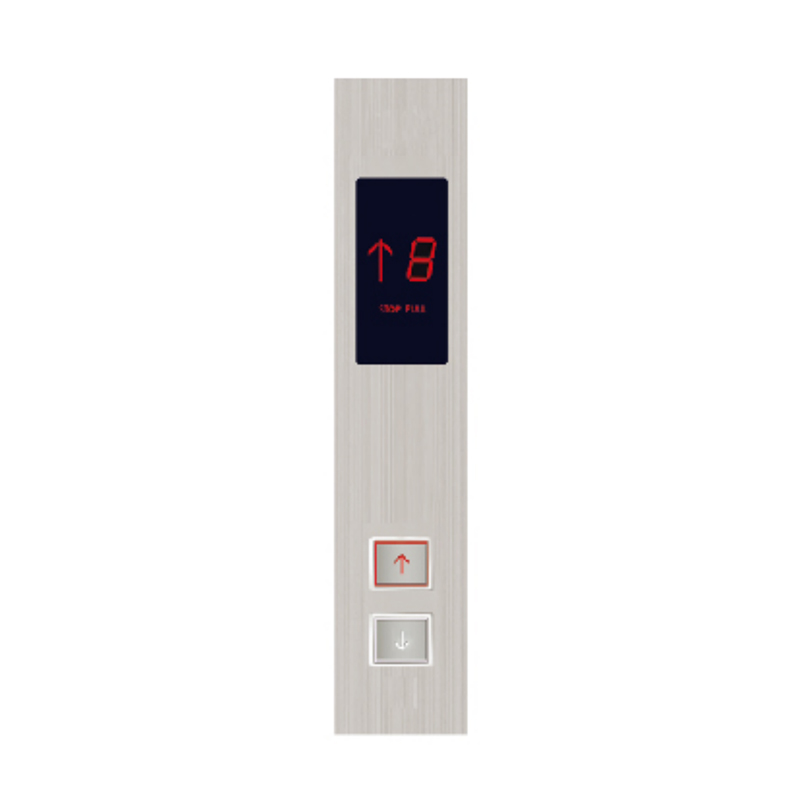
The TO-C100X elevator operation panel is designed to support modern elevator systems that require dependable control, intuitive operation, durable construction, and an attractive cabin appearance. It is suitable for elevator projects that place importance on practical function as well as coordinated interior design. As part of a broader elevator solution portfolio, the panel can be considered for passenger elevators, panoramic and observation elevators, hospital elevators, home villa elevators, cargo elevators, car elevators, and other vertical transportation applications where clear and reliable user control is required.
Tenau Elevator (China) Co., Ltd. combines elevator design, research and development, manufacturing, marketing, installation, and after-sales service. This integrated capability is important when selecting an operation panel because the panel should not be treated as an isolated decorative accessory. It must work correctly with the elevator control system, fit the cabin structure, support the intended traffic pattern, and remain dependable throughout the service life of the elevator.
The TO-C100X represents a practical approach to elevator operation panel development. It is intended to combine functional clarity, adaptable design, manufacturing consistency, and compatibility with contemporary elevator interiors. Its value comes not only from the panel’s visible surface, but also from the engineering, production controls, quality systems, and application knowledge behind it.
TO-C100X
1. The Role of an Elevator Operation Panel in a Modern Elevator
An elevator operation panel is the main human-machine interface inside the elevator car. Through this interface, passengers communicate their destination and access important elevator functions. A well-designed panel must therefore provide a straightforward operating experience for first-time users, regular passengers, elderly people, children, people with disabilities, hospital visitors, hotel guests, workers, and building management personnel.
The panel normally accommodates several types of controls. These may include floor selection buttons, door-open and door-close buttons, alarm or emergency buttons, communication controls, overload indicators, access-control interfaces, and other project-specific functions. Depending on the elevator type and building requirements, the panel may also be integrated with display systems, card readers, fire-service operation, destination-control functions, or special service controls.
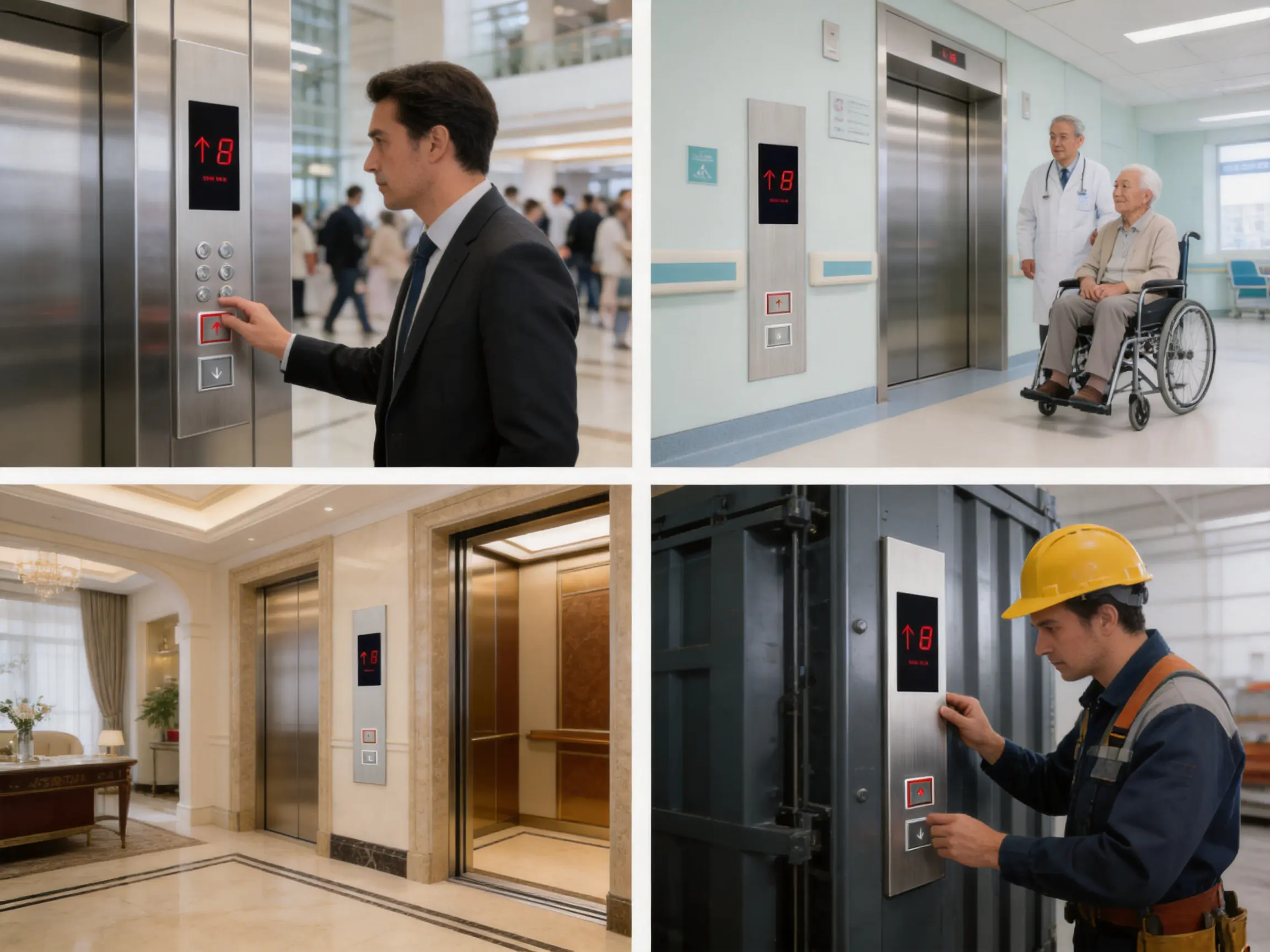
In a passenger elevator, the operation panel should help users select a floor quickly and confidently. In a hospital elevator, it may need to support frequent use, easy cleaning, high visibility, and operation by staff wearing gloves. In a cargo or car elevator, the panel may need a more robust configuration to withstand intensive use and a demanding working environment. In a home villa elevator, the emphasis may shift toward compact proportions, quiet visual integration, and coordination with residential decoration.
These different applications demonstrate why a high-quality elevator operation panel must balance several objectives at the same time. It should be easy to understand without excessive explanation, sufficiently robust for repeated operation, visually appropriate for the cabin, and suitable for integration with the elevator’s electrical and control architecture.
The TO-C100X is positioned within this important interface category. Its design can support the development of an elevator cabin that is orderly, modern, and user-oriented. By combining a clear operating arrangement with manufacturing discipline, the panel helps transform a basic elevator control point into a dependable part of the passenger experience.
2. Product Overview of the TO-C100X
The TO-C100X is an elevator operation panel developed for use in contemporary elevator cabins. Its primary purpose is to provide a practical control interface for passengers and authorized operators. The panel can be configured according to the elevator model, cabin arrangement, destination floor count, control system, accessibility requirements, and interior design scheme.
Because elevator projects differ considerably, a useful operation panel should be adaptable rather than restricted to one application. A residential tower may require a compact panel with a refined appearance. A commercial building may need clear floor identification and high-frequency operation. A hospital may require easily sanitized surfaces and simple controls. A freight elevator may call for stronger protection and a configuration that prioritizes durability. A suitable panel design must accommodate these differences while preserving reliable operating logic.
The TO-C100X can be evaluated from four connected perspectives: user interaction, physical construction, system integration, and production quality. From the user perspective, the panel should make the intended functions apparent. From the construction perspective, its visible and internal parts should be designed for repeated use. From the integration perspective, the panel should coordinate with the elevator controller, wiring, cabin structure, and optional devices. From the manufacturing perspective, dimensions, surface treatment, assembly, and inspection should be controlled consistently.
This combination distinguishes a professional elevator operation panel from a generic switch plate. A generic component may provide a button or display, but it may not offer the dimensional coordination, electrical compatibility, finish consistency, or project support required for an elevator installation. The TO-C100X is supported by an elevator manufacturer with experience across complete elevator systems, giving customers access to a broader technical context when selecting and applying the panel.
2.1 Design Priorities
The main design priorities of the TO-C100X include operational clarity, durability, clean appearance, installation practicality, and adaptability. These priorities are relevant to both new elevator projects and modernization work.
Operational clarity means that users should be able to identify the floor buttons and functional controls without confusion. Button spacing, symbol placement, numbering, illumination, and tactile feedback all influence the user experience. The arrangement should be logical and should reduce unnecessary hesitation inside the elevator.
Durability means that the panel should tolerate repeated contact during everyday service. An elevator in a busy office building may be used hundreds or thousands of times each day. The surface must remain presentable, and the controls must continue to operate correctly despite frequent pressing, cleaning, and incidental contact with luggage or equipment.
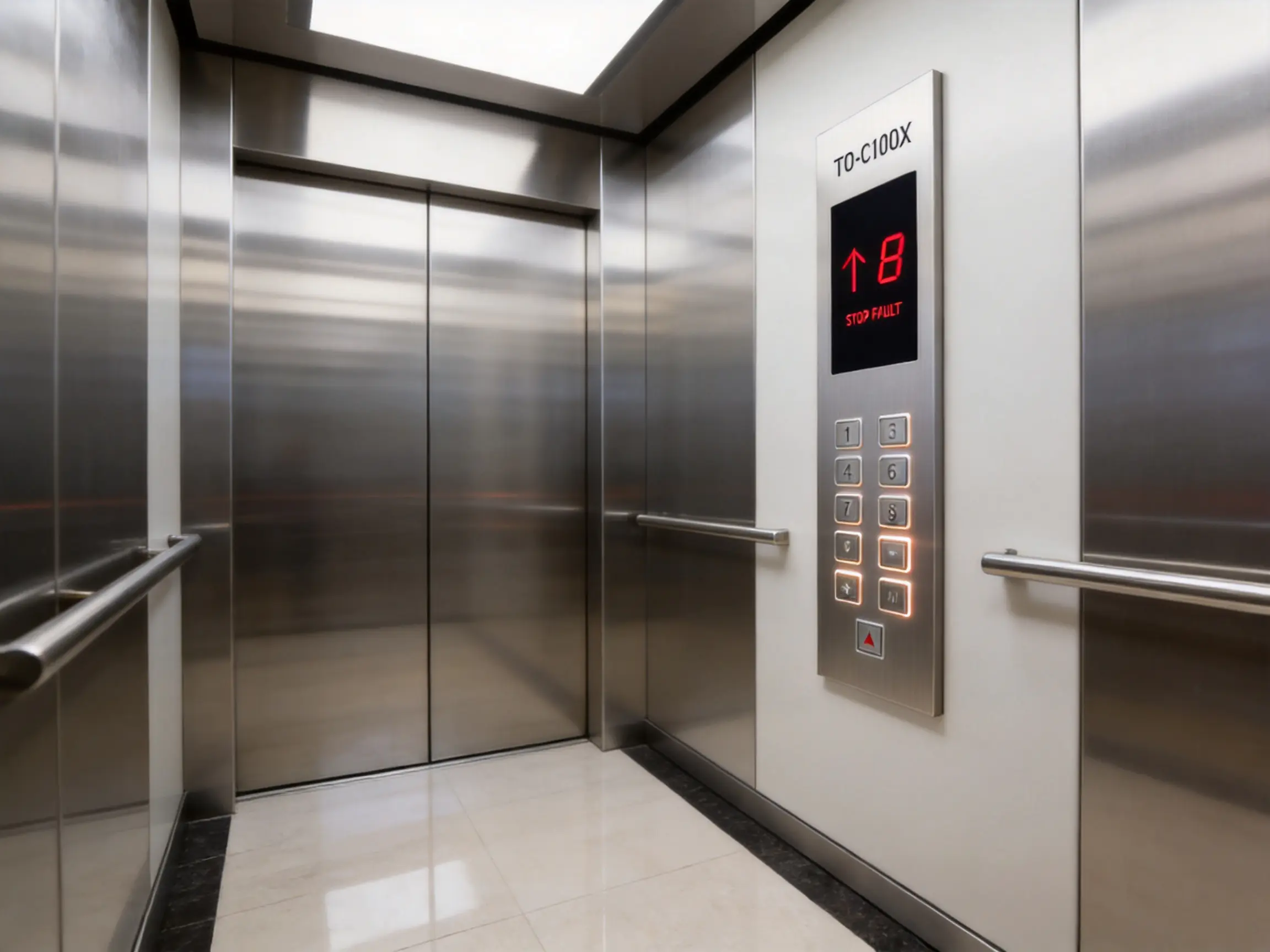
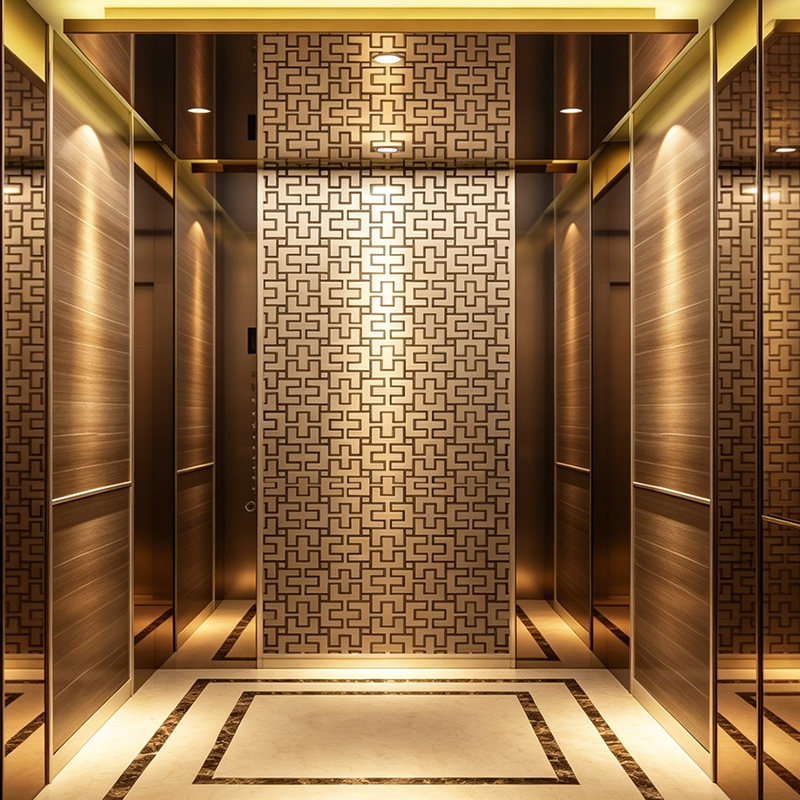
A clean appearance is important because the operation panel is a visible feature of the cabin. A panel with balanced proportions, consistent finishing, and orderly control placement can complement stainless steel, glass, stone-effect, wood-effect, or other interior materials. It can help create a more cohesive passenger environment.
Installation practicality includes suitable mounting arrangements, accessible internal connections, reasonable maintenance access, and compatibility with the elevator cabin structure. These details affect installation time, commissioning efficiency, and future servicing.
Adaptability allows the panel to serve different elevator categories and project requirements. It may be configured for a particular number of floors, optional controls, accessibility needs, language conventions, or interior style. The exact configuration should be confirmed during technical communication and project design.
3. Advantages Compared with Generic or Less Integrated Alternatives
Customers comparing elevator operation panels often encounter products that appear similar at first glance. Many panels contain buttons, indicators, and a metal or plastic faceplate. However, the difference between a dependable elevator component and a basic interface becomes clearer when the product is evaluated over its entire service life.
3.1 Better Coordination with the Complete Elevator System
One of the primary advantages of selecting a panel from an integrated elevator manufacturer is system coordination. The panel is not designed in isolation from the controller, traction system, door operator, safety circuit, cabin, and inspection requirements. This broader relationship can reduce uncertainty during project planning.
Tenau Elevator develops and supplies complete elevator solutions, including passenger elevators, freight elevators, escalators, moving walks, and related products. This experience allows the operation panel to be considered as part of a complete vertical transportation system. A customer can discuss panel selection in relation to elevator speed, cabin dimensions, traffic requirements, building function, and interior design rather than treating the panel as a separate commodity.
By contrast, a generic panel purchased without system-level coordination may create challenges involving wiring, button logic, dimensions, indicator communication, or mounting. Even if the panel appears attractive, additional adaptation may be required at the installation site. Integrated planning can help reduce such risks.
3.2 Consistent Manufacturing and Appearance
Elevator cabins often contain several visible control elements. If the panel, landing fixtures, indicators, buttons, and cabin finishes do not match, the final installation can look improvised. Consistency in materials, surface treatment, button appearance, and illumination contributes to a more professional result.
The TO-C100X benefits from a controlled manufacturing environment in which design, processing, assembly, and inspection can be coordinated. This is particularly valuable for projects involving multiple elevators. A consistent production process helps reduce variation between panels and supports a uniform appearance across a building or group of buildings.
For architects, developers, and elevator contractors, visual consistency is not only an aesthetic issue. It can affect perceived building quality and the satisfaction of end users. A neat, precise panel supports the impression that the elevator has been carefully engineered and professionally installed.
3.3 Practical Support for Different Applications
Elevator requirements vary substantially according to the building. A panel for a luxury residential project may prioritize visual refinement. A panel for a hospital may emphasize hygiene and legibility. A panel for a logistics facility may need to withstand more forceful and frequent use. A panel for a public building may require accessibility-related features and highly visible indicators.
A broad elevator product portfolio gives the manufacturer experience across these application conditions. The TO-C100X can be discussed in relation to different cabin types and project objectives. This makes it more suitable for planned customization than a one-size-fits-all interface with limited adaptation options.
3.4 More Efficient Technical Communication
When the panel supplier also understands elevator engineering, technical discussions can be more direct. Questions about floor count, button arrangement, control voltage, communication, emergency functions, cabin materials, installation position, and maintenance access can be addressed within a complete elevator framework.
This can be especially useful for overseas projects. Customers often need to coordinate among building designers, general contractors, elevator installers, electrical engineers, and local authorities. A manufacturer with design, production, installation, and after-sales capabilities can help organize the information required for a successful project.
3.5 Lifecycle Value Rather Than Initial Price Alone
The lowest initial purchase price does not always represent the lowest total cost. An inexpensive panel may create additional expenses through inconsistent quality, difficult installation, premature replacement, poor availability of components, or limited technical support. These costs can be more significant in busy buildings where elevator downtime affects residents, employees, visitors, or goods movement.
A professionally manufactured operation panel should be assessed according to its expected service life, maintenance requirements, compatibility, appearance retention, and support arrangements. The TO-C100X is intended to provide value through dependable application, controlled production, and coordination with broader elevator services.
4. Manufacturing Strengths Behind the Product
The performance of an elevator operation panel depends heavily on how it is designed and manufactured. Even a simple-looking panel may involve sheet processing, surface treatment, electrical assembly, component installation, wiring, labeling, functional testing, and final inspection. A weakness in any stage can affect the completed product.
Tenau Elevator operates a large-scale manufacturing base in Nanxun, Zhejiang Province, within the economically connected Shanghai-Nanjing-Suzhou-Hangzhou region. The location provides access to an established industrial ecosystem, engineering resources, transportation networks, and supply-chain support. More importantly, the company has developed capabilities covering elevator design, research and development, manufacturing, installation, and after-sales service.
4.1 Design and Research Capability
A strong product begins before manufacturing. Research and development activities help determine how an operation panel should respond to market needs, safety expectations, interior trends, user behavior, and elevator system requirements. Design teams must consider both visible features and hidden technical relationships.
For the TO-C100X, design work may involve the arrangement of controls, the relationship between the panel and the cabin wall, the selection of suitable materials, the integration of indicators, and the accessibility of internal components. The panel must be attractive without compromising function. It must also fit within the dimensional limitations of an elevator cabin.
Research and development can further support improvements in production efficiency, surface durability, wiring organization, assembly methods, and inspection procedures. These improvements are especially important when products are supplied to multiple countries and used in different building environments.
4.2 Advanced Production Lines
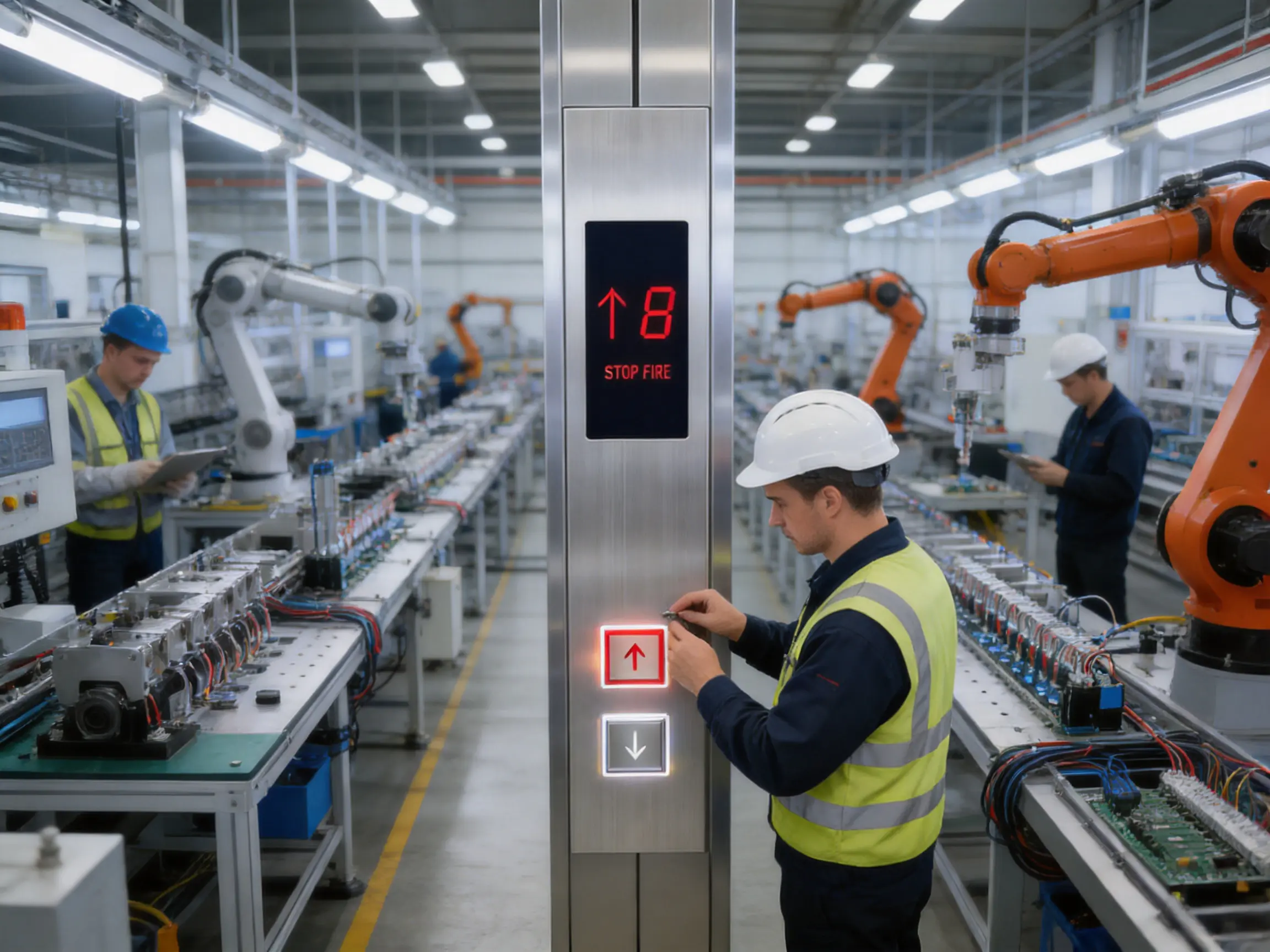
Tenau states that its manufacturing operations include German Industry 4.0 intelligent manufacturing and automated production lines. These capabilities can contribute to repeatable production, improved process visibility, and more consistent quality.
Automation is valuable where repeated operations require stable accuracy. It can help control processing positions, improve production rhythm, and reduce avoidable variation. Intelligent manufacturing systems can also assist with data collection and production monitoring, making it easier to identify process deviations and improve factory management.
Automation does not eliminate the need for skilled workers. Instead, it allows engineering and production personnel to focus more effectively on process control, quality verification, equipment management, assembly accuracy, and continuous improvement. The strongest manufacturing model combines automated equipment with trained technical teams and clearly defined procedures.
4.3 Closed-Loop Quality Control
Tenau describes a full closed-loop quality control system. In practical terms, a closed-loop approach connects design requirements, material management, production processes, inspection results, corrective actions, and customer feedback. It aims to prevent problems from being treated as isolated incidents.
For an elevator operation panel, quality control may include verification of incoming materials, dimensional checks, surface inspections, button operation tests, wiring checks, illumination checks, labeling verification, and final appearance inspection. Depending on the project, additional testing may be required to confirm communication with the elevator controller or the operation of special functions.
When an issue is discovered, a closed-loop system should help identify its source. The cause may involve a design detail, supplier variation, equipment setting, assembly method, operator instruction, or inspection gap. Corrective action can then be introduced into the relevant process instead of merely replacing one defective component.
4.4 International Management Standards
Tenau states that it complies with ISO9001, ISO14001, and OHSMS18001 standards. These standards relate respectively to quality management, environmental management, and occupational health and safety management.
ISO9001-oriented quality management supports controlled procedures, documented responsibilities, process monitoring, customer focus, and continual improvement. These principles are relevant to operation panel production because consistent quality requires more than final inspection. It requires control throughout the entire process.
ISO14001-oriented environmental management encourages responsible control of environmental aspects, resource use, waste, and production impacts. As customers and building developers increasingly consider sustainability, environmental management has become a meaningful part of supplier evaluation.
OHSMS18001 is associated with occupational health and safety management. A safer production environment benefits employees, supports stable operations, and reflects a structured approach to factory management. Reliable products are more likely to come from manufacturing processes that are also carefully managed and responsibly operated.
4.5 Digital Technologies and Data-Based Improvement
Big data and Internet of Things technologies can support modern elevator manufacturing and service management. In production, data may be used to monitor equipment performance, track process conditions, identify recurring defects, and improve scheduling. In the wider elevator business, digital tools can support product traceability, service records, remote communication, and maintenance planning.
For customers, the practical benefit is improved transparency and responsiveness. A manufacturer that uses structured information can manage product details more accurately and respond more efficiently when technical questions arise. Digital manufacturing also supports the repeatability needed for projects involving many operation panels or multiple elevator models.
5. Functional and User-Oriented Benefits
5.1 Clear Control Arrangement
A passenger should not need specialized training to understand the basic operation of an elevator. Floor buttons and commonly used controls should be arranged logically, with clear identification and an appropriate visual hierarchy. A well-organized panel reduces confusion and contributes to a smoother passenger flow.
The TO-C100X can be planned according to the number of floors and the functions required by the project. Button layout, labeling, indicator position, and optional controls should be reviewed during the design stage. This allows the panel to reflect the elevator’s actual use instead of forcing the project into a fixed arrangement.
5.2 Tactile and Visual Feedback
Passengers benefit when a button provides clear feedback after it is pressed. Feedback may be tactile, visual, or both. Illumination can help show that a floor selection has been registered, while a suitable button action can provide confidence that the control has responded.
Visual feedback is particularly useful in busy or noisy environments. It can also help passengers who may not immediately hear an audible signal. For accessibility, button design and control placement should be considered together with applicable local standards and project requirements.
5.3 Accessibility Considerations
Elevator operation panels should be designed with diverse users in mind. Considerations may include readable characters, sufficient contrast, tactile markings, reachable control heights, understandable symbols, and suitable audible or visual notifications. Requirements vary by country and building type, so the final design should be checked against the relevant regulations and accessibility standards.
The value of an adaptable panel is that accessibility-related elements can be included as part of the project configuration. A panel intended for a hospital, public building, airport, transportation hub, or educational facility may require different accessibility features from a private residential elevator.
5.4 Hygiene and Cleaning
Elevator panels are high-contact surfaces. They may be touched repeatedly by many passengers and may require regular cleaning. The panel design should therefore support practical maintenance. Smooth surfaces, orderly construction, appropriate material selection, and resistance to routine cleaning procedures can help preserve appearance and usability.
Hospital elevators and public elevators often require particularly strict cleaning routines. The selected cleaning agents, methods, and frequency should be confirmed with the project team to ensure that they are compatible with the panel finish and materials. Proper maintenance instructions remain important even when durable materials are used.
5.5 Suitability for Different Elevator Types
For passenger elevators, the panel can contribute to convenient daily transportation and a polished cabin appearance. For panoramic and observation elevators, it can be coordinated with transparent or decorative interiors without distracting from the viewing experience.
For hospital elevators, the design discussion may emphasize easy recognition, cleaning, accessibility, and reliable use during urgent movement of patients and medical equipment. For home villa elevators, a compact and visually integrated configuration may be preferred.
For cargo elevators, the panel may be positioned and protected according to loading patterns and operational conditions. For car elevators, the interface may need to support the building’s vehicle movement procedure and safety logic. For escalators and moving walks, the control concept differs from that of an elevator cabin, but the same principles of reliability, clear user communication, and controlled manufacturing remain relevant.
6. Materials, Surface Quality, and Interior Coordination
The operation panel is both a technical component and an interior element. Its material and surface treatment influence durability, cleaning, appearance, and the perceived quality of the elevator cabin.
Elevator interiors may use stainless steel, coated metal, glass, decorative laminates, stone-effect panels, wood-effect finishes, or custom architectural materials. The operation panel should coordinate with these choices in color, texture, reflectivity, proportions, and visual emphasis.
A balanced panel should be noticeable enough to be found easily but not so visually dominant that it overwhelms the cabin. In a commercial building, a refined panel can support a professional atmosphere. In a hotel, it can contribute to a hospitality-oriented design. In a residential development, it can be coordinated with the surrounding interior palette.
Surface quality is also important for long-term appearance. Uneven finishing, visible processing marks, inconsistent color, or poorly aligned components can reduce the perceived quality of the entire elevator. Controlled manufacturing and final inspection help reduce these risks.
Customers should discuss the intended material, finish, color, button style, indicator arrangement, and cleaning requirements before production. Samples, drawings, and approval procedures can help confirm the appearance before a larger quantity is manufactured.
7. Installation, Commissioning, and Maintenance
Even a well-manufactured panel must be installed correctly. The installation process should consider cabin wall dimensions, mounting structure, wiring routes, grounding, controller connections, protective components, and access for future servicing.
Before installation, the project team should confirm panel dimensions and the location of all controls. The wiring diagram should correspond to the actual panel configuration. Any optional device, such as an access-control reader or special communication element, should be identified in advance.
During commissioning, technicians should verify each button, indicator, door function, alarm function, communication feature, and relevant control signal. Testing should be carried out under the operating conditions specified for the elevator system. Where required, the panel should also be checked for correct operation during inspection, emergency, fire-service, or independent-service modes.
Maintenance should include regular cleaning, inspection of buttons and indicators, verification of emergency functions, examination of visible damage, and checking of internal connections during scheduled elevator servicing. If a button becomes difficult to press or an indicator fails, the issue should be recorded and addressed promptly.
A manufacturer with installation and after-sales experience can provide more complete support than a supplier that only ships a component. Tenau’s capabilities cover installation and after-sales service in addition to design and manufacturing. This integrated approach can help customers address product questions during installation, commissioning, and long-term operation.
8. Quality and Reliability in Export Projects
International elevator projects involve more than product shipment. They require accurate technical documents, clear communication, packaging suitable for transportation, coordination with local installers, and an understanding of regional requirements.
Tenau Elevator exports products to many countries and regions worldwide. International experience can help the company understand the need for different languages, electrical conventions, documentation formats, building practices, and customer expectations. Each project should still be reviewed individually because local codes and approval procedures can vary.
Reliable export supply depends on accurate product identification. The TO-C100X should be specified with the relevant drawings, configuration, quantity, finish, button arrangement, and connection information. Clear documentation reduces misunderstandings between the factory, distributor, contractor, and installation team.
Packaging is another important consideration. Elevator panels should be protected against impact, vibration, dust, moisture, and surface damage during handling and transportation. The packaging method should reflect the panel’s materials and the expected shipping route. Customers should inspect received products promptly and report any transport-related issue according to the agreed procedure.
For large projects, production scheduling and batch consistency are also important. A controlled manufacturing system can help coordinate repeated orders and reduce differences between early and later deliveries. This is valuable when elevators are installed in stages or when several buildings use the same interior standard.
9. Application Selection Guide
| Application | Primary Requirements | Relevant TO-C100X Considerations |
|---|---|---|
| Passenger elevator | Clear floor selection, frequent operation, attractive interior coordination | Logical button arrangement, readable identification, durable surface, consistent appearance |
| Panoramic or observation elevator | Visual harmony with glass and decorative cabin materials | Refined proportions, coordinated finish, unobtrusive but accessible control placement |
| Hospital elevator | Hygiene, accessibility, visibility, dependable repeated operation | Easy-to-clean configuration, clear controls, suitable accessibility features, reliable feedback |
| Home villa elevator | Compact dimensions, quiet visual integration, residential comfort | Space-efficient arrangement, coordinated finish, simple and intuitive operation |
| Cargo elevator | Heavy-duty use, practical control access, robust operation | Application-specific protection, durable controls, configuration matched to loading conditions |
| Car elevator | Vehicle movement procedures, clear instructions, operational safety | Integration with project control logic, visible indicators, coordinated installation planning |
| High-speed elevator | Efficient passenger flow, premium interior expectations, complete system coordination | Integration with the elevator control system, clear interface design, high-quality cabin finish |
The table provides a general selection framework rather than a substitute for technical design. The final panel configuration should be determined by the elevator model, applicable codes, cabin dimensions, control system, building function, and customer requirements.
10. How the Product Supports Architects, Contractors, and Building Owners
10.1 Benefits for Architects and Interior Designers
Architects and interior designers need elevator components that can fit within a wider design language. The operation panel is often located in a prominent position, making its proportions and finish important to the cabin’s overall visual composition.
The TO-C100X can be considered during the early interior design stage so that the panel position, dimensions, materials, and control arrangement are coordinated with handrails, lighting, ceiling panels, mirrors, doors, and wall finishes. Early coordination reduces the risk of late changes or visible compromises during installation.
10.2 Benefits for Elevator Contractors
Elevator contractors benefit from clear technical information, consistent production, practical installation arrangements, and responsive communication. A panel that has been designed within the elevator manufacturer’s product system can reduce the amount of field modification required.
Contractors should confirm all technical details before placing an order. These details may include the number of floors, button sequence, special functions, mounting dimensions, cable requirements, indicator type, materials, finish, and applicable inspection requirements. Proper confirmation supports smoother production and installation.
10.3 Benefits for Building Owners and Developers
Building owners and developers are concerned with safety, user satisfaction, maintenance, appearance, and long-term operating cost. The operation panel affects all of these areas because it is used constantly and remains visible throughout the elevator’s service life.
A reliable panel can support a better passenger experience, reduce avoidable service interruptions, maintain the visual standard of the building, and simplify future maintenance. When purchased as part of a complete elevator solution, it may also improve coordination among the elevator, cabin, control system, and after-sales service provider.
11. Ordering and Customization Considerations
Before requesting a quotation for the TO-C100X, customers should prepare as much project information as possible. This may include the elevator type, number of floors, cabin dimensions, intended building use, quantity of elevators, installation location, preferred materials, button layout, accessibility requirements, and desired delivery schedule.
Customers should also explain whether the panel is intended for a new elevator or a modernization project. Replacement work may require accurate measurement of the existing cabin, review of the original wiring, compatibility checks, and special installation arrangements. A modernization panel must often fit within existing openings and coordinate with legacy equipment.
Customization should be managed through drawings and written approvals. A typical process may involve initial requirements, preliminary design, technical clarification, drawing confirmation, sample or finish approval, production, inspection, shipment, installation, and commissioning. The exact process depends on the project scope and contract arrangement.
Surface finishes and visual details should be approved before mass production. Customers may need to confirm color, texture, reflectivity, numbering style, symbol design, indicator appearance, and the relationship between the panel and surrounding cabin materials.
Technical confirmation is equally important. The panel must correspond to the elevator controller and the required functions. Emergency communication, alarm, door controls, fire-service functions, access control, and other special features should be identified clearly so that the correct components and wiring are included.
12. Why Manufacturing Integration Matters for Product Quality
Manufacturing integration creates a direct connection between product design and factory execution. When a company is responsible for multiple stages of the elevator process, it can use practical installation and service experience to improve future product designs.
For example, installation teams may identify a mounting detail that could be simplified, a wiring route that could be made more accessible, or a surface feature that requires special maintenance attention. This information can return to the design and production teams, creating a cycle of improvement.
Similarly, after-sales service records may reveal recurring questions or replacement needs. These observations can guide improvements in documentation, spare-part planning, component selection, and product configuration. The result is a stronger relationship between the factory and the real operating environment.
Tenau’s combination of design, research and development, manufacturing, installation, and after-sales service supports this integrated model. Its large-scale manufacturing base, intelligent production capabilities, management systems, and international market experience provide a foundation for supplying elevator components such as the TO-C100X with greater process consistency.
Manufacturing integration also supports responsibility for the complete elevator solution. Customers can communicate with a supplier that understands how the panel interacts with the cabin, controller, doors, safety devices, and user environment. This can be particularly valuable when a project includes different elevator categories or special technical requirements.
13. Maintenance and Long-Term Performance Recommendations
The service life of an elevator operation panel depends on product quality, correct installation, operating conditions, cleaning practices, and scheduled maintenance. Even a durable panel should be inspected as part of the normal elevator maintenance program.
Cleaning should be performed with methods appropriate to the selected surface finish. Abrasive tools and unsuitable chemicals may damage the surface or reduce its appearance. Building operators should follow the manufacturer’s recommendations and should test any unfamiliar cleaning product in an inconspicuous area when appropriate.
Buttons should be checked for smooth action, correct return, and proper feedback. Indicators should be observed for flickering, inconsistent brightness, or failure. Alarm and communication functions should be tested according to the elevator maintenance schedule and applicable regulations.
The panel should also be checked for loose parts, cracks, deformation, corrosion, damaged labels, and signs of unauthorized modification. Any condition that could affect safe operation should be reported to qualified elevator service personnel.
In high-traffic buildings, the maintenance team may benefit from keeping records of common issues and replacement components. A structured service history can help identify patterns and support preventive action. When replacement parts are required, the exact panel model and configuration should be confirmed to avoid incompatibility.
14. Frequently Asked Questions
Q1. What is the TO-C100X?
The TO-C100X is an elevator operation panel designed to provide passenger and operator controls inside an elevator cabin. It can be configured for different elevator applications and project requirements, subject to technical confirmation.
Q2. Which elevator types can use this operation panel?
The panel may be considered for passenger elevators, panoramic and observation elevators, hospital elevators, home villa elevators, cargo elevators, car elevators, and other suitable elevator systems. The exact configuration depends on the elevator model, control system, cabin design, and required functions.
Q3. Can the panel be customized?
Project-related customization may include button arrangement, floor quantity, labeling, finish, indicator configuration, accessibility features, and additional controls. Customers should provide technical and design requirements before production so that the configuration can be reviewed and confirmed.
Q4. Why is system compatibility important?
The operation panel must communicate correctly with the elevator controller and must fit the cabin structure. Incorrect electrical or dimensional compatibility can cause installation delays, additional modification, or operational problems. System-level coordination helps reduce these risks.
Q5. Is the panel suitable for hospital elevators?
It may be suitable for hospital applications when configured for the project’s hygiene, accessibility, visibility, and operational requirements. Hospital elevator specifications should be reviewed carefully, including cleaning procedures, control height, emergency functions, and any special service modes.
Q6. How does the manufacturer support product quality?
Tenau states that it uses German Industry 4.0 intelligent manufacturing, automated production lines, big data, Internet of Things technology, and a full closed-loop quality control system. The company also states compliance with ISO9001, ISO14001, and OHSMS18001 management standards.
Q7. What information is needed for a quotation?
Useful information includes elevator type, number of floors, quantity, cabin dimensions, control system, required functions, preferred material and finish, installation location, accessibility requirements, delivery schedule, and whether the project is new construction or modernization.
Q8. Can the panel be used in a modernization project?
It may be considered for modernization, but the existing cabin opening, wiring, controller, mounting structure, and available space must be checked. Accurate measurements and technical documentation are necessary before confirming compatibility.
Q9. What should be checked during commissioning?
Technicians should verify button operation, floor registration, illumination, door controls, alarm functions, communication functions, special controls, wiring, grounding, and compatibility with the elevator’s operating modes. Testing should follow applicable regulations and project procedures.
Q10. How can customers protect the panel during long-term use?
Customers should use suitable cleaning methods, avoid abrasive materials, prevent unauthorized modification, inspect buttons and indicators regularly, and include the panel in the elevator’s scheduled maintenance program. Any damage or abnormal operation should be reported to qualified service personnel.
Q11. What makes an integrated elevator supplier advantageous?
An integrated supplier can coordinate the operation panel with the elevator controller, cabin, doors, safety system, installation process, and after-sales service. This can simplify communication and reduce the risk of treating a critical interface as an isolated component.
Q12. Where is Tenau Elevator located?
Tenau Elevator (China) Co., Ltd. is located in the Nanxun Economic Development Zone, Nanxun District, Huzhou City, Zhejiang Province, China. Its manufacturing base is positioned within the economically active Shanghai-Nanjing-Suzhou-Hangzhou region.
15. Conclusion
The TO-C100X elevator operation panel is designed for an essential part of the elevator user experience: the point where passengers and operators interact directly with the vertical transportation system. Its importance extends beyond button selection. The panel contributes to accessibility, visual quality, system communication, operational confidence, maintenance, and the long-term perception of the elevator.
Its principal advantages come from the combination of adaptable application, practical interface design, coordination with complete elevator systems, controlled manufacturing, and support from an experienced elevator company. The product can be evaluated for passenger elevators, panoramic elevators, hospital elevators, home villa elevators, cargo elevators, car elevators, and other suitable applications.
Tenau Elevator strengthens this product proposition through integrated design, research and development, manufacturing, installation, and after-sales service. Its intelligent manufacturing approach, automated production lines, data and Internet of Things technologies, management standards, and closed-loop quality control system provide a structured foundation for consistent production.
For customers, the best results will come from early technical communication and careful confirmation of every project detail. Button arrangement, dimensions, finish, special functions, accessibility, wiring, installation, and maintenance should all be reviewed before production. When these elements are coordinated properly, the operation panel can provide reliable daily performance while supporting the appearance and quality of the complete elevator cabin.
As buildings become more intelligent, accessible, and design-conscious, elevator interfaces must continue to evolve. A dependable operation panel such as the TO-C100X can help connect advanced elevator engineering with the everyday needs of passengers, building owners, contractors, and facility managers.
References
1. Product information supplied for the TO-C100X elevator operation panel.
2. Company information supplied for Tenau Elevator (China) Co., Ltd., including manufacturing, research and development, installation, and after-sales capabilities.
3. International Organization for Standardization. Quality management systems principles and requirements associated with ISO9001.
4. International Organization for Standardization. Environmental management systems principles and requirements associated with ISO14001.
5. Occupational health and safety management system principles associated with OHSMS18001.
6. General principles of elevator design, operation, accessibility, maintenance, and inspection used in international vertical transportation practice.
7. General Industry 4.0 manufacturing principles, including automation, production data management, process monitoring, and continuous improvement.
Product: TO-C100X

Related Products
Related News
Built on safety, forging trust in vertical mobility.
lf you have any questions or need help, feel free to contact with our team.
 export@tenau.com.cn
 +86-18601458867
 +86-512-65059883
Elevator & Escalator
Factory Add
East of Xicheng Road, North of Lianyi Road, Nanxun Economic Development Zone, Nanxun District, Huzhou City, Zhejiang Province, P.R.China
Copyright © Tenau Elevator (China) Co., Ltd. All Rightd Reserved.
Custom High Quality Elevator Suppliers and World Brand Elevator Company