

 en
 Español
 русский
 中文简体

TO-F003 Elevator Handrail: Reliable Performance, Refined Comfort, and Modern Manufacturing
Content
- 1 Understanding the Role of an Elevator Handrail
- 2 Product Overview of the TO-F003 Elevator Handrail
- 3 Core Advantages of the TO-F003 Design
- 4 Manufacturing Strength Behind the Product
- 5 Material, Finish, and Project Specification Considerations
- 6 Comparison with Generic and Competitor Handrail Options
- 7 Applications in Different Building Environments
- 8 Installation and Maintenance Principles
- 9 Project Procurement Guidance
- 10 Why Manufacturing Integration Matters to Global Buyers
- 11 Environmental and Operational Responsibility
- 12 Design Integration with Elevator Cabin Interiors
- 13 Quality Assurance from Order to Delivery
- 14 Long-Term Value for Building Owners and Contractors
- 15 Frequently Asked Questions
- 15.1 What is the TO-F003?
- 15.2 Which elevators can use the TO-F003?
- 15.3 Is the TO-F003 suitable for hospital elevators?
- 15.4 Can the handrail be used in a home villa elevator?
- 15.5 Can the TO-F003 be customized?
- 15.6 What information should be provided for a quotation?
- 15.7 How should the handrail be maintained?
- 15.8 What manufacturing advantages support the product?
- 15.9 Does the manufacturer provide complete elevator solutions?
- 15.10 How can international buyers request more information?
- 16 Recommended Selection Checklist
- 17 Conclusion
- 18 References
- 19 Product: TO-F003
Elevator handrails are among the most frequently touched components in an elevator cabin. Although they are often smaller than the doors, control panels, or wall finishes, they have a direct effect on passenger comfort, perceived quality, hygiene, accessibility, and the overall visual character of the interior. The TO-F003 elevator handrail is designed as a practical and refined solution for passenger elevators, panoramic and observation elevators, hospital elevators, home villa elevators, cargo elevators, car elevators, and other vertical transportation environments.
A well-designed handrail must satisfy several requirements at the same time. It should provide a stable point of support, feel comfortable in the hand, coordinate with the cabin interior, withstand repeated daily use, and remain easy to clean and maintain. It must also be compatible with different cabin layouts and installation conditions. For architects, elevator contractors, property developers, interior designers, and facility managers, the handrail is therefore not merely a decorative accessory. It is an important part of the elevator’s human-centered design.
The TO-F003 model belongs to a professional elevator handrail product range developed for modern elevator interiors. It can be considered for new installations, renovation projects, customized cabin packages, and replacement applications where appearance, durability, and dependable manufacturing are important. Supported by an integrated design, research and development, production, installation, and after-sales service system, the product reflects a broader approach to elevator engineering rather than an isolated hardware offering.
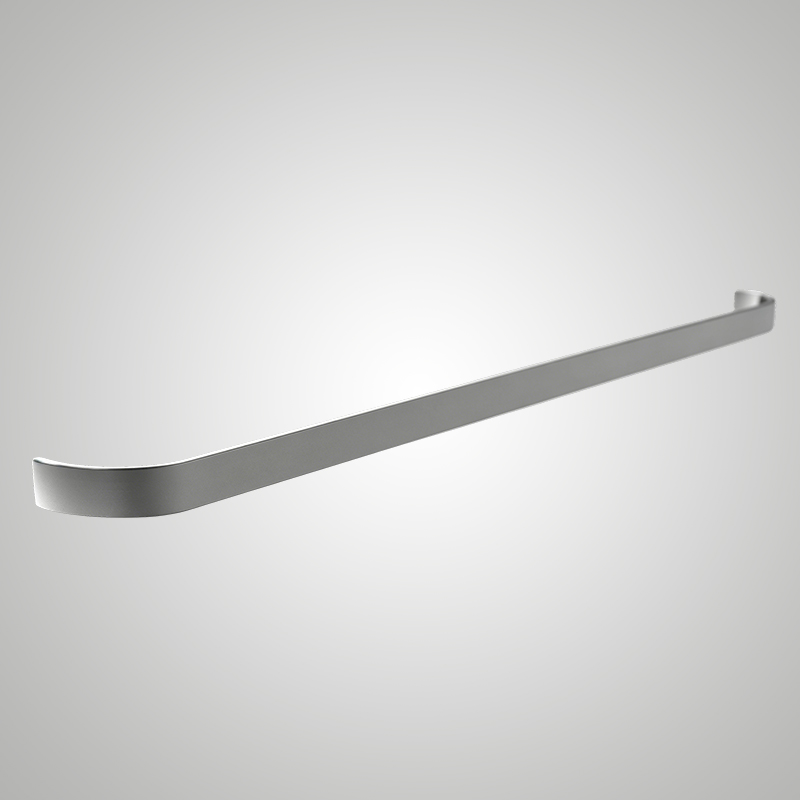
TO-F003
Understanding the Role of an Elevator Handrail
An elevator cabin is a compact public space used by people of different ages, physical abilities, and travel purposes. Passengers may enter while carrying luggage, pushing a trolley, using a wheelchair, accompanying a child, or adjusting their balance during acceleration and deceleration. A suitable handrail offers a convenient support point without obstructing movement or making the cabin feel crowded.
In passenger elevators, the handrail contributes to a sense of security and order. In hospital elevators, it can support patients, visitors, medical staff, and equipment movement. In home villa elevators, it can complement residential decoration and provide a practical detail for family members. In panoramic elevators, the handrail must work with glass, metal, lighting, and scenic views without distracting from the architectural environment.
Handrails also influence the way users evaluate elevator quality. Passengers may not know the technical details of a traction machine, control system, or safety circuit, but they immediately notice whether the handrail feels solid, smooth, clean, and properly finished. A loose fitting, rough edge, uncomfortable profile, or poorly coordinated color can reduce confidence in the entire elevator. Conversely, a carefully engineered handrail can make the cabin feel more complete and professionally finished.
For this reason, the performance of an elevator handrail should be assessed through several dimensions: ergonomics, structural stability, surface quality, visual integration, cleaning convenience, installation accuracy, adaptability, and long-term service support. The TO-F003 concept addresses these dimensions as part of a comprehensive elevator manufacturing system.
Product Overview of the TO-F003 Elevator Handrail
The TO-F003 is an elevator handrail intended for integration into elevator cabin interiors. Its application is not limited to one elevator category. Depending on the project design and confirmed technical requirements, it may be used in passenger elevators, panoramic elevators, observation elevators, hospital elevators, home elevators, cargo elevators, car elevators, escalators, moving walk systems, and related elevator interior projects.
The product is particularly suitable for projects that require a clean, coordinated, and dependable handrail solution. It may be incorporated into a complete cabin interior package or selected as an individual component for a renovation or replacement project. This flexibility allows buyers to align the handrail with the cabin’s wall panels, floor materials, ceiling design, lighting arrangement, control panel, protective features, and accessibility requirements.
Because elevator interiors vary significantly from one project to another, a handrail should not be evaluated only by its appearance in a catalog image. Important considerations include cabin width, wall structure, mounting location, passenger flow, intended use, cleaning procedures, local regulations, and the relationship between the handrail and other interior components. The TO-F003 product can be discussed with the manufacturer as part of a project-specific solution so that dimensions, finishes, installation details, and compatibility requirements can be reviewed before production.
| Evaluation Area | Importance in an Elevator Project | TO-F003 Project Value |
|---|---|---|
| Passenger support | Helps users maintain balance and feel secure during elevator movement. | Provides a dedicated support element for a wide range of cabin applications. |
| Ergonomics | Determines whether the handrail feels natural and comfortable in daily use. | Can be selected and coordinated according to the intended cabin and user environment. |
| Interior coordination | Affects the visual unity of the cabin. | Suitable for integration with modern elevator decoration and customized interior schemes. |
| Surface maintenance | Influences cleaning efficiency and long-term appearance. | Designed for use in environments where regular cleaning and appearance control are required. |
| Installation | Impacts project speed, safety, and serviceability. | Can be reviewed together with cabin structure and installation requirements. |
| Application flexibility | Allows one product family to support different building types. | Applicable to multiple elevator categories and project configurations. |
Core Advantages of the TO-F003 Design
Comfort-Oriented Passenger Interaction
The main purpose of a handrail is to provide comfortable support. A suitable design should feel stable without being unnecessarily bulky. It should be easy to grasp or rest a hand on, while leaving adequate space for passengers to stand, move, enter, and exit. This is especially important in elevators with high passenger turnover, where the handrail may be touched thousands of times during its service life.
The TO-F003 is positioned as a handrail solution that combines practical support with a polished interior appearance. When correctly specified for a cabin, it can help create a more welcoming and user-oriented environment. Its presence is valuable for elderly passengers, children, passengers with temporary mobility limitations, and users who prefer an additional point of stability.
Comfort is not determined by shape alone. The installation height, distance from the wall, end treatment, surface finish, and relationship to other interior parts all influence user experience. A professional supplier should therefore consider the complete installation condition rather than treating the handrail as an isolated object. This project-based approach helps the TO-F003 perform more effectively in different cabin layouts.
Stable and Professional Appearance
Elevator interiors are highly visible architectural elements. In commercial buildings, hotels, hospitals, residential developments, shopping centers, and transportation facilities, passengers form an impression of the building while traveling through the elevator. The handrail should support this impression rather than appear disconnected from the rest of the cabin.
The TO-F003 can be incorporated into a variety of design directions, including contemporary, minimalist, technical, commercial, hospitality, and residential styles. Its visual role can be emphasized or understated depending on the selected finish and surrounding materials. For example, a coordinated metallic appearance may support a modern stainless-steel cabin, while a contrasting finish may help define the handrail as an intentional design feature.
Compared with generic components that may be difficult to match with a specific cabin, a professionally developed elevator handrail offers greater opportunities for coordinated design. The manufacturer can evaluate the relationship between the handrail and the broader cabin package, helping customers avoid mismatched colors, inconsistent proportions, or installation details that appear improvised.
Adaptability Across Elevator Categories
One advantage of the TO-F003 product concept is its suitability for varied elevator environments. A passenger elevator may prioritize high-frequency use and easy cleaning. A hospital elevator may require careful attention to hygiene, impact exposure, equipment movement, and accessibility. A home villa elevator may place greater emphasis on interior decoration and quiet residential comfort. A cargo or car elevator may require a more robust project configuration because of heavy-duty operating conditions.
These applications are not identical, and the final handrail specification should be confirmed according to the environment. Nevertheless, a handrail product that can be adapted across categories gives project owners and elevator contractors more procurement flexibility. It can support standardized design language across a building portfolio while still allowing individual cabins to receive appropriate technical treatment.
For panoramic and observation elevators, interior elements must coexist with transparent or visually open cabin structures. A handrail can provide a useful visual reference and a comfortable support point while preserving the intended viewing experience. In escalator and moving walk applications, related handrail requirements may differ from those of a lift cabin, so application-specific engineering review remains important.
Suitable for New Projects and Renovation Work
Elevator modernization projects often require carefully selected replacement components. The existing cabin may have limited space, unusual wall construction, or an interior design that must be preserved. A replacement handrail should therefore be evaluated for dimensional compatibility, mounting method, finish coordination, and maintenance access.
The TO-F003 can be considered for new elevator cabins as well as selected renovation projects. For new construction, it may be included early in the design process so that the cabin wall structure, lighting, control panel, and protective elements are coordinated from the beginning. For renovation work, the project team can provide existing cabin information to determine the most appropriate configuration.
This flexibility helps reduce the risk of purchasing a visually attractive component that later proves difficult to install. A supplier with integrated design and manufacturing capabilities can communicate more effectively between product development, production, and technical service teams, creating a smoother path from product selection to site installation.
Manufacturing Strength Behind the Product
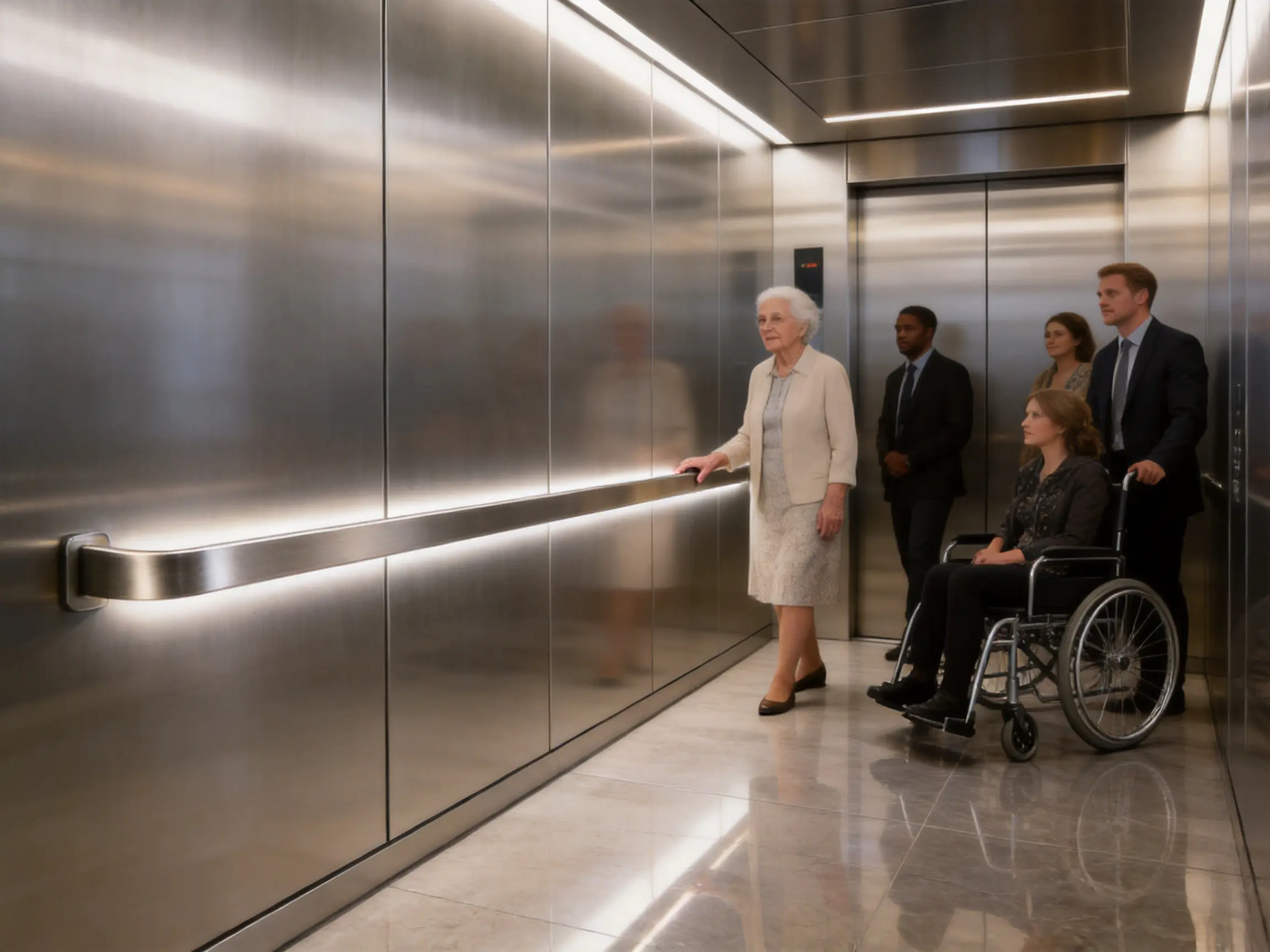
The quality of an elevator handrail depends not only on its visible appearance but also on the systems used to design, manufacture, inspect, package, and support it. Tenau Elevator (China) Co., Ltd. is described as a comprehensive elevator manufacturer integrating design, research and development, manufacturing, marketing, installation, and after-sales service. This integrated structure is significant because it connects a component such as the TO-F003 with the wider technical environment in which it will be used.
The company’s manufacturing base is located in Nanxun, Zhejiang Province, within the Shanghai-Nanjing-Suzhou-Hangzhou economic circle. This location provides access to an established industrial and logistics network while supporting the production and distribution of elevator equipment and related components. A large-scale manufacturing base can contribute to better production organization, more consistent process control, and greater capacity for project-based orders.
Integrated Design and Research Development
Product development begins before the first production operation. Engineers and designers must consider the handrail’s intended use, relationship to elevator cabins, installation requirements, appearance, material behavior, cleaning expectations, packaging, and service needs. An integrated research and development process allows these factors to be examined together rather than handled separately by unrelated suppliers.
For the TO-F003, this type of development environment can support design adjustments for different elevator applications. A project may require a particular length, mounting position, surface treatment, or relationship with a customized cabin panel. The ability to communicate with a manufacturer that understands both elevator systems and interior components can simplify technical evaluation.
Research and development also supports continuous improvement. Feedback from installation teams, maintenance personnel, project contractors, and end users can be used to refine product details. Over time, this may improve ease of assembly, service access, surface durability, packaging protection, and compatibility with different cabin structures.
Intelligent Manufacturing and Industry 4.0 Practices
The company describes its production system as incorporating German Industry 4.0 intelligent manufacturing, automated production lines, big data, Internet of Things technology, and a full closed-loop quality control system. These capabilities are relevant to elevator handrail production because consistency is essential for components that must fit accurately into a finished cabin.
Automation can help reduce variation in repeatable manufacturing tasks and improve production efficiency. Digital production management can support the recording and tracking of manufacturing information. Data-based monitoring can help identify process abnormalities earlier, while connected equipment can improve coordination between production planning and shop-floor operations.
A closed-loop quality control approach is especially valuable. In a closed-loop system, quality information is not treated as a final inspection result only. Instead, information can be used to identify the source of a problem, introduce corrective action, verify the result, and prevent recurrence. This method is more effective than relying solely on visual inspection at the end of production.
For customers, the practical benefit is greater confidence that each batch is produced through a controlled process. While final product requirements must still be confirmed for each order, intelligent manufacturing provides a strong foundation for repeatability and traceability.
Quality Management Systems
The company reports compliance with ISO9001, ISO14001, and OHSMS18001 standards. These management systems represent three important areas: quality management, environmental management, and occupational health and safety management.
ISO9001-oriented quality management supports organized procedures for customer requirements, document control, production planning, inspection, corrective action, and continual improvement. For an elevator handrail, this can help ensure that specifications and project instructions are transferred accurately from the sales and engineering stages into production.
ISO14001-oriented environmental management reflects attention to environmental responsibilities and the control of relevant production impacts. This is increasingly important for building owners, developers, and contractors who evaluate suppliers according to broader sustainability and compliance goals.
OHSMS18001 is associated with occupational health and safety management. Safe manufacturing conditions benefit employees and also contribute to more stable production operations. A supplier that manages workplace risks systematically demonstrates a more mature approach to industrial production.
Certifications and management systems do not replace product-specific inspection, but they provide an organized framework for controlling processes. When combined with technical expertise and manufacturing experience, they strengthen the reliability of the supply chain.
Material, Finish, and Project Specification Considerations
The appropriate material and finish for an elevator handrail depend on the elevator’s operating environment, design concept, cleaning methods, expected traffic, and budget. Buyers should confirm the exact technical specification of the TO-F003 before placing an order, including material grade, dimensions, surface treatment, fixing method, allowable customization, packaging, and applicable standards.
In many elevator interiors, metallic materials are selected because they can provide a durable and contemporary appearance. Surface treatment may affect resistance to fingerprints, stains, cleaning chemicals, abrasion, and visual aging. A finish that looks attractive under showroom lighting should also be assessed under actual building conditions, including artificial light, frequent contact, and regular maintenance.
Hospital and healthcare applications deserve special consideration. Frequent cleaning and disinfection can expose surfaces to chemical agents that may affect certain finishes. The project team should confirm cleaning compatibility and maintenance procedures before selection. Edges, joints, mounting points, and transitions should be designed to minimize areas where dirt or moisture can accumulate.
Residential applications may allow greater emphasis on decorative coordination. A home villa elevator can be designed as an extension of the interior architecture, with the handrail matched to wall panels, flooring, lighting, and furniture finishes. In this setting, the TO-F003 can contribute to a calm and integrated appearance while retaining its practical function.
Heavy-duty applications require careful engineering review. Cargo elevators and car elevators may be exposed to impacts, equipment movement, dust, oil, or other demanding conditions. The handrail’s location and protection should be considered alongside the cabin’s intended loading method. A product selected for such an environment should be confirmed according to the actual operating conditions rather than assumed to be suitable solely because it belongs to an elevator product range.
Comparison with Generic and Competitor Handrail Options
Elevator handrails are available from many sources, including general metal fabricators, interior hardware suppliers, elevator component distributors, and complete elevator manufacturers. The main difference between a dedicated elevator manufacturer and a general component supplier is often the depth of system understanding.
A generic handrail may provide an attractive shape or competitive initial price, but it may not have been developed with elevator cabin tolerances, installation sequencing, passenger flow, maintenance access, or elevator safety requirements in mind. A component that is acceptable in a static architectural setting may require additional adaptation in a moving elevator cabin.
The TO-F003 benefits from being associated with a manufacturer whose primary business includes elevators and related transportation equipment. This can provide several practical advantages:
First, the product can be evaluated in relation to the complete elevator cabin rather than as an isolated decorative item. Second, technical communication may be more direct because the supplier understands elevator structures and project workflows. Third, the handrail can be considered alongside passenger elevators, hospital elevators, panoramic elevators, home elevators, freight elevators, escalators, moving walks, and related interior systems. Fourth, after-sales service and installation support can be coordinated through a broader elevator service structure.
Another competitive advantage is manufacturing depth. A supplier with design, research and development, intelligent production, quality systems, and installation capabilities can offer more than a standard catalog component. This is valuable when a project has unusual dimensions, multiple elevator types, strict delivery coordination, or a requirement for consistent interior styling across several buildings.
Price remains an important purchasing factor, but the lowest initial quotation does not always represent the lowest total project cost. Incorrect dimensions, poor packaging, delayed replacement parts, inconsistent finishes, installation modifications, or premature surface deterioration can create additional costs. A product supported by controlled manufacturing and technical coordination may provide better value over the full service life of the elevator.
| Comparison Factor | Generic Component Source | TO-F003 Through an Integrated Elevator Manufacturer |
|---|---|---|
| Elevator system knowledge | May be limited to the component itself. | Supported by broader experience in elevator design and manufacturing. |
| Cabin coordination | Often requires the buyer or contractor to manage compatibility. | Can be reviewed together with cabin interiors and elevator applications. |
| Customization communication | May depend on general fabrication capability. | Can be discussed through an elevator-focused engineering process. |
| Quality management | Varies significantly between suppliers. | Supported by reported quality, environmental, and safety management systems. |
| Production consistency | Depends on individual workshop controls. | Supported by automated production and intelligent manufacturing practices. |
| Project support | May end after delivery. | Can connect with installation and after-sales service resources. |
| Multi-category procurement | May require several separate suppliers. | Can be considered within a wider elevator and component portfolio. |
Applications in Different Building Environments
Passenger Elevators
Passenger elevators require a balance between capacity, comfort, appearance, and ease of maintenance. The TO-F003 can contribute to a complete interior scheme in office buildings, hotels, apartment complexes, shopping centers, public buildings, and mixed-use developments. In high-traffic locations, the handrail should be specified with attention to surface maintenance, passenger movement, and resistance to repeated contact.
Hospital Elevators
Hospital elevators often carry patients, wheelchairs, beds, medical equipment, visitors, and staff. The handrail must be considered as part of a wider healthcare interior strategy that may include impact protection, easy-clean surfaces, clear circulation paths, and accessible design. The exact material and finish should be reviewed for compatibility with hospital cleaning and disinfection procedures.
Home Villa Elevators
Residential elevators are usually judged by quiet comfort, design coordination, safety, and ease of use. The TO-F003 may be included in a villa elevator where the cabin is designed to match the surrounding residence. A refined handrail can provide a useful support point without making the interior look overly industrial.
Panoramic and Observation Elevators
Observation elevators are often important architectural features. Their interiors may include glass, polished metal, special lighting, and premium decorative details. The handrail should be positioned and finished so that it supports passengers while preserving the visual openness of the cabin. Coordination with transparent surfaces and lighting is particularly important in these applications.
Cargo and Car Elevators
Cargo elevators and car elevators have different operating priorities from standard passenger lifts. They may require protective cabin features and more careful consideration of loading activities. The TO-F003 can be evaluated for these environments as part of a project-specific interior and protection scheme. The final selection should reflect the expected loads, impact risks, cleaning conditions, and maintenance procedures.
Escalators and Moving Walks
Escalators and moving walks use continuous handrail systems with different technical requirements from elevator cabin handrails. However, a comprehensive elevator manufacturer may offer related handrail and transportation solutions across multiple product categories. This can be useful for major developments that require elevators, escalators, moving walks, and interior components from a coordinated supply chain.
Installation and Maintenance Principles
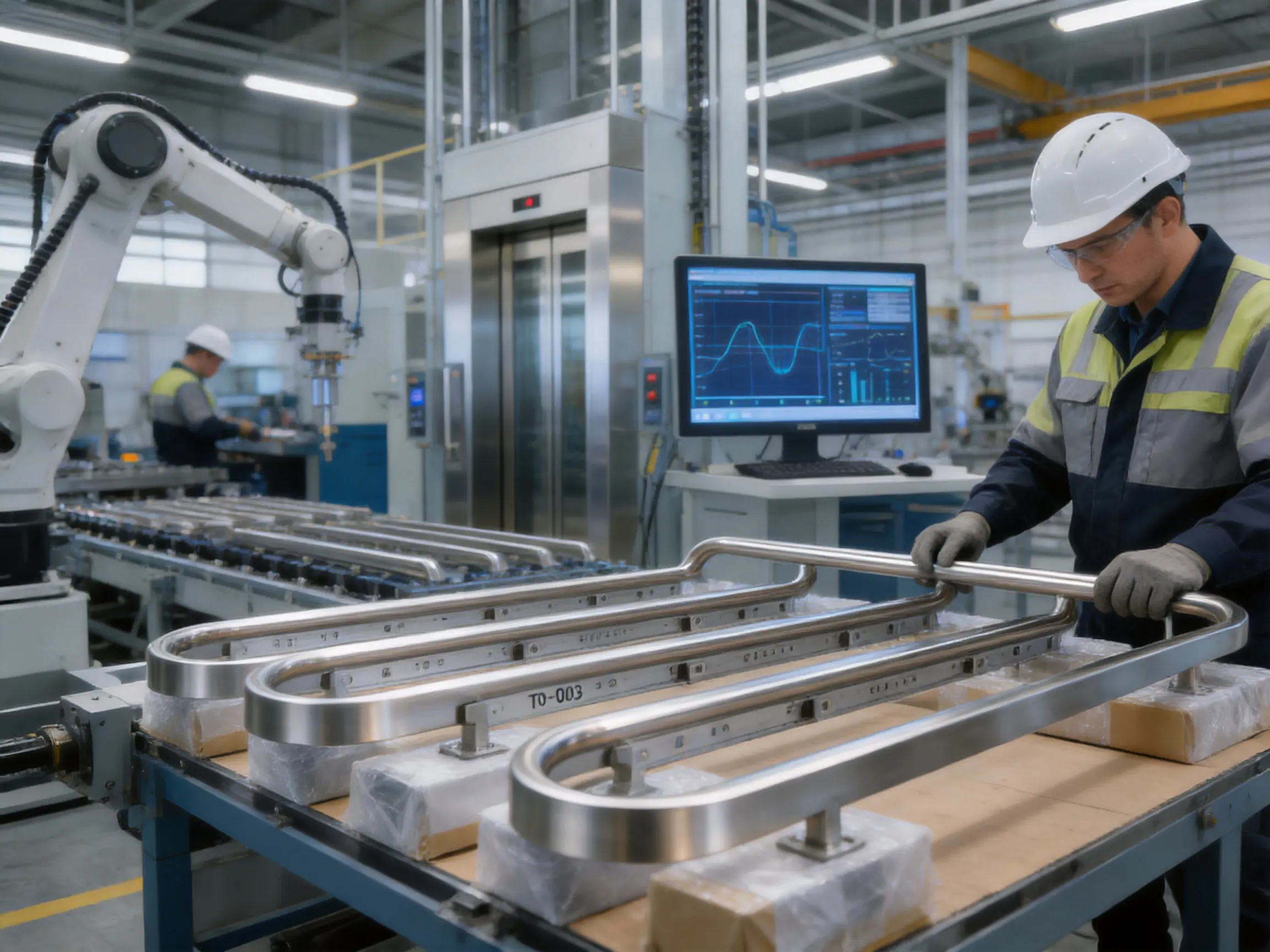
Correct installation is essential to the performance of any elevator handrail. The cabin wall or supporting structure must be prepared according to the approved installation drawing. Mounting points should be accurately positioned, fasteners should be suitable for the structure, and the handrail should be checked for alignment, stability, clearance, and finish condition.
Before installation, the project team should verify the delivered product against the order information. This includes checking model identification, quantity, dimensions, finish, accessories, and packaging condition. Any visible damage or discrepancy should be documented before the component is installed.
During installation, unnecessary force should be avoided. Improper drilling, overtightening, or modification at the job site may affect both appearance and structural stability. If the cabin interior is customized, coordination between the handrail installer and the cabin installation team can prevent conflicts with wall panels, lighting, control stations, ventilation openings, and protective elements.
After installation, the handrail should be inspected for movement, sharp edges, uneven gaps, surface defects, and interference with passenger circulation. The elevator should not be placed into normal service until the complete cabin and elevator system have been inspected according to applicable requirements.
Routine maintenance is generally straightforward but should be consistent. Cleaning should follow the recommended procedure for the confirmed material and finish. Soft, non-abrasive cleaning tools are normally preferable for finished surfaces, while aggressive chemicals, abrasive powders, and unapproved tools should be avoided unless specifically permitted by the supplier. Fingerprints, dust, and stains should be removed regularly so that the handrail remains both hygienic and visually attractive.
Maintenance personnel should periodically check mounting stability and inspect the surface for scratches, corrosion, deformation, or other signs of abnormal use. In high-traffic or demanding environments, inspection frequency may need to be increased. A loose or damaged handrail should be repaired or replaced promptly rather than left in service.
Project Procurement Guidance
When requesting a quotation for the TO-F003, buyers should provide as much project information as possible. Useful information includes the elevator type, cabin dimensions, quantity, installation location, wall construction, desired finish, intended building use, delivery destination, required documentation, and expected installation schedule.
If the handrail is intended for a hospital, hotel, residential tower, public facility, cargo elevator, or car elevator, this should be stated clearly. The operating environment can affect the recommended specification. Customers should also identify whether the product is for a new elevator, a modernization project, or a replacement application.
Technical confirmation should cover the following points:
1. Product model and quantity.
2. Overall dimensions and allowable dimensional variation.
3. Material and surface finish.
4. Mounting method and supporting structure.
5. Relationship to cabin wall panels and other interior components.
6. Cleaning and maintenance requirements.
7. Packaging and transportation protection.
8. Inspection documents and project records.
9. Installation responsibilities.
10. Warranty and after-sales service arrangements.
For international projects, buyers should also confirm export packaging, shipping marks, documentation language, customs requirements, and delivery terms. Clear communication at the quotation stage can reduce misunderstandings and help the manufacturer prepare an accurate production and delivery plan.
Why Manufacturing Integration Matters to Global Buyers
International elevator projects often involve multiple parties, including architects, consultants, general contractors, elevator installers, interior contractors, distributors, and building owners. A component supplier that can communicate across these roles is valuable because the handrail may be affected by decisions made in several parts of the project.
An integrated manufacturer can help connect product selection with elevator design, production, installation, and after-sales support. This does not eliminate the need for local engineering review or compliance with regional regulations, but it can make technical coordination more efficient. Global buyers also benefit from a supplier that understands export production, quality documentation, packaging, and international customer service.
Tenau Elevator (China) Co., Ltd. reports that its products are exported to many countries and regions worldwide. International experience can support the handling of different project expectations, communication practices, packaging requirements, and delivery arrangements. Customers should still confirm the specific certifications and approvals required in their target market for every project.
The company’s product portfolio includes passenger elevators, freight elevators, escalators, moving walks, elevator parts, cabin interiors, and solutions for low-speed, medium-speed, high-speed, and ultra-high-speed applications. This breadth allows the TO-F003 to be considered as part of a larger procurement strategy, especially when a project needs a coordinated supplier for several elevator categories.
Environmental and Operational Responsibility
Modern elevator procurement increasingly considers more than appearance and purchase price. Developers and building owners may evaluate energy use, production responsibility, service life, maintenance requirements, replacement frequency, and environmental management. A durable and maintainable handrail can contribute to a longer-lasting cabin interior and reduce the need for frequent replacement.
The reported use of ISO14001 environmental management principles indicates that environmental factors are included in the company’s management framework. Intelligent manufacturing can also support better production planning and resource control. When production information is managed accurately, material usage, process efficiency, rework, and waste can be monitored more systematically.
From an operational perspective, a handrail that remains stable, easy to clean, and visually acceptable over time can support the overall condition of the elevator cabin. This is particularly relevant in commercial and public buildings, where interior appearance affects user satisfaction and facility management costs.
Design Integration with Elevator Cabin Interiors
The best handrail installation is one that appears to belong naturally within the cabin. Designers should consider the handrail during the early interior planning stage rather than adding it after wall panels and control equipment have already been finalized. Early coordination allows the location, length, supporting structure, and finish to be resolved with fewer compromises.
In a minimalist cabin, the handrail may be designed as a quiet horizontal line that supports the composition without attracting excessive attention. In a premium hotel or residential cabin, it may become a carefully selected accent that complements decorative metal, stone, glass, wood-effect panels, or other materials. In a healthcare environment, function and hygiene may appropriately take priority over decorative complexity.
Lighting also affects the visual result. Direct lighting can emphasize fingerprints, scratches, or uneven surfaces, while diffuse lighting may create a softer appearance. Designers should evaluate samples under lighting conditions similar to the final cabin. Color and finish samples should also be compared with the actual wall and floor materials rather than viewed separately.
Accessibility should remain a central consideration. The handrail should not reduce the usable cabin area or obstruct controls, door openings, emergency equipment, or wheelchair turning space. Its placement should be reviewed against the applicable local accessibility and elevator requirements. The final installation should be safe and convenient for the widest practical range of users.
Quality Assurance from Order to Delivery
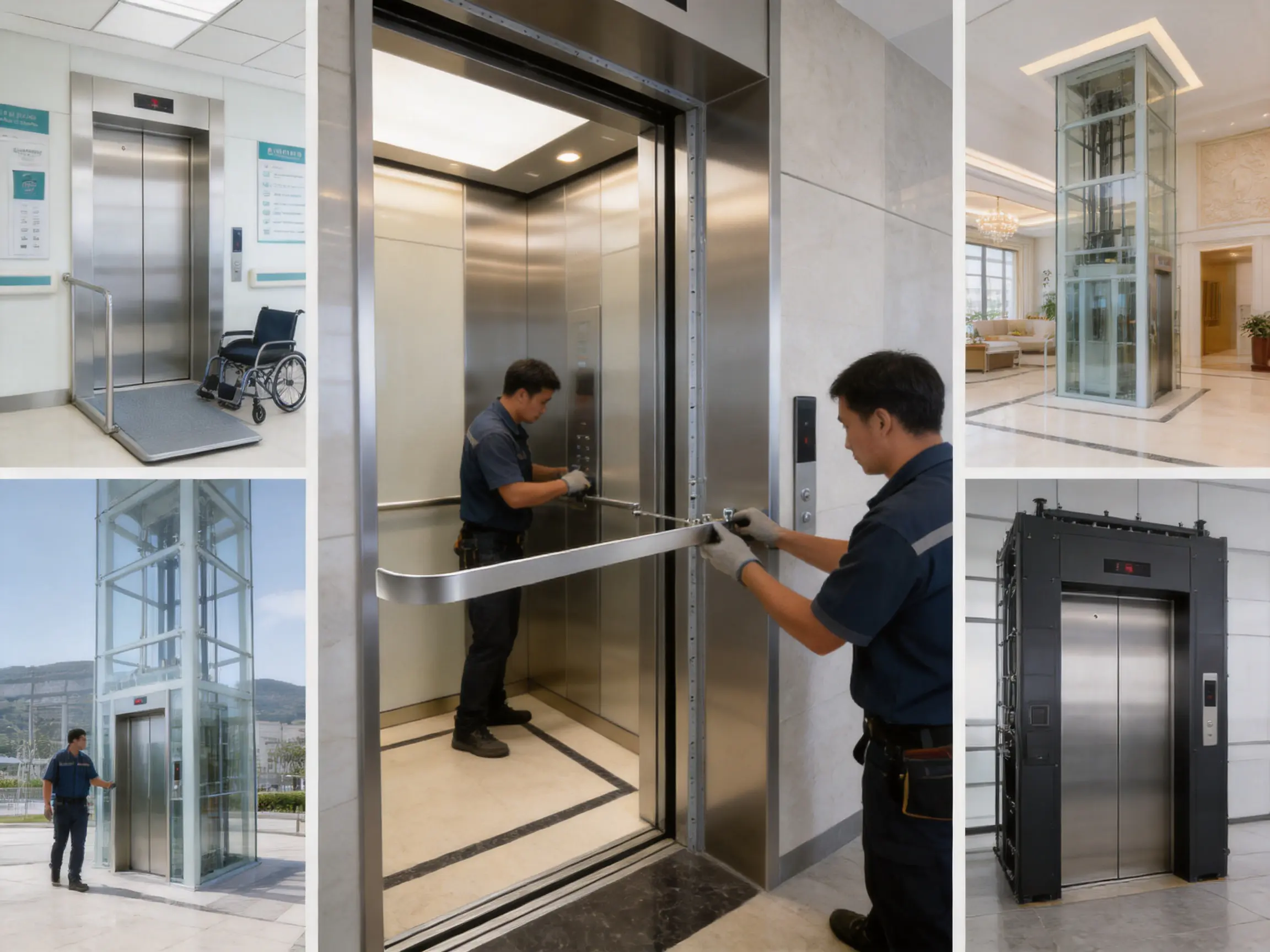
Quality assurance begins with accurate customer information. Product model, drawing revision, finish, dimensions, quantity, and delivery requirements should be documented clearly. A controlled document process helps ensure that the manufactured product corresponds to the approved technical information.
During production, process control is important for dimensions, surface treatment, component assembly, and packaging. Automated equipment and digital production systems can improve repeatability, but inspection remains necessary. Depending on the confirmed specification, inspection may include dimensional checks, appearance checks, mounting verification, surface review, and packaging inspection.
Packaging is particularly important for elevator interior components. Even a correctly manufactured handrail can be damaged by vibration, impact, moisture, or poor handling during transportation. Protective packaging should help prevent scratching and deformation while allowing the product to be identified and checked efficiently at the receiving site.
At delivery, customers should store the product in a clean, dry, and protected location. Components should remain in their original packaging until installation whenever practical. Heavy objects should not be placed on the package, and finished surfaces should be protected from construction dust, welding sparks, paint, and other site contamination.
Long-Term Value for Building Owners and Contractors
For building owners, the value of an elevator handrail is connected to passenger experience, cabin appearance, maintenance effort, and service continuity. A well-selected component can support a professional impression every time the elevator is used. It can also reduce the likelihood of frequent cosmetic complaints or premature replacement.
For elevator contractors, installation efficiency and technical clarity are major concerns. A product that is properly documented and coordinated with the cabin structure can reduce site adjustments. The ability to communicate with an elevator-focused manufacturer may also help resolve questions more quickly when the project contains multiple elevator types or customized interior requirements.
For architects and interior designers, the TO-F003 offers a practical way to include a functional support element within a broader design concept. Its role can be subtle or prominent, depending on the chosen finish and cabin composition. The key is to treat the handrail as part of the user experience and architectural detailing rather than as an afterthought.
For distributors and international partners, a product backed by an established elevator manufacturer can provide access to a broader technical and commercial support system. This may simplify product selection, quotation preparation, project coordination, and after-sales communication.
Frequently Asked Questions
What is the TO-F003?
The TO-F003 is an elevator handrail designed for use in elevator cabin interiors and related vertical transportation projects. It is listed under the elevator handrail category and can be considered for several elevator applications.
Which elevators can use the TO-F003?
The product may be considered for passenger elevators, panoramic and observation elevators, hospital elevators, home villa elevators, cargo elevators, and car elevators. Related elevator projects should be reviewed according to their specific operating conditions. Escalator and moving walk handrail requirements are different and require separate technical confirmation.
Is the TO-F003 suitable for hospital elevators?
It can be evaluated for hospital elevator applications, but the final specification should account for cleaning chemicals, disinfection procedures, accessibility, patient movement, equipment loading, and impact protection. Buyers should confirm the material and finish requirements before ordering.
Can the handrail be used in a home villa elevator?
Yes, it can be considered for home villa elevator interiors. Residential projects may emphasize decorative coordination, comfortable use, quiet operation, and compatibility with the surrounding architecture. Final dimensions and finish should be confirmed with the project requirements.
Can the TO-F003 be customized?
Customization should be discussed with the manufacturer. Possible project considerations may include dimensions, finish, mounting arrangement, and coordination with cabin wall panels. The availability of each customization depends on engineering feasibility, production requirements, quantity, and the approved technical specification.
What information should be provided for a quotation?
Customers should provide the elevator type, cabin dimensions, quantity, intended building use, desired finish, installation conditions, delivery location, and project schedule. Photos, drawings, or existing handrail information are useful for renovation and replacement projects.
How should the handrail be maintained?
Maintenance should follow the confirmed material and finish recommendations. Regular cleaning with suitable non-abrasive methods helps preserve hygiene and appearance. Maintenance teams should also inspect mounting stability, surface condition, edges, and any signs of deformation or abnormal wear.
What manufacturing advantages support the product?
The product is supported by an elevator manufacturer with integrated design, research and development, manufacturing, marketing, installation, and after-sales service capabilities. The company also reports intelligent manufacturing, automated production lines, big data, Internet of Things technology, closed-loop quality control, and compliance with ISO9001, ISO14001, and OHSMS18001 management standards.
Does the manufacturer provide complete elevator solutions?
The company’s product and service scope includes passenger elevators, freight elevators, escalators, moving walks, elevator parts, cabin interiors, and elevator solutions covering different speed categories. This allows customers to discuss the handrail within a broader elevator project.
How can international buyers request more information?
International buyers can contact the export team of Tenau Elevator (China) Co., Ltd. using the company contact information supplied for the product. They should include detailed project requirements so that the manufacturer can provide an appropriate technical and commercial response.
Recommended Selection Checklist
Before approving the TO-F003 for a project, the buyer should confirm that the product meets the intended application and cabin design. The following checklist can help organize the review:
• Confirm the elevator category and operating environment.
• Measure the available cabin wall area and verify clearances.
• Review the required handrail length, position, and installation height.
• Confirm material, surface finish, color, and appearance expectations.
• Check compatibility with wall panels, control panels, lighting, and protective elements.
• Review accessibility and passenger circulation requirements.
• Confirm cleaning chemicals and maintenance procedures for the building.
• Request drawings or technical documents before production.
• Confirm packaging, shipping, delivery, and storage requirements.
• Establish inspection, installation, warranty, and after-sales responsibilities.
• Verify local codes, standards, and project approval requirements.
This process helps ensure that the selected handrail is suitable not only in appearance but also in practical operation. It also gives the manufacturer the information required to provide a more accurate recommendation.
Conclusion
The TO-F003 elevator handrail is a practical component for modern elevator interiors, combining passenger support, visual coordination, application flexibility, and project-oriented manufacturing support. Its value is strongest when it is evaluated as part of a complete elevator cabin rather than as an independent decorative accessory.
Compared with generic handrail options, the product benefits from its connection to an integrated elevator manufacturer with experience in design, research and development, production, installation, and after-sales service. Intelligent manufacturing, automated production lines, data and Internet of Things technologies, closed-loop quality control, and reported ISO management systems provide a strong foundation for consistent production and professional project execution.
The product can be considered for passenger elevators, panoramic and observation elevators, hospital elevators, home villa elevators, cargo elevators, car elevators, and related vertical transportation projects. The final specification should always be confirmed according to the elevator type, cabin structure, building environment, local requirements, finish expectations, and maintenance conditions.
For developers, contractors, designers, distributors, and building owners seeking a reliable elevator handrail solution, the TO-F003 provides a useful combination of function and design potential. When supported by accurate technical communication and correct installation, it can help create elevator cabins that are safer to use, more comfortable for passengers, easier to maintain, and more complete in appearance.
References
1. Product information supplied for the TO-F003 elevator handrail.
2. Company information supplied for Tenau Elevator (China) Co., Ltd.
3. ISO 9001, Quality Management Systems — Requirements.
4. ISO 14001, Environmental Management Systems — Requirements with Guidance for Use.
5. OHSMS18001, Occupational Health and Safety Management System principles.
6. General principles of elevator cabin interior design, accessibility, maintenance, and passenger safety.
7. General Industry 4.0 concepts relating to automated production, data management, connected manufacturing, and closed-loop quality control.
Product: TO-F003

Related Products
Related News
Built on safety, forging trust in vertical mobility.
lf you have any questions or need help, feel free to contact with our team.
 export@tenau.com.cn
 +86-18601458867
 +86-512-65059883
Elevator & Escalator
Factory Add
East of Xicheng Road, North of Lianyi Road, Nanxun Economic Development Zone, Nanxun District, Huzhou City, Zhejiang Province, P.R.China
Copyright © Tenau Elevator (China) Co., Ltd. All Rightd Reserved.
Custom High Quality Elevator Suppliers and World Brand Elevator Company