

 en
 Español
 русский
 中文简体

Modern Wood Veneer Cabin Interior Villa Passenger Lift: A Complete Guide to Design, Safety, and Smart Performance
Content
- 1 1. The Role of a Passenger Lift in Modern Villa Design
- 2 2. Product Overview
- 3 3. Machine-Roomless Design and Efficient Space Planning
- 4 4. Energy Efficiency and Responsible Residential Operation
- 5 5. Quiet Traction and Comfortable Travel
- 6 6. Wood Veneer Cabin Design and Interior Appeal
- 7 7. Comprehensive Safety Architecture
- 8 8. Intelligent Control and User Convenience
- 9 9. Radiation Shielding and Electromagnetic Considerations
- 10 10. Manufacturing Technology and Quality Strength
- 11 11. Advantages Compared with Basic or Conventional Home Lifts
- 12 12. Optional IoT Monitoring and Remote Service
- 13 13. Installation and Project Coordination
- 14 14. Maintenance and Long-Term Ownership
- 15 15. Service Philosophy and Global Support
- 16 16. Applications for the Product
- 17 17. How to Evaluate This Elevator for a Specific Project
- 18 18. Frequently Asked Questions
- 18.1 What type of elevator is the TO-V010?
- 18.2 What does machine-roomless mean?
- 18.3 What materials are used inside the cabin?
- 18.4 Is the wood veneer suitable for daily residential use?
- 18.5 How does the elevator support a quiet home environment?
- 18.6 What happens if the elevator experiences a malfunction?
- 18.7 Can passengers contact someone outside the cabin?
- 18.8 What information is shown inside the cabin?
- 18.9 Does the elevator include overload protection?
- 18.10 Can IoT monitoring be added?
- 18.11 Is the elevator suitable for elderly passengers?
- 18.12 What should be prepared before installation?
- 18.13 How important is maintenance?
- 18.14 What makes the product different from a basic platform lift?
- 19 19. Conclusion
- 20 References
- 21 Product: Modern Wood Veneer Cabin Interior Villa Passenger Lift
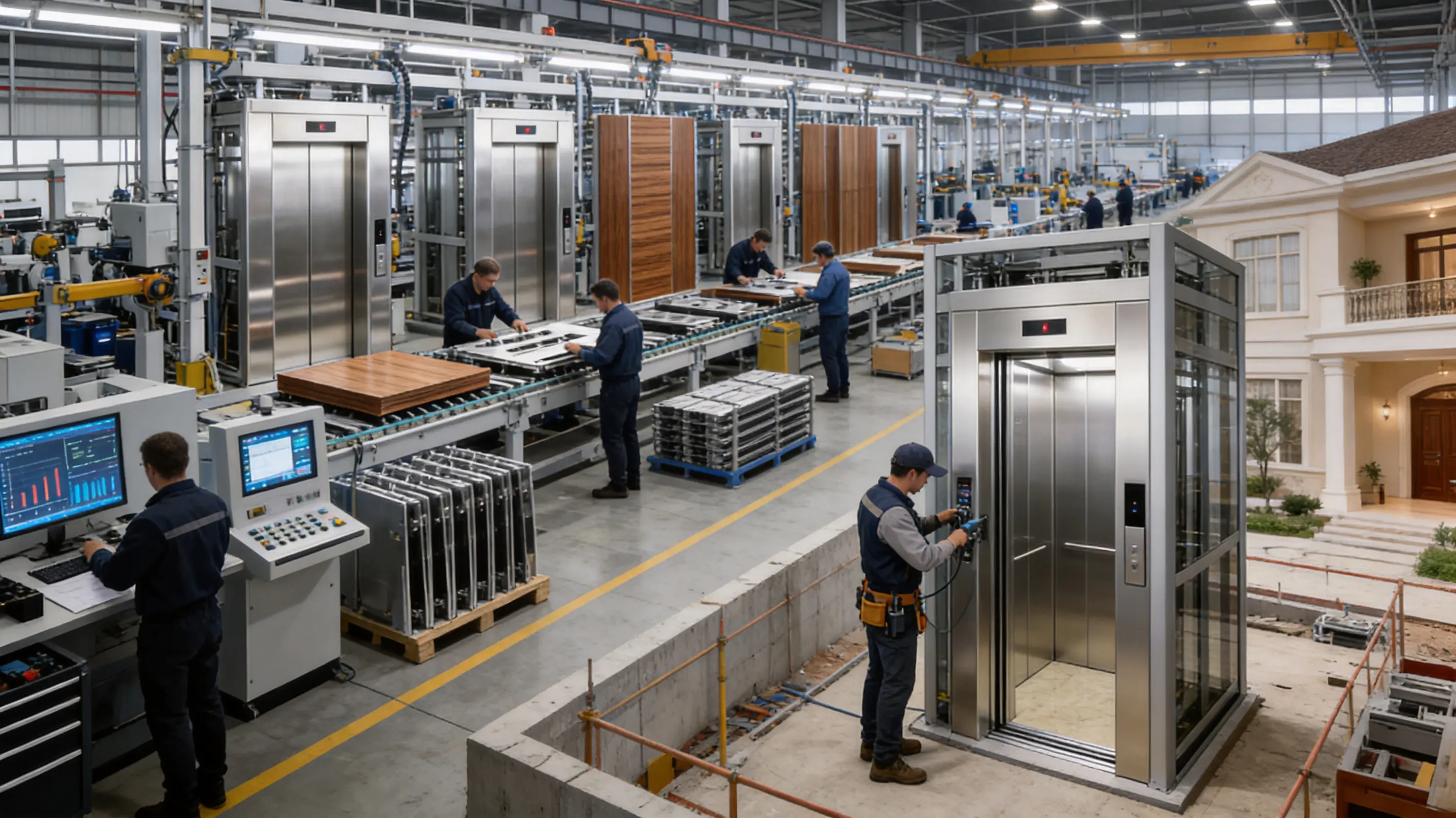
A villa elevator is no longer viewed only as a device for moving between floors. In modern residential architecture, it is an important part of the building’s appearance, accessibility, comfort, and long-term value. A well-designed home lift should operate quietly, occupy limited space, use energy responsibly, and provide dependable protection for every passenger. At the same time, it should complement the interior design rather than appear as a purely industrial installation.
The Modern Wood Veneer Cabin Interior Villa Passenger Lift, identified as model TO-V010, is designed around these expectations. It combines a machine-roomless structure, energy-efficient traction technology, intelligent control, comprehensive safety functions, and a refined cabin interior based on wood veneer, mirror surfaces, and stainless steel. This combination makes it suitable for private villas, luxury residences, townhouses, boutique properties, and other low-rise residential projects where both practical performance and visual quality matter.
Unlike a basic residential platform lift, this product is developed as a complete passenger elevator. It provides a fully enclosed cabin, automatic door operation, floor indication, registered-call display, emergency communication, ventilation, lighting, and a broad range of monitoring and protection functions. Its design also offers a more architectural appearance than many conventional home elevators, allowing it to blend naturally with modern interior schemes.
This article examines the lift’s design concept, technical advantages, cabin materials, safety systems, intelligent functions, manufacturing strengths, installation considerations, service capabilities, and suitability for different residential applications.
1. The Role of a Passenger Lift in Modern Villa Design
Residential buildings are becoming more vertically organized. Many contemporary villas include several floors, rooftop terraces, underground garages, entertainment rooms, bedrooms, offices, and service areas. Stairs remain an important architectural feature, but they cannot always provide convenient access for elderly residents, people with reduced mobility, children, or anyone transporting luggage and household items.
A passenger elevator solves this access challenge while also supporting the building’s long-term usability. It can make each floor more accessible, reduce physical strain, and increase the flexibility of the home. In a multigenerational household, a lift can allow older family members to move independently between floors. In a luxury villa, it can create a smoother connection between living spaces, garages, gardens, and recreational areas.
However, residential elevators face different requirements from elevators installed in large commercial buildings. A villa lift must usually fit into a more limited shaft or structural area. It must also operate with low noise because the elevator may be located close to bedrooms, living rooms, or study spaces. Its interior must be visually attractive, and its control system should be simple enough for everyday household use.
The TO-V010 concept addresses these requirements through several coordinated design choices. The machine-roomless arrangement helps reduce the architectural footprint. The traction system supports smooth movement and controlled acceleration. The intelligent controller coordinates operation and safety functions. The cabin materials provide a warm, residential appearance rather than an institutional or commercial look.
2. Product Overview
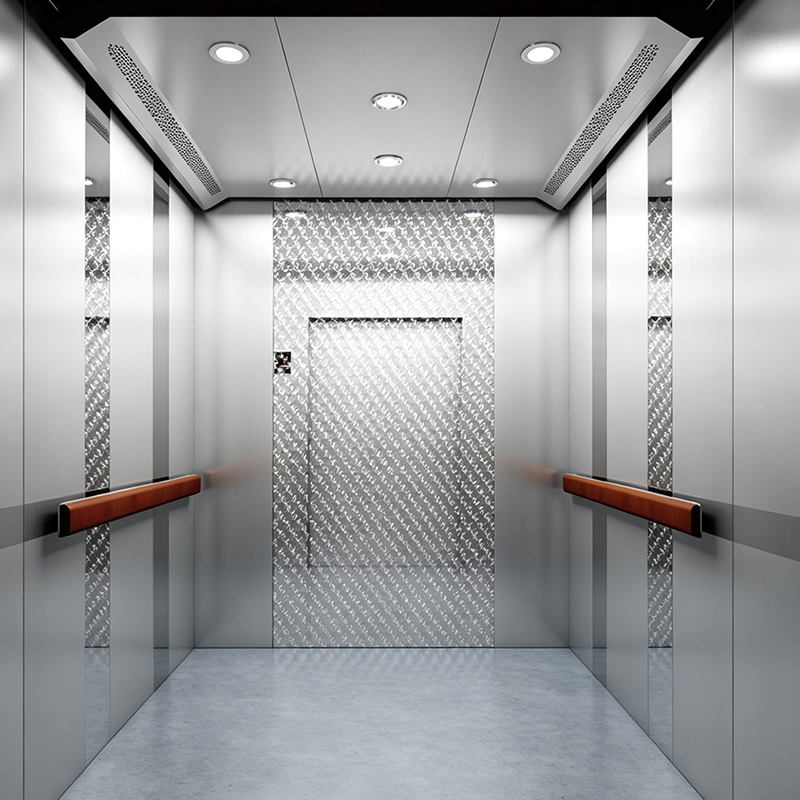
The Modern Wood Veneer Cabin Interior Villa Passenger Lift is a home passenger elevator with an interior design centered on wood veneer. Its main cabin surfaces combine wood, mirror, and stainless-steel elements. The ceiling uses mirror stainless steel with LED downlights, while the floor is finished with PVC. These materials create a balanced visual effect: wood adds warmth, mirror surfaces increase perceived space, stainless steel contributes durability, and LED lighting supports a clean contemporary atmosphere.
The elevator incorporates a machine-roomless and energy-efficient design. By reducing the need for a separate machine room, the system can help architects and homeowners use building space more efficiently. This is particularly valuable in villas where every square meter may be carefully planned for bedrooms, storage, mechanical equipment, or interior decoration.
The product also includes a steel enclosure intended to shield electromagnetic radiation from the control equipment. This design supports a more comfortable residential environment and helps separate the elevator’s electrical control components from surrounding household appliances. The system is engineered to provide safe and radiation-free operation in normal use without interfering with other equipment in the home.
Intelligent control functions support automatic doors, fault memory, shaft self-learning, floor and direction display, and registered-call indication. These functions are not merely conveniences. They also help the elevator maintain predictable operation, assist technicians during inspection, and improve the user’s understanding of the lift’s current status.
Product element | Design or function | Residential benefit |
Elevator type | Villa passenger lift | Convenient vertical transportation for private homes and low-rise residences |
Structural design | Machine-roomless configuration | More efficient use of building space and greater planning flexibility |
Cabin wall | Wood veneer, mirror, and stainless steel | Warm, elegant, and customizable interior appearance |
Ceiling | Mirror stainless steel with LED downlights | Reflective finish and balanced cabin illumination |
Floor | PVC | Practical, easy-to-maintain surface for daily residential use |
Control functions | Automatic doors, fault memory, shaft self-learning, display functions | Convenient operation and easier maintenance |
Emergency functions | Self-rescue, emergency calling, and emergency landing | Improved passenger protection during abnormal conditions |
3. Machine-Roomless Design and Efficient Space Planning
One of the most significant advantages of the product is its machine-roomless architecture. Traditional elevator installations may require a dedicated machine room above the shaft or in another part of the building. In a villa, such a room can complicate the roof design, consume valuable floor area, and increase construction coordination requirements.
A machine-roomless elevator places the necessary traction and control equipment in a more integrated arrangement. This can reduce the amount of additional architectural space required for elevator machinery. The result is a cleaner building plan and greater freedom when arranging the roof, attic, upper-level rooms, or façade.
For architects, this arrangement can simplify the relationship between the elevator shaft and the surrounding structure. For homeowners, it can preserve more usable space. For contractors, it can reduce the number of separate rooms that must be built, waterproofed, ventilated, finished, and maintained.
The machine-roomless approach is especially beneficial in renovation or extension projects. Existing buildings often have limited space for a new mechanical room. A compact elevator solution may make it easier to integrate vertical transportation without substantially changing the building’s external appearance.
Space efficiency does not mean that performance is sacrificed. The lift uses a traction system designed for controlled movement and smooth running curves. The traction arrangement supports comfortable starts, stops, and floor-to-floor travel. In a villa environment, where passengers are often close to living spaces, the integrated layout also contributes to a more discreet installation.
4. Energy Efficiency and Responsible Residential Operation
Energy consumption is an increasingly important consideration for homeowners, property developers, and architects. A residential elevator may not operate as continuously as a commercial lift, but its efficiency still affects the building’s overall environmental performance and operating cost.
The TO-V010 is described as an energy-efficient elevator. Its traction-based design, intelligent control functions, and efficient operating logic are intended to reduce unnecessary energy use during daily service. The machine-roomless concept may also reduce the need to power and ventilate a separate equipment room, depending on the building’s overall design and local requirements.
Intelligent control helps the lift respond to actual passenger demand. Automatic door functions can reduce unnecessary open time, while call registration and floor indication make operation more organized. The control system also uses shaft self-learning to understand operating conditions and support accurate travel management.
Energy efficiency should be considered together with durability. A lift that consumes less energy but requires frequent repairs may not provide a sustainable long-term solution. The product’s design therefore combines efficient operation with a steel control enclosure, fault detection, overload protection, and a structured quality-control approach. Reliable components and accurate manufacturing help reduce the likelihood of avoidable downtime and premature replacement.
For homeowners, a responsible elevator choice includes more than the initial purchase price. Important considerations include electricity consumption, maintenance requirements, expected service life, replacement-part availability, cabin durability, and the ability to diagnose faults efficiently. A product designed with these factors in mind can offer stronger value over the entire ownership period.
5. Quiet Traction and Comfortable Travel
Noise is one of the most important differences between a commercial installation and a residential elevator. In a shopping center or office building, elevator noise is usually masked by general activity. In a villa, mechanical sounds may be noticeable in bedrooms, corridors, and family rooms.
The TO-V010 uses a noise-reducing traction system and smooth running curves to improve the passenger experience. Controlled acceleration and deceleration help prevent abrupt movements at the beginning and end of a journey. A smooth ride is particularly important for older passengers, young children, and people who may feel uncomfortable with sudden changes in speed.
Comfort also depends on accurate leveling. When the cabin arrives at a floor, it should align with the landing in a stable and predictable way. This helps reduce trip hazards and makes it easier to move luggage, shopping bags, wheelchairs, or other household items into and out of the cabin.
Ventilation and lighting further contribute to comfort. The cabin includes lighting and ventilation functions, allowing passengers to travel in a bright and adequately aired space. The LED downlights in the ceiling can provide a clean visual environment while the reflective ceiling surface helps distribute light across the cabin.
The combination of low noise, smooth movement, adequate lighting, ventilation, and automatic doors gives the elevator a more refined character. It is intended to feel like an integrated part of the home rather than a separate industrial machine.
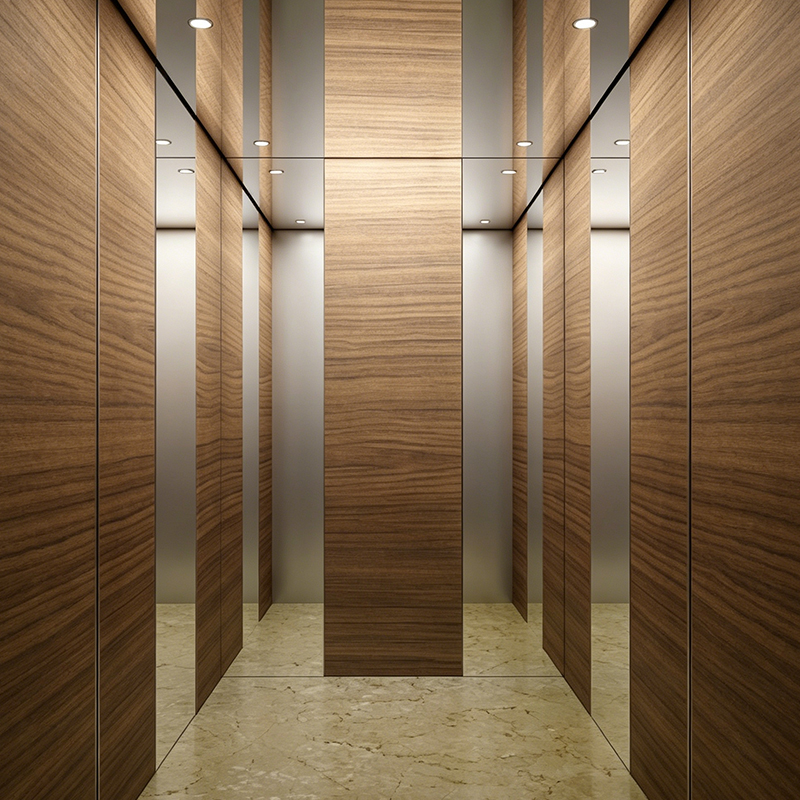
Modern Wood Veneer Cabin Interior Villa Passenger Lift
6. Wood Veneer Cabin Design and Interior Appeal
The visual character of a villa elevator matters because the cabin is experienced repeatedly by residents and visitors. A plain metal cabin may be functional, but it may not match the quality or style of a carefully designed home. The TO-V010 addresses this issue through a modern wood veneer cabin interior.
Wood veneer provides a warmer and more natural appearance than a fully metallic interior. It can complement timber flooring, wood doors, cabinetry, wall panels, and other residential materials. Depending on the selected veneer tone and grain, the cabin can support minimalist, contemporary, classic, luxury, or transitional interior schemes.
Wood also creates a sense of visual comfort. In a small enclosed space, natural-looking surfaces can make the cabin feel less clinical and more connected to the surrounding home. The inclusion of mirror and stainless-steel elements prevents the interior from appearing visually heavy. Mirrors can increase the perception of space, while stainless steel adds a crisp and durable detail.
The cabin design is flexible and can be adapted to different aesthetic preferences. A darker wood veneer may create a sophisticated atmosphere in a luxury villa. A pale veneer can make the cabin feel brighter and more understated. Mirror panels can be used to reinforce a spacious appearance, while brushed or polished stainless steel can provide a more technical accent.
Material selection must balance beauty with daily practicality. Residential elevators experience repeated contact from passengers, luggage, furniture, cleaning equipment, and household traffic. The combination of wood veneer, mirror, stainless steel, and PVC allows different surfaces to perform different roles. High-contact areas can benefit from durable metal details, while decorative sections provide the desired warmth and visual distinction.
The PVC floor is a practical choice for everyday residential use. It can be cleaned efficiently and is suitable for a cabin that may carry shoes, shopping bags, small furniture items, or other household objects. The floor finish can also be coordinated with the broader interior palette.
6.1 Ceiling and Lighting
The ceiling uses mirror stainless steel with LED downlights. This design combines reflectivity, durability, and functional illumination. LED lighting generally provides efficient operation, long service life, and a clean appearance suitable for modern residential interiors.
Good lighting is important for both comfort and safety. Passengers should be able to see control buttons, floor displays, door edges, and objects they are carrying. A well-lit cabin also feels more welcoming, especially during nighttime travel.
6.2 Wall Materials
The car wall specification includes wood veneer, mirror, and stainless steel. This multi-material approach provides opportunities for visual zoning. Wood can act as the main decorative surface, mirror can enlarge the perceived cabin volume, and stainless steel can frame panels or protect areas that receive frequent contact.
These materials also offer design flexibility for different projects. A villa developer may prefer a consistent standard cabin across several properties, while a private homeowner may want the elevator to coordinate with a specific interior concept. The product’s material combination supports both approaches.
6.3 Floor Finish
The PVC floor provides a practical foundation for the cabin. It is suitable for regular cleaning and can contribute to a neat, finished appearance. Floor material should be selected with attention to slip resistance, maintenance routines, and compatibility with the intended project specification.
7. Comprehensive Safety Architecture
Safety is the central requirement for any passenger elevator, and it is particularly important in a private residence where users may include people who are unfamiliar with elevator equipment. The product incorporates multiple layers of protection rather than relying on a single safety feature.
Fault detection helps the controller identify abnormal operating conditions. Overcurrent and overload protection are designed to respond when electrical or load conditions exceed permitted levels. Anti-slip and anti-reverse systems help protect against undesirable movement conditions. Door-block protection helps manage situations in which the doors cannot operate normally.
Emergency landing functions are designed to assist passengers when a malfunction affects ordinary travel. Instead of leaving passengers without a controlled response, the system can support a protective sequence intended to move the cabin to a safe floor where conditions permit. The precise behavior depends on the installation, local code requirements, and emergency power arrangement.
The elevator also includes self-rescue systems. During certain malfunctions or power-related events, these systems are intended to help provide rapid protection by bringing passengers toward a safe landing area. This is a valuable feature for home use because passengers may not have immediate access to building management staff or a trained operator.
An emergency calling system allows passengers to contact people outside the cabin for assistance. Communication is a vital part of elevator safety. If a passenger is delayed inside the cabin, the ability to request help can reduce anxiety and support a faster response.
Safety functions work best when combined with regular inspection and professional maintenance. Electronic protection cannot replace correct installation, periodic testing, proper cleaning, and timely replacement of worn components. The lift should therefore be operated and maintained according to the manufacturer’s instructions and the requirements of applicable local regulations.
Safety or protection function | Purpose | Importance in a villa |
Fault detection | Identifies abnormal operating conditions | Supports safer operation and more efficient troubleshooting |
Overcurrent protection | Helps protect electrical components from excessive current | Reduces electrical risk and supports system reliability |
Overload protection | Responds to excessive passenger or cargo loading | Protects the traction and control system |
Anti-slip and anti-reverse systems | Helps prevent undesirable movement behavior | Improves passenger confidence and ride stability |
Door-block protection | Manages abnormal door conditions | Helps protect passengers during entry and exit |
Emergency landing | Supports movement toward a safe floor in certain emergencies | Reduces the duration of passenger entrapment |
Emergency calling | Connects passengers with people outside the cabin | Provides immediate assistance communication |
Self-rescue system | Supports protective action during malfunctions | Particularly useful in private homes without on-site operators |
8. Intelligent Control and User Convenience
Modern elevator control systems perform much more than simply moving a cabin upward or downward. They coordinate calls, door movement, floor positioning, acceleration, safety checks, fault records, and passenger information. The intelligent control platform in this villa lift is designed to make operation more predictable and maintenance more informed.
Automatic doors make everyday use easier. Passengers can enter and leave without manually handling heavy doors, which is helpful for children, older residents, and anyone carrying goods. Door operation can also improve accessibility when the elevator is used by people with mobility limitations.
Fault memory records relevant operating information for later analysis. This function can help maintenance personnel understand what happened before a malfunction, identify recurring conditions, and plan corrective action. Better information can reduce the time required for troubleshooting and help avoid repeated problems.
Shaft self-learning enables the control system to learn relevant shaft and travel conditions. This supports accurate operation and can be especially useful during commissioning, adjustment, or service procedures. Proper setup by qualified technicians remains essential, but intelligent learning can improve the efficiency of the adjustment process.
The cabin display provides floor information, travel direction, and registered-call status. Clear information improves passenger confidence. Users can see where the elevator is located, whether it is moving upward or downward, and whether their request has been recognized by the system.
The control system also supports optimized speed and comfortable travel. A home elevator does not need to feel aggressive or overly fast. Its priorities are dependable service, smooth motion, accurate stopping, and a pleasant cabin environment. The control strategy is therefore aligned with residential expectations.
9. Radiation Shielding and Electromagnetic Considerations
The elevator’s intelligent control system is housed in a steel enclosure designed to shield radiation. In a residential setting, electromagnetic compatibility is a relevant consideration because the elevator may operate near televisions, routers, audio equipment, computers, smart-home devices, kitchen appliances, and medical equipment.
The steel enclosure helps separate the control equipment from the surrounding environment. This design supports stable operation and is intended to prevent the elevator from affecting other household appliances during normal operation. Appropriate grounding, wiring, installation practices, and compliance testing are also important parts of electromagnetic safety.
It is useful to understand that a properly engineered elevator system should be considered as a complete electrical installation. Shielding is one element, while correct cable routing, grounding, component quality, protection devices, and commissioning procedures all contribute to dependable performance.
For homeowners, this can provide reassurance that the elevator has been considered not only as a mechanical transportation device but also as a piece of intelligent electrical equipment integrated into the home.
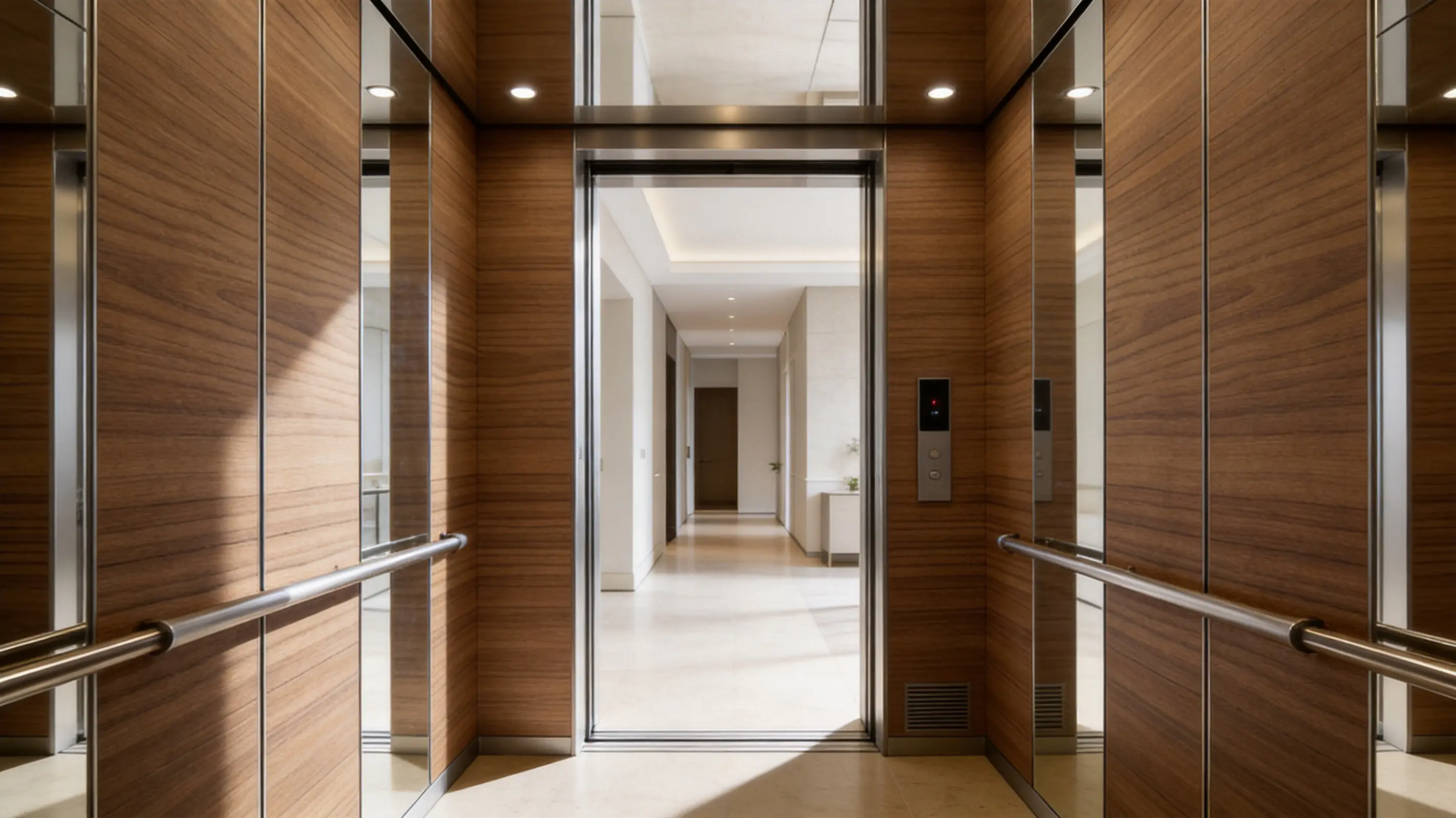
10. Manufacturing Technology and Quality Strength
The performance of a villa elevator depends heavily on the quality of its design, manufacturing, assembly, testing, installation, and after-sales support. Tenau Elevator (China) Co., Ltd. operates as a comprehensive elevator manufacturer integrating design, research and development, manufacturing, marketing, installation, and service.
The company’s manufacturing strategy is based on advanced production capabilities and structured quality management. Its operations include German Industry 4.0 intelligent manufacturing concepts, automated production lines, big-data applications, Internet of Things technology, and a closed-loop quality-control system.
Industry 4.0 manufacturing connects production equipment, process data, product information, and quality records. In elevator manufacturing, this can support more consistent fabrication of structural components, cabin panels, doors, brackets, control cabinets, and other parts. Automation can improve repeatability, while digital data can make it easier to monitor production conditions and trace manufacturing results.
A closed-loop quality system is particularly valuable because it connects inspection findings with corrective action. If a defect or deviation is identified, the information can be reviewed, the cause can be investigated, and process improvements can be introduced. This approach is more effective than treating inspection as a final step only.
Advanced manufacturing also supports customization. Villa projects frequently require variations in cabin dimensions, landing arrangements, finishes, door configurations, control details, and building interfaces. A capable manufacturer must be able to manage customized requirements without losing control of quality or delivery consistency.
The company operates a large-scale manufacturing base and maintains professional teams for product development and production. Its capabilities cover low-speed, medium-speed, high-speed, and ultra-high-speed elevators, as well as passenger elevators, freight elevators, escalators, moving walks, and related solutions. This broad product experience supports a deeper understanding of elevator mechanics, control systems, safety requirements, and project coordination.
The company also follows recognized management standards, including ISO9001 for quality management, ISO14001 for environmental management, and OHSMS18001 for occupational health and safety management. These standards provide a structured framework for process control, environmental responsibility, and workplace safety.
10.1 Research and Development
Research and development are important for maintaining competitiveness in the elevator industry. A modern elevator manufacturer must continue improving traction systems, control software, safety functions, energy performance, cabin materials, monitoring technology, and installation methods.
The company’s product development capabilities cover a wide range of elevator speeds and applications. This broad technical foundation can benefit villa lift development by allowing residential products to use proven technologies from other segments while still being adapted to the specific needs of private homes.
Research and development also support the integration of smart functions. Fault memory, remote warnings, operating data, and condition monitoring can help shift elevator service from purely reactive repair toward more proactive maintenance.
10.2 Automated Production
Automated production lines can improve consistency in cutting, forming, welding, coating, assembly, and inspection processes. Consistent dimensions are important in elevator manufacturing because many components must fit together accurately during final assembly and installation.
Automation can also reduce variation between production batches. For a villa project involving several elevators, this helps maintain uniform cabin appearance and operating characteristics. Digital production records may further improve traceability from component preparation through final testing.
10.3 Full Closed-Loop Quality Control
Elevator quality involves many interconnected factors. A cabin may have excellent visual finishing, but the overall product also requires accurate mechanical alignment, reliable electrical connections, appropriate software configuration, safe door operation, correct leveling, and successful final testing.
A full closed-loop quality-control system treats these elements as part of one process. Design requirements are translated into manufacturing procedures, production results are inspected, test information is recorded, and feedback is used to improve future work. This systematic method supports product reliability and helps protect the manufacturer’s ability to deliver customized solutions.
11. Advantages Compared with Basic or Conventional Home Lifts
The market includes many types of residential lifting equipment, from simple platform lifts to compact screw-driven systems and conventional machine-room elevators. The TO-V010 offers several advantages when compared with more basic alternatives.
First, it is designed as a passenger elevator with a complete cabin environment. A fully enclosed cabin provides a different level of comfort, privacy, and weather protection compared with an open platform. This makes it more appropriate for a premium villa where the lift is expected to function as part of the interior architecture.
Second, the machine-roomless structure offers a more flexible planning solution than a traditional elevator requiring a separate equipment room. This can reduce the impact on the building’s roofline and interior layout.
Third, the wood veneer interior gives the product a more residential and customized appearance. Many basic lifts prioritize mechanical function but provide limited options for decorative integration. The use of wood, mirror, stainless steel, and LED lighting allows the cabin to support a higher-end design concept.
Fourth, the product combines comfort features with intelligent control. Automatic doors, fault memory, shaft self-learning, floor displays, ventilation, and emergency communication create a more complete user experience than a minimal lift controller.
Fifth, the safety architecture includes several protection and rescue functions. This is important because a home elevator may be used by residents without technical knowledge and may not have a building manager available nearby.
Sixth, the product benefits from a manufacturer with experience across multiple elevator categories and speed ranges. This broader engineering background can be an advantage when a project requires coordination with freight elevators, parking lifts, escalators, moving walks, or other vertical-transportation systems.
Comparison factor | Basic residential lifting equipment | Modern wood veneer villa passenger lift |
Cabin environment | May be open or minimally enclosed | Fully designed passenger cabin with lighting and ventilation |
Interior design | Often limited to standard panels | Wood veneer, mirror, stainless steel, and LED design options |
Space planning | May require additional equipment space | Machine-roomless arrangement supports efficient planning |
Ride quality | Can vary depending on drive technology and adjustment | Noise-reducing traction and smooth running curves |
Control intelligence | May provide basic call and movement functions | Includes fault memory, shaft self-learning, automatic doors, and displays |
Safety communication | May be limited | Emergency calling and self-rescue functions |
Manufacturer capability | May focus on one narrow product type | Experience across multiple elevator and moving-transport categories |
12. Optional IoT Monitoring and Remote Service
Connected elevator technology is becoming more valuable in residential applications. Optional IoT technology can enable real-time monitoring and remote warnings, allowing relevant operating information to be reviewed without waiting for a physical inspection.
For a private villa, remote monitoring can be useful when the homeowner travels frequently, when the property is located far from a service center, or when the building is managed by a property company. A warning about an abnormal condition can help maintenance personnel respond earlier and plan the appropriate tools or replacement parts.
IoT functions may support improved service efficiency by making communication between the elevator, homeowner, property manager, and maintenance provider more organized. Instead of relying only on a verbal description of a problem, service personnel may receive system information that helps them understand the situation before arriving on site.
Remote monitoring should always be implemented with attention to cybersecurity, privacy, data protection, and local regulations. The exact capabilities depend on the selected configuration, communication network, project requirements, and service agreement. Nevertheless, the option demonstrates that the elevator platform is prepared for a more connected approach to residential maintenance.
13. Installation and Project Coordination
Successful elevator installation begins before the equipment arrives at the construction site. The architect, structural engineer, elevator supplier, electrical contractor, interior designer, and general contractor should coordinate shaft dimensions, pit conditions, headroom, landing positions, power supply, drainage, ventilation, door openings, and access routes.
The machine-roomless configuration can simplify some aspects of planning, but it does not eliminate the need for accurate civil-work preparation. The shaft must be constructed to the approved drawings, and the supporting structure must be able to accommodate the elevator loads and guide-rail reactions. Door openings must be aligned correctly, and finished surfaces should not interfere with moving components.
Electrical planning is also essential. The project should provide the appropriate power supply, grounding, protection equipment, emergency communication connections, and any required monitoring network. The installer should verify that the site conditions match the technical requirements before commissioning.
Interior finishes require special coordination. Wood veneer and mirror panels should be protected from damage during the later stages of construction. If the elevator is installed before all interior work is complete, the cabin may need temporary protection against dust, impacts, paint, moisture, and construction traffic.
After installation, qualified technicians should conduct testing and commissioning. This typically includes checking door operation, leveling accuracy, travel behavior, emergency functions, displays, communication equipment, load conditions, electrical protection, and fault responses. Final acceptance should follow the applicable national and local elevator codes.
14. Maintenance and Long-Term Ownership
Regular maintenance is necessary to preserve safety, comfort, and reliability. A maintenance program should include inspection of traction components, guide systems, doors, electrical connections, control equipment, safety devices, emergency communication, lighting, ventilation, and cabin finishes.
Fault memory can make maintenance more efficient by providing information about previous operating conditions. Technicians can use this information together with physical inspection and testing to identify trends. If the optional IoT system is installed, remote warnings may provide an additional source of maintenance information.
Homeowners should keep the cabin clean and avoid using unsuitable chemicals on wood veneer, mirror, stainless steel, or PVC surfaces. Heavy or oversized objects should not be carried unless the elevator has been specified and approved for that purpose. The rated load should never be exceeded.
Passengers should keep hands, clothing, toys, and other objects away from moving doors. Children should use the elevator under appropriate supervision. If the doors do not operate normally, passengers should not attempt to force them open. Instead, they should use the emergency calling system and follow the instructions of trained personnel.
A service agreement can help ensure that inspections, adjustments, emergency response, and replacement parts are managed in a planned way. For a premium residential elevator, professional after-sales support is as important as the initial product design.
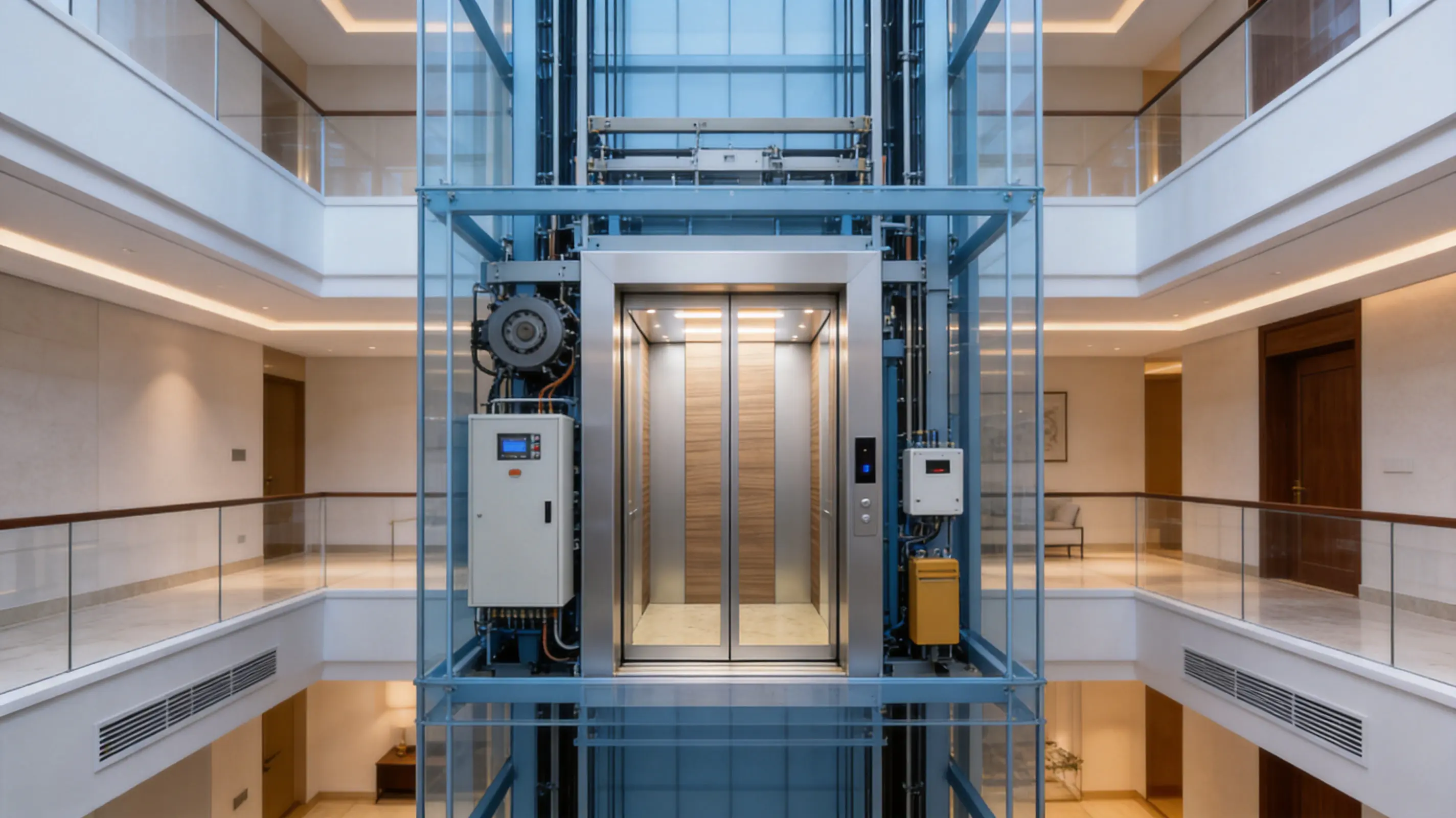
15. Service Philosophy and Global Support
The manufacturer describes its service approach as a full-course, one-to-one tracking system focused on client needs. This means that support is intended to extend across the project lifecycle rather than end when the elevator is delivered.
Early-stage service may include product selection, application assessment, technical communication, customization, and coordination with architectural drawings. During production, project tracking can help organize manufacturing progress, documentation, inspection, and delivery. During installation, technical support can assist with commissioning and acceptance. After handover, maintenance and remote monitoring options can support continued operation.
This service model is valuable for villa projects because residential installations often involve multiple parties and detailed design expectations. The homeowner may not be familiar with elevator terminology, while the architect may focus on appearance and the contractor may focus on construction coordination. A professional supplier can help connect these requirements into one practical solution.
The manufacturer exports products to many countries and regions. International experience can help a supplier understand different project environments, shipping conditions, documentation needs, installation practices, and regulatory expectations. Final compliance must always be verified according to the destination country and the specific installation, but global project experience can provide a useful foundation.
16. Applications for the Product
16.1 Private Villas
Private villas are the primary application for this type of elevator. The wood veneer cabin can be coordinated with the home’s interior palette, while the machine-roomless structure can support space-efficient planning. The elevator can connect bedrooms, living spaces, entertainment areas, garages, and roof terraces.
16.2 Multigenerational Homes
In homes occupied by several generations, a passenger lift can support greater independence for elderly residents. It can reduce reliance on stairs and make it easier to move between floors with personal belongings, groceries, or medical equipment.
16.3 Luxury Townhouses
High-end townhouses often have narrow floor plates and several vertically arranged levels. A compact machine-roomless elevator can provide convenient access without sacrificing too much usable area. Its decorative cabin can contribute to the property’s premium positioning.
16.4 Boutique Residential Properties
Small hotels, guest residences, and boutique developments may use a villa-style elevator when they want a quiet, attractive, and personalized passenger experience. The cabin’s wood veneer and metal detailing can support a hospitality-oriented interior theme.
16.5 Residential Renovation Projects
Renovated homes may have limited options for adding a conventional elevator. A machine-roomless design can provide more flexibility, although the feasibility of each project must be confirmed through a structural and technical assessment.
17. How to Evaluate This Elevator for a Specific Project
Before ordering a villa passenger lift, the project team should collect accurate building information. Important items include the number of floors, total travel height, shaft dimensions, pit depth, headroom, desired cabin size, rated load, door type, power supply, local code requirements, and expected traffic level.
The interior design should be reviewed alongside practical requirements. Wood veneer color, mirror placement, stainless-steel finish, ceiling style, floor material, handrails, control panels, and display arrangements should be considered as part of the complete cabin concept.
Noise expectations should also be discussed. The location of the shaft relative to bedrooms and study rooms can influence the required acoustic treatment. Structural isolation, correct installation, and appropriate maintenance all contribute to quiet operation.
Accessibility requirements should be considered from the beginning. Cabin dimensions, door clear opening, control-button height, handrail arrangements, lighting, floor leveling, and emergency communication can all influence ease of use for people with reduced mobility.
Finally, the project should establish a clear service plan. The owner should understand inspection intervals, warranty coverage, response procedures, replacement-part availability, remote monitoring options, and the responsibilities of the homeowner, installer, and maintenance provider.
18. Frequently Asked Questions
What type of elevator is the TO-V010?
It is a passenger elevator designed for villas and residential applications. It provides an enclosed cabin, automatic doors, passenger controls, floor indication, ventilation, lighting, and multiple safety and emergency functions.
What does machine-roomless mean?
A machine-roomless elevator is designed without requiring a separate traditional machine room. The traction and control equipment are arranged in an integrated configuration, helping reduce the additional architectural space needed for elevator machinery. The exact structural requirements still depend on the project design and applicable regulations.
What materials are used inside the cabin?
The specified cabin materials include wood veneer, mirror, and stainless steel for the car walls. The ceiling uses mirror stainless steel with LED downlights, and the floor uses PVC.
Is the wood veneer suitable for daily residential use?
Wood veneer can be suitable for daily residential use when it is correctly specified, installed, cleaned, and maintained. It provides a warm decorative appearance, while stainless steel, mirror, and PVC contribute durability and practical maintenance characteristics.
How does the elevator support a quiet home environment?
The product uses a noise-reducing traction system and smooth running curves. Quiet performance also depends on correct installation, structural conditions, shaft treatment, component adjustment, and regular maintenance.
What happens if the elevator experiences a malfunction?
The elevator includes fault detection, fault memory, self-rescue functions, emergency landing features, and an emergency calling system. The exact response depends on the type of malfunction, the installation configuration, available emergency power, and applicable safety requirements.
Can passengers contact someone outside the cabin?
Yes. An emergency calling system is included to allow passengers to request assistance from outside the cabin during an emergency or abnormal operating condition.
What information is shown inside the cabin?
The cabin display can show the current floor, travel direction, and registered calls. This helps passengers understand the elevator’s status during operation.
Does the elevator include overload protection?
Yes. Overload protection is listed among the elevator’s safety functions. Passengers should still follow the rated load specified for the final project installation.
Can IoT monitoring be added?
Optional IoT technology is available for real-time monitoring and remote warnings. The specific functions depend on the selected configuration, communication conditions, service arrangement, and local requirements.
Is the elevator suitable for elderly passengers?
Its automatic doors, smooth travel, lighting, ventilation, floor display, emergency calling, and enclosed cabin can support comfortable residential use by elderly passengers. The project should also consider accessibility dimensions and local accessibility standards.
What should be prepared before installation?
The project should confirm shaft dimensions, pit and headroom requirements, structural support, landing openings, power supply, grounding, emergency communication, ventilation, delivery access, and interior-finish coordination. Approved technical drawings should be followed during construction.
How important is maintenance?
Maintenance is essential for safe and reliable operation. Regular professional inspection helps preserve door performance, leveling accuracy, traction behavior, safety functions, electrical protection, emergency communication, and cabin condition.
What makes the product different from a basic platform lift?
The product is designed as a complete passenger elevator with a fully enclosed cabin, decorative interior, automatic doors, intelligent control, smooth traction travel, emergency communication, and a broader set of protection functions. A basic platform lift may provide a different level of enclosure, comfort, appearance, or control capability.
19. Conclusion
The Modern Wood Veneer Cabin Interior Villa Passenger Lift brings together residential aesthetics, efficient space planning, intelligent operation, and comprehensive safety. Its machine-roomless design can help architects and homeowners use building space more effectively, while its noise-reducing traction system and smooth running curves support a comfortable home environment.
The wood veneer cabin distinguishes the product from many purely functional residential lifts. The combination of wood, mirror, stainless steel, LED lighting, and PVC flooring creates an interior that can be integrated into a modern villa rather than hidden as a technical necessity. At the same time, automatic doors, ventilation, displays, fault memory, shaft self-learning, emergency calling, self-rescue, and emergency landing functions provide practical value beyond appearance.
Its manufacturing foundation is another important strength. The supplier combines design, research and development, production, installation, and after-sales service. German Industry 4.0 manufacturing concepts, automated production lines, big-data and IoT applications, recognized management systems, and closed-loop quality control support a structured approach to product reliability and customization.
For homeowners, developers, architects, and contractors seeking a premium home elevator, the product offers a balanced solution: compact planning, attractive design, dependable control, safety-oriented engineering, and service support. The final selection should always be confirmed through a project-specific technical assessment, professional installation, regulatory review, and appropriate maintenance plan.
References
1. Product specification materials for the Modern Wood Veneer Cabin Interior Villa Passenger Lift, model TO-V010.
2. General principles of passenger elevator safety, inspection, installation, and maintenance.
3. ISO 9001 quality management system principles.
4. ISO 14001 environmental management system principles.
5. Occupational health and safety management system principles represented by OHSMS18001.
6. General guidance on Industry 4.0 intelligent manufacturing, automated production, digital traceability, and closed-loop quality control.
7. General guidance on elevator accessibility, emergency communication, passenger protection, and residential building integration.
Product: Modern Wood Veneer Cabin Interior Villa Passenger Lift

Related Products
Related News
Built on safety, forging trust in vertical mobility.
lf you have any questions or need help, feel free to contact with our team.
 export@tenau.com.cn
 +86-18601458867
 +86-512-65059883
Elevator & Escalator
Factory Add
East of Xicheng Road, North of Lianyi Road, Nanxun Economic Development Zone, Nanxun District, Huzhou City, Zhejiang Province, P.R.China
Copyright © Tenau Elevator (China) Co., Ltd. All Rightd Reserved.
Custom High Quality Elevator Suppliers and World Brand Elevator Company