

 en
 Español
 русский
 中文简体

T0-EHD1030A Elevator Operation Panel: Intelligent Control, Reliable Manufacturing, and Flexible Application
Content
- 1 Introduction
- 2 Product Overview
- 3 Advantages Compared with Basic or Poorly Integrated Panels
- 4 Design and Usability Considerations
- 5 Manufacturing Strength and Process Control
- 6 Product and Manufacturing Comparison
- 7 Applications Across Elevator Categories
- 8 Installation and Project Coordination
- 9 Maintenance and Lifecycle Value
- 10 Environmental and Organizational Responsibility
- 11 Why the Manufacturer Matters
- 12 Recommended Selection Process
- 13 Frequently Asked Questions
- 13.1 What is the T0-EHD1030A?
- 13.2 Which elevator applications can use this operation panel?
- 13.3 Can the panel be used in a customized elevator cabin?
- 13.4 What makes an integrated elevator supplier advantageous?
- 13.5 Is the panel suitable for hospital elevators?
- 13.6 How should the panel be maintained?
- 13.7 Does the manufacturer provide complete elevator solutions?
- 13.8 What quality systems are associated with the manufacturer?
- 13.9 Can the panel support international elevator projects?
- 13.10 What information should be provided when requesting a quotation?
- 14 Conclusion
- 15 References
- 16 Product: T0-EHD1030A
Introduction
An elevator operation panel is one of the most visible and frequently used components in an elevator system. It connects passengers with the elevator controller, displays essential travel information, supports floor selection, and contributes significantly to the cabin’s overall appearance. Although it may appear to be a relatively small part of the installation, the operation panel has a direct influence on usability, accessibility, maintenance efficiency, interior design, and the perceived quality of the complete elevator.
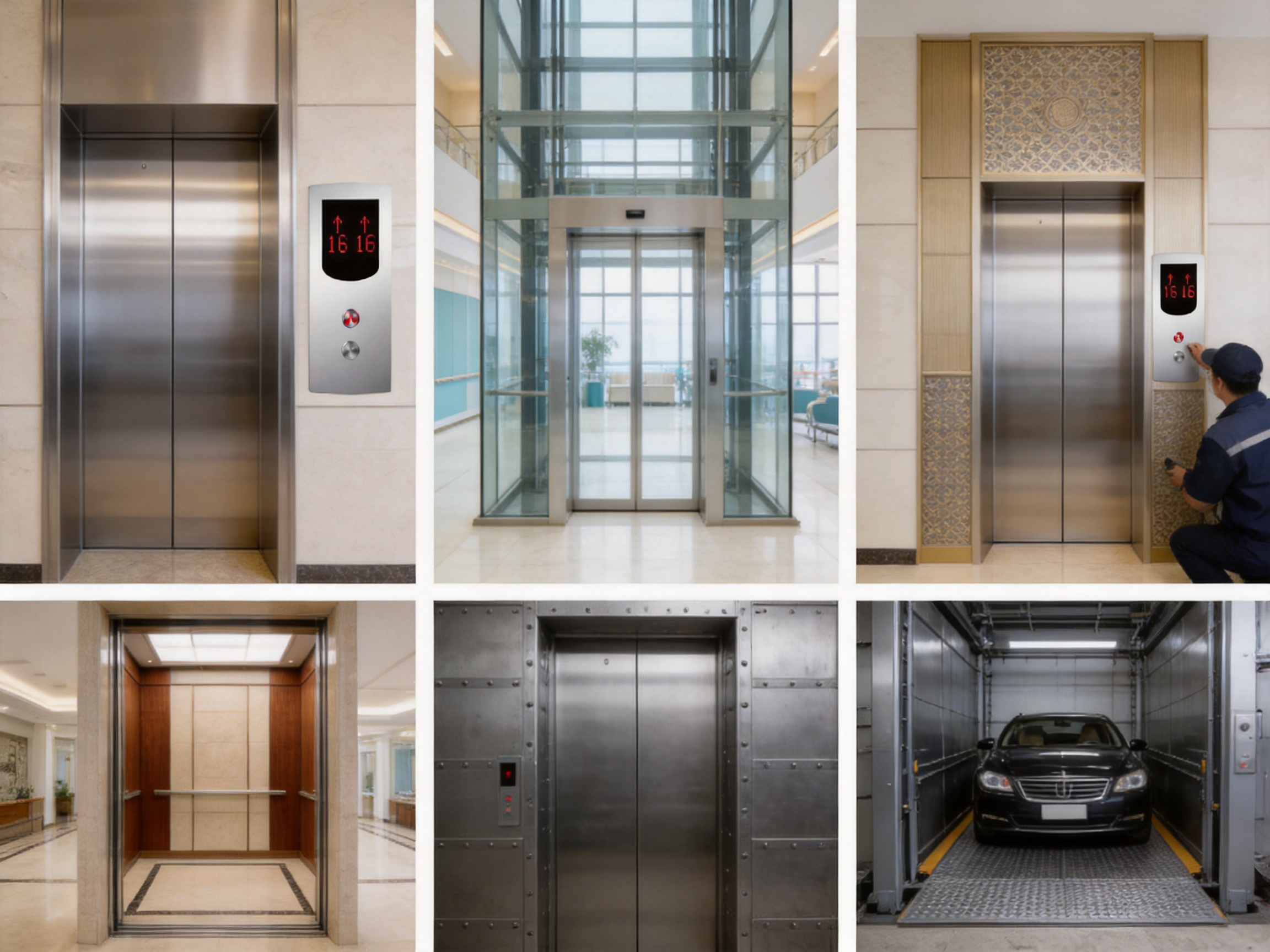
The T0-EHD1030A is an elevator operation panel designed for integration into modern elevator cabins and elevator control environments. It is suitable for projects that require a combination of practical operation, coordinated cabin styling, dependable daily use, and professional manufacturing support. As part of a broader elevator product portfolio, the panel can be considered for passenger elevators, panoramic and observation elevators, hospital elevators, home and villa elevators, cargo elevators, car elevators, and other vertical transportation applications where an organized and reliable user interface is required.
The value of the T0-EHD1030A is not limited to its visible design. Its potential advantages come from the relationship between interface structure, elevator-system compatibility, manufacturing discipline, quality management, and the experience of the company producing and supporting it. A well-designed operation panel must perform consistently during repeated use, remain easy to understand for different passenger groups, coordinate with the surrounding cabin, and support the technical requirements of elevator installation and service.
This article examines the T0-EHD1030A from a product, application, manufacturing, and service perspective. It also explains why an elevator operation panel should be evaluated as part of a complete elevator solution rather than as an isolated decorative component.
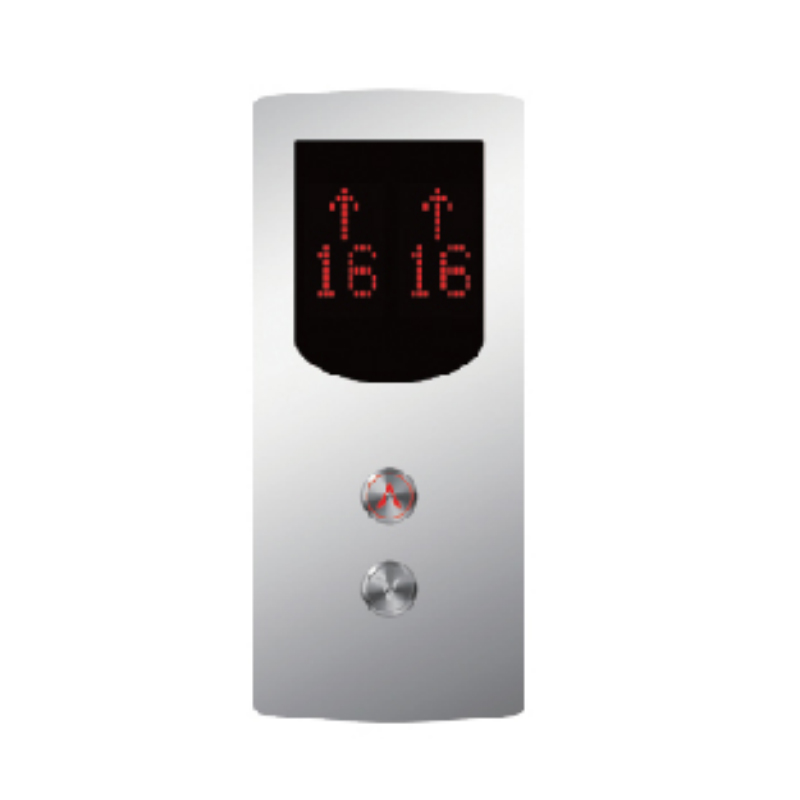
T0-EHD1030A
Product Overview
The T0-EHD1030A belongs to the elevator operation panel category. Its primary purpose is to provide passengers and authorized users with a clear and convenient interface for interacting with an elevator. Depending on the final project configuration, an operation panel may incorporate floor-selection buttons, door-open and door-close controls, alarm or emergency functions, indicator elements, communication-related components, and other interface features required by the elevator system.
In a passenger elevator, the panel normally acts as the central control point inside the cabin. Passengers use it to select their destination floor and activate related functions. In a hospital elevator, the panel must support straightforward operation and practical cleaning requirements while allowing medical staff, patients, and visitors to interact with the elevator without unnecessary complexity. In a home or villa elevator, appearance, compact integration, and ease of use may be especially important. In a cargo or car elevator, the panel may need to withstand a more demanding operating environment and support a design coordinated with the larger cabin and loading process.
The T0-EHD1030A is therefore best understood as a functional and architectural element. It contributes to the elevator’s operating interface while also influencing the cabin’s visual identity. The panel’s layout, button arrangement, visible labeling, installation method, and surrounding finish all affect the passenger experience. When selected and configured correctly, it can help create a cabin environment that is orderly, modern, and consistent with the wider elevator design.
Core Functional Role
The main function of an elevator operation panel is to transform passenger commands into signals recognized by the elevator control system. This process requires clear button identification, dependable activation, appropriate feedback, and stable electrical integration. The panel must also be positioned at a practical height and arranged so that passengers can quickly locate the required controls.
A good operation panel supports intuitive use without requiring passengers to study the interface. Floor buttons should be logically arranged, important functions should be visually distinguishable, and the panel should provide suitable feedback when a command has been accepted. In buildings with high passenger traffic, this clarity can reduce hesitation, repeated button pressing, and unnecessary congestion inside the cabin.
The T0-EHD1030A can be selected as part of a complete elevator configuration in which the operation panel is coordinated with the elevator controller, cabin interior, door system, display, signaling equipment, and safety functions. This coordinated approach is important because an operation panel is not independent of the elevator system. Its electrical connections, communication requirements, dimensions, fixing method, and functional options must all be considered during design and installation.
Visible Interface and Cabin Experience
Passengers often judge elevator quality through the cabin interface. They may not see the motor, controller, guide rails, or safety equipment, but they directly interact with the operation panel every time they use the elevator. A panel that looks organized, feels stable during operation, and provides understandable feedback can improve confidence in the entire elevator.
The T0-EHD1030A is suitable for projects seeking a professional cabin appearance without sacrificing practical operation. Its design can be integrated into a variety of interior concepts, subject to the selected configuration and project requirements. It may be used in contemporary commercial buildings, residential developments, hospitality facilities, healthcare projects, public buildings, and specialized transportation environments.
For architects and elevator contractors, this makes the operation panel an important specification item. The panel should be evaluated according to its appearance, operating logic, integration method, serviceability, and compatibility with the intended elevator model. Selecting the panel at an early stage helps avoid visual mismatches and reduces the risk of later changes to the cabin layout.
Advantages Compared with Basic or Poorly Integrated Panels
Many elevator operation panels can perform basic floor-selection functions. However, basic functionality alone does not necessarily provide a satisfactory long-term solution. Differences in design quality, manufacturing control, electrical integration, user feedback, and after-sales support can become evident after installation. The T0-EHD1030A offers value by being considered within a professional elevator manufacturing system rather than treated as an uncoordinated aftermarket accessory.
1. A More Complete System Perspective
One of the principal advantages of using an operation panel supplied through an integrated elevator manufacturer is the ability to coordinate the panel with the complete elevator. Independent component suppliers may offer attractive panels, but compatibility with the elevator controller, cabin dimensions, wiring arrangement, display system, and emergency functions must then be confirmed separately.
When the operation panel is developed and supplied within a broader elevator product system, the engineering team can consider the panel together with passenger elevators, freight elevators, escalators, moving walks, cabin interiors, and associated control equipment. This reduces the possibility of treating the panel as an isolated component and supports a more consistent project outcome.
2. Improved Visual Coordination
Elevator cabins are often designed around a specific architectural concept. Stainless steel, glass, decorative panels, lighting, handrails, ceiling elements, and floor materials must work together. An operation panel that does not match the cabin can make the interior look unfinished, even if the elevator is technically functional.
The T0-EHD1030A can be evaluated as part of the cabin interior rather than selected only according to its button functions. This approach supports better coordination between the panel and the surrounding materials. It is especially valuable in hotels, offices, residential towers, retail properties, and public facilities where the elevator cabin contributes to the building’s visual presentation.
3. Clearer User Interaction
Passengers need to understand an elevator panel quickly. A clear layout helps users identify floor buttons, door controls, alarm functions, and other available options. This is important for first-time users, children, older passengers, visitors who do not speak the local language, and people operating the elevator under crowded conditions.
The panel’s design can support a more predictable interaction sequence. The passenger enters the elevator, identifies the desired floor, presses the corresponding button, and receives visible or tactile confirmation. The easier this process is to understand, the more comfortable the elevator becomes for daily use.
In commercial and public buildings, intuitive operation can also improve traffic flow. Passengers spend less time searching for controls, and the likelihood of repeated or incorrect inputs is reduced. For building owners, this contributes to a more professional user experience without requiring complicated training or instructions.
4. Suitability for Different Elevator Applications
A versatile operation panel should be capable of supporting different elevator environments. Passenger elevators generally emphasize comfort and appearance. Hospital elevators place greater importance on accessibility, straightforward operation, hygiene, and compatibility with medical transportation procedures. Home elevators may require a compact and coordinated design. Cargo and car elevators may need a robust interface suitable for service personnel and industrial use.
The T0-EHD1030A can be considered across these application categories, with the final configuration determined by the elevator model, project standards, regulatory requirements, and customer specifications. This application flexibility gives contractors and developers a broader design option than a panel intended for only one narrow type of installation.
5. Professional Manufacturing Support
A panel’s quality depends not only on its original design but also on how consistently it is manufactured. Variations in assembly, labeling, wiring, surface treatment, button alignment, or inspection can affect installation and user perception. A professional manufacturing base with documented processes is better positioned to control these details.
The manufacturer associated with the T0-EHD1030A operates within a comprehensive elevator production environment that includes design, research and development, manufacturing, marketing, installation, and after-sales service. This structure enables the operation panel to be supported by engineering knowledge from the wider elevator industry.
For international customers, this can be a meaningful advantage. A supplier that understands complete elevator projects is more likely to recognize the importance of documentation, packaging, installation coordination, project communication, spare parts, and technical support. These factors can be as important as the panel’s visible appearance.
Design and Usability Considerations
An elevator operation panel must be designed for repeated use by a wide range of people. It should support operation under different lighting conditions, accommodate passengers with different levels of familiarity, and remain understandable during busy periods. The design should also be considered in relation to cleaning, maintenance, accessibility, and emergency use.
Button and Control Arrangement
The arrangement of buttons has a direct effect on usability. A logical order allows passengers to locate floor buttons efficiently. Important control functions should be separated or visually differentiated when appropriate. Symbols and labels should be legible, and the layout should avoid unnecessary visual clutter.
For elevators serving many floors, the panel arrangement should allow passengers to scan the available options quickly. For low-rise residential or villa elevators, a more compact arrangement may be appropriate. In either case, the panel must be coordinated with the cabin dimensions and the required accessibility clearances.
Buttons should provide a clear indication that a command has been received. This feedback may be visual, tactile, or both, depending on the design and applicable project requirements. Clear feedback helps prevent passengers from pressing the same button repeatedly and improves confidence in the elevator’s response.
Accessibility and Inclusive Use
Modern elevator design must consider users with different physical abilities. The operation panel should be positioned and configured according to the applicable accessibility requirements of the installation location. Considerations may include control height, button size, contrast, tactile identification, audible information, emergency communication, and the ability to operate the panel from a wheelchair.
The T0-EHD1030A can be incorporated into an elevator design in which these requirements are addressed during engineering. The panel alone cannot determine complete accessibility performance; the cabin dimensions, handrail arrangement, door width, lighting, control logic, and signaling systems must also be considered. Nevertheless, the panel is a central part of an accessible elevator interface and should be selected early enough to support compliance planning.
Cleaning and Daily Maintenance
Elevator panels are touched frequently and may be exposed to dust, fingerprints, moisture, cleaning agents, and occasional impact. For hospitals, transportation facilities, shopping centers, and office buildings, cleaning may occur several times a day. The panel design should therefore support practical cleaning and routine inspection.
A well-integrated panel minimizes unnecessary gaps, exposed wiring, and difficult-to-reach areas. Its surface and control components should be maintained according to the manufacturer’s instructions and the requirements of the building. Proper cleaning procedures help preserve the panel’s appearance and reduce the accumulation of contaminants.
Maintenance personnel also benefit from an organized panel structure. If a button, indicator, or connection requires inspection, clear documentation and a logical internal arrangement can shorten service time. This is another area where support from a complete elevator manufacturer can provide an advantage over an unverified generic component.
Cabin Interior Integration
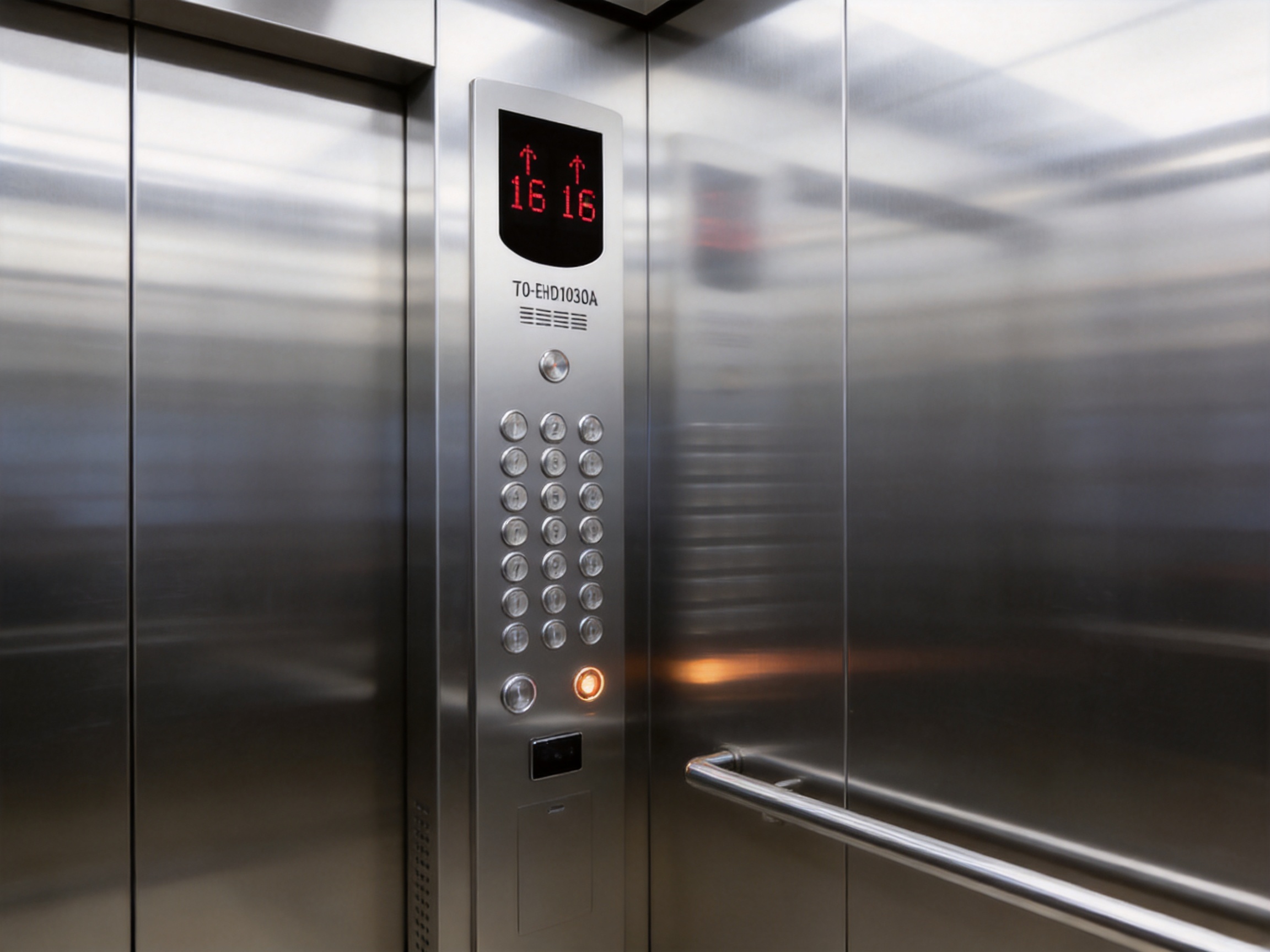
The operation panel should be considered together with the elevator cabin wall, handrail, display, ceiling, lighting, and door entrance. A panel can be visually attractive by itself but unsuitable for a specific interior if its proportions, finish, or location are not coordinated with the cabin design.
For panoramic and observation elevators, the panel may need to complement glass, metal, and transparent architectural elements without interrupting the visual character of the cabin. For hospitals, the panel may be integrated into a durable interior designed for stretcher movement and frequent cleaning. For home elevators, it may be coordinated with residential finishes such as wood, stone, decorative metal, or custom wall surfaces.
The T0-EHD1030A provides a component around which the interior design team can develop a coherent control area. The exact finish, dimensions, and configuration should be confirmed according to the project order and technical drawings.
Manufacturing Strength and Process Control
The performance of an elevator operation panel is closely connected with the production system behind it. A reliable product requires more than a design drawing. It requires controlled material handling, accurate processing, consistent assembly, electrical verification, appearance inspection, documentation, and traceable quality procedures.
Integrated Design and Research Capability
The manufacturer of the T0-EHD1030A originates from Germany and operates as a comprehensive elevator enterprise with capabilities covering design, research and development, manufacturing, marketing, installation, and after-sales service. This integrated structure provides a foundation for developing elevator components with an understanding of how they function in complete vertical transportation systems.
Research and development activities can address several areas relevant to operation panels. These may include panel layout, control-system communication, cabin integration, component selection, installation methods, user interface improvement, and adaptation to different elevator applications. An R&D-oriented manufacturer is better positioned to adjust designs according to project requirements rather than relying only on fixed, generic products.
For customers, design and engineering support can be valuable when a project involves unusual cabin dimensions, a specialized elevator type, a high-traffic building, a hospital environment, or an architectural interior requiring customized coordination. The T0-EHD1030A can be evaluated within this broader design capability.
Intelligent Manufacturing
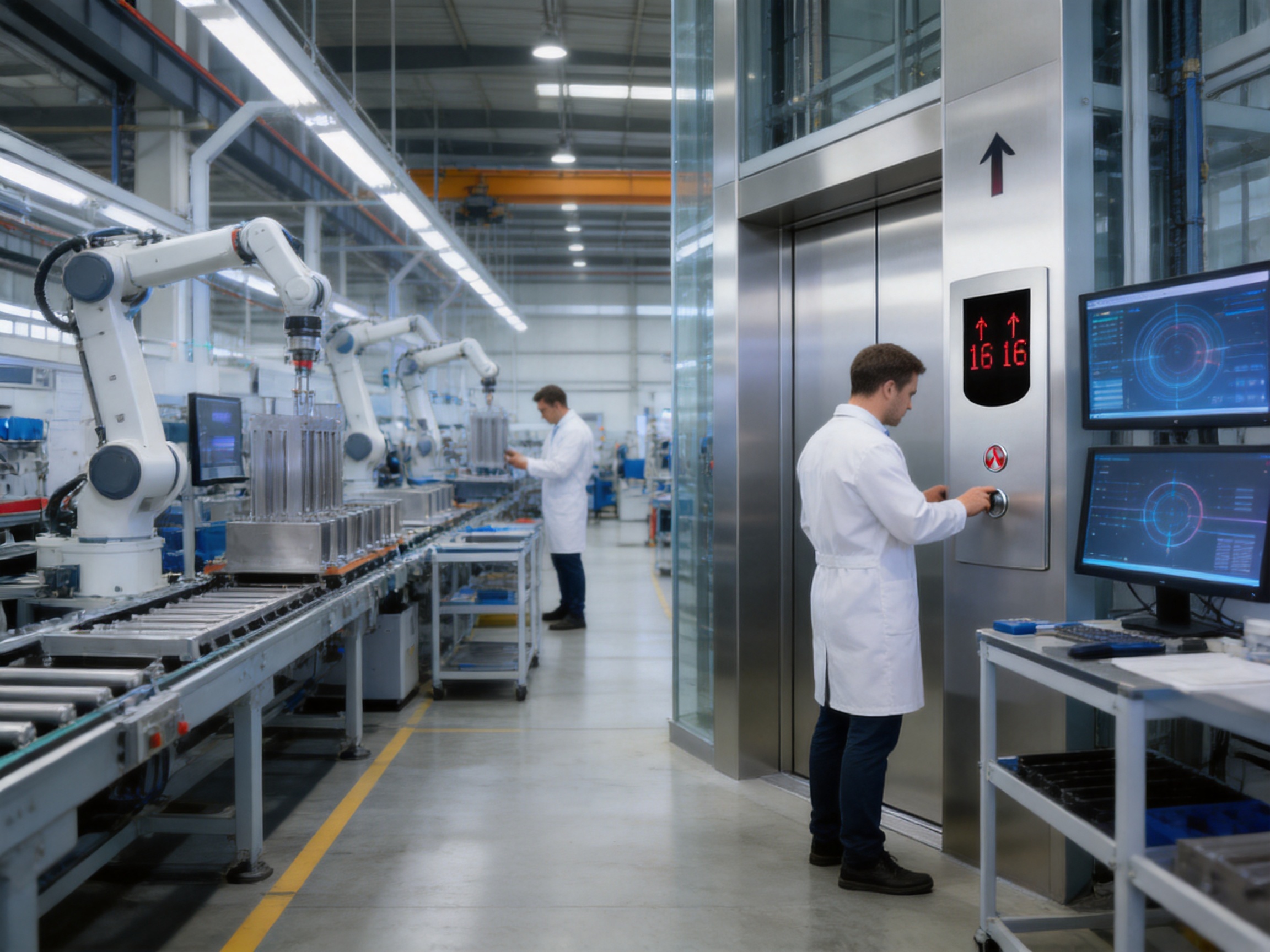
The company operates a large-scale manufacturing base using German Industry 4.0 intelligent manufacturing concepts. Intelligent manufacturing can connect production planning, process execution, data collection, inspection, and quality analysis. In an elevator factory, this approach can help improve consistency across different product categories and production stages.
Automated production lines can support repeatable processing and reduce the effect of avoidable manual variation. Digital production information can help operators follow defined procedures and allow management teams to monitor manufacturing status. Data-based control is particularly useful when a company produces multiple elevator types and a wide range of related components.
For an operation panel, manufacturing consistency may involve accurate cutting or forming, controlled surface treatment, stable component assembly, organized wiring, correct labeling, and reliable final inspection. Industry 4.0 methods do not replace skilled personnel; instead, they combine equipment, software, process standards, and human expertise to create a more controlled production environment.
Automated Production Lines
Automated lines can contribute to consistent production by repeating established operations with controlled parameters. This is important for components that must be manufactured in quantity while maintaining stable dimensions and appearance. Consistency helps the panel fit correctly into the cabin and reduces installation adjustments.
Automation can also improve production efficiency. When manufacturing capacity is organized effectively, the supplier may be better able to support projects with different quantities, delivery schedules, and product categories. A large-scale elevator factory can coordinate operation panels with complete elevator orders, which may help simplify procurement and production planning for customers.
At the same time, automation must be supported by inspection and process monitoring. A machine can repeat an operation, but the quality system must confirm that the result meets the required standard. This is why automated production should be viewed as one part of a complete closed-loop manufacturing model.
Big Data and Internet of Things Technology
The company applies big data and Internet of Things technology within its manufacturing and elevator ecosystem. These technologies can support the collection and analysis of production information, equipment status, quality records, and service-related data. In a modern elevator business, data can help connect design, manufacturing, installation, and after-sales activities.
For customers, the practical benefit is improved organizational visibility. Production records can support internal quality analysis, while service information can help identify recurring issues and improve future products. In the long term, data-driven management can contribute to more responsive engineering and better lifecycle support.
IoT technology is also increasingly relevant to intelligent elevators. Depending on the complete elevator configuration, connected systems may support monitoring, remote diagnostics, operational data collection, or maintenance management. The operation panel is one of the user-facing elements in this ecosystem and must be correctly integrated with the elevator’s broader control and communication architecture.
Closed-Loop Quality Control
A full closed-loop quality control system is intended to identify problems, analyze their causes, implement corrective action, and verify the results. This is more effective than relying only on a final inspection after manufacturing is complete. Quality should be controlled at multiple stages, including design review, material preparation, production, assembly, testing, packaging, installation, and service.
For the T0-EHD1030A, a closed-loop approach can support important quality objectives such as correct component selection, accurate assembly, functional reliability, stable appearance, and proper project documentation. It can also reduce the risk that an issue discovered during installation will be repeated in future production.
Quality management is especially important for elevator components because elevator systems are used repeatedly over long service periods. A component that appears acceptable during a brief inspection must also remain suitable for ongoing operation, maintenance, and replacement support. A disciplined manufacturing system helps address these lifecycle requirements.
Management System Certifications
The company reports compliance with ISO9001 quality management, ISO14001 environmental management, and OHSMS18001 occupational health and safety management standards. These systems represent structured approaches to quality, environmental responsibility, and workplace safety.
ISO9001-related processes can support controlled documentation, customer requirement review, process management, inspection, corrective action, and continual improvement. ISO14001 emphasizes environmental management and the control of relevant environmental impacts. OHSMS18001 relates to occupational health and safety management within the organization.
Certifications do not replace product-specific evaluation, technical documentation, or project testing. However, they indicate that the manufacturer has established formal management frameworks rather than relying solely on informal production practices. For international elevator projects, this can strengthen confidence in the supplier’s organizational maturity.
Product and Manufacturing Comparison
The following table summarizes how the T0-EHD1030A can be evaluated against a basic, non-integrated operation panel. The comparison is presented as a purchasing and engineering framework. Actual specifications, options, dimensions, and compliance details should be confirmed in the final technical documentation for each project.
| Evaluation Area | T0-EHD1030A Within an Integrated Elevator Solution | Basic or Uncoordinated Panel |
|---|---|---|
| System compatibility | Can be reviewed together with the elevator controller, cabin, display, wiring, and related equipment. | May require separate compatibility checks and additional coordination. |
| Cabin design | Can be considered as part of the complete cabin interior and architectural concept. | May create visual or dimensional mismatches with the cabin. |
| Application range | Can be evaluated for passenger, hospital, residential, cargo, car, panoramic, and other elevator projects. | May be limited to a narrow application or generic installation. |
| Manufacturing support | Backed by an elevator manufacturer with design, R&D, production, installation, and service capabilities. | Support may depend on a separate component distributor or intermediary. |
| Quality management | Produced within an environment using structured quality, environmental, safety, and process controls. | Quality procedures and traceability may vary significantly by supplier. |
| Project coordination | Potentially supports consolidated communication for the panel and complete elevator solution. | May require multiple parties to resolve technical questions. |
| Lifecycle service | Can be connected to broader elevator installation, maintenance, and after-sales capabilities. | Replacement and service responsibility may be less clearly defined. |
Applications Across Elevator Categories
Passenger Elevators
Passenger elevators are commonly installed in residential buildings, offices, hotels, shopping centers, public facilities, and mixed-use developments. In these environments, the operation panel must balance frequent use, visual quality, intuitive control, and long-term maintainability.
The T0-EHD1030A can serve as a central cabin interface for passenger elevator projects that require a professional and coordinated control area. Its design should be matched with the number of floors, cabin layout, display arrangement, accessibility requirements, and selected decorative materials. In high-traffic buildings, clear operation and reliable feedback can make a noticeable difference to passenger satisfaction.
Panoramic and Observation Elevators
Panoramic and observation elevators often form part of a building’s architectural experience. Passengers may focus on external views, glass structures, lighting, and decorative details. The operation panel should support convenient control while fitting naturally into the visual environment.
For these elevators, the location and appearance of the panel are especially important. The control area should remain easy to find without unnecessarily distracting from the panoramic experience. Coordination between the panel, transparent surfaces, lighting, and cabin frame can help produce a refined interior result.
Hospital Elevators
Hospital elevators operate under demanding conditions. They may transport patients on beds, medical equipment, visitors, staff, and service materials. The cabin and control interface must support frequent use, clear operation, and practical maintenance.
The T0-EHD1030A can be considered for hospital elevator applications where the panel layout is coordinated with accessibility, cleaning, emergency communication, and medical transportation requirements. The final hospital specification should address the complete cabin, including door dimensions, internal clearances, handrails, protective features, lighting, and control-system functions.
Home and Villa Elevators
Home and villa elevators are often selected as part of a customized residential interior. Homeowners may place greater emphasis on quiet comfort, compact design, decorative coordination, and ease of use. The operation panel should complement the style of the residence rather than appear like a standard industrial fixture.
The T0-EHD1030A can be integrated into a residential elevator concept in which the panel location, cabin finish, button arrangement, and display requirements are determined in advance. A professional supplier can also help align the panel with the selected elevator capacity, travel height, door arrangement, and control system.
Cargo Elevators
Cargo elevators are designed for goods, equipment, materials, and service operations. Their control interfaces may be used by trained operators and may be exposed to a more demanding working environment than a typical passenger elevator.
In these applications, the operation panel should be selected in relation to the cargo cabin, loading conditions, protective interior design, traffic pattern, and safety procedures. The T0-EHD1030A can be evaluated as part of a freight elevator solution where the panel’s layout and integration are adapted to the operational needs of the building.
Car Elevators
Car elevators transport vehicles and require careful coordination between the elevator cabin, entrances, traffic signals, controls, and building circulation. The operation panel may be used by drivers, attendants, or facility personnel, and its placement should support safe and efficient operation.
For car elevator projects, the panel is only one part of the complete system. It should be reviewed together with door controls, traffic management, emergency functions, cabin protection, loading guidance, and the building’s access procedures. A manufacturer with experience across multiple elevator categories can help coordinate these requirements more effectively.
Escalators and Moving Walks
Escalators and moving walks do not use a cabin operation panel in the same way as vertical elevators, but they form part of the same broader vertical transportation portfolio. A supplier capable of manufacturing elevators, escalators, moving walks, and related components can provide more unified support for large commercial, transportation, and public infrastructure projects.
This broader portfolio may simplify procurement and project communication. It also demonstrates that the manufacturer understands different passenger-flow environments and the importance of consistent quality across multiple types of transportation equipment.
Installation and Project Coordination
Correct installation is essential to the performance of any elevator operation panel. Even a well-manufactured panel can experience problems if it is installed with incorrect dimensions, unsuitable wiring, poor alignment, inadequate protection, or incomplete testing. The panel should therefore be incorporated into the elevator engineering process at an early stage.
Technical Confirmation Before Production
Before production, the project team should confirm the elevator model, cabin dimensions, number and arrangement of floors, button configuration, display requirements, emergency functions, accessibility provisions, panel location, finish, and connection details. Any local code or building-owner requirement should also be reviewed.
Drawings and technical documents should clearly identify the panel’s external dimensions, fixing points, cable routing, interface requirements, and relationship with adjacent cabin elements. Early confirmation reduces the possibility of on-site modification, which can affect both appearance and reliability.
Coordination with the Cabin Manufacturer and Installer
The operation panel must align with the cabin wall and supporting structure. The installer should know how the panel is fixed, how cables are routed, and how the unit is connected to the elevator control system. If the panel includes displays, indicators, emergency communication, or special control functions, these elements should be tested as part of the complete elevator.
Coordination is particularly important for customized cabins. Decorative materials may have different thicknesses, installation tolerances, and maintenance requirements. The panel opening and surrounding trim must be designed accurately so that the final result is secure and visually balanced.
Testing and Commissioning
During commissioning, the panel should be tested under normal operating conditions. Tests may include floor selection, button response, indicator operation, door-open and door-close commands, alarm functions, emergency communication, illumination, and system feedback. The test program must follow the applicable technical standards and project requirements.
Testing should not be limited to a single button press. The panel should be checked through repeated operating cycles and in coordination with the elevator controller, doors, display, and safety functions. Any abnormal response, incorrect labeling, loose component, or communication issue should be documented and corrected before handover.
Maintenance and Lifecycle Value
Elevator operation panels are used throughout the elevator’s service life. Their lifecycle value depends on durability, maintainability, spare-part availability, technical documentation, and the supplier’s ability to provide support after installation.
Routine Inspection
Routine inspection should confirm that buttons, indicators, displays, emergency functions, and visible surfaces remain in acceptable condition. Maintenance personnel should check for loose components, damaged surfaces, unusual activation behavior, poor illumination, damaged labels, or signs of moisture or impact.
Inspection frequency depends on the elevator’s usage, building type, local regulations, maintenance plan, and operating environment. High-traffic buildings and healthcare facilities may require more frequent attention than low-use private installations.
Cleaning Practices
Cleaning should follow the recommended methods for the panel’s materials and surface finish. Aggressive chemicals, abrasive tools, excessive moisture, and unsuitable disinfectants may damage surfaces or affect button markings. In hospitals and other sensitive environments, the cleaning method should be confirmed with the equipment supplier and facility management team.
Regular cleaning improves appearance and supports hygienic operation. It should be carried out without allowing liquid to enter electrical interfaces or internal components. Maintenance staff should also ensure that cleaning does not obscure symbols, labels, tactile features, or indicator windows.
Replacement and Spare Parts
Over a long operating period, buttons, indicators, wiring components, or other interface elements may eventually require replacement. A complete elevator manufacturer can offer an advantage if replacement components are documented within the wider elevator service system.
When ordering spare parts, the customer should provide the elevator project information, panel model, installation location, component identification, and photographs when necessary. This helps reduce the risk of supplying an incompatible part. Maintaining accurate records from the original installation can make future service faster and more economical.
After-Sales Support
After-sales service is an important consideration when comparing elevator component suppliers. Technical questions may arise during installation, commissioning, modernization, troubleshooting, or building renovation. A supplier with installation and service capabilities can provide more complete assistance than a company focused only on product shipment.
The manufacturer’s international orientation and export experience are relevant for customers outside China. International projects may involve different languages, standards, documentation practices, shipping conditions, and local installation teams. Clear communication and organized technical support can reduce delays and help maintain the intended product quality.
Environmental and Organizational Responsibility
Elevator manufacturing has environmental and operational responsibilities that extend beyond the product itself. Material use, energy consumption, production waste, packaging, worker safety, and product lifecycle all influence the overall sustainability of a project.
The company’s reported ISO14001 environmental management framework indicates an organized approach to identifying and managing environmental considerations. Although environmental performance must be evaluated through project-specific information, a formal management system provides a basis for continuous improvement and responsible production practices.
Occupational safety is also essential in elevator manufacturing. Production, assembly, testing, warehousing, installation, and maintenance all involve technical tasks and potential hazards. The reported OHSMS18001 framework reflects attention to workplace health and safety management. This is relevant to customers because responsible manufacturing supports continuity, workforce protection, and operational stability.
For building owners and developers, choosing a supplier with structured environmental and safety management can support broader corporate responsibility goals. It may also simplify supplier evaluation when projects require documented management practices or sustainability-related procurement criteria.
Why the Manufacturer Matters
The T0-EHD1030A should not be evaluated only by its external appearance or initial purchase price. The manufacturer’s technical depth, production scale, quality systems, application knowledge, and service capability can significantly affect the total value of the product.
Tenau Elevator operates as a professional comprehensive elevator manufacturer based in Nanxun, Zhejiang Province, within the Shanghai-Nanjing-Suzhou-Hangzhou economic circle. The company’s location provides access to an important industrial and logistics region while supporting manufacturing, engineering, and international export activities.
The company offers passenger elevators, freight elevators, escalators, moving walks, and related elevator solutions. It also reports capabilities in the design, research and development, and manufacture of low-speed, medium-speed, high-speed, and ultra-high-speed elevators. This range indicates experience with different operating conditions, performance requirements, and project categories.
A broad product portfolio can benefit customers managing complex developments. A commercial project may require passenger elevators, service elevators, escalators, and moving walks. A residential development may require passenger elevators and villa elevators. A transportation or public facility may need multiple forms of passenger movement equipment. Working with a manufacturer experienced across these categories can reduce fragmentation in procurement and technical communication.
The company also reports numerous intellectual property rights and exports products to many countries and regions. International experience can support awareness of different customer expectations, project procedures, packaging requirements, and service conditions. For the T0-EHD1030A, this wider business capability provides context for evaluating the panel as an internationally deployable elevator component.
Recommended Selection Process
Customers considering the T0-EHD1030A should use a structured selection process. The first step is to define the elevator application. A passenger elevator in a hotel will have different priorities from a cargo elevator in a factory or a villa elevator in a private residence.
The second step is to confirm the technical interface. This includes the elevator controller, communication method, button quantity, indicator requirements, emergency functions, electrical characteristics, panel dimensions, mounting method, cable routing, and accessibility provisions. These details should be confirmed through the manufacturer’s technical documentation rather than assumed from general product descriptions.
The third step is to coordinate the visual design. The customer should compare the proposed panel with the cabin materials, wall arrangement, lighting, handrails, displays, and door finishes. Samples, drawings, or approved visual references can help ensure that the final panel meets the project’s architectural expectations.
The fourth step is to review manufacturing and quality support. Customers should ask about inspection procedures, testing, documentation, packaging, traceability, spare parts, warranty conditions, and after-sales communication. A reliable component supplier should be able to explain how the product is controlled before shipment and supported after installation.
The final step is to include the panel in the complete elevator acceptance process. Operation, visual condition, labeling, illumination, accessibility, emergency functions, and communication with the elevator controller should all be verified before handover.
Frequently Asked Questions
What is the T0-EHD1030A?
The T0-EHD1030A is an elevator operation panel designed to provide a user interface for elevator control functions. It can be considered for integration into different elevator types, with the final configuration depending on the elevator system, cabin design, project requirements, and applicable standards.
Which elevator applications can use this operation panel?
The panel can be evaluated for passenger elevators, panoramic and observation elevators, hospital elevators, home and villa elevators, cargo elevators, and car elevators. The correct configuration should be confirmed for each application because operating conditions, accessibility needs, control functions, and cabin layouts may differ.
Can the panel be used in a customized elevator cabin?
It can be considered for customized cabins when the dimensions, fixing method, finish, button layout, wiring, and control-system interface are confirmed during the engineering stage. Custom cabin projects should not rely on assumptions; technical drawings and final approval documents are recommended.
What makes an integrated elevator supplier advantageous?
An integrated supplier can review the operation panel together with the elevator controller, cabin, doors, display, safety systems, installation requirements, and after-sales service. This can reduce compatibility risks and simplify communication compared with sourcing a panel separately from a supplier that does not manufacture or support the complete elevator system.
Is the panel suitable for hospital elevators?
The panel may be suitable for hospital elevator projects when configured according to the hospital’s accessibility, hygiene, emergency communication, cleaning, and medical transportation requirements. The complete elevator cabin and control system must be reviewed together to ensure that the project’s technical and regulatory needs are met.
How should the panel be maintained?
Maintenance should include regular inspection of buttons, indicators, displays, emergency functions, visible surfaces, labels, and connections. Cleaning should follow the recommended procedure for the panel’s materials. Liquids, abrasive tools, and aggressive chemicals should not be used unless specifically approved by the supplier.
Does the manufacturer provide complete elevator solutions?
The manufacturer provides a broad range of elevator products and related solutions, including passenger elevators, freight elevators, escalators, moving walks, and elevator components. Its capabilities cover design, research and development, manufacturing, marketing, installation, and after-sales service.
What quality systems are associated with the manufacturer?
The company reports compliance with ISO9001, ISO14001, and OHSMS18001 management standards. These relate respectively to quality management, environmental management, and occupational health and safety management. Product-specific technical requirements and testing should still be confirmed for every project.
Can the panel support international elevator projects?
The manufacturer exports products to many countries and regions and operates an international-oriented business. International customers should confirm local code requirements, documentation, packaging, installation responsibilities, spare parts, warranty conditions, and communication arrangements before placing an order.
What information should be provided when requesting a quotation?
Customers should provide the elevator type, number of floors, intended application, cabin dimensions, desired panel location, button quantity, display and indicator requirements, accessibility needs, preferred finish, quantity, destination country, project schedule, and any applicable technical standards. Detailed information helps the manufacturer propose a more accurate configuration.
Conclusion
The T0-EHD1030A is an elevator operation panel intended to combine practical passenger interaction with coordinated elevator-system integration. Its importance extends beyond the visible control surface. The panel influences usability, accessibility, cabin appearance, installation efficiency, maintenance, and the building owner’s perception of elevator quality.
Compared with a basic or uncoordinated panel, its principal potential advantages come from being evaluated within a complete elevator manufacturing and service environment. This supports closer coordination with controllers, cabin interiors, elevator applications, installation teams, quality procedures, and after-sales resources.
The manufacturing background is equally significant. The associated company combines design, R&D, manufacturing, installation, and service capabilities with German Industry 4.0 intelligent manufacturing, automated production lines, big data, Internet of Things technology, and a closed-loop quality control system. Its reported ISO9001, ISO14001, and OHSMS18001 management systems further demonstrate an organized approach to quality, environmental responsibility, and occupational safety.
For developers, elevator contractors, architects, distributors, and building owners, the best selection decision should consider the complete lifecycle of the product. Technical compatibility, visual coordination, accessibility, maintenance, documentation, spare parts, and service support should be reviewed together. When these factors are addressed during the planning stage, the T0-EHD1030A can become a reliable and visually integrated part of a modern elevator solution.
References
1. ISO 9001, Quality Management Systems — Requirements.
2. ISO 14001, Environmental Management Systems — Requirements with Guidance for Use.
3. OHSMS18001, Occupational Health and Safety Management System Framework.
4. General principles of elevator design, installation, inspection, operation, and maintenance.
5. Industry 4.0 concepts for intelligent manufacturing, production data management, and process traceability.
6. Accessibility principles for elevator controls, passenger interfaces, and public-building transportation systems.
7. Manufacturer-provided product information for the T0-EHD1030A elevator operation panel.
8. Manufacturer-provided information concerning elevator design, research and development, intelligent manufacturing, quality control, installation, and after-sales service.
Product: T0-EHD1030A

Related Products
Related News
Built on safety, forging trust in vertical mobility.
lf you have any questions or need help, feel free to contact with our team.
 export@tenau.com.cn
 +86-18601458867
 +86-512-65059883
Elevator & Escalator
Factory Add
East of Xicheng Road, North of Lianyi Road, Nanxun Economic Development Zone, Nanxun District, Huzhou City, Zhejiang Province, P.R.China
Copyright © Tenau Elevator (China) Co., Ltd. All Rightd Reserved.
Custom High Quality Elevator Suppliers and World Brand Elevator Company