

 en
 Español
 русский
 中文简体

TO-F006 Elevator Handrail: Durable, Comfortable, and Designed for Modern Vertical Transportation
Content
- 1 1. The Role of an Elevator Handrail in Passenger Safety and Comfort
- 2 2. Product Overview of TO-F006
- 3 3. Design Advantages of the TO-F006 Handrail
- 4 4. Advantages Compared with Basic or Poorly Designed Alternatives
- 5 5. Manufacturing Strength Behind the Product
- 6 6. Quality Management and International Production Standards
- 7 7. Application in Different Elevator Environments
- 8 8. Installation and Project Coordination
- 9 9. Maintenance and Long-Term Serviceability
- 10 10. Customization and Specification Considerations
- 11 11. Supply Chain and International Project Advantages
- 12 12. Sustainability and Responsible Manufacturing
- 13 13. Why Choose a Comprehensive Elevator Manufacturer
- 14 14. Recommended Evaluation Process for Buyers
- 15 15. Frequently Asked Questions
- 15.1 Q1: What is the main function of the TO-F006 elevator handrail?
- 15.2 Q2: Which elevator types can use this handrail?
- 15.3 Q3: Can TO-F006 be used in a hospital elevator?
- 15.4 Q4: Is the product suitable for a customized cabin interior?
- 15.5 Q5: How does the manufacturer support consistent quality?
- 15.6 Q6: What quality management standards are associated with the manufacturer?
- 15.7 Q7: What information should be provided when requesting a quotation?
- 15.8 Q8: How should the handrail be maintained?
- 15.9 Q9: Can the handrail be used in a modernization project?
- 15.10 Q10: Why is system compatibility important for a handrail?
- 15.11 Q11: Is the product suitable for export projects?
- 15.12 Q12: Where can customers obtain product and project information?
- 16 16. Conclusion
- 17 References
- 18 Product: TO-F006
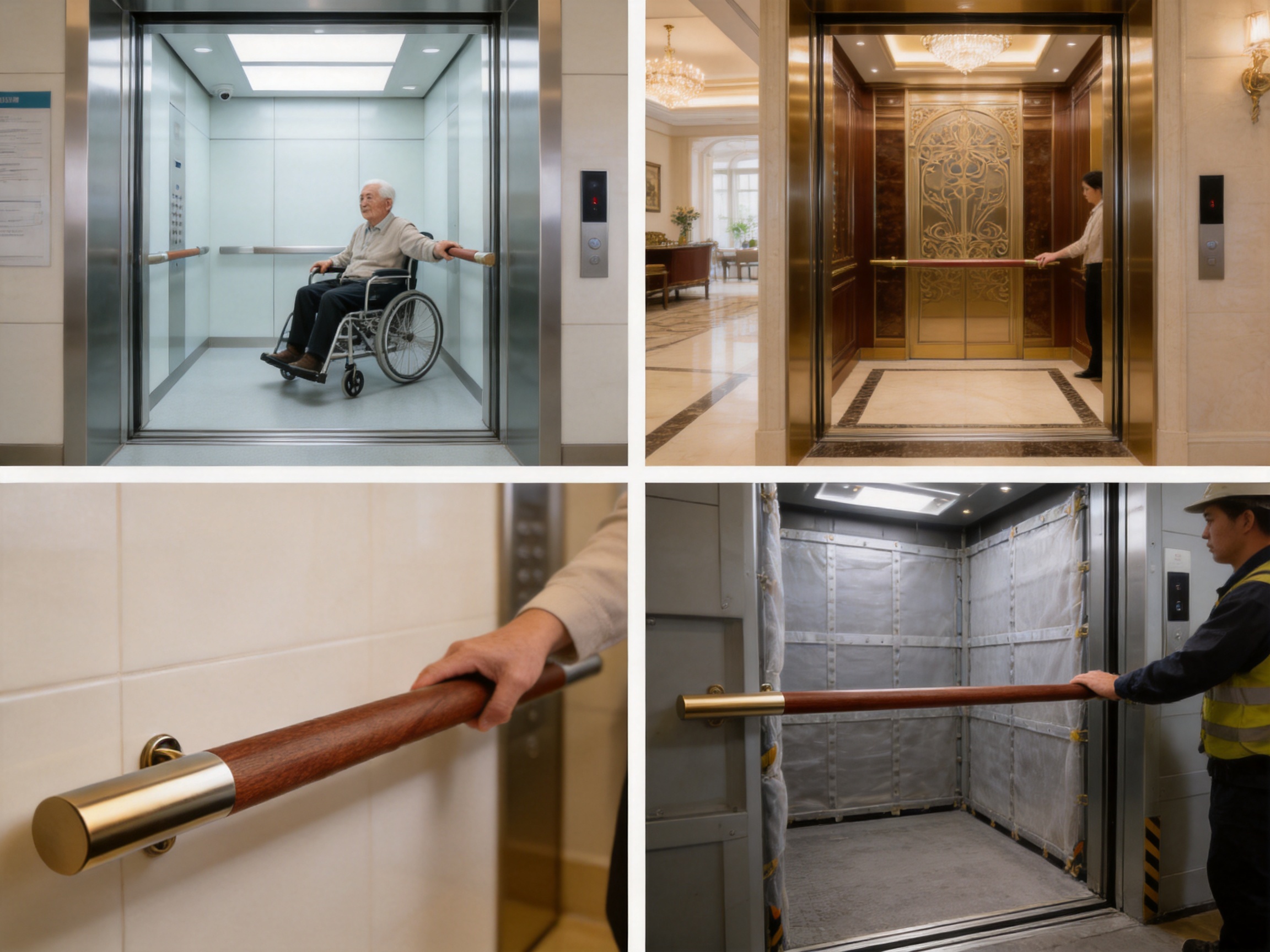
Elevator handrails are among the most frequently touched components in a vertical transportation system. Although they occupy a relatively small area inside an elevator cabin, they play an important role in passenger stability, comfort, accessibility, interior appearance, and perceived product quality. The TO-F006 elevator handrail is designed as a practical and refined solution for passenger elevators, panoramic elevators, hospital elevators, home villa elevators, cargo elevators, car elevators, and other elevator environments that require safe and dependable passenger support.
A well-designed handrail must do more than provide something to hold. It must integrate with the cabin wall, maintain a comfortable gripping position, withstand repeated daily contact, complement the interior design, and remain reliable under demanding operating conditions. It should also support the overall impression of cleanliness and quality, especially in hospitals, hotels, office buildings, shopping centers, residential developments, and public transportation facilities.
TO-F006 is part of a broader elevator component and cabin interior portfolio developed by Tenau Elevator (China) Co., Ltd. The company combines elevator design, research and development, manufacturing, marketing, installation, and after-sales service. Its manufacturing capabilities cover passenger elevators, freight elevators, escalators, moving walks, and related elevator systems. This broader experience is valuable because an elevator handrail should never be treated as an isolated accessory. Its dimensions, mounting method, finish, structural performance, and visual character must coordinate with the cabin and the complete elevator system.
With a focus on safety, environmental responsibility, intelligent manufacturing, and international quality management, the manufacturer produces elevator components for customers in many countries and regions. The result is a handrail solution that can be specified for new elevator projects, modernization programs, interior renovations, and customized cabin designs.
1. The Role of an Elevator Handrail in Passenger Safety and Comfort
Passenger movement inside an elevator is affected by acceleration, deceleration, vibration, sudden stops, crowding, and the movement of other passengers. Most elevator journeys are smooth, but passengers may still need a stable support point when entering or exiting, standing during a busy trip, assisting children, carrying luggage, or traveling in a moving cabin during an emergency situation.
An elevator handrail provides a clear and convenient contact point at an appropriate height. It helps passengers maintain balance without pressing against the cabin wall or holding door frames and control panels. For older adults, people with limited mobility, injured passengers, and wheelchair users, a properly positioned handrail can make the elevator environment more accessible and reassuring.
The handrail also contributes to the psychological perception of safety. A robust, well-finished rail communicates that the elevator cabin has been carefully designed. Loose, sharp-edged, poorly aligned, or visually inconsistent handrails can create the opposite impression, even when the elevator's main mechanical systems are functioning correctly. For architects, developers, and elevator contractors, cabin details therefore influence both practical performance and customer satisfaction.
In public buildings, the handrail can experience thousands of contacts every day. It may be touched by passengers with wet hands, gloves, luggage, packages, or mobility aids. It can be exposed to cleaning agents and repeated wiping. These conditions make surface quality, structural stability, corrosion resistance, and ease of maintenance important considerations during product selection.
2. Product Overview of TO-F006
TO-F006 is an elevator handrail intended for integration into elevator cabins and related vertical transportation interiors. Its design can support a clean and coordinated appearance while providing a practical gripping surface for passengers. As an elevator interior component, it can be matched with different cabin layouts, wall finishes, lighting schemes, flooring materials, and control panel arrangements.
The product is suitable for projects that require a balance between functional support and attractive cabin styling. It can be used in standard passenger elevators as well as more specialized environments where the cabin is subject to higher traffic, stricter hygiene requirements, heavier loads, or more frequent cleaning.
| Product Item | Information |
|---|---|
| Product model | TO-F006 |
| Product category | Elevator handrail |
| Primary application | Elevator cabin support and interior finishing |
| Suitable elevator types | Passenger, panoramic, observation, hospital, home villa, cargo, car, and high-speed elevators, subject to project requirements |
| Related systems | Elevator cabin interiors and elevator component solutions |
| Design priorities | Passenger comfort, stable installation, visual coordination, durability, and maintainability |
| Manufacturer | Tenau Elevator (China) Co., Ltd. |
The exact dimensions, mounting details, finish, color, and configuration should be confirmed according to the elevator cabin design and project specification. This approach allows the handrail to be incorporated into both standard and customized interiors without compromising the overall cabin concept.
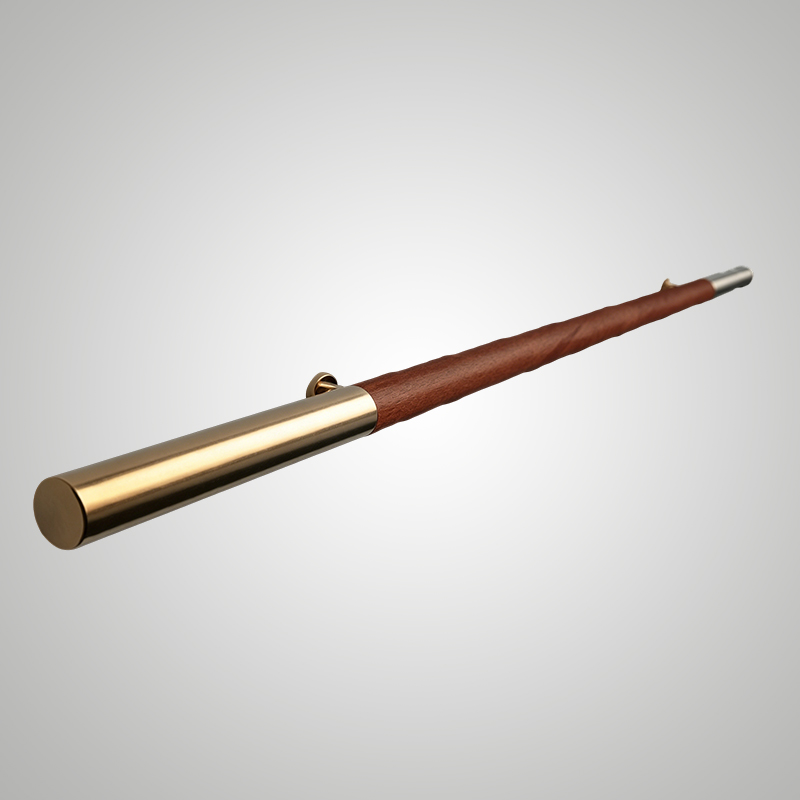
TO-F006
3. Design Advantages of the TO-F006 Handrail
3.1 Comfortable Passenger Contact
The primary purpose of a handrail is to offer a stable and comfortable gripping point. TO-F006 is designed with passenger contact in mind, supporting a natural hand position and reducing the discomfort that may result from sharp corners, irregular transitions, or poorly considered mounting locations.
A comfortable handrail is particularly important in elevators serving hospitals, elder-care facilities, transport hubs, public buildings, and residential developments with a diverse passenger population. A passenger may hold the rail for only a few seconds, but the quality of that contact affects the overall usability of the cabin.
3.2 Integration with Cabin Interior Design
Elevator cabins are increasingly treated as architectural spaces rather than purely functional enclosures. Materials, colors, lighting, mirrors, ceilings, flooring, control panels, and handrails must work together. TO-F006 can contribute to a balanced cabin composition by providing a dedicated horizontal or vertical visual element without overwhelming the surrounding surfaces.
For minimalist cabins, the handrail can support a clean and restrained design language. For premium residential, hotel, or commercial projects, it can be coordinated with decorative metalwork and other interior details. In practical service elevators, it can provide an organized and professional appearance while prioritizing durability.
3.3 Stable and Secure Installation
A handrail is only effective when it remains firmly attached to the cabin structure. Repeated passenger contact creates pulling, pushing, and lateral forces. TO-F006 is intended to be installed as a stable cabin component, with mounting arrangements selected according to the wall construction, rail configuration, and project requirements.
Correct installation helps prevent movement, rattling, misalignment, and progressive loosening. It also supports a consistent visual gap between the rail and cabin wall. During installation, the elevator contractor should confirm the supporting structure, fastener selection, alignment, clearance, and final tightening. These details are essential to achieving the intended performance of the product.
3.4 Smooth and Maintainable Surfaces
Elevator handrails are repeatedly touched and cleaned. A surface that is smooth, accessible, and free from unnecessary recesses is easier for maintenance teams to wipe and inspect. This is valuable in hospitals and public buildings, where cleaning frequency is often higher than in private residential elevators.
Good maintainability also reduces the time required for routine inspections. Staff can check the rail for looseness, scratches, surface contamination, or damage without removing complicated decorative elements. A handrail that is easy to clean and inspect contributes to lower operating effort over the service life of the elevator.
3.5 Compatibility with Multiple Elevator Applications
One of the advantages of a versatile handrail design is its ability to serve different elevator categories. Passenger elevators may require a refined appearance and high daily contact resistance. Hospital elevators may prioritize cleanability, accessibility, and robust construction. Home villa elevators may emphasize compact proportions and interior coordination. Cargo and car elevators may require increased resistance to impact and demanding operating conditions.
TO-F006 can be evaluated for these applications as part of a complete cabin solution. The final selection should take into account cabin size, passenger flow, expected usage, wall materials, local regulations, and the intended installation environment.
4. Advantages Compared with Basic or Poorly Designed Alternatives
The elevator market includes many handrails that appear similar at first glance. However, differences in material selection, surface treatment, mounting quality, dimensional accuracy, and manufacturing control can significantly affect the user experience and maintenance requirements.
4.1 More Complete System Compatibility
A basic standalone handrail may be difficult to coordinate with a complete elevator cabin. Its brackets may not match the wall structure, its dimensions may interfere with control panels, or its appearance may conflict with the cabin's other finishes. TO-F006 is supplied within the context of an elevator manufacturer that also develops cabins and complete elevator systems. This makes it easier to consider the handrail together with the surrounding interior and technical arrangement.
System compatibility can reduce redesign work during a project. It may also simplify communication between the elevator supplier, architect, interior designer, and installation team. Instead of selecting an unrelated accessory at the end of the design process, the handrail can be incorporated as part of the cabin specification from the beginning.
4.2 Better Attention to Repeated Use
Low-cost components sometimes focus only on initial appearance. They may not be designed for frequent passenger contact, repeated cleaning, or long-term exposure to the operating environment. A handrail developed by an established elevator manufacturer is more likely to be evaluated in relation to actual elevator use, including cabin movement, passenger behavior, service access, and maintenance routines.
This practical orientation supports a more dependable solution for high-traffic buildings. The value of the product is not limited to its purchase price. It also includes reduced adjustment, fewer appearance defects, easier cleaning, and better long-term passenger confidence.
4.3 More Consistent Manufacturing Quality
Inconsistent dimensional accuracy can cause visible differences between handrails installed in different cabins or between separate production batches. It can also make installation more difficult. A manufacturer using standardized production procedures, quality inspection, and controlled assembly can deliver more consistent results.
Tenau's manufacturing system incorporates automated production lines, intelligent manufacturing concepts, data-based management, and closed-loop quality control. These capabilities support repeatability, traceability, and process improvement. For large projects involving many elevators, consistency is especially important because each cabin should present the same level of finish and functional quality.
4.4 Stronger Project Support
Purchasing an elevator handrail from a comprehensive elevator company can provide advantages beyond the physical component. Technical teams can help review cabin arrangements, application conditions, installation details, and coordination with other elevator parts. This reduces the risk of selecting a rail that is attractive in isolation but unsuitable for the actual elevator.
Project support is valuable for international customers, original equipment partners, contractors, and building owners who need a coordinated supply chain. It can also help when the handrail is part of a broader cabin renovation or replacement program.
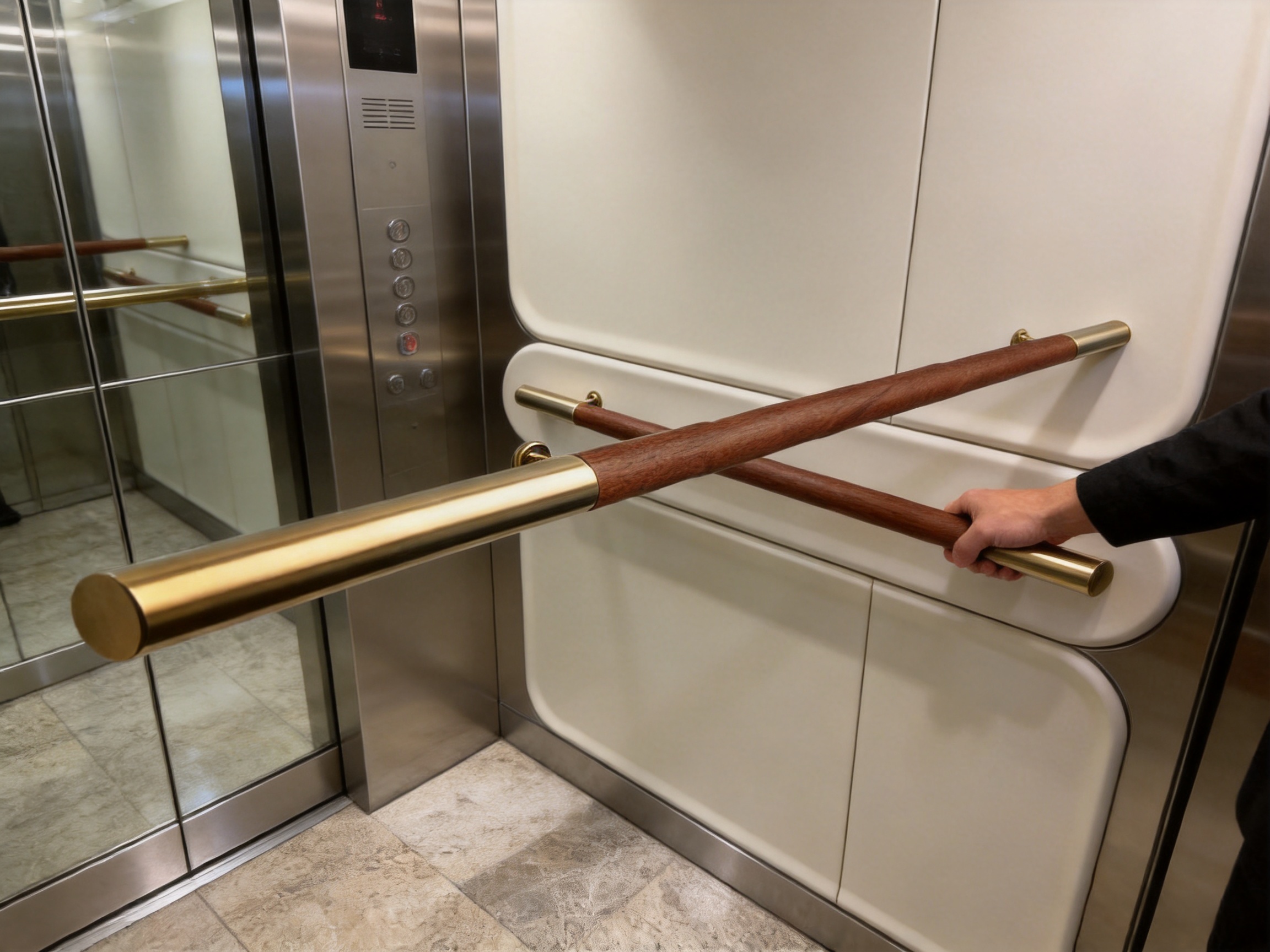
5. Manufacturing Strength Behind the Product
The performance of an elevator handrail is influenced by the manufacturing environment in which it is produced. Material processing, forming, joining, finishing, assembly, inspection, packaging, and technical documentation all contribute to final quality. A product may have an attractive design, but without stable production control its appearance and performance can vary.
5.1 Integrated Design and Research Capability
Tenau Elevator (China) Co., Ltd. integrates design and research and development with manufacturing and service operations. This enables product decisions to be assessed from multiple perspectives. Designers can consider passenger needs, cabin aesthetics, installation efficiency, production feasibility, and long-term maintenance at the same time.
Integrated research and manufacturing also supports customization. Elevator projects often differ in cabin dimensions, building functions, traffic patterns, decoration standards, and regulatory requirements. A supplier with internal technical capabilities can respond more effectively than a distributor that only resells standard accessories.
5.2 Intelligent Manufacturing and Industry 4.0 Practices
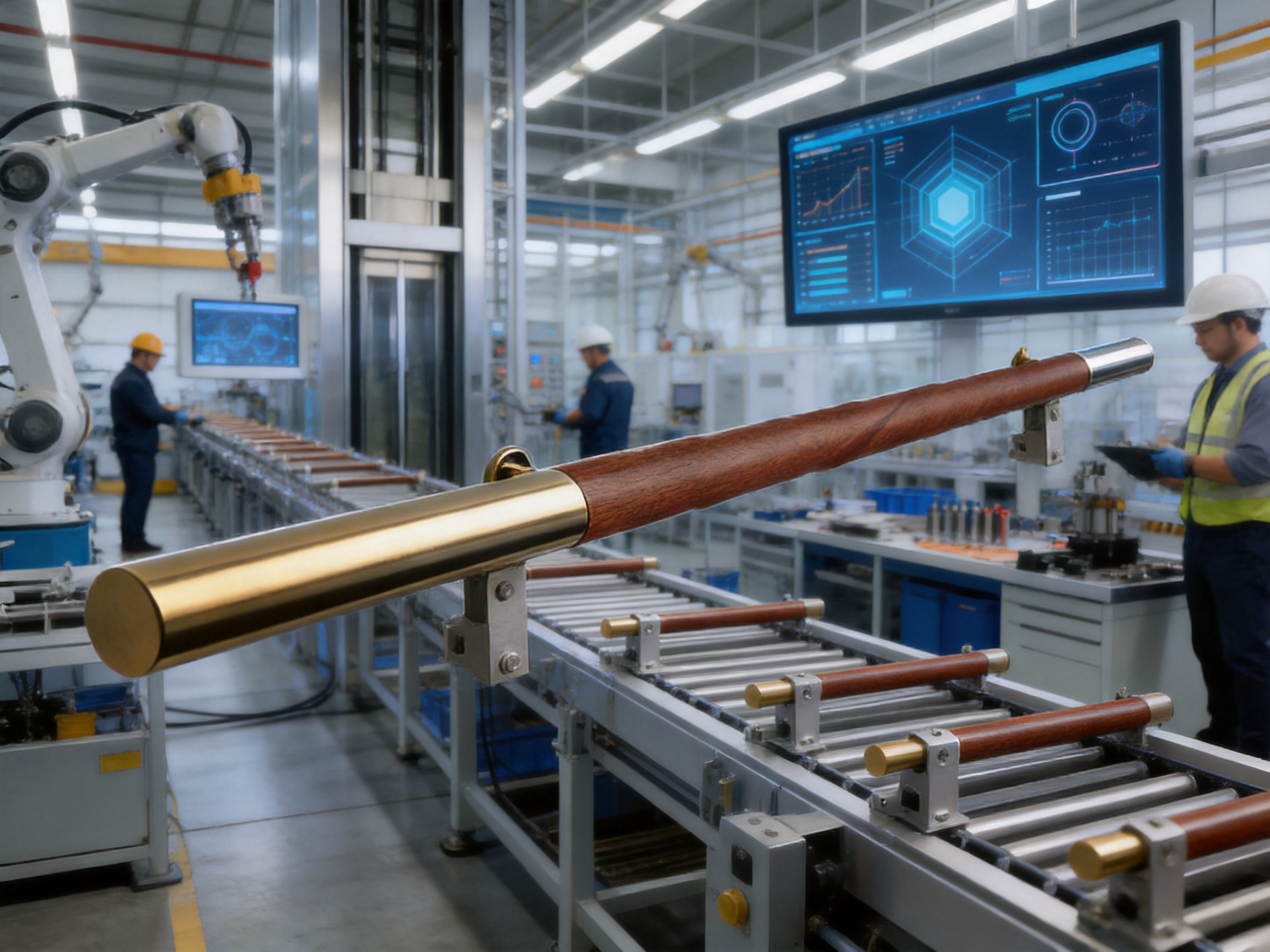
The company applies German Industry 4.0 intelligent manufacturing concepts to its production operations. In practical terms, intelligent manufacturing can involve connected equipment, digital production records, automated processing, process monitoring, production scheduling, and data-based quality analysis.
These practices are relevant to elevator handrails because the product requires repeatable dimensions and a consistent finish. Digital production management can help control work instructions, coordinate different processing stages, reduce manual recording errors, and improve production traceability.
Automation does not replace skilled engineering and inspection. Instead, it allows repetitive operations to be carried out with greater consistency while technical staff focus on process design, quality verification, equipment management, and continuous improvement. This combination of technology and professional oversight creates a stronger foundation for stable product delivery.
5.3 Automated Production Lines
Automated production lines can improve repeatability in cutting, forming, drilling, surface preparation, and assembly-related operations. Consistent processing is important for a handrail because small deviations can affect the appearance of joints, the alignment of brackets, and the ease of installation.
Automation may also help reduce production variation between individual units. When a project requires multiple elevator cabins, consistent component dimensions simplify installation and help ensure a uniform appearance throughout the building. For international projects, standardized production can support more predictable packaging, shipment, and site assembly.
5.4 Big Data and Internet of Things Technology
The company also applies big data and Internet of Things technology within its manufacturing and elevator ecosystem. Connected data can support equipment monitoring, production analysis, product tracking, and service management. These capabilities help the manufacturer identify recurring issues and improve processes based on actual operational information.
For a component such as TO-F006, data-supported manufacturing can contribute to better batch management and quality review. If a production or installation issue is identified, documented information can help technical teams trace the relevant stage and implement corrective action. Over time, this supports a more mature quality system.
5.5 Closed-Loop Quality Control
A closed-loop quality control system does not stop at final inspection. It links requirements, production procedures, inspection results, corrective actions, and process improvement. This approach is useful because quality problems may arise from design, materials, equipment settings, assembly, packaging, transportation, or installation.
By reviewing information across the product lifecycle, a manufacturer can identify the source of problems instead of treating each defect as an isolated event. The objective is to prevent recurrence and strengthen the process. For customers, this can result in more consistent products and more reliable technical support.
6. Quality Management and International Production Standards
Tenau maintains management systems associated with ISO9001, ISO14001, and OHSMS18001. These standards relate respectively to quality management, environmental management, and occupational health and safety management. Together, they reflect a structured approach to manufacturing and organizational control.
6.1 Quality Management
ISO9001-based quality management emphasizes documented procedures, customer requirements, process control, inspection, corrective action, and continual improvement. For TO-F006, this type of system can support clear product specifications, controlled production steps, and organized quality records.
Quality management is especially important when supplying components for international projects. Customers may require consistent documentation, defined inspection criteria, stable production batches, and reliable communication. A formal management system creates a framework for meeting those expectations.
6.2 Environmental Management
Elevator components are manufactured within a wider environmental context that includes material use, energy consumption, packaging, surface treatment, waste management, and transportation. An environmental management system encourages organizations to identify and control these impacts.
For building owners and project developers, environmental responsibility is increasingly relevant to procurement decisions. A supplier that considers environmental management can better support projects seeking sustainable construction practices, green building objectives, or responsible supply chain documentation.
6.3 Occupational Health and Safety
Safe manufacturing conditions are connected to product reliability. Well-managed workplaces are more likely to maintain orderly production, equipment inspection, staff training, and disciplined operating procedures. OHSMS18001-related practices support attention to employee safety and operational risk control.
A responsible manufacturing environment benefits customers indirectly by supporting stable production and reducing avoidable disruptions. It also reflects a broader commitment to sustainable and professional business operations.
7. Application in Different Elevator Environments
7.1 Passenger Elevators
Passenger elevators are the most common application for an elevator handrail. These cabins may serve offices, apartments, hotels, shopping centers, schools, public buildings, and transportation facilities. The handrail must support frequent contact while complementing the cabin's visual design.
In passenger elevators, TO-F006 can be considered for cabins where comfort, cleanability, and appearance are all important. The final configuration should be coordinated with the cabin width, door position, control panel, mirror, ventilation openings, and accessibility requirements.
7.2 Panoramic and Observation Elevators
Panoramic and observation elevators place particular emphasis on visibility and interior presentation. Passengers may spend more time looking through glass panels or viewing surrounding scenery. A handrail should provide support without unnecessarily obstructing the visual experience.
TO-F006 can be incorporated into an observation elevator design in a way that supports passenger confidence while maintaining a visually balanced cabin. The choice of location and finish should be coordinated with glass surfaces, lighting, metal framing, and decorative elements.
7.3 Hospital Elevators
Hospital elevators have demanding functional requirements. They may carry patients, medical staff, visitors, wheelchairs, beds, equipment, and supplies. Their interiors are subject to frequent cleaning and may experience impacts from mobile equipment.
In this environment, handrail selection should focus on secure attachment, smooth surfaces, cleanability, accessibility, and compatibility with the larger cabin protection strategy. TO-F006 can be evaluated as part of a hospital elevator interior package, provided that its configuration satisfies the relevant project standards and impact requirements.
7.4 Home Villa Elevators
Home villa elevators often have more individualized interior designs than standard commercial elevators. Owners may request specific colors, decorative finishes, compact dimensions, or coordination with residential architecture.
TO-F006 can support a residential cabin by combining practical passenger assistance with a clean interior appearance. Because home elevators may be used by children, older residents, and guests, a stable and comfortable handrail can improve the everyday experience of the elevator.
7.5 Cargo Elevators
Cargo elevators are designed for goods, equipment, and industrial materials, but personnel may still enter the cabin during loading and unloading. The interior is often exposed to more demanding conditions, including contact with tools, pallets, carts, and packaging materials.
For cargo applications, the handrail should be reviewed alongside wall protection, floor loading, door protection, and cabin impact resistance. TO-F006 may be suitable when the selected configuration and installation method are matched to the operating environment.
7.6 Car Elevators
Car elevators require careful coordination between cabin dimensions, vehicle clearance, loading procedures, protective surfaces, and user movement. Drivers or attendants may stand inside the cabin while the vehicle is positioned or removed.
A handrail can offer additional support during entry, exit, and cabin movement. It should be positioned so that it does not interfere with vehicle clearance, doors, mirrors, or loading operations. The product should therefore be specified as part of a complete car elevator cabin design.
7.7 High-Speed Elevators
High-speed elevators require careful control of structural, aerodynamic, mechanical, and passenger comfort factors. Although a handrail is a relatively small component, it forms part of the passenger contact environment and should remain secure and free from vibration-related noise.
When TO-F006 is used in a high-speed elevator, engineers should verify mounting stability, clearances, cabin vibration behavior, and compatibility with the complete high-speed elevator design. This system-level approach helps ensure that interior components support the performance expectations of the elevator.
8. Installation and Project Coordination
Proper installation is essential to achieving the intended benefits of TO-F006. Before installation, the contractor should review the approved cabin drawings, handrail dimensions, mounting locations, wall construction, and relevant project requirements. The installation area should be clear of concealed services, wiring, control equipment, and other components that could be affected by drilling or fastening.
The supporting structure must be adequate for the expected contact forces. Fasteners should be selected according to the cabin material and the manufacturer’s technical instructions. The handrail should be aligned accurately, with consistent spacing from the wall and sufficient clearance for passenger use and routine cleaning.
After installation, the contractor should check for movement, sharp edges, visible gaps, uneven joints, surface damage, and interference with doors or control panels. A final inspection should also confirm that the rail does not obstruct accessibility features or emergency equipment.
For large projects, it is useful to create a standard installation checklist. The checklist may include product model, quantity, cabin identification, mounting position, fastener verification, alignment, surface condition, and acceptance status. Standardized inspection reduces the chance of inconsistent installation across multiple elevator units.
9. Maintenance and Long-Term Serviceability
Routine maintenance of an elevator handrail is straightforward but should not be neglected. Cleaning teams should use methods compatible with the handrail finish. Abrasive pads, harsh chemicals, and unsuitable solvents may damage the surface or reduce its appearance. A soft cloth and an approved cleaning solution are generally preferable, subject to the actual material and finish specifications.
Maintenance personnel should periodically check whether the rail remains firmly attached. Any unusual movement, rattling, damaged bracket, loose fastener, sharp edge, or surface defect should be reported for correction. Early attention can prevent a minor issue from affecting passenger confidence or causing additional damage to the cabin wall.
In hospitals, public buildings, hotels, and other high-traffic facilities, cleaning and inspection frequency may need to be increased. A documented maintenance schedule helps building operators demonstrate that passenger-contact components are being properly managed.
For modernization projects, a replacement handrail can refresh the interior appearance of an older cabin without requiring a complete elevator replacement. However, compatibility with the existing wall structure, dimensions, accessibility arrangements, and local regulations should be confirmed before ordering.
10. Customization and Specification Considerations
Elevator projects often require customization. Before selecting TO-F006, customers should provide information about the elevator type, cabin dimensions, wall materials, expected passenger volume, intended building use, preferred finish, installation location, and applicable standards.
Other important considerations include whether the elevator is intended for public use, whether wheelchair access is required, whether the cabin will carry beds or vehicles, and whether the handrail must coordinate with protective panels or decorative structures. The product can then be evaluated within the complete cabin arrangement rather than as an isolated item.
| Specification Area | Questions for Project Review | Why It Matters |
|---|---|---|
| Cabin application | Is the elevator for passengers, patients, goods, vehicles, or residential use? | Operating conditions influence design and installation requirements. |
| Cabin dimensions | What are the internal width, depth, and height? | Dimensions determine rail length, location, and clearance. |
| Wall construction | What materials and reinforcement are used? | Mounting hardware must suit the supporting structure. |
| Passenger accessibility | Are special height, clearance, or accessibility requirements applicable? | Handrail placement should support safe and inclusive use. |
| Surface finish | Which color, texture, or decorative treatment is required? | The finish should coordinate with the overall cabin interior. |
| Cleaning environment | Will the handrail face frequent disinfecting or intensive cleaning? | Material and surface maintenance procedures should be compatible. |
| Project quantity | How many cabins and replacement units are required? | Quantity affects production scheduling, packaging, and delivery planning. |
| Regulatory requirements | Which local codes and technical standards apply? | Compliance must be reviewed before final approval. |
Customization may involve dimensions, mounting arrangements, finish coordination, packaging, labeling, or integration with a wider cabin interior package. The extent of customization depends on the project and should be confirmed through technical drawings and formal approval procedures.
11. Supply Chain and International Project Advantages
Tenau Elevator is located in Nanxun, Zhejiang Province, within the economically developed Shanghai-Nanjing-Suzhou-Hangzhou region. This location supports access to manufacturing resources, engineering talent, transportation networks, and supply chain partners. For international customers, a strong industrial base can contribute to efficient production coordination and export preparation.
The company maintains a large-scale manufacturing base and a professional technical team. It also has experience serving customers in multiple countries and regions. This international orientation is useful for elevator contractors and distributors that require product communication, documentation, packaging coordination, and after-sales support across different markets.
Because the company manufactures complete elevators as well as elevator parts and cabin interiors, customers may be able to coordinate several product categories through one supplier. This can simplify procurement for projects requiring passenger elevators, freight elevators, escalators, moving walks, cabin components, and related solutions.
A single-supplier or coordinated-supplier approach can reduce the risk of mismatched finishes, incompatible dimensions, unclear responsibilities, and fragmented technical communication. It may also make it easier to plan spare parts and future maintenance requirements.
12. Sustainability and Responsible Manufacturing
Modern elevator customers increasingly evaluate products through the full lifecycle, including material efficiency, manufacturing impact, service life, maintenance needs, and end-of-life considerations. A durable handrail can contribute to sustainability by reducing the frequency of replacement and avoiding unnecessary interior refurbishment.
Environmental management practices within the manufacturing organization can support more responsible control of production activities. These practices may include monitoring energy and resource use, managing waste, improving process efficiency, and evaluating environmental risks.
Durability is also an environmental advantage. When a handrail remains attractive and functional for a long period, the project may require fewer replacements, less packaging, fewer transportation activities, and less installation labor. Long-term reliability therefore has value beyond immediate operating performance.
Customers should still confirm the actual material composition, finish system, cleaning recommendations, and project-specific environmental documentation when sustainability certification or green building evidence is required.
13. Why Choose a Comprehensive Elevator Manufacturer
An elevator handrail is a visible and frequently used component, but its successful application depends on more than the component itself. Choosing a comprehensive elevator manufacturer can provide several practical advantages.
First, the supplier understands the relationship between cabin interiors and elevator engineering. This helps ensure that the handrail does not interfere with doors, control systems, lighting, ventilation, emergency equipment, or accessibility requirements.
Second, the supplier can coordinate the handrail with other interior elements. Matching finishes and consistent design details are easier to achieve when cabin components are developed and produced within an integrated product system.
Third, the supplier can support installation and after-sales service. If a technical question arises at the project site, customers can communicate with a team familiar with both the handrail and the elevator cabin.
Fourth, an established manufacturer is better positioned to manage production quantities, quality records, packaging, export requirements, and replacement parts. These capabilities become particularly important for commercial developments, large residential projects, hospitals, airports, and multi-building programs.
14. Recommended Evaluation Process for Buyers
Buyers can evaluate TO-F006 through a structured process. The first step is to identify the application and expected operating conditions. A handrail for a quiet villa elevator may have different requirements from one used in a hospital or high-traffic public building.
The second step is to review the cabin drawings and determine the intended installation position. This includes checking handrail length, height, clearance, wall structure, control panel location, door movement, and accessibility considerations.
The third step is to confirm the material and surface finish. Customers should request the appropriate technical information for cleaning, corrosion resistance, appearance, and maintenance. If the project has special hygiene or environmental requirements, these should be discussed before production.
The fourth step is to review samples, drawings, or approved finish boards when appearance is important. A physical sample can help the customer evaluate color, texture, grip comfort, dimensional proportion, and coordination with other cabin materials.
The fifth step is to clarify production lead time, packaging, delivery, installation responsibility, inspection procedures, and after-sales support. Clear project coordination reduces delays and prevents misunderstandings.
The final step is to confirm compliance with applicable codes and project standards. Product selection should be approved by the responsible elevator engineer, architect, contractor, or regulatory authority where required.
15. Frequently Asked Questions
Q1: What is the main function of the TO-F006 elevator handrail?
The main function is to provide passengers with a stable and convenient support point inside an elevator cabin. It also contributes to cabin appearance, accessibility, passenger comfort, and interior completeness.
Q2: Which elevator types can use this handrail?
It can be considered for passenger elevators, panoramic and observation elevators, hospital elevators, home villa elevators, cargo elevators, car elevators, and other elevator cabins. Suitability depends on the cabin layout, operating environment, technical requirements, and applicable regulations.
Q3: Can TO-F006 be used in a hospital elevator?
It may be used in a hospital elevator when its material, finish, mounting arrangement, and cleaning characteristics meet the project requirements. Hospital applications should be reviewed carefully because they may involve frequent disinfection, wheelchair traffic, patient beds, and strict accessibility expectations.
Q4: Is the product suitable for a customized cabin interior?
Yes, the handrail can be evaluated as part of a customized cabin design. Customers should provide cabin drawings, preferred finishes, installation locations, and technical requirements so that the product can be coordinated with the complete interior.
Q5: How does the manufacturer support consistent quality?
The manufacturer uses integrated design and research capabilities, automated production lines, intelligent manufacturing concepts, data and Internet of Things technology, and a closed-loop quality control system. These systems are intended to improve repeatability, traceability, and continuous process improvement.
Q6: What quality management standards are associated with the manufacturer?
The company operates with management systems associated with ISO9001 quality management, ISO14001 environmental management, and OHSMS18001 occupational health and safety management. Project-specific compliance should be confirmed through the relevant technical and certification documents.
Q7: What information should be provided when requesting a quotation?
Customers should provide the elevator type, cabin dimensions, quantity, installation position, wall material, desired finish, operating environment, delivery location, applicable standards, and any customization requirements. Drawings or photographs of the cabin can also help the technical team prepare an appropriate solution.
Q8: How should the handrail be maintained?
It should be cleaned with methods suitable for its material and finish. Maintenance staff should avoid abrasive tools and unsuitable chemicals, inspect the rail periodically for looseness or damage, and arrange prompt correction if movement, sharp edges, or surface defects are found.
Q9: Can the handrail be used in a modernization project?
It may be suitable for elevator modernization or cabin refurbishment. The existing wall structure, available space, mounting points, accessibility arrangement, and local code requirements should be checked before final selection.
Q10: Why is system compatibility important for a handrail?
System compatibility helps prevent interference with doors, control panels, lighting, mirrors, ventilation, emergency equipment, and other cabin components. It also improves visual coordination and can simplify installation, inspection, and future maintenance.
Q11: Is the product suitable for export projects?
The manufacturer has experience supplying elevator products to customers in many countries and regions. Export suitability depends on the destination market's technical standards, documentation requirements, packaging conditions, and installation regulations.
Q12: Where can customers obtain product and project information?
Customers can contact Tenau Elevator (China) Co., Ltd. through its international sales and technical service channels to request drawings, specifications, quotations, samples, and project support. The product model TO-F006 should be included in the inquiry.
16. Conclusion
TO-F006 is designed to provide a practical, comfortable, and visually coordinated handrail solution for modern elevator cabins. Its value comes from the combination of passenger support, stable installation, maintainable surfaces, broad application potential, and integration with complete elevator interior design.
Compared with basic accessories selected without system coordination, TO-F006 offers the benefit of being developed within a comprehensive elevator manufacturing environment. This allows the product to be considered alongside cabin structure, passenger movement, interior decoration, manufacturing consistency, installation, and after-sales service.
The manufacturing strengths behind the product include integrated research and development, automated production lines, German Industry 4.0 intelligent manufacturing concepts, big data and Internet of Things technology, and closed-loop quality control. The company's management systems associated with quality, environmental responsibility, and occupational safety provide an additional foundation for professional production.
For passenger elevators, panoramic elevators, hospitals, villas, cargo facilities, car elevators, and other vertical transportation projects, the handrail should be selected as part of a complete cabin solution. Proper specification, installation, inspection, and maintenance will help the component deliver reliable performance throughout the elevator's operating life.
When comfort, appearance, durability, manufacturing consistency, and project coordination are all important, TO-F006 offers a dependable option for customers seeking a high-quality elevator handrail from an experienced international elevator manufacturer.
References
1. Tenau Elevator (China) Co., Ltd. Product and company information supplied for the TO-F006 elevator handrail.
2. International Organization for Standardization. Quality Management Systems — Requirements, ISO 9001.
3. International Organization for Standardization. Environmental Management Systems — Requirements with Guidance for Use, ISO 14001.
4. Occupational health and safety management system guidance associated with OHSMS18001.
5. General principles of elevator cabin accessibility, passenger safety, interior design, inspection, and maintenance.
6. Industry 4.0 manufacturing principles concerning automation, connected production, data management, traceability, and continuous improvement.
Product: TO-F006

Related Products
Related News
Built on safety, forging trust in vertical mobility.
lf you have any questions or need help, feel free to contact with our team.
 export@tenau.com.cn
 +86-18601458867
 +86-512-65059883
Elevator & Escalator
Factory Add
East of Xicheng Road, North of Lianyi Road, Nanxun Economic Development Zone, Nanxun District, Huzhou City, Zhejiang Province, P.R.China
Copyright © Tenau Elevator (China) Co., Ltd. All Rightd Reserved.
Custom High Quality Elevator Suppliers and World Brand Elevator Company