

 en
 Español
 русский
 中文简体

Standard Medical Passenger Elevator with PVC Flooring: Safe, Intelligent, and Efficient Vertical Mobility for Healthcare Facilities
Content
- 1 1. Why Medical Passenger Elevators Require Specialized Design
- 2 2. Product Overview
- 3 3. Core Safety Engineering
- 4 4. Smooth Travel and Passenger Comfort
- 5 5. Intelligent Door and Traffic Management
- 6 6. Practical Medical Interior Configuration
- 7 7. Maintenance Intelligence and Fault Diagnosis
- 8 8. Advanced Manufacturing Strengths
- 9 9. Quality Management and International Orientation
- 10 10. Advantages Compared with Basic Passenger Elevators
- 11 11. Installation, Commissioning, and Service Considerations
- 12 12. Sustainability and Long-Term Value
- 13 13. Recommended Applications
- 14 14. Why Choose an Integrated Elevator Manufacturer
- 15 15. Frequently Asked Questions
- 15.1 Q1: What type of elevator is the TO-Y002?
- 15.2 Q2: What flooring does the elevator use?
- 15.3 Q3: How is passenger movement protected at the entrance?
- 15.4 Q4: Does the elevator include protection against unintended movement?
- 15.5 Q5: How does VVVF control improve the ride?
- 15.6 Q6: Can the elevator operate independently for a special task?
- 15.7 Q7: How does the elevator reduce unnecessary stops?
- 15.8 Q8: Does the elevator provide fault information for maintenance personnel?
- 15.9 Q9: What is inspection mode?
- 15.10 Q10: Does the elevator support remote monitoring?
- 15.11 Q11: What materials are used inside the car?
- 15.12 Q12: Who manufactures the elevator?
- 15.13 Q13: What manufacturing technologies does the company use?
- 15.14 Q14: Is the product suitable for every hospital project?
- 15.15 Q15: Why is after-sales service important for a hospital elevator?
- 16 16. Conclusion
- 17 References
- 18 Product: Standard Medical Passenger Elevator with PVC Flooring
Standard Medical Passenger Elevator with PVC Flooring
Hospitals and healthcare facilities require vertical transportation systems that support safety, reliability, hygiene, accessibility, and uninterrupted daily operations. Unlike ordinary commercial elevators, a medical passenger elevator must serve patients, visitors, doctors, nurses, technicians, and service personnel in an environment where smooth movement and dependable operation are essential. The Standard Medical Passenger Elevator with PVC Flooring, identified as model TO-Y002, is designed to address these demanding requirements through a combination of advanced safety engineering, intelligent control, durable interior materials, and responsive service support.
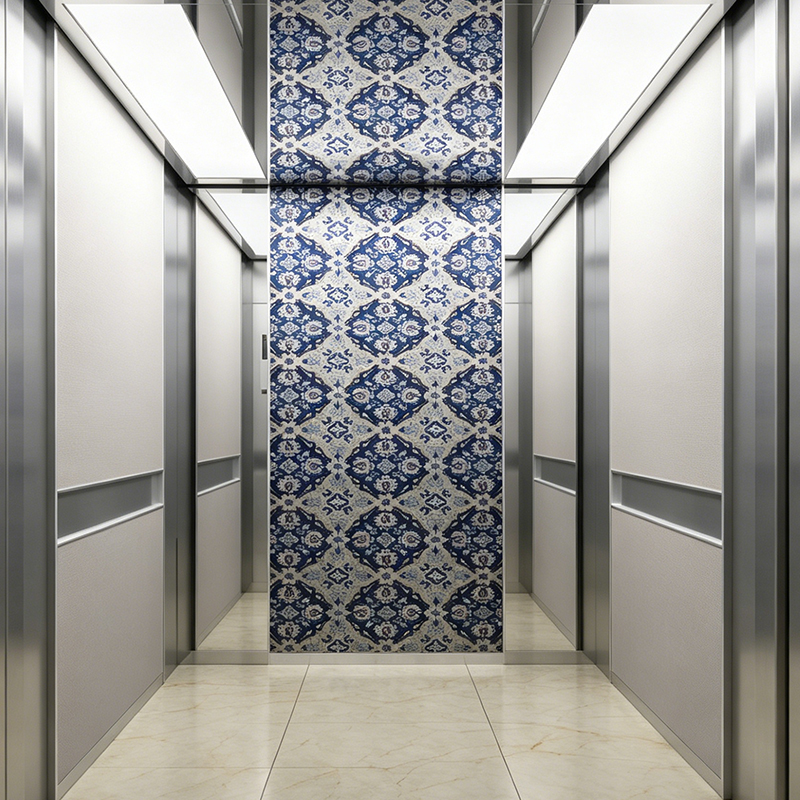
Developed for healthcare environments, this elevator combines a practical interior configuration with sophisticated control functions. Its painted steel ceiling, integrated fluorescent tube lighting, hairline stainless-steel car walls, double flat stainless-steel handrails, and PVC flooring create an interior that is functional, durable, and suitable for regular cleaning. At the same time, the elevator incorporates VVVF motion control, infrared entrance protection, multi-level overspeed protection, fault self-diagnosis, intelligent door management, and remote monitoring capabilities.
The product is supplied by Tenau Elevator (China) Co., Ltd., a comprehensive elevator manufacturer involved in design, research and development, manufacturing, marketing, installation, and after-sales service. The company’s production approach combines international technology, Industry 4.0 intelligent manufacturing, automated production lines, Internet of Things technology, big-data applications, and closed-loop quality control. These strengths help position the TO-Y002 as more than a basic passenger elevator. It is a medical transportation solution developed for stable operation, controlled movement, and long-term serviceability.
1. Why Medical Passenger Elevators Require Specialized Design
Healthcare buildings typically have complex traffic patterns. Patients may move between wards, examination rooms, operating departments, diagnostic areas, emergency units, and rehabilitation spaces. Visitors often travel in groups, while medical staff may need rapid and predictable access between floors. Equipment, beds, wheelchairs, and other healthcare-related items can also create additional demands on the elevator environment.
In this setting, elevator performance cannot be measured only by speed or appearance. The system must provide controlled acceleration, stable deceleration, accurate stopping, safe door operation, and clear arrival information. It should also reduce unnecessary stops, limit passenger inconvenience, and help facility managers identify faults quickly when they occur.
A medical elevator interior must be practical rather than excessively decorative. Surfaces should support frequent cleaning and withstand repeated daily use. Handrails should assist passengers who require additional stability. Lighting should provide a clear and comfortable interior environment. Flooring should offer a suitable finish for healthcare use and routine maintenance.
The TO-Y002 responds to these requirements through a balanced configuration. It integrates medical-use-oriented interior features with a control system designed to improve motion quality, door safety, operating efficiency, and maintenance response. Its design is particularly suitable for facilities that need dependable passenger transportation without unnecessary complexity in the interior specification.
2. Product Overview
The Standard Medical Passenger Elevator with PVC Flooring is categorized as a hospital elevator. Its model designation is TO-Y002. The product is intended to provide safe and comfortable vertical transportation for healthcare facilities and other locations requiring a durable, orderly, and intelligent passenger elevator.
The elevator combines several important functional groups. The first is movement control. Advanced variable-voltage variable-frequency technology, commonly known as VVVF control, is used to create a smooth speed curve. The second is entrance protection, supported by full-area infrared detection and a comprehensive infrared light curtain. The third is operational intelligence, including automatic door timing, independent running, anti-nuisance call management, advance opening, and remote monitoring. The fourth is safety supervision, including an Unintended Car Movement Protection device, multi-level overspeed protection, emergency braking, inspection mode, and fault-recording functions.
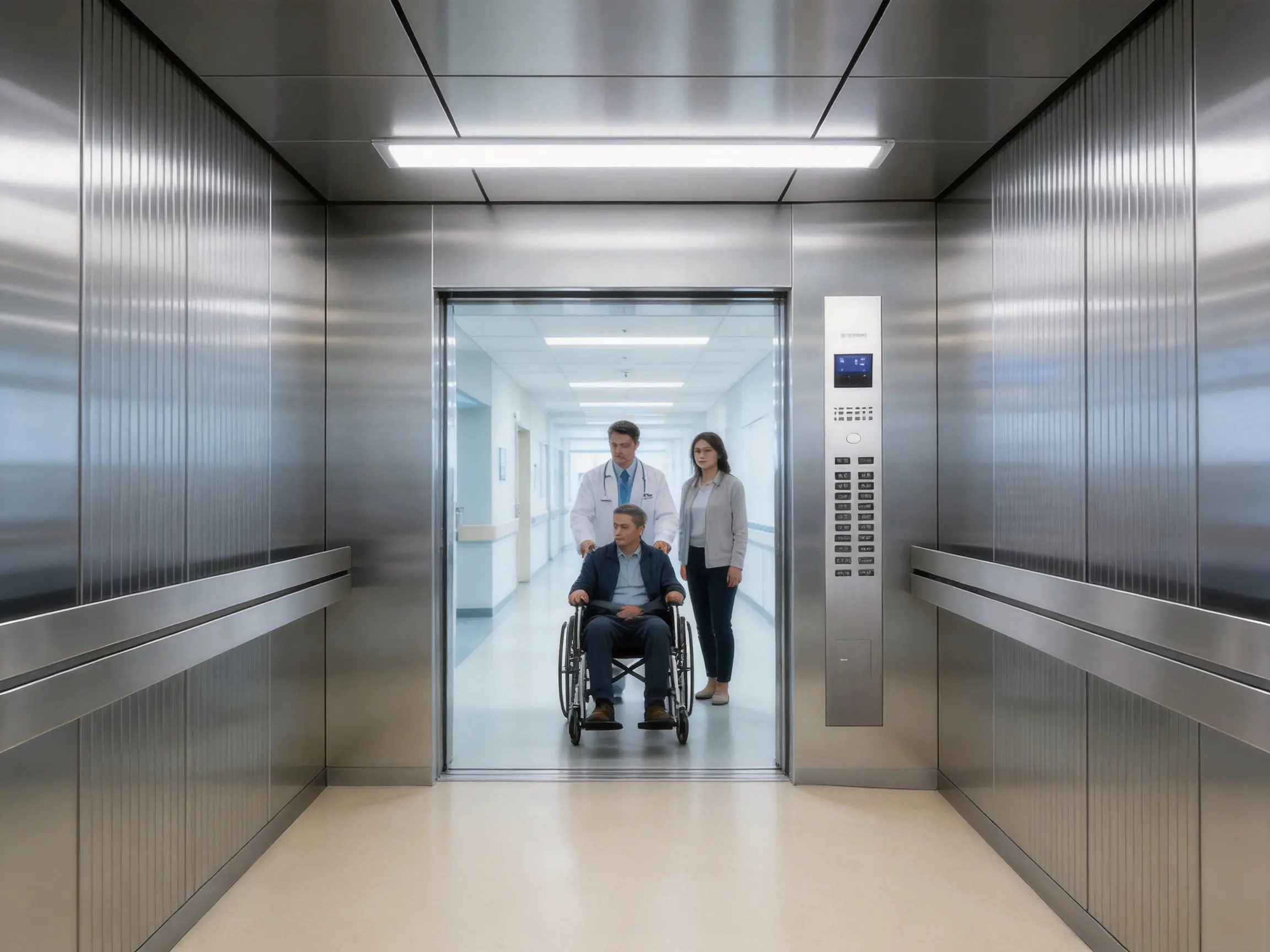
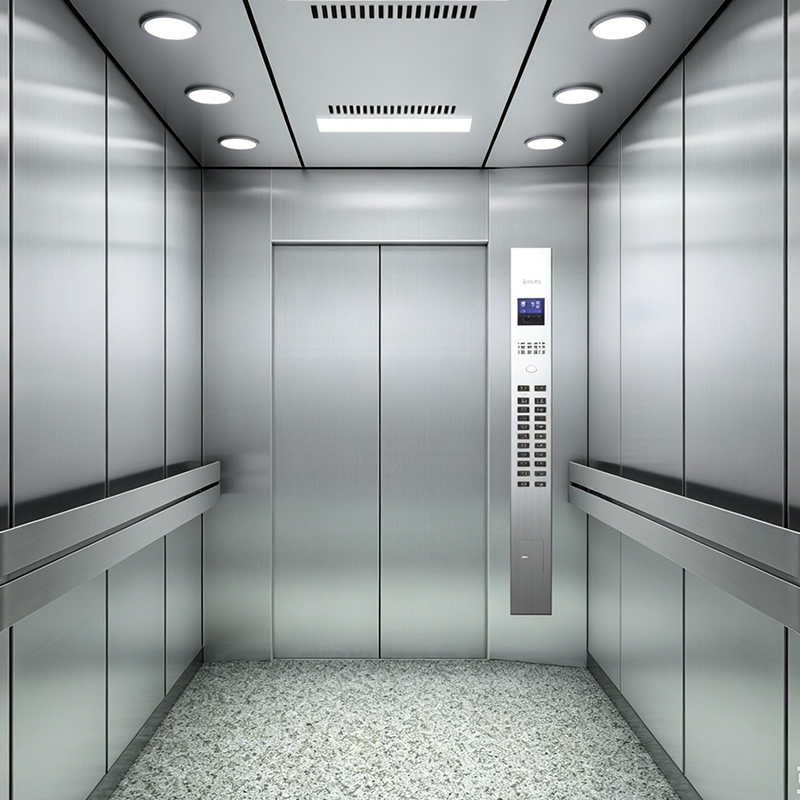
The interior specification is deliberately practical. A painted steel ceiling with fluorescent lighting and integrated tube lamps provides functional illumination. Hairline stainless-steel car walls help create a clean and professional appearance while supporting repeated use. Double flat stainless-steel handrails provide additional support for passengers. PVC flooring offers a practical surface for a medical passenger elevator, particularly where regular cleaning and straightforward maintenance are important.
3. Core Safety Engineering
Safety is the primary design principle of a medical passenger elevator. In a hospital, even a brief operational irregularity can affect patient transfers, staff movement, appointment schedules, and emergency coordination. The TO-Y002 therefore incorporates multiple layers of protection rather than relying on a single safety function.
3.1 Unintended Car Movement Protection
The elevator includes an integrated Unintended Car Movement Protection, or UCMP, device. Its purpose is to help arrest unregulated car shifts and protect passengers from unexpected movement. This function is particularly important during boarding and exiting, when passengers are transitioning between the car and the landing.
By incorporating UCMP into the overall safety architecture, the elevator provides an additional protective layer against irregular car movement. This reflects a safety philosophy based on prevention, monitoring, and controlled intervention. Instead of treating safety as a single emergency feature, the system uses coordinated functions to reduce risk throughout the operating cycle.
3.2 Full-Area Infrared Detection
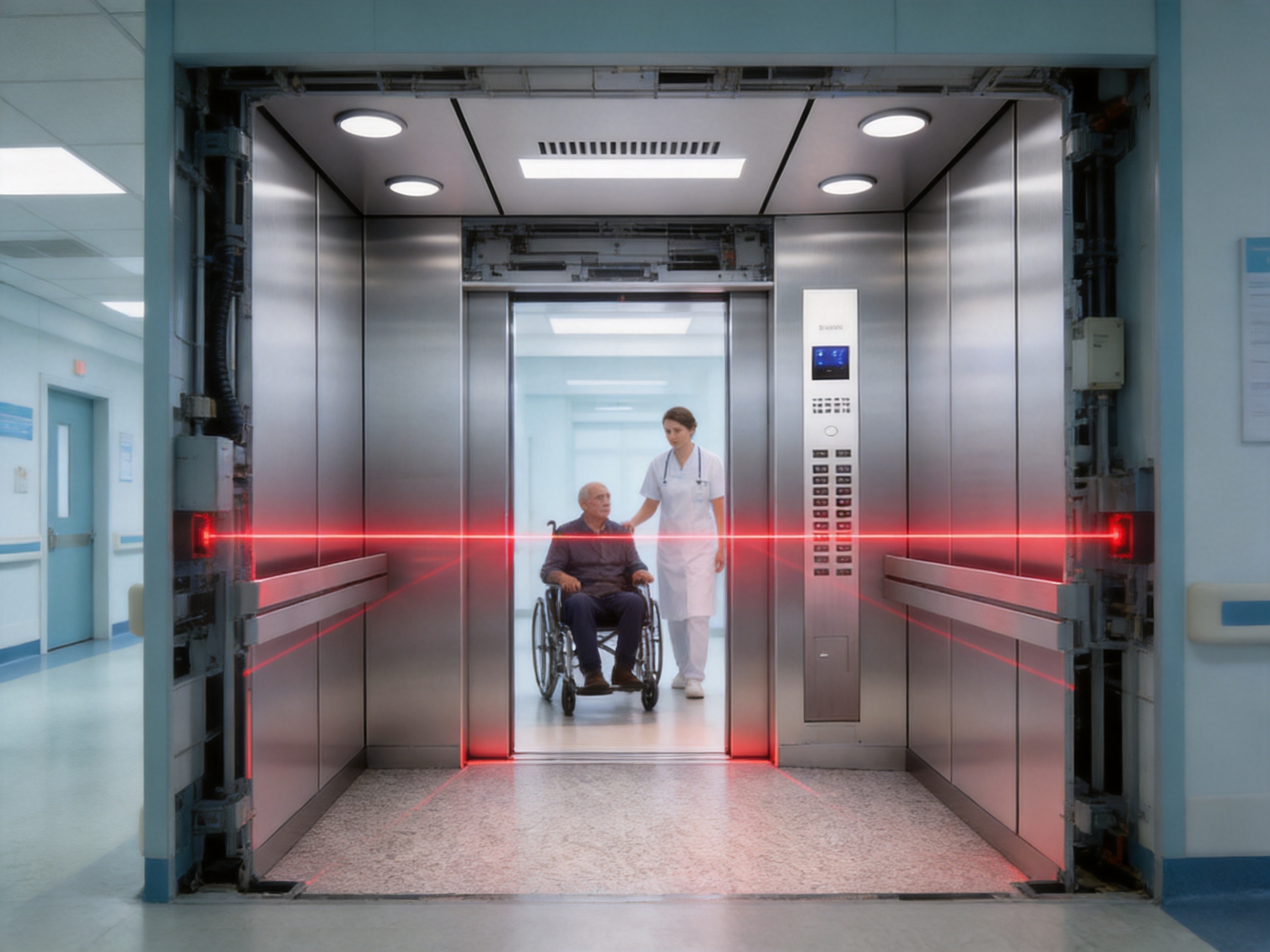
The entrance is protected by full-area infrared detection. A comprehensive infrared light curtain monitors the door zone and helps identify passengers or objects that may be within the closing path. When an obstruction is detected, the door-control system can respond by reopening and attempting to close again after the area is clear.
This entrance protection is valuable in healthcare facilities because passengers may move more slowly than in ordinary commercial buildings. Patients using mobility aids, people assisting patients, and staff transporting items may require additional time to pass through the entrance. Infrared protection helps support a safer transition without depending solely on passengers to react quickly.
3.3 Door Collision Prevention
Door integrity is supported by collision-prevention technology designed to maintain normal door-track operations. Elevator doors operate repeatedly throughout the day, and their condition directly influences passenger safety and elevator availability. A door system that can detect or respond to obstruction conditions helps reduce unnecessary stress on door components and supports consistent operation.
The repeated-closing function further strengthens the entrance system. If an obstacle prevents proper closure, the doors can reopen and attempt to close again until the obstruction is cleared. This provides a controlled response to ordinary entrance disturbances while avoiding the need for passengers or staff to intervene manually.
3.4 Overspeed Protection and Emergency Braking
The elevator includes multi-level overspeed protection with automatic braking and safety tongs. This layered approach is intended to respond when the car exceeds a permitted speed condition. The combination of monitoring, braking, and mechanical safety intervention provides a robust foundation for passenger protection.
In addition to normal operational controls, emergency braking provides a further safeguard for abnormal conditions. The system is designed to move from monitoring to intervention when required, helping stabilize the elevator and protect occupants.
3.5 Start Control and Positional Security
Start control is designed to stop the elevator automatically if the lift fails to leave the door zone within a set time. This prevents the system from continuing with an abnormal starting condition. Positional security functions support designated-floor redirection and movement prevention, helping maintain stable loading and controlled positioning.
These functions are especially relevant in healthcare environments, where passengers may require more time to enter or leave and where stable floor positioning is important for wheelchairs, stretchers, and assisted movement. The design supports predictable operation at the moment when passengers are most dependent on the elevator’s accuracy.
4. Smooth Travel and Passenger Comfort
Passenger comfort is closely related to safety. Sudden acceleration, abrupt braking, or noticeable vibration can be uncomfortable for healthy passengers and especially challenging for patients. The TO-Y002 uses advanced VVVF technology to provide a seamless and vibration-free speed curve.
VVVF control manages the relationship between voltage, frequency, and motor operation. By controlling the motor more precisely during acceleration and deceleration, the elevator can deliver a smoother travel experience than a basic fixed-speed system. The result is a more gradual transition from standing to movement and from movement to stopping.
Smooth motion benefits patients who may be recovering from surgery, experiencing limited mobility, or using wheelchairs and other assistive devices. It also improves the experience for medical staff transporting equipment and for visitors who may be unfamiliar with the building.
Stable stopping is equally important. When the car reaches the destination floor, controlled positioning helps passengers move across the threshold with greater confidence. This is particularly valuable for users who may have difficulty negotiating changes in floor level or who require assistance during entry and exit.
4.1 Arrival Notification
The elevator provides a clear car arrival gong to notify passengers of the destination. In busy healthcare facilities, visual attention may be divided among signage, patient assistance, equipment, and other people. An audible arrival signal gives passengers an additional indication that the elevator has reached the requested floor.
The arrival notification function also supports a more orderly passenger experience. People waiting outside the elevator can prepare to enter or exit, while passengers inside the car receive a clear indication of their arrival.
4.2 Advance Opening
Advance opening allows the doors to begin opening when the car enters the designated door zone. This can reduce waiting time at the landing and improve passenger flow. In healthcare buildings, where elevator use may be concentrated at specific times, even small improvements in door-cycle efficiency can support smoother circulation.
Advance opening must be coordinated with positional and door-zone protection. The TO-Y002 combines this operating function with entrance detection and safety monitoring, allowing improved flow without abandoning controlled door operation.
5. Intelligent Door and Traffic Management
Elevator efficiency depends not only on motor performance but also on how calls and doors are managed. The TO-Y002 includes several intelligent control functions that help adapt operation to passenger behavior and traffic conditions.
5.1 Automatic Door Timing Adjustment
Smart door control automatically adjusts the door opening time according to the calling type. Different calls can represent different operating situations. For example, a passenger entering from a landing may require a different response from passengers selecting a destination from inside the car. Automatic timing adjustment helps the system manage these situations in a more appropriate way.
This function can reduce unnecessary waiting while still allowing suitable access time. In a hospital, where passengers may include children, older adults, patients, and people using mobility aids, adaptable door timing is a useful feature.
5.2 Independent Running
Independent running enables the elevator to respond only to internal car commands. This mode can be valuable when the car is reserved for a particular task, such as transporting a patient, assisting a medical team, or carrying equipment between designated floors.
By ignoring external landing calls during independent operation, the elevator can complete its assigned movement without unnecessary interruptions. This provides facility operators with greater flexibility when organizing patient transfers, maintenance activities, or specialized transportation requirements.
5.3 Command Cancellation by Double-Click
The command register cancellation function allows an unwanted floor selection to be canceled by double-clicking the corresponding command. This helps passengers correct a mistake without requiring the car to stop at an unnecessary floor.
In a healthcare environment, avoiding incorrect stops can save time and reduce congestion. It can also help a medical team remain focused on the intended destination rather than spending additional time correcting a selection error.
5.4 Anti-Nuisance Operation
The anti-nuisance function intelligently cancels unnecessary calls under light-load conditions. In a lightly loaded car, multiple registered commands may not always reflect actual passenger requirements. Automatically removing unnecessary calls can help prevent avoidable stops and improve travel efficiency.
This function contributes to a more efficient traffic pattern without requiring passengers or facility staff to manage every individual call manually. It is one example of how intelligent software can improve the practical performance of a conventional elevator system.
6. Practical Medical Interior Configuration
The interior of a medical passenger elevator must support cleanliness, durability, visibility, and passenger confidence. The TO-Y002 uses materials and components selected for a practical healthcare-oriented environment.
Interior Component |
Standard Configuration |
Practical Benefit |
Ceiling |
Painted steel with fluorescent lighting and integrated tube lamp |
Functional illumination and a durable overhead finish |
Car wall |
Hairline stainless steel |
Professional appearance and suitability for repeated daily use |
Handrail |
Double flat stainless steel |
Additional passenger support and practical interior protection |
Floor |
PVC |
Practical surface for routine cleaning and maintenance |
6.1 Painted Steel Ceiling and Integrated Lighting
The painted steel ceiling provides a functional and durable upper surface. Integrated fluorescent tube lighting supports a bright interior, which is important for passenger comfort and visibility. Clear illumination helps users identify controls, observe the floor, and move safely within the car.
In medical facilities, lighting also contributes to a more reassuring atmosphere. Patients and visitors may already feel anxious or uncertain, particularly when traveling to unfamiliar departments. A clean and well-lit elevator interior can provide a more orderly and professional impression.
6.2 Hairline Stainless-Steel Car Walls
Hairline stainless steel offers a restrained, professional appearance that is appropriate for hospitals, clinics, and healthcare buildings. Its linear finish provides visual texture while avoiding an excessively decorative design. Stainless steel is also widely used in high-traffic interiors because it provides a durable surface for regular use.
The wall finish contributes to a sense of cleanliness and order. It also works well with the stainless-steel handrails, creating a coordinated interior specification rather than a collection of unrelated materials.
6.3 Double Flat Stainless-Steel Handrails
Double flat stainless-steel handrails provide passengers with additional points of support. This feature is important for people who may have reduced balance, limited strength, or temporary mobility challenges. Handrails can also assist family members, nurses, and attendants who accompany patients.
The double configuration improves usability for passengers of different heights. It also helps protect the car walls from contact with luggage, mobility devices, and other items during normal operation.
6.4 PVC Flooring
PVC flooring is a practical choice for a medical passenger elevator. Healthcare buildings require regular cleaning, and floor materials must be selected with daily service routines in mind. PVC provides a straightforward, functional surface that supports routine maintenance and contributes to a clean interior appearance.
The flooring also complements the elevator’s broader design philosophy. Instead of emphasizing unnecessary decoration, the product focuses on materials that support durability, cleaning, passenger movement, and long-term operational practicality.
7. Maintenance Intelligence and Fault Diagnosis
Elevator reliability depends not only on preventing faults but also on identifying and resolving them efficiently. The TO-Y002 includes a fault self-diagnosis function capable of recording the latest 62 fault records. This provides maintenance personnel with useful information for investigating irregular conditions.
A historical fault record can help technicians understand whether a problem is isolated or recurring. It may also provide context regarding operating conditions before a service event. By reducing the need to rely exclusively on memory or manual reports, recorded data can support a more organized maintenance process.
For hospitals, faster troubleshooting can help reduce downtime and operational disruption. Elevator availability affects patient schedules, staff circulation, visitor movement, and the transportation of equipment. A system that supports rapid diagnosis can improve the efficiency of service response and help facility managers make better maintenance decisions.
7.1 Inspection Mode
Inspection mode provides inching running capability for safe and precise maintenance operations. During inspection, technicians may need to move the car in small, controlled increments to check components, positioning, or operating conditions.
Inching movement allows maintenance personnel to perform detailed checks without relying on full-speed travel. This supports more precise work and helps create a controlled maintenance environment. It also reflects the importance of serviceability in the overall product design.
7.2 Remote Monitoring and Intelligent Oversight
The elevator is supported by an advanced remote monitoring system for real-time operational oversight. Remote monitoring can help authorized service personnel observe elevator status, identify abnormal conditions, and coordinate response more efficiently.
When combined with fault self-diagnosis and IoT technology, remote monitoring creates a more connected maintenance process. Rather than waiting for every issue to be reported manually, the service network can use operational information to support faster awareness and more structured follow-up.
8. Advanced Manufacturing Strengths
The performance of an elevator depends on the quality of its design and components, but manufacturing discipline is equally important. Tenau Elevator (China) Co., Ltd. describes itself as a comprehensive manufacturer integrating design, research and development, manufacturing, marketing, installation, and after-sales service. This integrated structure allows the company to coordinate product development and field support within one broader organization.
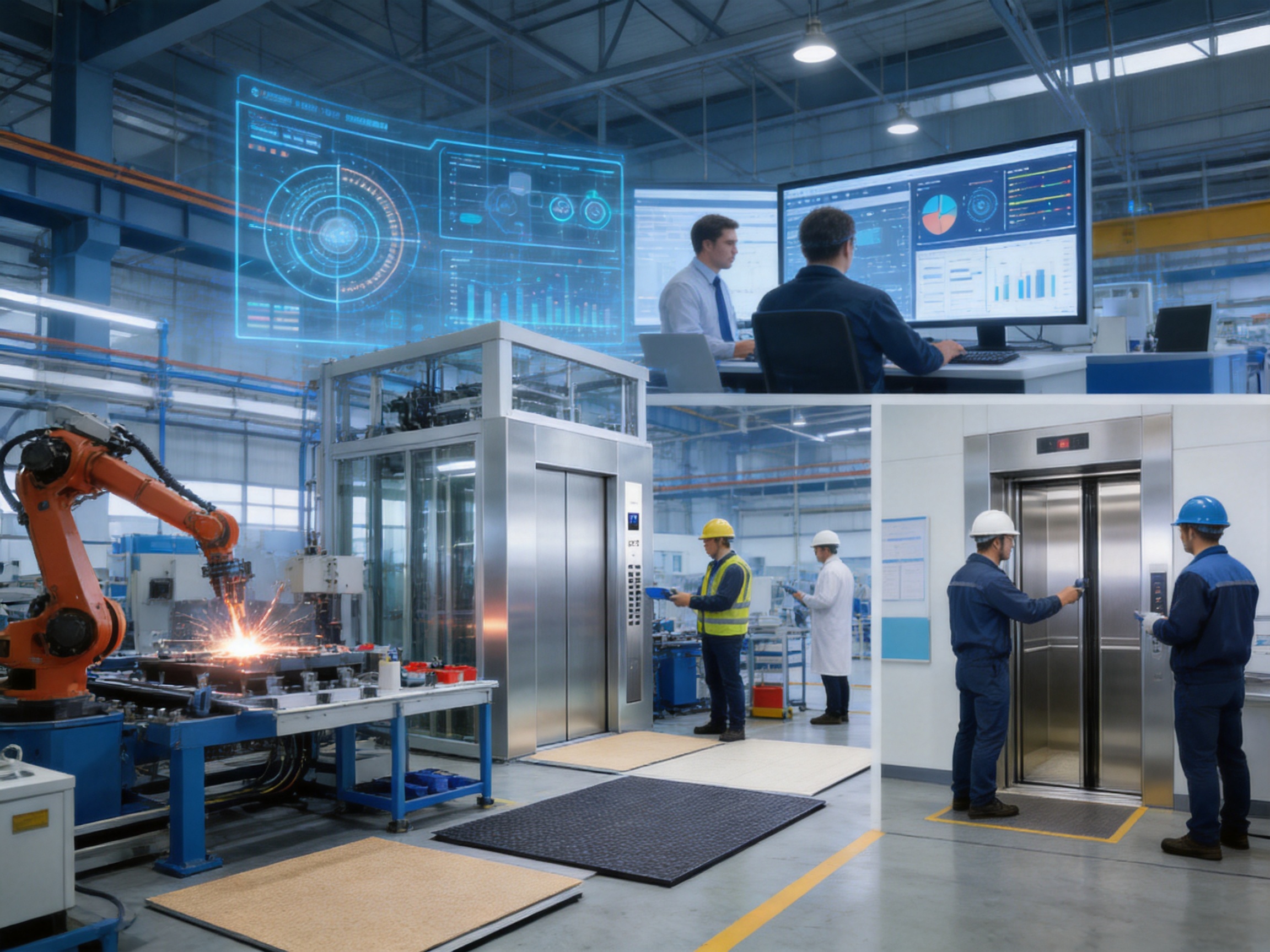
The company operates a large-scale manufacturing base and uses German Industry 4.0 intelligent manufacturing methods. Industry 4.0 generally involves the use of connected equipment, production data, automation, and digital coordination to improve manufacturing visibility and consistency. In an elevator factory, these methods can support more systematic management of materials, production steps, inspection activities, and quality information.
8.1 Automated Production Lines
Automated production lines can improve repeatability in manufacturing. When production tasks are supported by controlled equipment and standardized procedures, variation can be reduced and process information can be managed more consistently.
This is important for elevator production because an elevator is an integrated system consisting of many coordinated parts. The car, doors, control system, drive components, safety devices, and interior materials must work together accurately. Consistent manufacturing helps create a stronger foundation for final installation and commissioning.
8.2 Big Data and IoT Applications
The company applies big-data and Internet of Things technology to its elevator ecosystem. These technologies support the collection, transmission, and analysis of operating information. In practical terms, connected data can assist remote monitoring, service coordination, fault analysis, and long-term equipment management.
For the TO-Y002, intelligent oversight is directly relevant to hospital operators. Facility managers can benefit from a more transparent view of elevator operation, while maintenance teams can use available information to organize inspection and response activities.
8.3 Closed-Loop Quality Control
A full closed-loop quality control system is designed to connect manufacturing, inspection, feedback, correction, and verification. Instead of treating quality as a single inspection at the end of production, a closed-loop approach encourages continuous control throughout the product lifecycle.
This manufacturing philosophy is particularly valuable for elevators because field performance depends on the interaction of multiple subsystems. Feedback from production, installation, operation, and maintenance can be used to improve future processes and support more consistent product quality.
8.4 Research and Development Capability
Tenau has capabilities in the design, research and development, and manufacturing of low-speed, medium-speed, high-speed, and ultra-high-speed elevators. This range indicates experience across different elevator applications and performance levels.
Although the TO-Y002 is a standard medical passenger elevator rather than a high-speed product, access to broad technical experience can support the development of control systems, safety functions, manufacturing processes, and service methods. The product benefits from an organization that works across multiple elevator categories, including passenger elevators, freight elevators, escalators, moving walks, and related solutions.
9. Quality Management and International Orientation
The manufacturer reports compliance with ISO9001, ISO14001, and OHSMS18001 standards. These standards relate respectively to quality management, environmental management, and occupational health and safety management. Together, they reflect an organizational approach that considers product quality, environmental responsibility, and workplace safety.
For international elevator buyers, a structured management system can be an important consideration. Healthcare projects often involve multiple stakeholders, formal documentation, installation coordination, acceptance procedures, and long-term maintenance requirements. A manufacturer with established management practices is better positioned to support these project demands.
Tenau also emphasizes international technology and rigorous management systems. Its products are exported to many countries and regions worldwide. International experience can support familiarity with diverse project environments, customer expectations, installation conditions, and service requirements.
The company’s stated mission combines safety and environmental protection with the development of an intelligent elevator ecosystem. This aligns with the needs of modern healthcare construction, where building operators increasingly seek equipment that is not only functional but also connected, maintainable, and responsibly manufactured.
10. Advantages Compared with Basic Passenger Elevators
The TO-Y002 offers several advantages when compared with a basic passenger elevator that provides only standard floor service and simple door operation.
10.1 More Comprehensive Safety Architecture
A basic system may not provide the same combination of UCMP, full-area infrared detection, repeated closing, multi-level overspeed protection, automatic emergency braking, start control, positional security, and inspection functions. The TO-Y002 brings these features together as a coordinated safety architecture.
10.2 More Suitable for Healthcare Traffic
Independent running, anti-nuisance call cancellation, adjustable door timing, advance opening, and arrival notification are useful in buildings where passenger needs vary significantly. These functions help the elevator respond more effectively to patient transportation, staff movement, visitor traffic, and equipment handling.
10.3 Better Operational Visibility
Fault recording, remote monitoring, IoT connectivity, and intelligent oversight provide more information than a conventional stand-alone elevator. This can help maintenance teams detect issues, analyze events, and respond with greater efficiency.
10.4 More Practical Interior Materials
The combination of PVC flooring, stainless-steel walls, stainless-steel handrails, and functional lighting is suited to frequent use and regular cleaning. The interior is designed around practical service requirements rather than purely decorative presentation.
10.5 Stronger Manufacturing Support
The manufacturer’s integrated capabilities cover design, research and development, manufacturing, installation, and after-sales service. This can simplify project coordination and provide a clearer service pathway for customers seeking long-term support from one experienced elevator organization.
11. Installation, Commissioning, and Service Considerations
Even a well-designed elevator requires professional installation and commissioning. Healthcare projects often involve complex construction schedules, strict access requirements, and coordination with electrical, architectural, mechanical, and building-management systems. A comprehensive manufacturer can contribute technical support during these stages.
Commissioning should verify smooth travel, accurate stopping, door operation, infrared protection, call registration, independent running, emergency functions, arrival notification, and fault-reporting behavior. The goal is to ensure that the installed elevator performs as intended in the actual building environment.
After installation, routine maintenance should include inspection of door mechanisms, safety devices, control systems, drive equipment, lighting, handrails, flooring, and interior surfaces. Hospital elevators may experience heavy and continuous use, so preventive maintenance is important for long-term reliability.
The manufacturer provides a round-the-clock service team and a service network intended to respond to client requirements. Its support model covers the period from initial installation through long-term operation. This full-cycle approach is particularly valuable for medical facilities, where elevator availability can have a direct influence on daily workflows.
12. Sustainability and Long-Term Value
Long-term value in an elevator is determined by more than its purchase price. Facility owners must consider reliability, maintenance efficiency, energy use, downtime, interior durability, spare-part support, and the ability to monitor equipment over time.
The TO-Y002 contributes to long-term value through its intelligent control functions and service-oriented design. Smooth VVVF operation supports controlled travel, while anti-nuisance logic and advance opening can improve traffic efficiency. Fault records and remote monitoring can assist preventive maintenance and reduce the time required to understand operational problems.
The use of durable interior materials can also support longer service life. Hairline stainless-steel walls and stainless-steel handrails are appropriate for high-contact areas. PVC flooring provides a practical surface that can be maintained through regular cleaning routines. A functional interior may reduce the need for frequent decorative replacement in a demanding healthcare environment.
The manufacturer’s environmental management focus, together with its reported ISO14001-based management structure, demonstrates attention to environmental considerations at the organizational level. While specific project energy performance depends on configuration, building conditions, usage patterns, and local requirements, an intelligent elevator platform provides a useful foundation for responsible equipment management.
13. Recommended Applications
The Standard Medical Passenger Elevator with PVC Flooring is suitable for hospitals, clinics, rehabilitation centers, medical office buildings, nursing facilities, outpatient centers, and other healthcare-related structures. It may also be appropriate for public buildings that require a durable and safety-focused passenger elevator with a practical interior.
It is especially suitable where the project requires:
Reliable passenger transportation across multiple floors.
Smooth motion for patients and mobility-aid users.
Comprehensive entrance protection.
Practical interior materials that support routine cleaning.
Intelligent traffic and door management.
Remote monitoring and service visibility.
Fault records to support maintenance diagnosis.
Professional installation and long-term after-sales support.
The final elevator configuration should be confirmed according to building layout, traffic analysis, local regulations, shaft conditions, capacity requirements, travel height, door arrangement, power supply, and project-specific medical transportation needs.
14. Why Choose an Integrated Elevator Manufacturer
Working with an integrated manufacturer can provide advantages throughout the project lifecycle. A company involved in research and development can adjust technology according to market requirements. A company with its own manufacturing capabilities can coordinate production and quality control more directly. A company with installation and after-sales teams can provide continuity after delivery.
For a hospital elevator project, this continuity matters. The customer is not purchasing an isolated mechanical product; the customer is establishing a long-term transportation system within a critical building. Product selection, manufacturing, shipment, installation, commissioning, maintenance, and future service all influence the final result.
Tenau Elevator (China) Co., Ltd. presents itself as such an integrated partner. Its capabilities include elevator design, R&D, manufacturing, marketing, installation, and after-sales service. Its manufacturing base, automated production lines, intelligent systems, and international management practices support a coordinated approach to elevator delivery.
The company’s broader product portfolio includes passenger elevators, freight elevators, escalators, moving walks, and related elevator solutions. This range may be useful for developers or contractors managing several vertical transportation requirements within one project or across multiple buildings.
15. Frequently Asked Questions
Q1: What type of elevator is the TO-Y002?
The TO-Y002 is a standard medical passenger elevator designed for hospital and healthcare-related applications. It combines passenger transportation functions with safety, intelligent control, practical interior materials, and maintenance-oriented technologies.
Q2: What flooring does the elevator use?
The standard interior specification uses PVC flooring. PVC provides a practical surface for regular cleaning and maintenance, making it suitable for environments where cleanliness and repeated daily use are important.
Q3: How is passenger movement protected at the entrance?
The elevator uses full-area infrared detection and a comprehensive infrared light curtain. These systems monitor the entrance area and support door reopening when an obstacle is detected. The repeated-closing function allows the doors to attempt closure again after the obstruction is removed.
Q4: Does the elevator include protection against unintended movement?
Yes. The product includes an integrated Unintended Car Movement Protection device designed to arrest unregulated car shifts and improve passenger protection.
Q5: How does VVVF control improve the ride?
VVVF control manages motor operation to create a smoother acceleration and deceleration curve. This helps reduce sudden movement and vibration, creating a more comfortable travel experience for patients, staff, and visitors.
Q6: Can the elevator operate independently for a special task?
Yes. Independent running allows the car to respond only to commands entered from inside the car. This can be useful for patient transfers, equipment movement, medical staff operations, or other dedicated transportation requirements.
Q7: How does the elevator reduce unnecessary stops?
The elevator includes command cancellation through double-click operation and an anti-nuisance function that can intelligently cancel unnecessary calls under light-load conditions. These functions help reduce incorrect or avoidable stops.
Q8: Does the elevator provide fault information for maintenance personnel?
Yes. The fault self-diagnosis system records the latest 62 fault records. These records can help maintenance personnel investigate abnormal operation and support faster troubleshooting.
Q9: What is inspection mode?
Inspection mode provides inching running capability for safe and precise maintenance operations. It allows technicians to move the elevator in controlled increments during inspection and servicing.
Q10: Does the elevator support remote monitoring?
Yes. The product is supported by an intelligent remote monitoring system intended to provide real-time oversight of elevator operation. The manufacturer also applies IoT and big-data technologies within its broader elevator ecosystem.
Q11: What materials are used inside the car?
The standard interior includes a painted steel ceiling with fluorescent lighting and an integrated tube lamp, hairline stainless-steel car walls, double flat stainless-steel handrails, and PVC flooring.
Q12: Who manufactures the elevator?
The elevator is manufactured and supported by Tenau Elevator (China) Co., Ltd., a company involved in elevator design, research and development, manufacturing, marketing, installation, and after-sales service.
Q13: What manufacturing technologies does the company use?
The company reports the use of German Industry 4.0 intelligent manufacturing, automated production lines, big-data technology, IoT technology, and a full closed-loop quality control system.
Q14: Is the product suitable for every hospital project?
The product is designed for medical passenger elevator applications, but the final suitability depends on the building’s capacity, travel height, traffic requirements, shaft dimensions, local regulations, power conditions, and project specifications. These details should be confirmed during technical planning.
Q15: Why is after-sales service important for a hospital elevator?
Hospitals depend on consistent vertical transportation for patients, visitors, medical teams, and equipment. Professional after-sales service supports preventive maintenance, troubleshooting, operational continuity, and long-term equipment performance.
16. Conclusion
The Standard Medical Passenger Elevator with PVC Flooring is designed to meet the practical and safety-oriented requirements of healthcare transportation. Its value lies in the combination of multiple technologies and design decisions: smooth VVVF travel, full-area infrared protection, UCMP, repeated door closing, intelligent door timing, independent running, anti-nuisance operation, advance opening, arrival notification, fault self-diagnosis, inspection mode, emergency braking, and remote monitoring.
Its interior configuration supports the daily realities of healthcare facilities. Painted steel, integrated fluorescent lighting, hairline stainless-steel walls, double stainless-steel handrails, and PVC flooring create a functional environment focused on durability, visibility, passenger support, and routine maintenance.
The product is further strengthened by the manufacturer’s integrated capabilities. Tenau Elevator (China) Co., Ltd. combines elevator design, R&D, manufacturing, installation, and after-sales service. Its reported use of Industry 4.0 intelligent manufacturing, automated production, IoT technology, big-data applications, and closed-loop quality control demonstrates a commitment to modern production and connected equipment management.
For hospitals, clinics, rehabilitation centers, and similar facilities, the TO-Y002 offers a balanced solution for safe and dependable passenger movement. It is not limited to the basic function of moving people between floors. Instead, it combines safety engineering, passenger comfort, intelligent operation, practical materials, maintenance visibility, and long-term service support in one medical elevator platform.
References
1. Product specification materials for the Standard Medical Passenger Elevator with PVC Flooring, model TO-Y002.
2. Manufacturer-provided information on elevator safety functions, travel functions, and intelligent management systems.
3. Manufacturer-provided interior configuration data for ceiling, car wall, handrail, and flooring materials.
4. Manufacturer-provided overview of Industry 4.0 intelligent manufacturing, automated production lines, IoT technology, big-data applications, and closed-loop quality control.
5. Manufacturer-provided company profile covering elevator design, research and development, manufacturing, installation, marketing, and after-sales service.
6. General engineering principles concerning elevator safety, passenger accessibility, preventive maintenance, and healthcare facility transportation.
Product: Standard Medical Passenger Elevator with PVC Flooring

Related Products
Related News
Built on safety, forging trust in vertical mobility.
lf you have any questions or need help, feel free to contact with our team.
 export@tenau.com.cn
 +86-18601458867
 +86-512-65059883
Elevator & Escalator
Factory Add
East of Xicheng Road, North of Lianyi Road, Nanxun Economic Development Zone, Nanxun District, Huzhou City, Zhejiang Province, P.R.China
Copyright © Tenau Elevator (China) Co., Ltd. All Rightd Reserved.
Custom High Quality Elevator Suppliers and World Brand Elevator Company