

 en
 Español
 русский
 中文简体

Rosewood Veneer Titanium Etched Mirror Residential Elevator: A Refined Solution for Modern Villas
Content
- 1 1. Product Positioning for Contemporary Residential Architecture
- 2 2. Distinctive Cabin Design and Interior Materials
- 3 3. Advantages Compared with Conventional Residential Elevator Options
- 4 4. Travel Functions Designed for Family Use
- 5 5. Safety Architecture for Residential Confidence
- 6 6. Manufacturing Strength Behind the Product
- 7 7. Environmental and Space-Efficient Design Considerations
- 8 8. Customization for Villa Projects
- 9 9. Installation, Service, and Lifecycle Support
- 10 10. Why the TO-V040 Fits Premium Home and Villa Applications
- 11 11. Recommended Evaluation Criteria Before Purchase
- 12 12. Frequently Asked Questions
- 12.1 What type of elevator is the TO-V040?
- 12.2 What materials are used inside the cabin?
- 12.3 Does the elevator use a machine room?
- 12.4 Is the control cabinet designed for residential environments?
- 12.5 How does the elevator respond to a power failure?
- 12.6 What safety protections are included?
- 12.7 Is the elevator suitable for older family members?
- 12.8 Can the cabin be customized?
- 12.9 How does the elevator support comfortable travel?
- 12.10 What information appears on the displays?
- 12.11 Does the supplier provide monitoring technology?
- 12.12 What manufacturing capabilities support the product?
- 12.13 Which management standards does the company identify?
- 12.14 Where can buyers obtain project information?
- 13 13. Conclusion
- 14 References
- 15 Product: Rosewood Veneer Titanium Etched Mirror Residential Elevator
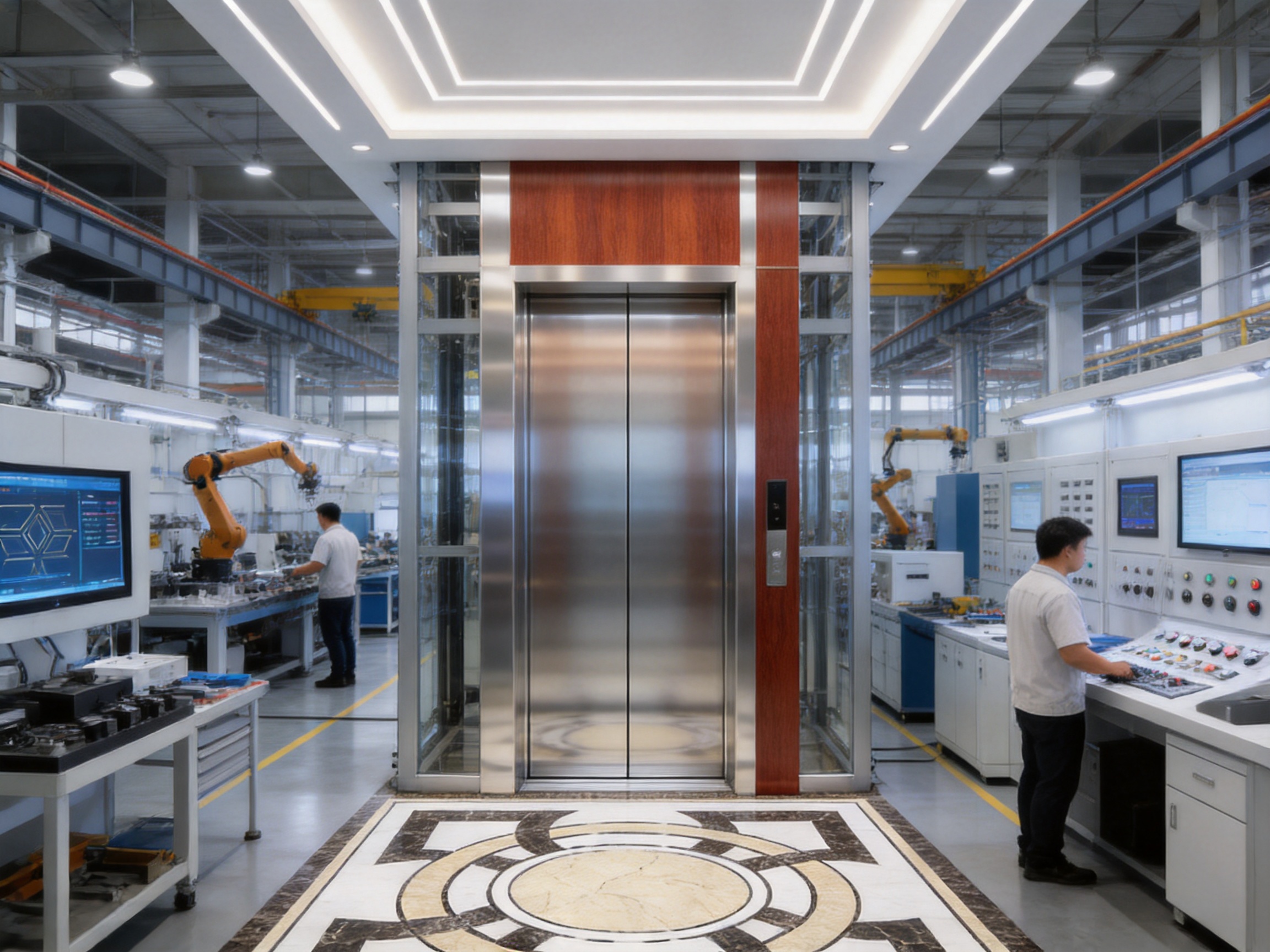
Residential elevators have moved beyond being simple vertical transportation devices. In modern villas, private residences, and luxury homes, an elevator is increasingly expected to combine safe movement, architectural elegance, quiet performance, intelligent control, and long-term dependability. The Rosewood Veneer Titanium Etched Mirror Residential Elevator, identified as model TO-V040, is designed around these expectations. It brings together a warm wood-inspired interior, distinctive titanium etched mirror decoration, environmentally considerate engineering, and a broad range of protection and comfort functions.
Designed for home and villa applications, this elevator provides a practical solution for multi-level residences while contributing to the visual character of the interior. Its rosewood veneer creates a welcoming atmosphere, while the titanium etched mirror stainless steel on the rear wall introduces a refined contemporary accent. A marble-pattern floor, integrated lighting, and carefully coordinated ceiling and wall materials complete the cabin environment.
The value of this residential elevator lies not only in its appearance. The product is supported by a machine-roomless and environmentally friendly design, a radiation-free integrated control cabinet, noise-reducing technology, self-rescue functions, emergency communication, and multiple systems for detecting and preventing unsafe operating conditions. These features make the TO-V040 a comprehensive residential mobility solution rather than merely a decorative elevator cabin.
For homeowners, architects, contractors, and property developers, the product offers a balance between private-home convenience and professional elevator engineering. It is suitable for projects where appearance, space efficiency, family safety, customized design, and dependable service must be considered together.
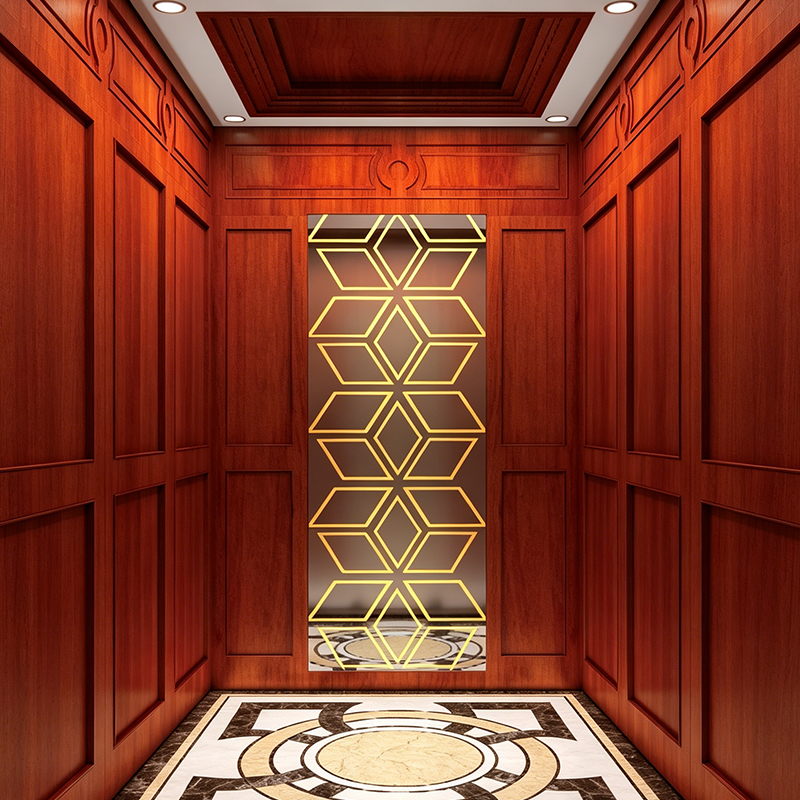
Rosewood Veneer Titanium Etched Mirror Residential Elevator
1. Product Positioning for Contemporary Residential Architecture
The design of a villa elevator must respond to a different environment from that of a commercial passenger elevator. In a commercial building, elevators are usually evaluated according to traffic capacity, public durability, and standardized appearance. In a private residence, the priorities are broader. The elevator must fit into the architectural concept of the home, operate quietly, remain easy to use for family members, and provide confidence during unusual situations such as a power interruption or a system fault.
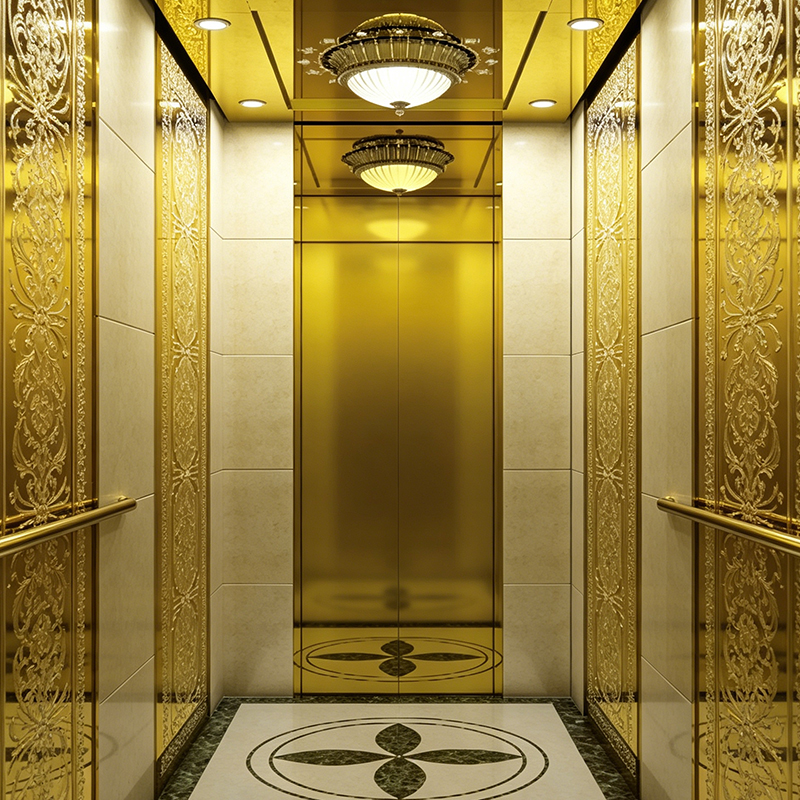
The TO-V040 addresses these residential requirements through a combination of visual customization and integrated safety technology. Its cabin is not presented as a generic metal enclosure. Instead, the interior uses rosewood veneer on the side walls, a coordinated rear-wall composition, a decorative ceiling, and a marble-pattern floor. This gives the elevator the character of a carefully designed room within the home.
The elevator can support residents who need convenient access between floors, including older family members, children, and people who may find stairs difficult to use. It can also improve the functional connection between living areas, bedrooms, entertainment spaces, garages, and upper-level terraces. In a villa, this convenience can become an important part of the overall residential experience.
At the same time, the elevator’s appearance is sufficiently refined for premium interior projects. Rosewood tones add warmth and visual depth, while titanium etched mirror stainless steel provides a contrasting surface with a more contemporary character. This combination can work with traditional, transitional, modern, and luxury residential styles when coordinated with surrounding flooring, wall finishes, doors, and lighting.
The model is therefore positioned as a residential elevator for projects in which transportation and interior design are equally important. It aims to deliver the practical benefits of a home elevator without making the cabin appear purely technical or industrial.
2. Distinctive Cabin Design and Interior Materials
Rosewood Veneer Side Walls
The side walls of the TO-V040 use rosewood veneer. Wood-inspired finishes are especially suitable for residential environments because they create a softer and more familiar atmosphere than an all-metal cabin. The rosewood appearance can visually connect the elevator with doors, cabinetry, wall panels, furniture, and other interior elements in the home.
In a villa project, material continuity is an important part of design quality. A residential elevator is often located near an entrance hall, staircase, living room, or private corridor. A cold or overly commercial cabin may feel disconnected from these spaces. The rosewood veneer helps the elevator become part of the interior design language rather than an isolated mechanical installation.
The veneer finish also provides visual richness without requiring excessive ornamentation. Its natural wood character can serve as the principal decorative surface, allowing the mirror stainless steel, ceiling lighting, and floor pattern to act as complementary elements. This produces a balanced cabin rather than one that depends on many competing decorative details.
Titanium Etched Mirror Stainless Steel
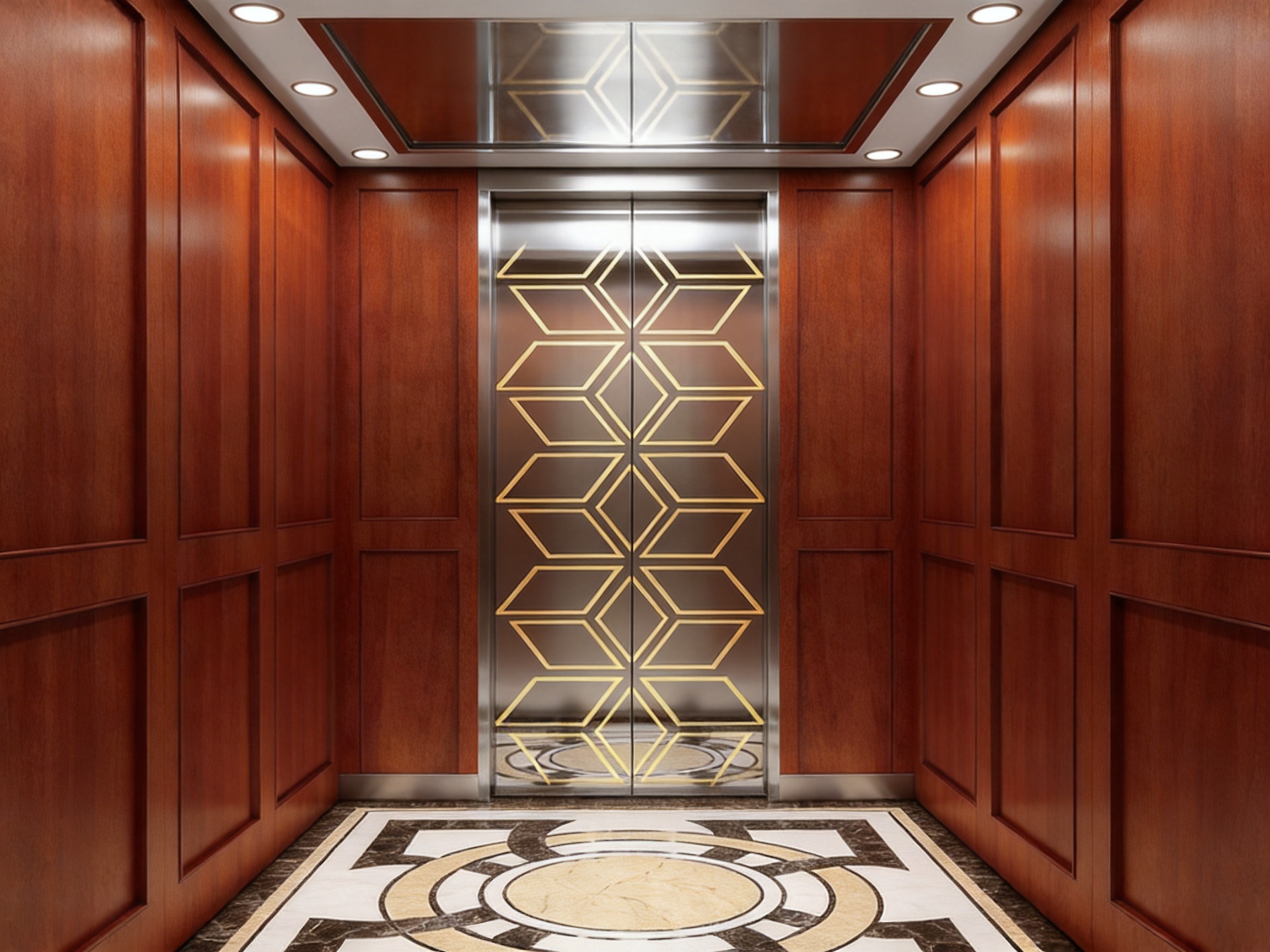
The rear wall combines rosewood elements with a central mirror and titanium etched stainless steel. This arrangement creates a focal point at the back of the cabin. The mirror contributes depth and can make the interior feel more open, while the etched titanium surface adds texture and a distinctive metallic finish.
Titanium etched mirror decoration is particularly useful in premium residential design because it combines reflective brightness with a patterned surface. Instead of presenting a completely plain mirror panel, the etched treatment introduces a more deliberate visual identity. It can complement modern architectural details, dark wood, stone, glass, and metal fixtures.
The rear-wall composition also supports the perception of greater cabin depth. Reflective surfaces can help a compact residential elevator feel less enclosed, especially when used alongside carefully placed lighting. The result is an interior that is elegant without becoming visually overwhelming.
Painted Steel Ceiling with Mirror Stainless Steel
The ceiling consists of a painted steel frame, a middle mirror stainless steel section, and surrounding downlight lighting. This arrangement uses a structured frame to support the lighting design while placing a reflective element at the center. The downlights provide functional illumination and contribute to a more polished cabin appearance.
Appropriate lighting is essential in a residential elevator. It supports visibility for buttons, displays, and door areas while helping passengers feel comfortable during travel. The ceiling design of the TO-V040 is intended to provide a clean distribution of light rather than relying on a visually intrusive fixture.
The combination of painted steel, mirror stainless steel, and downlights also gives the ceiling a layered appearance. It can coordinate with the titanium etched mirror rear wall while maintaining enough contrast against the rosewood side walls. This careful use of materials helps unify the cabin design.
Marble-Pattern Floor
The floor uses a marble-pattern finish. Marble is widely associated with premium architecture, and a marble-pattern surface can bring that visual language into the elevator while allowing the project to maintain a coordinated interior concept. It provides a stone-inspired foundation beneath the warm wood walls and metallic decorative elements.
The floor plays an important role in the passenger’s first impression of the cabin. Because it is viewed together with the walls and ceiling, its pattern must support rather than compete with the rest of the design. The marble appearance adds a sense of permanence and refinement, making the cabin feel more like a residential architectural space.
Cabin element |
Material or finish |
Design contribution |
Ceiling |
Painted steel frame, central mirror stainless steel, surrounding downlights |
Structured appearance, reflection, and comfortable illumination |
Side walls |
Rosewood veneer |
Warm residential character and visual continuity with interior furnishings |
Rear wall |
Rosewood on both sides, central titanium etched mirror stainless steel |
Decorative focal point, depth, and contemporary contrast |
Floor |
Marble pattern |
Premium appearance and coordination with villa interiors |
3. Advantages Compared with Conventional Residential Elevator Options
Residential elevator projects often face a choice between basic standardized products and highly customized systems. A basic product may provide transportation but offer limited design flexibility, while a highly decorative system may focus on appearance without presenting a complete description of safety, control, service, and manufacturing capabilities. The TO-V040 is intended to bridge these areas.
Integrated Aesthetic and Functional Design
One advantage is the integration of cabin appearance and elevator functionality. The rosewood veneer, etched mirror stainless steel, marble-pattern floor, and illuminated ceiling are not separate decorative accessories added to an otherwise standard concept. They are presented as a coordinated cabin design suitable for a private home.
This approach can simplify decision-making for homeowners and designers. Instead of selecting unrelated wall, ceiling, and floor treatments, the project can begin with a unified visual direction. Customization remains possible, but the base design already establishes a coherent relationship between natural-looking, reflective, and stone-inspired materials.
Machine-Roomless Design
The product uses a machine-roomless design. For residential architecture, this can be a significant advantage because it may help reduce the need for a separate machine room above or near the elevator shaft. Space that might otherwise be dedicated to mechanical equipment can potentially be used more efficiently within the building plan, subject to project conditions and applicable requirements.
A machine-roomless arrangement can be valuable in villas where roofline design, attic space, and upper-floor planning are carefully controlled. It may support a cleaner architectural solution and reduce the visual impact of elevator equipment. It can also help architects coordinate the elevator with limited building space during the early design stage.
The practical outcome depends on the specific building, shaft arrangement, local regulations, and installation conditions. Nevertheless, the machine-roomless concept gives the TO-V040 a strong positioning advantage for residential projects where space efficiency matters.
Radiation-Free Integrated Control Cabinet
The elevator incorporates a radiation-free integrated control cabinet. According to the product information, the control design is intended to support safe operation and strong interference resistance. In a family home, where the elevator may be located close to bedrooms, living spaces, or other occupied areas, the emphasis on a radiation-free operating environment is especially relevant to user confidence.
The integrated cabinet also helps consolidate essential control components into a coordinated system. This can support a more organized installation and contribute to the machine-roomless design concept. Strong interference resistance is important because elevator controls must respond reliably to signals from buttons, sensors, motors, doors, and monitoring systems.
Noise-Reducing Operation
Noise is one of the most noticeable differences between a suitable home elevator and a product designed primarily for commercial or industrial settings. In a private residence, elevator movement may occur near bedrooms, studies, family rooms, or entertainment areas. Excessive vibration or mechanical sound can reduce comfort even when the elevator performs its basic transportation function.
The TO-V040 uses noise-reducing technology with smooth and comfortable running. This makes quiet operation one of its important residential advantages. Smooth movement can improve the experience for passengers and reduce the feeling of abrupt starting, stopping, or direction changes.
Comfortable operation also supports the product’s premium positioning. A well-designed cabin should not only look elegant when stationary; it should maintain that impression during travel. Quietness, controlled movement, lighting, ventilation, and clear displays all contribute to this complete experience.
Comprehensive Safety and Self-Rescue Functions
Another distinction is the product’s range of safety functions. The information provided for the TO-V040 includes fault detection, motor and inverter overheat protection, overload protection, overcurrent protection, anti-slip protection, anti-reverse protection, and door block protection.
These functions address different potential operating conditions. Overload and overcurrent protection help manage electrical and load-related risks. Motor and inverter overheat protection supports protection of important operating components. Anti-slip and anti-reverse functions are intended to prevent undesirable movement conditions, while door block protection helps respond to obstructions in the door area.
The elevator also includes self-rescue systems that activate during faults or power failures. For a residential elevator, this function can be particularly reassuring. Family members may not always be accompanied by trained building staff, so the elevator must provide a structured response when normal operation is interrupted.
An emergency calling system connects the cabin to external support. This communication function is an important part of a residential safety strategy because it can help occupants request assistance when they need it. Together, self-rescue and emergency calling functions provide more than ordinary travel control; they support a response process for abnormal situations.
4. Travel Functions Designed for Family Use
The travel functions of a residential elevator must be understandable, dependable, and suitable for different members of a household. The TO-V040 includes features intended to protect family health, support reliable operation, and provide assistance during faults or power failures.
Family-Oriented Operation
Unlike a public elevator, a home elevator may be used by people of different ages and levels of technical familiarity. A child, an older adult, a visitor, or a family member carrying household items should be able to use the elevator without encountering unnecessary complexity.
The product includes call management, automatic doors, adjustable door timings, and inspection modes. Automatic doors make routine travel more convenient, while adjustable timing can help accommodate the needs of a particular home. For example, a residence may require a different door-holding period from a high-traffic public building.
Inspection modes support professional maintenance and servicing. They allow authorized personnel to assess and manage the elevator under controlled conditions. This distinction between ordinary passenger use and inspection operation is important for maintaining an appropriate safety framework.
Clear Floor and Direction Information
Cabin and landing displays provide floor information, travel direction, and fault warnings. Clear information reduces uncertainty, especially for users who may be unfamiliar with the elevator or who need confirmation that the system has registered a call correctly.
In a multi-level villa, floor identification can be especially useful when bedrooms, offices, storage areas, garages, and entertainment rooms are distributed across several levels. Direction indicators help passengers understand the current status of the elevator before entering or while traveling.
Fault warnings are also important because they provide information when the system detects an abnormal condition. A visible warning can help occupants respond appropriately and avoid repeated operation when professional support is required.
Ventilation and Cabin Comfort
The product information identifies ventilation and lighting as part of the comfortable cabin environment. These details are easy to overlook, but they have a direct effect on the passenger experience. A residential elevator should feel clean, visible, and comfortable during both short and extended journeys.
Lighting helps passengers see controls, floor indicators, and door areas. Ventilation contributes to the cabin environment and supports a more pleasant experience. When combined with noise-reducing technology and smooth running, these features help the elevator feel integrated into the home rather than like a separate mechanical space.
5. Safety Architecture for Residential Confidence
Safety is the central consideration in any elevator project. In a private home, safety has an additional emotional dimension because the elevator is used by family members and guests in a familiar personal environment. The TO-V040 is designed with multiple protective functions rather than relying on a single safety measure.
Fault Detection
Fault detection provides a foundation for responsive operation. A system that can identify abnormal conditions is better positioned to limit risks, issue warnings, and activate appropriate protective procedures. For a residential elevator, detection is important because homeowners may not immediately recognize a technical problem through sound or visual inspection.
Fault detection also supports maintenance and service activities. When combined with professional service tracking and optional IoT technology, it can help create a more informed approach to elevator management. Online monitoring and trouble warnings may provide useful information for service teams, subject to the selected configuration and project requirements.
Thermal and Electrical Protection
Motor and inverter overheat protection is included among the product’s safety functions. Elevator drive components must operate within appropriate conditions, and temperature management is part of protecting equipment performance. Overcurrent protection addresses abnormal current conditions, while overload protection responds to excessive passenger or load conditions.
These functions contribute to a layered protection strategy. Each addresses a different type of potential problem, helping the elevator respond more appropriately than a system with limited monitoring. The objective is to support reliable movement while reducing the likelihood that abnormal electrical or mechanical conditions will continue unnoticed.
Movement and Door Protection
Anti-slip and anti-reverse functions are designed to protect against undesirable movement behavior. Door block protection addresses situations in which the door area encounters an obstruction. In a family home, where children, pets, luggage, and household items may be present, door protection is an important consideration.
Automatic doors and door timing controls further support safe and convenient use. The elevator should allow passengers to enter and exit without unnecessary pressure while ensuring that the door sequence remains controlled. A combination of mechanical, electrical, and control protections helps create a more complete residential elevator system.
Emergency Communication and Self-Rescue
Power interruptions and system faults are among the situations that concern homeowners most. The self-rescue system is designed to activate during such events, supporting a safer response when normal operation is unavailable. The emergency calling system provides a channel to external support, helping occupants communicate their situation.
These functions are particularly valuable because private residences may not have a staffed reception desk, security office, or building maintenance team available at all times. An elevator with self-rescue and emergency calling capabilities is better aligned with the realities of independent home use.
6. Manufacturing Strength Behind the Product
The performance and appearance of a residential elevator depend on more than the visible cabin. They are also influenced by engineering, production organization, quality management, component coordination, installation support, and after-sales service. Tenau Elevator (China) Co., Ltd. describes itself as a comprehensive elevator manufacturer integrating design, research and development, manufacturing, marketing, installation, and after-sales service.
This integrated structure can provide advantages over suppliers that focus on only one part of the product lifecycle. Elevator systems require close coordination between mechanical design, electrical control, cabin production, safety systems, installation, and maintenance. When these activities are managed within a comprehensive manufacturing and service framework, the supplier can maintain clearer responsibility across the project.
Design and Research Capability
The company has capabilities in the design and research and development of low-speed, medium-speed, high-speed, and ultra-high-speed elevators. Although the TO-V040 is a residential product, this broader technical background is relevant because it indicates experience across different elevator categories and operating requirements.
Residential elevators can benefit from engineering knowledge developed across passenger, freight, high-speed, and specialized elevator applications. Such experience can support more disciplined approaches to control, safety, structure, energy considerations, and system integration.
German-Origin Technical Background
The company states that it originates from Germany and introduces international technologies and rigorous management systems. This background contributes to the product’s positioning as a professionally engineered solution rather than a purely decorative home accessory.
International technology introduction can support the adoption of established approaches to elevator control, manufacturing organization, and quality management. It also helps a supplier serve customers in different markets, where project expectations, building practices, and product requirements may vary.
Intelligent Manufacturing and Industry 4.0
The company uses German Industry 4.0 intelligent manufacturing, automated production lines, big data, and IoT technology. These technologies are significant because modern elevator manufacturing involves many interconnected components and quality checkpoints. Digital and automated production processes can help improve consistency, traceability, and production coordination.
Automated production lines can reduce dependence on irregular manual processes for suitable manufacturing tasks. Big data can support the collection and analysis of production or service information, while IoT technology can support online monitoring and trouble warnings when selected for the project.
For a residential elevator, the practical benefit of these capabilities is not limited to factory efficiency. They can support the broader lifecycle of the product, from design and manufacturing to installation, operation, monitoring, and after-sales service. A home elevator is a long-term building system, so lifecycle support is as important as initial appearance.
Closed-Loop Quality Control
Tenau describes a full closed-loop quality control system. A closed-loop approach suggests that quality information can be reviewed across multiple stages rather than being considered only at the final inspection. Design, procurement, production, assembly, testing, installation, and service all influence final performance.
This approach is valuable for a product such as the TO-V040, which combines decorative finishes with mechanical and electronic systems. The rosewood veneer, titanium etched mirror stainless steel, lighting, control cabinet, doors, displays, and safety components must be coordinated carefully. Quality management should therefore address both visible craftsmanship and hidden system reliability.
Management Standards
The company identifies compliance with ISO9001, ISO14001, and OHSMS18001 standards. These standards correspond to quality management, environmental management, and occupational health and safety management. Their inclusion demonstrates an organized management orientation covering product quality, environmental responsibility, and workplace safety.
Environmental management is consistent with the product’s machine-roomless and environmentally friendly design positioning. Quality management supports the need for reliable elevator production and service. Occupational health and safety management reflects the importance of safe practices throughout manufacturing and installation operations.
7. Environmental and Space-Efficient Design Considerations
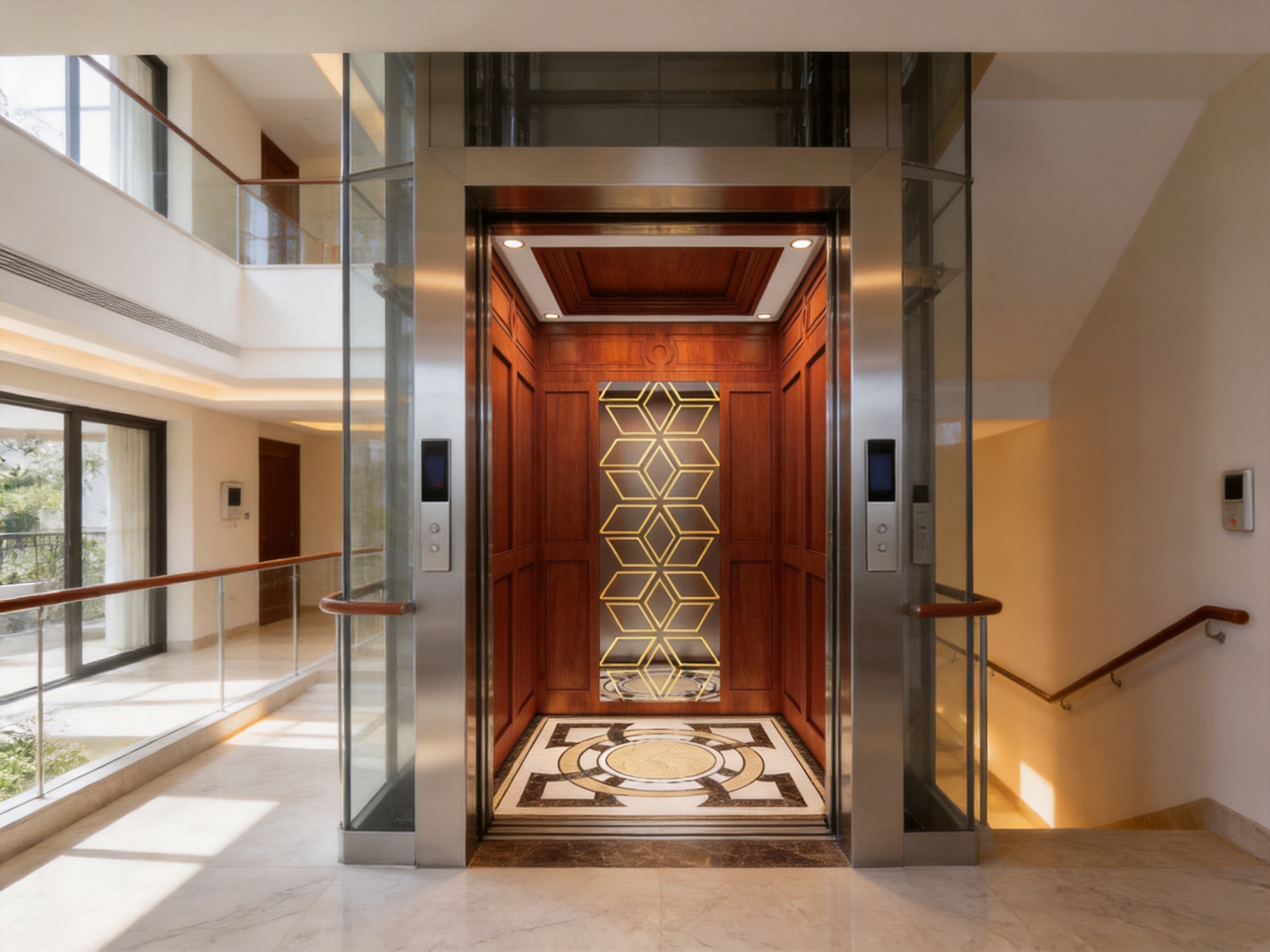
Environmental responsibility in a residential elevator can be evaluated through several factors, including the use of space, operating technology, manufacturing practices, and long-term serviceability. The TO-V040 is described as environmentally friendly and machine-roomless, providing a foundation for a more efficient architectural approach.
A machine-roomless elevator can help reduce the building area required for separate equipment. In a villa, every square meter may have a strong design or functional value. Avoiding a dedicated machine room can support more flexible planning of the roof, upper floors, or adjacent technical areas, depending on the project layout.
The company’s ISO14001 environmental management orientation also provides context for its environmental positioning. Environmental management is not limited to the installed product; it can include manufacturing processes, resource control, operational procedures, and continuous improvement.
Energy performance, environmental impact, and local compliance should always be reviewed for the specific elevator configuration and building. The product’s environmental advantages should therefore be considered as part of a complete project assessment rather than as an isolated claim.
8. Customization for Villa Projects
Customization is a major requirement in high-quality residential elevator projects. Every villa has a different architectural style, shaft size, floor arrangement, interior material palette, and family usage pattern. The TO-V040 provides a design direction while allowing flexible customization according to the supplied product information.
Interior Coordination
The rosewood veneer can be coordinated with wood flooring, wall paneling, stair handrails, cabinetry, and furniture. The titanium etched mirror stainless steel can relate to metal door hardware, lighting details, balustrades, and contemporary decorative features. The marble-pattern floor can complement stone surfaces in entrances, halls, bathrooms, or living spaces.
Designers can use the cabin as a transition between different areas of the home. For example, the elevator can connect a warm living area with a more contemporary entertainment floor. Its combination of natural-looking and reflective materials gives it enough flexibility to bridge different design treatments.
Lighting and Atmosphere
The ceiling’s surrounding downlights provide a base for a comfortable atmosphere. Lighting design may be coordinated with the home’s general lighting temperature and intensity, subject to the available configuration. The goal is to ensure that the elevator feels like part of the residence rather than a separate public facility.
Lighting also affects how the rosewood veneer and titanium etched mirror are perceived. Softer illumination can emphasize the warmth of the wood finish, while reflective surfaces can increase the sense of depth. A carefully planned lighting arrangement supports both practical visibility and decorative quality.
Project-Specific Planning
Although the product has a defined design concept, each installation should be reviewed according to the building’s shaft dimensions, landing arrangement, electrical conditions, local codes, travel height, user expectations, and installation environment. Early coordination between the homeowner, architect, builder, and elevator supplier can reduce conflicts during construction.
Professional planning should consider the location of landing doors, access for installation, maintenance requirements, emergency procedures, and the relationship between the elevator and nearby rooms. The machine-roomless design may simplify certain planning aspects, but it does not eliminate the need for careful engineering review.
9. Installation, Service, and Lifecycle Support
An elevator is a long-term system, and the quality of service after delivery is central to its value. Tenau provides installation and after-sales service as part of its comprehensive business structure. It also offers one-to-one service tracking and optional IoT technology for online monitoring and trouble warning.
One-to-One Service Tracking
One-to-one service tracking can give a project a clearer communication structure. Instead of requiring the customer to contact different departments for design, delivery, installation, and service issues, a dedicated service relationship can help organize information throughout the project.
This approach is especially useful for residential customers, who may not have previous experience purchasing an elevator. A coordinated service process can help explain technical requirements, project stages, installation preparation, operating procedures, and maintenance considerations.
Optional IoT Monitoring
Optional IoT technology supports online monitoring and trouble warning. Depending on the selected configuration, connected monitoring may help provide information about elevator status and potential service needs. This can support a more proactive approach to maintenance rather than relying only on periodic visits or user reports.
For homeowners, monitoring can provide additional confidence. For service teams, it may help identify a developing issue earlier and prepare for a more informed response. The exact functions, connectivity requirements, data policies, and service scope should be confirmed for each project.
Professional After-Sales Service
Elevator safety and reliability depend on appropriate installation, commissioning, inspection, maintenance, and repair. A supplier with integrated after-sales capabilities can support these activities more effectively than a seller that only delivers equipment.
Tenau presents its service philosophy as professional, prompt, and considerate, with safety and customer satisfaction as priorities. This is important for a residential elevator because service quality affects the household continuously after installation. A well-designed cabin must be supported by equally responsible technical assistance.
10. Why the TO-V040 Fits Premium Home and Villa Applications
The product’s suitability for premium residential applications comes from the interaction of several features rather than a single decorative or technical specification. Its appearance is refined, but it also provides practical safety and comfort systems. Its machine-roomless design supports architectural flexibility, while its control and monitoring functions support long-term use.
The warm rosewood interior helps the elevator integrate with a home. The titanium etched mirror creates a distinctive luxury detail. The marble-pattern floor and illuminated ceiling complete the visual composition. Together, these elements make the cabin appropriate for a residence where the elevator is visible to family members and guests.
At the system level, the product includes radiation-free integrated control, interference resistance, noise reduction, smooth travel, self-rescue, emergency calling, fault detection, and multiple protective functions. This makes it more comprehensive than a decorative cabin that lacks clearly identified operational support.
At the manufacturing level, the supplier offers design, research and development, automated production, Industry 4.0 practices, quality control, international technology, and after-sales service. These capabilities help position the product against competitors that may offer limited customization, less integrated service, or less developed manufacturing support.
For architects and developers, the TO-V040 can serve as a design feature within a villa project. For homeowners, it can provide convenient movement and family-oriented safety. For contractors, the machine-roomless arrangement and coordinated supplier support may help simplify project planning. For international buyers, the company’s export experience and comprehensive product range provide a broader supply foundation.
11. Recommended Evaluation Criteria Before Purchase
Customers should evaluate a residential elevator according to the complete project rather than appearance alone. The following areas deserve attention during consultation and technical review.
Building Compatibility
The elevator shaft, landing locations, travel height, floor arrangement, electrical supply, structural conditions, and access for installation should be confirmed. A machine-roomless configuration can provide planning advantages, but the building must still meet the required technical conditions.
Usage Requirements
The household should consider how frequently the elevator will operate, who will use it, whether it will carry household goods, and what level of customization is desired. These factors can influence the appropriate configuration and control settings.
Safety and Emergency Procedures
Customers should understand the self-rescue function, emergency calling system, fault warnings, inspection procedures, and maintenance responsibilities. Family members should know how to respond if the elevator stops or displays a warning.
Interior Materials
The rosewood veneer, titanium etched mirror stainless steel, ceiling treatment, downlights, and marble-pattern floor should be reviewed alongside the home’s architectural materials. The supplier can advise on available customization and coordination options.
Service and Monitoring
Before ordering, customers should clarify installation responsibilities, commissioning, maintenance schedules, warranty terms, service response procedures, spare parts, and the availability of optional IoT monitoring. Clear documentation supports a smoother project and better long-term ownership.
12. Frequently Asked Questions
What type of elevator is the TO-V040?
The TO-V040 is a residential elevator designed for home and villa applications. It belongs to the home villa elevator category and combines a decorative cabin with safety, comfort, control, and emergency functions.
What materials are used inside the cabin?
The side walls use rosewood veneer. The rear wall uses rosewood on both sides with a central mirror and titanium etched stainless steel. The ceiling uses a painted steel frame, central mirror stainless steel, and surrounding downlight lighting. The floor has a marble-pattern finish.
Does the elevator use a machine room?
The product uses a machine-roomless design. This can support more efficient building planning, although the exact installation arrangement must be reviewed according to the project’s structure, dimensions, local requirements, and technical conditions.
Is the control cabinet designed for residential environments?
The product includes a radiation-free integrated control cabinet with strong interference resistance. These characteristics are intended to support safe and reliable operation in a family environment.
How does the elevator respond to a power failure?
The product includes self-rescue systems designed to activate during faults or power failures. It also includes an emergency calling system that connects the cabin to external support.
What safety protections are included?
The listed safety functions include fault detection, motor and inverter overheat protection, overload protection, overcurrent protection, anti-slip protection, anti-reverse protection, and door block protection.
Is the elevator suitable for older family members?
The elevator is designed for residential use and includes automatic doors, call management, clear cabin and landing displays, lighting, ventilation, emergency communication, and self-rescue functions. These features can support convenient family use, while the final suitability should be assessed according to the household’s specific needs.
Can the cabin be customized?
The product information states that the rosewood veneer and titanium etched mirror cabin offers flexible customization. Available options should be confirmed with the supplier according to the project’s design, dimensions, materials, and technical requirements.
How does the elevator support comfortable travel?
Noise-reducing technology is used to support smooth and comfortable running. The cabin also includes lighting and ventilation features intended to improve the passenger environment.
What information appears on the displays?
Cabin and landing displays provide floor information, travel direction, and fault warnings. This helps passengers understand the elevator’s current status.
Does the supplier provide monitoring technology?
Optional IoT technology is available for online monitoring and trouble warning. The exact monitoring functions and service conditions should be confirmed for each project.
What manufacturing capabilities support the product?
The supplier describes integrated design, research and development, manufacturing, marketing, installation, and after-sales service. It also identifies automated production lines, German Industry 4.0 intelligent manufacturing, big data, IoT technology, and a full closed-loop quality control system.
Which management standards does the company identify?
The company identifies ISO9001, ISO14001, and OHSMS18001 standards. These relate to quality management, environmental management, and occupational health and safety management.
Where can buyers obtain project information?
Customers can contact Tenau Elevator (China) Co., Ltd. through its international sales department for product configuration, customization, installation, service, and project consultation. Technical details should be confirmed directly before ordering.
13. Conclusion
The Rosewood Veneer Titanium Etched Mirror Residential Elevator is designed to meet the combined demands of modern villa architecture and dependable family transportation. Its rosewood veneer side walls, titanium etched mirror rear wall, marble-pattern floor, and illuminated ceiling provide a distinctive residential identity. At the same time, its machine-roomless structure, radiation-free integrated control cabinet, noise-reducing technology, and smooth operation support practical home use.
The product’s safety functions further strengthen its residential positioning. Fault detection, thermal and electrical protection, anti-slip and anti-reverse functions, door block protection, self-rescue systems, and emergency calling provide multiple layers of support for routine travel and abnormal situations. Automatic doors, adjustable timings, ventilation, lighting, call management, and clear displays contribute to user comfort.
Behind the product is a comprehensive manufacturing and service organization with capabilities in design, research and development, automated production, intelligent manufacturing, quality management, installation, and after-sales support. The use of Industry 4.0 methods, big data, IoT technology, and closed-loop quality control provides a modern foundation for consistent production and lifecycle service.
For homeowners, the TO-V040 can enhance accessibility and comfort without sacrificing interior design quality. For architects and developers, it offers a coordinated cabin concept with flexible customization. For buyers comparing suppliers, its combination of visual refinement, integrated safety, machine-roomless planning, manufacturing capability, and service support makes it a strong option for high-quality residential elevator projects.
References
1. Product specification information for residential elevator model TO-V040, including cabin materials, travel functions, safety functions, and service features.
2. Tenau Elevator corporate profile and manufacturing capability information.
3. General principles of residential elevator planning, cabin design, safety management, and lifecycle service.
4. ISO 9001 quality management system principles.
5. ISO 14001 environmental management system principles.
6. OHSMS 18001 occupational health and safety management principles.
7. General Industry 4.0 concepts relating to automated manufacturing, data management, and connected equipment monitoring.
Product: Rosewood Veneer Titanium Etched Mirror Residential Elevator

Related Products
Related News
Built on safety, forging trust in vertical mobility.
lf you have any questions or need help, feel free to contact with our team.
 export@tenau.com.cn
 +86-18601458867
 +86-512-65059883
Elevator & Escalator
Factory Add
East of Xicheng Road, North of Lianyi Road, Nanxun Economic Development Zone, Nanxun District, Huzhou City, Zhejiang Province, P.R.China
Copyright © Tenau Elevator (China) Co., Ltd. All Rightd Reserved.
Custom High Quality Elevator Suppliers and World Brand Elevator Company