

 en
 Español
 русский
 中文简体

Advanced Elevator Operation Panels for Safer, Smarter, and More Refined Vertical Transportation
Content
- 1 1. The Role of an Elevator Operation Panel in a Complete Elevator System
- 2 2. Product Positioning of the TO-C8002X
- 3 3. Key Advantages Compared with Generic or Disconnected Alternatives
- 4 4. Manufacturing Strength Behind the Product
- 5 5. Design Considerations for Different Elevator Applications
- 6 6. Materials, Finish, and Long-Term Usability
- 7 7. Engineering and Installation Coordination
- 8 8. Quality Management and International Project Capability
- 9 9. Sustainability and Responsible Manufacturing
- 10 10. Comparison Framework for Professional Buyers
- 11 11. Recommended Specification Process
- 12 12. Maintenance and Lifecycle Considerations
- 13 13. Why Manufacturer Experience Matters
- 14 14. Frequently Asked Questions
- 14.1 Q1: What is the TO-C8002X?
- 14.2 Q2: Which elevators can use this operation panel?
- 14.3 Q3: Is the panel suitable for customized elevator projects?
- 14.4 Q4: What makes an elevator-manufacturer-supplied panel different from a generic panel?
- 14.5 Q5: Can the panel be used in a hospital elevator?
- 14.6 Q6: Can it be integrated into a luxury or panoramic elevator cabin?
- 14.7 Q7: How does intelligent manufacturing support product quality?
- 14.8 Q8: What management standards does the manufacturer state that it follows?
- 14.9 Q9: What information should be sent when requesting a quotation?
- 14.10 Q10: Does the company provide installation and after-sales service?
- 14.11 Q11: Is the panel appropriate for a high-speed elevator?
- 14.12 Q12: How should the panel be maintained?
- 14.13 Q13: Can the panel support different building interior styles?
- 14.14 Q14: Why should the panel be approved together with the elevator cabin?
- 15 15. Conclusion
- 16 References
- 17 Product: TO-C8002X
Elevator operation panels are among the most frequently used and most visible components in a vertical transportation system. Every passenger, building manager, maintenance technician, and service provider interacts with the panel directly or indirectly. A well-designed panel must therefore do more than provide buttons. It must support intuitive operation, clear communication, reliable service access, long-term durability, attractive interior design, and compatibility with the wider elevator control system.
The TO-C8002X elevator operation panel is developed for modern elevator applications that demand a balanced combination of usability, visual quality, manufacturing precision, and dependable performance. As part of a comprehensive elevator product portfolio, it can be considered for passenger elevators, panoramic and observation elevators, hospital elevators, home villa elevators, cargo elevators, car elevators, high-speed elevators, and other customized vertical transportation projects.
Its value is not limited to the panel itself. The product is supported by the capabilities of Tenau Elevator (China) Co., Ltd., a professional elevator manufacturer integrating design, research and development, manufacturing, marketing, installation, and after-sales service. This integrated structure allows the operation panel to be developed with a broader understanding of elevator systems, cabin environments, user behavior, control requirements, and project-specific installation conditions.
The result is an operation panel solution intended to contribute to a complete elevator experience: convenient for passengers, practical for operators, suitable for interior designers, and manageable for project contractors.
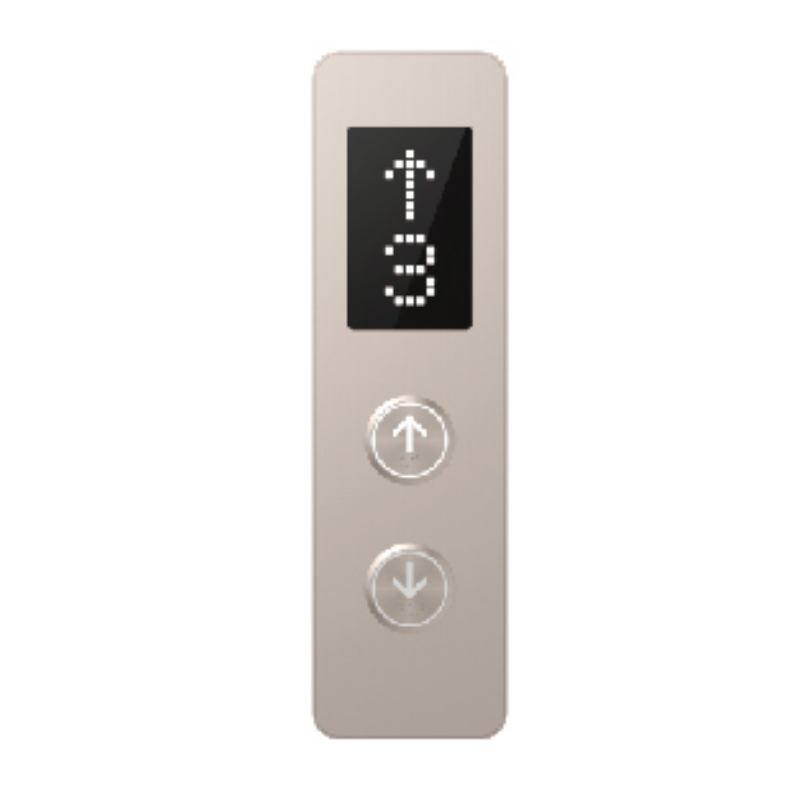
TO-C8002X
1. The Role of an Elevator Operation Panel in a Complete Elevator System
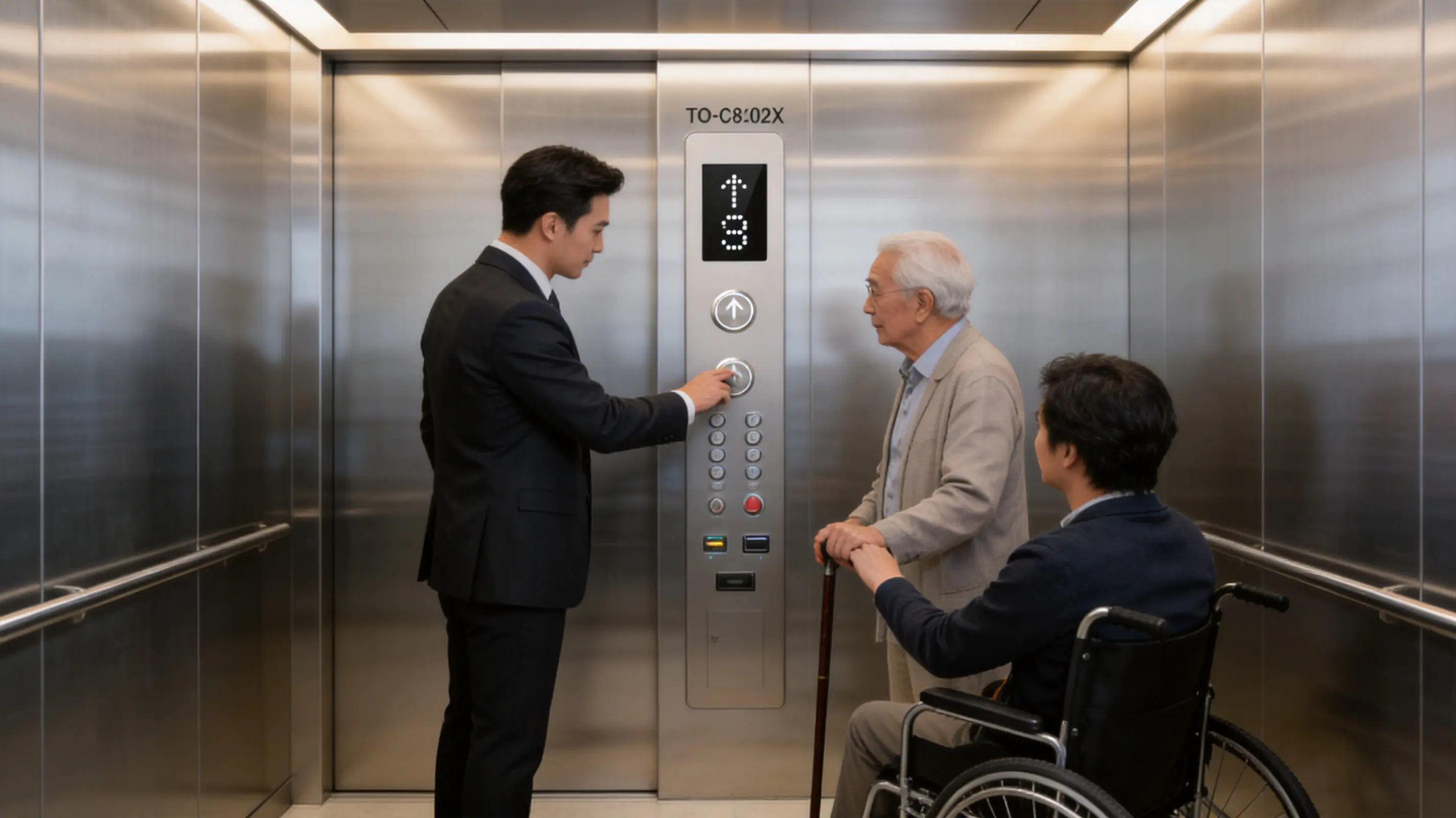
An elevator operation panel is the primary human-machine interface inside an elevator car. It allows passengers to select floors, activate door functions, request assistance, and interact with other available elevator services. In certain applications, it may also incorporate displays, access control, emergency communication, destination selection, service functions, and customized indicators.
Because the operation panel is used repeatedly throughout the elevator’s service life, its design must take account of both immediate usability and long-term reliability. A button that is difficult to identify, a display that is hard to read, or a panel surface that is difficult to clean can negatively affect the passenger experience. In a hospital, hotel, office tower, residential building, or logistics facility, these small details can influence the perceived quality of the entire building.
The panel also has an important relationship with elevator safety. While the panel is not a substitute for the elevator safety system, its controls and indicators must work correctly with the elevator controller and associated devices. Floor selection, door opening, alarm functions, fire-service operation, inspection functions, and access control may all require coordinated electrical and mechanical integration.
For this reason, a quality operation panel should be viewed as part of a complete system rather than as an isolated decorative component. The design, materials, wiring, interface layout, mounting structure, and service access should be considered together.
1.1 Passenger Interaction
Passengers generally expect an elevator to be simple to use without requiring instructions. The floor buttons should be recognizable, logically arranged, and easy to operate. Important functions such as door open, door close, alarm, and emergency communication should be clearly differentiated from ordinary floor selection.
In public buildings, the panel may be used by people of different ages, languages, physical abilities, and levels of familiarity with the building. A clear layout and strong visual hierarchy can reduce hesitation and help passengers make selections quickly. In high-traffic environments, this can contribute to smoother passenger flow and shorter dwell times.
1.2 Interior Design Integration
The operation panel is usually installed on a visible wall of the elevator cabin. Its shape, finish, color, button style, and display arrangement can therefore influence the interior character of the car. A panel suitable for a commercial office may use a refined metallic appearance, while a residential or villa elevator may require a warmer and more architectural design.
Panoramic elevators and observation elevators place additional emphasis on appearance because the cabin and its components are frequently viewed as part of the building’s visual identity. Hospital elevators and cargo elevators may prioritize cleanability, impact resistance, and operational clarity. A versatile product platform should support different application priorities without compromising core functional requirements.
1.3 Maintenance and Service Access
Elevator maintenance teams need practical access to wiring, terminals, switches, indicators, and other service-related components. A panel that looks attractive but is unnecessarily difficult to inspect can increase service time and create avoidable maintenance inconvenience.
The design process should therefore consider installation tolerance, cable routing, component identification, panel removal, and replacement procedures. When the operation panel is developed by a company with experience in complete elevator manufacturing, these practical requirements can be evaluated together with the cabin structure and control system.
2. Product Positioning of the TO-C8002X
The TO-C8002X is positioned as an elevator operation panel for projects seeking a professional interface with dependable system integration and adaptable design potential. It is suitable for consideration in a variety of elevator categories, including passenger, residential, hospital, cargo, car, panoramic, observation, and high-speed applications.
The product is especially relevant where the buyer requires more than a generic push-button assembly. A complete project may require a coordinated panel appearance, compatible elevator controls, suitable mounting dimensions, clear labeling, customized finishes, and consistent quality across multiple elevators. These requirements are easier to manage when the panel is sourced from an experienced elevator manufacturer rather than from an unrelated component channel.
The TO-C8002X can be evaluated according to several key performance dimensions:
First, it provides a dedicated interface for elevator passenger operation. Its purpose is to organize commonly used elevator controls into a clear and accessible cabin panel.
Second, it can support an integrated cabin design approach. Because it belongs to a broader elevator manufacturing system, the panel may be considered alongside cabin interiors, elevator doors, control systems, signaling devices, and other related products.
Third, it is backed by a manufacturing organization with experience in different elevator speeds and application types. This is important for projects where operation panel requirements may vary according to traffic intensity, building type, environmental conditions, and control complexity.
Fourth, it benefits from a company-wide emphasis on safety, environmental protection, intelligent manufacturing, and closed-loop quality management. These capabilities provide a foundation for more consistent production and project support.
2.1 A Balanced Approach to Function and Appearance
Some operation panels focus mainly on function and offer limited attention to interior design. Others concentrate on visual appearance while providing less flexibility for system integration or service access. The TO-C8002X is intended to occupy a balanced position between these extremes.
For passengers, the panel should be easy to identify and use. For architects and interior designers, it should be capable of contributing to a coherent cabin appearance. For elevator contractors, it should be considered as part of an organized system rather than a disconnected accessory. For maintenance teams, it should support practical service and inspection procedures.
This balance is particularly important in modern projects where the elevator is not merely a transportation device. In offices, hotels, shopping centers, airports, residential towers, hospitals, and public facilities, the elevator cabin is part of the daily user experience. The operation panel is one of the clearest points where users perceive the building’s attention to detail.
3. Key Advantages Compared with Generic or Disconnected Alternatives
Elevator projects can obtain operation panels from many different sources. Generic panel suppliers may offer low initial prices, but the lowest purchase price does not always represent the lowest total project cost. Questions about compatibility, customization, documentation, replacement, finish consistency, and service responsibility may appear later in the project.
The TO-C8002X has several potential advantages when compared with disconnected alternatives. These advantages should be confirmed against the exact project specification, but they represent important selection criteria for professional buyers.
3.1 Better System-Level Compatibility
A panel designed within an elevator manufacturing environment can be evaluated in relation to elevator control systems, cabin structures, signaling arrangements, and installation procedures. This system-level perspective can reduce the risk of mismatched dimensions, incompatible wiring, unsuitable mounting methods, or inconsistent communication between the panel and the elevator controller.
When a project uses unrelated components from multiple suppliers, responsibility for compatibility may be divided among several parties. If a problem occurs, the elevator contractor may need to determine whether the cause is located in the panel, controller, wiring, software, cabin structure, or installation process. A manufacturer with integrated elevator capabilities can provide a more coordinated technical discussion.
3.2 More Consistent Appearance Across a Project
Large developments often contain several elevators serving different functions. The passenger elevators may require an elegant appearance, service elevators may need a more robust configuration, and accessible elevators may require additional controls or special markings. Even when the function varies, the developer may want a consistent visual language.
Working with an experienced elevator manufacturer can make it easier to coordinate panel design with cabin interiors, landing fixtures, doors, and other elevator elements. This can help avoid the visibly inconsistent appearance that sometimes occurs when panels are purchased from separate suppliers.
3.3 Support for Application-Specific Requirements
Different elevator categories create different operating demands. A hospital elevator may need a cleanable surface, clear controls, and space for specialized functions. A cargo elevator may prioritize durability and practical layout. A home villa elevator may require compact dimensions and close coordination with architectural finishes. A high-speed elevator may be part of a technically demanding project with more sophisticated monitoring and control requirements.
The TO-C8002X is supported by a company whose product scope includes these different elevator categories. This broader experience can help the manufacturer understand how panel requirements change from one application to another. The panel can therefore be evaluated within the context of the complete project rather than selected only by appearance.
3.4 Manufacturing Traceability and Quality Control
A generic panel purchased through an uncertain supply chain may have limited information about material sources, production processes, inspection records, or long-term replacement availability. A professional elevator manufacturer is more likely to operate with documented procedures, defined quality responsibilities, and repeatable production standards.
Tenau’s stated quality framework includes ISO9001 quality management, ISO14001 environmental management, and OHSMS18001 occupational health and safety management. These systems do not replace product-specific inspection, but they indicate a structured approach to organizational control, process management, environmental responsibility, and workplace safety.
3.5 More Complete Project Support
For international elevator projects, technical support and communication can be as important as the physical component. Buyers may require assistance with product selection, drawings, electrical coordination, installation guidance, commissioning, spare parts, or after-sales service.
Tenau integrates design, research and development, manufacturing, marketing, installation, and after-sales service. This integrated capability provides a more complete foundation for project support than a component seller whose responsibility ends when the panel is shipped.
4. Manufacturing Strength Behind the Product
The quality of an elevator operation panel depends not only on its visible appearance but also on the manufacturing environment in which it is designed and produced. Precision, repeatability, inspection, process control, and technical coordination all influence the final result.
Tenau Elevator (China) Co., Ltd. operates from Nanxun, Zhejiang Province, within the Shanghai-Nanjing-Suzhou-Hangzhou economic circle. The company has a large-scale manufacturing base and focuses on the development and production of elevators, escalators, moving walks, and related elevator solutions.
The company describes its origins as German and combines international technology with manufacturing and management systems in China. This background supports an approach that emphasizes engineering discipline, standardized processes, continuous improvement, and global market requirements.
4.1 Intelligent Manufacturing
Modern elevator manufacturing requires more than manual assembly. As product varieties increase and projects become more customized, manufacturers need systems that can maintain quality while managing different specifications, materials, finishes, and configurations.
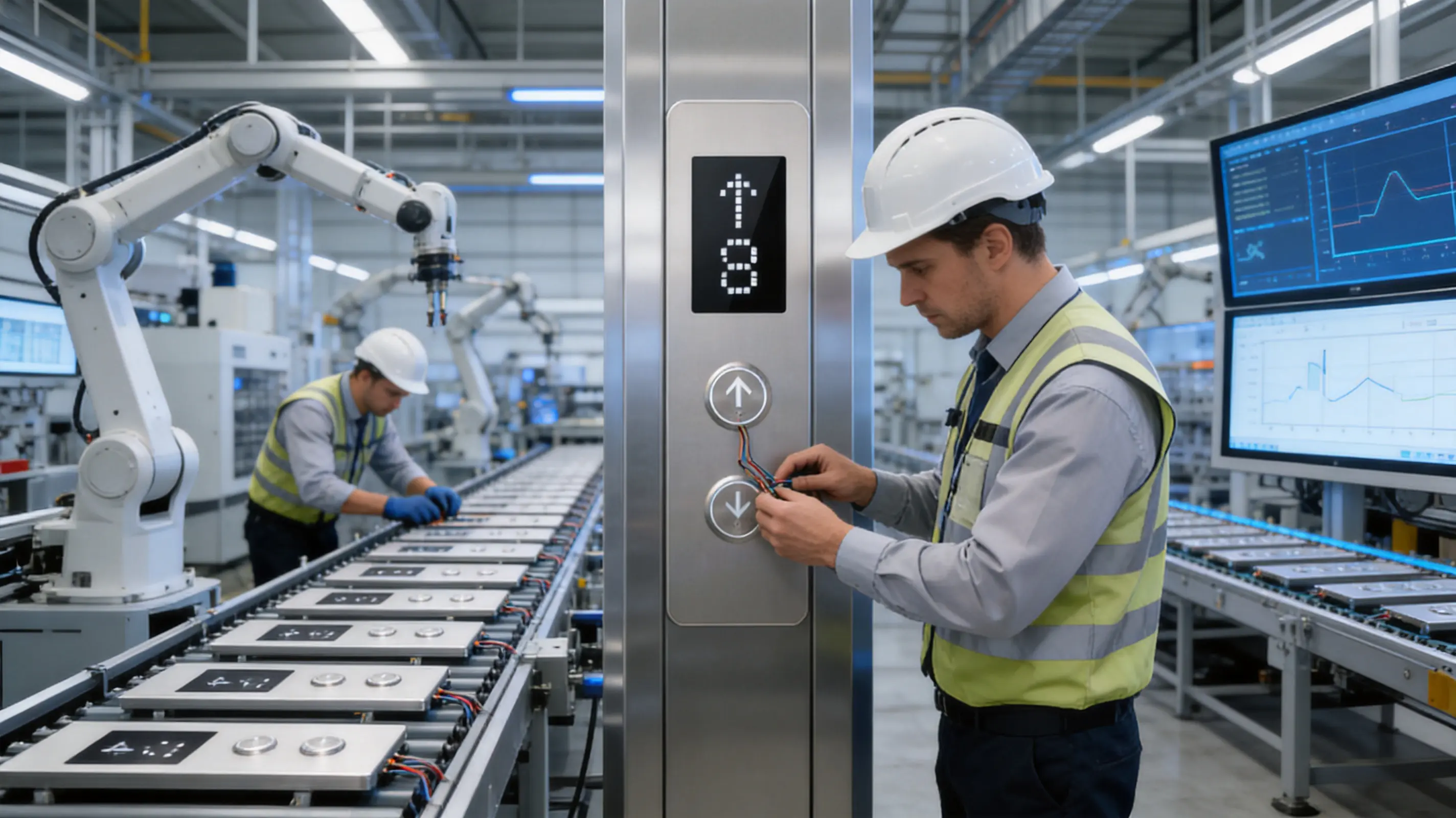
Tenau applies German Industry 4.0 intelligent manufacturing concepts, automated production lines, big data, Internet of Things technology, and a full closed-loop quality control system. These technologies can support production visibility, process monitoring, data collection, equipment management, and quality feedback.
In practical terms, intelligent manufacturing may help a manufacturer improve consistency in areas such as material handling, cutting, forming, surface treatment, assembly, wiring, inspection, and documentation. It can also help identify process deviations earlier, reducing the risk that an issue will remain undetected until final installation.
4.2 Automated Production Lines
Automated production lines are valuable when a product must be produced repeatedly with stable dimensions and controlled process conditions. For elevator panels, manufacturing precision is important because the panel must fit correctly within a cabin wall or operating console. Small variations in holes, mounting points, edges, and component placement can make installation more difficult.
Automation can help reduce variation in repeatable operations and improve production efficiency. It can also allow skilled personnel to focus on engineering, inspection, process improvement, and more complex assembly tasks. The appropriate balance between automation and skilled manual work is particularly important for customized elevator products.
For a project involving multiple elevators, production consistency is essential. If every panel has slightly different button spacing, surface appearance, or mounting characteristics, installation and maintenance become more complicated. A controlled manufacturing process helps create a more uniform result across the project.
4.3 Data-Based Quality Management
Big data and IoT technologies can support the collection and analysis of manufacturing information. Data may be used to monitor equipment condition, identify recurring process problems, compare production batches, and support preventive maintenance. When applied appropriately, these methods make quality management more proactive rather than purely reactive.
A full closed-loop quality control approach means that quality information should move back into the manufacturing and design process. If inspection identifies a recurring issue, the organization can investigate the cause, improve the process, update instructions, and verify whether the corrective action works. This approach is more valuable than simply identifying defective products at the end of production.
For the TO-C8002X, such a manufacturing philosophy can contribute to stable production quality, more reliable project coordination, and better long-term product support. Exact testing procedures and acceptance criteria should always be confirmed in the technical documentation for the selected configuration.
5. Design Considerations for Different Elevator Applications
An operation panel should not be selected without considering the environment in which it will be used. The correct configuration depends on traffic, users, building function, cleaning requirements, potential impact, operating frequency, interior style, and local regulations.
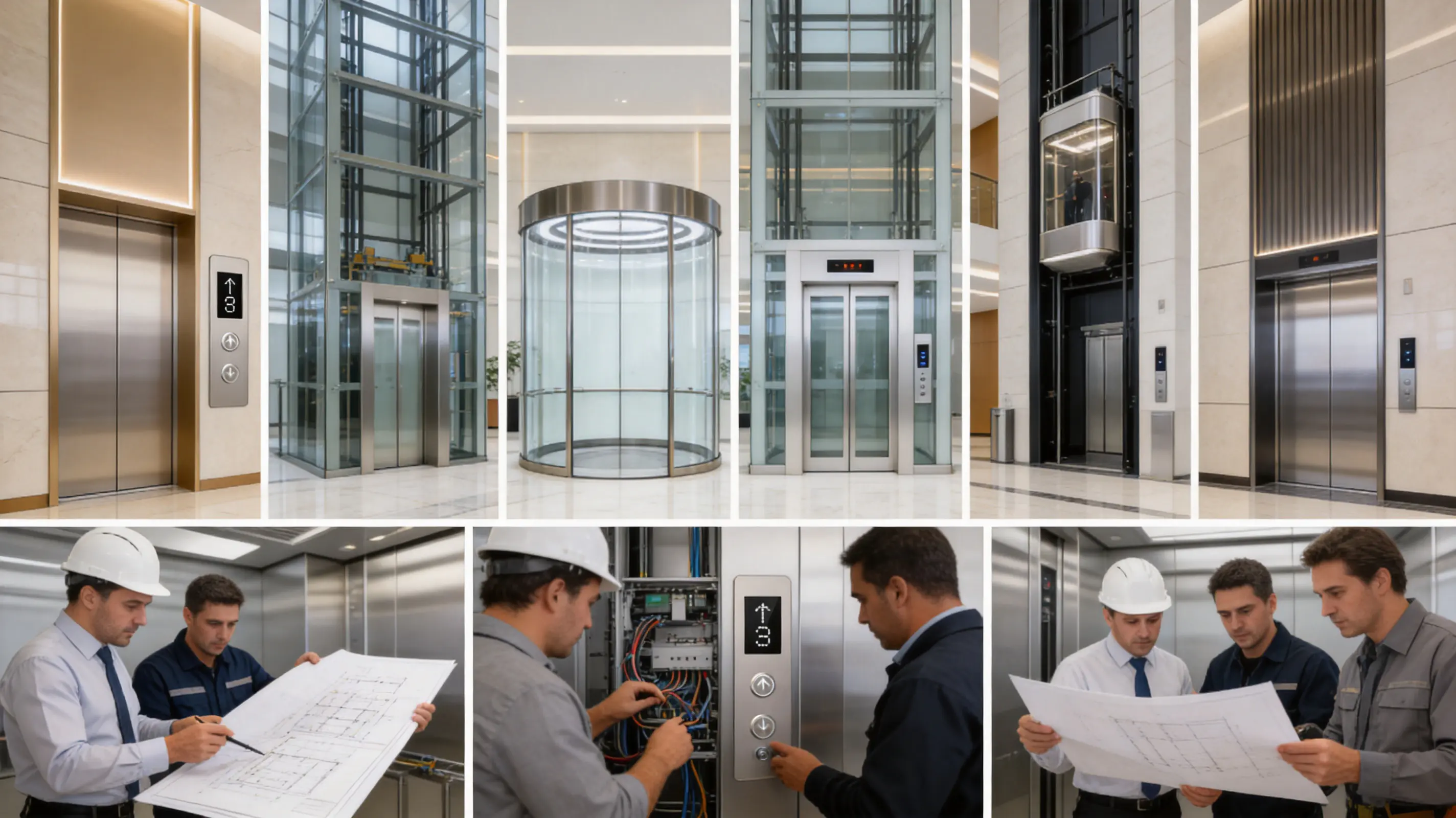
5.1 Passenger Elevators
Passenger elevators require a straightforward and visually clear interface. The panel should support fast floor selection and provide easy access to basic door and emergency functions. In an office building or residential tower, the panel may be used thousands of times each day, making button durability, surface maintenance, and clear labeling important.
The TO-C8002X can be considered for passenger elevator projects that require an organized panel design integrated with the cabin interior. Depending on the project specification, the panel may be coordinated with the elevator’s signaling system, access control, display, and communication functions.
5.2 Panoramic and Observation Elevators
Panoramic and observation elevators are often located in hotels, commercial complexes, tourism facilities, landmark buildings, and public attractions. Their cabins are designed to provide views, so every visible component contributes to the passenger’s perception of quality.
In these applications, the operation panel should support the architectural concept without reducing usability. A refined layout, appropriate surface treatment, and careful coordination with cabin materials can help the panel blend into the interior. The panel must remain easy to locate and operate even when the cabin design emphasizes transparency and visual openness.
5.3 Hospital Elevators
Hospital elevators serve patients, medical staff, visitors, equipment, beds, and emergency personnel. Their operation panels may be used by people under stress or with limited mobility. The layout should therefore be clear, robust, and easy to clean.
Hospital applications may also require special controls, additional access functions, or customized operating arrangements. The final panel specification should be developed in coordination with hospital planning, accessibility requirements, infection-control procedures, elevator traffic studies, and local codes.
5.4 Home and Villa Elevators
Home and villa elevators usually place strong emphasis on compact integration, quiet operation, customized interior design, and residential convenience. The operation panel may need to fit a smaller cabin or coordinate closely with stone, wood, glass, metal, or other decorative finishes.
A professionally manufactured panel can help residential elevator designers coordinate function and appearance from the beginning of the project. The right configuration may support a discreet appearance while keeping the essential controls recognizable to household members and guests.
5.5 Cargo Elevators
Cargo elevators are exposed to a different operating environment. They may transport pallets, machinery, vehicles, construction materials, or heavy goods. Their panels should be selected with consideration for impact, dirt, frequent loading activity, and practical service requirements.
The panel arrangement may differ from a passenger elevator because the priority is often operational efficiency and durability rather than decorative refinement. However, clear control identification remains important, especially when operators must work quickly or in demanding conditions.
5.6 Car Elevators
Car elevators transport vehicles between parking levels and may be used by drivers, attendants, or automated parking systems. Their operation panels need to be coordinated with traffic control, door operation, vehicle positioning, safety interlocks, and access management.
When used in a car elevator, the panel should be evaluated as part of a larger traffic and safety system. The final configuration may require special control logic, external call stations, signaling, or authorization functions.
5.7 Escalators and Moving Walks
Although the TO-C8002X is an elevator operation panel, its application belongs to a company portfolio that also includes escalators and moving walks. This broader product capability can benefit projects that involve multiple types of vertical transportation.
A developer or contractor working on a large commercial or transportation facility may prefer to coordinate elevator, escalator, and moving-walk suppliers through one experienced manufacturer. This can simplify communication regarding project scheduling, finish coordination, safety documentation, installation planning, and after-sales support.
5.8 High-Speed Elevators
High-speed and ultra-high-speed elevators operate in technically demanding buildings where traffic management, passenger comfort, control performance, and system coordination are particularly important. The operation panel forms part of the passenger interface within this advanced system.
Tenau states that it has capabilities in the design, research and development, and manufacturing of low-speed, medium-speed, high-speed, and ultra-high-speed elevators. This experience provides a relevant background for projects in which the operation panel must be coordinated with sophisticated elevator technologies and demanding building requirements.
6. Materials, Finish, and Long-Term Usability
The material and finish of an elevator operation panel influence its appearance, cleaning behavior, resistance to wear, and suitability for the building environment. A panel in a luxury hotel may be judged mainly by visual refinement, while a hospital panel may be judged by cleanability and resistance to intensive use. A cargo elevator may require a more rugged solution.
When specifying the TO-C8002X, buyers should discuss the intended environment, expected traffic volume, cleaning agents, exposure to moisture, risk of impact, accessibility requirements, and desired visual finish. These factors help determine whether a particular surface treatment and component configuration is appropriate.
Stainless steel and other metallic finishes are commonly considered for elevator interiors because they can provide a professional appearance and may be practical for cleaning. However, finish selection should be based on the complete project specification rather than appearance alone. Surface texture, reflection, fingerprints, lighting conditions, and maintenance procedures all affect the user experience.
Button and indicator design also deserve careful attention. Controls should be clearly distinguishable and arranged in a logical order. Indicators should be visible under the cabin’s lighting conditions. Tactile and visual requirements should be considered together, especially in public buildings and accessible installations.
6.1 Cleaning and Hygiene
Elevator panels are high-contact surfaces. In hospitals, schools, transport facilities, and commercial buildings, they may require frequent cleaning and disinfection. The selected materials and surface treatments should be compatible with the cleaning procedures specified by the facility operator.
A panel with a well-organized surface and minimal unnecessary recesses may be easier to maintain. However, the cleaning method must be verified for the exact finish and components. Buyers should request material information and maintenance recommendations before final approval.
6.2 Resistance to Daily Wear
Repeated button operation, contact with bags and tools, accidental impacts, and regular cleaning can gradually affect a panel. A professional manufacturing process should control assembly quality and surface consistency so that the panel remains presentable over its intended service period.
The correct durability level depends on the application. Passenger elevators in a busy railway station, for example, may experience a different duty cycle from a private villa elevator. Selecting the panel according to actual usage conditions helps avoid under-specification and unnecessary cost.
7. Engineering and Installation Coordination
The operation panel should be incorporated into the elevator design at an early stage. Late changes can affect cabin wall dimensions, wiring, controller interfaces, accessibility clearances, decorative finishes, and installation scheduling.
Before production, the project team should confirm the panel’s overall dimensions, mounting method, control arrangement, display requirements, button labeling, emergency functions, access-control provisions, cable routing, and relationship to other cabin components. A coordinated drawing review can reduce the risk of site modifications.
Tenau’s integrated design and manufacturing structure provides a suitable basis for this coordination. The manufacturer can evaluate the panel in relation to the elevator model, cabin arrangement, control cabinet, door system, and project-specific requirements. The buyer should still provide accurate building information and approve the final technical documents before production.
7.1 Documentation
Professional elevator projects generally require technical drawings, wiring information, installation instructions, inspection records, maintenance recommendations, and spare-parts information. The exact documentation package may vary by project and destination market.
Clear documentation supports several important activities. Installers use it to position and connect the panel. Commissioning engineers use it to verify functions. Maintenance teams use it for troubleshooting and replacement. Building owners may retain it as part of the equipment record.
7.2 Site Installation
Installation quality influences the final appearance and operation of the panel. Even a well-manufactured product can perform poorly if it is mounted incorrectly, wired carelessly, exposed to construction contamination, or adjusted without reference to the approved drawings.
Installation teams should verify that the cabin wall is prepared correctly, mounting points are aligned, cables are protected, connectors are secure, and buttons and indicators operate as intended. The finished panel should be inspected for surface damage, uneven gaps, loose components, and incorrect labeling.
7.3 Commissioning and Acceptance
During commissioning, the panel should be tested as part of the complete elevator system. Floor selections, door commands, alarm functions, indicators, access-control functions, emergency communication, fire-service operation, and other specified controls should be checked according to the approved requirements.
Acceptance procedures should also consider usability. Buttons should respond correctly, labels should be legible, indicators should be visible, and the panel should remain secure during normal operation. Any project-specific requirements should be recorded and verified before handover.
8. Quality Management and International Project Capability
Elevator equipment is used in buildings where reliability and safety are essential. International buyers therefore need confidence not only in the product design but also in the manufacturer’s organizational capabilities.
Tenau states that it complies with ISO9001, ISO14001, and OHSMS18001 management standards. ISO9001 is associated with quality management, ISO14001 with environmental management, and OHSMS18001 with occupational health and safety management. Together, these standards reflect a structured approach to production, environmental responsibility, and workplace safety.
Compliance with management standards should be considered together with product-specific certification, applicable local codes, inspection requirements, and project documentation. The buyer should confirm which approvals and tests are required in the destination market and ensure that the selected elevator configuration meets those requirements.
The company exports products to many countries and regions worldwide. International project experience can help a manufacturer understand the importance of packaging, shipping coordination, installation communication, language-sensitive documentation, local technical expectations, and after-sales response.
For the TO-C8002X, international buyers should provide the intended country, elevator type, project environment, applicable regulations, quantity, desired finish, control requirements, and installation conditions. This information allows the supplier to recommend a suitable configuration and prepare an accurate quotation.
9. Sustainability and Responsible Manufacturing
Environmental protection is increasingly important in construction and building equipment procurement. Buyers are evaluating not only energy consumption during operation but also manufacturing processes, material selection, packaging, maintenance requirements, and product service life.
Tenau identifies safety and environmental protection as important company missions and maintains an environmental management framework. Its intelligent manufacturing approach, automated production, data management, and process control can support more efficient use of materials and resources when properly implemented.
A durable operation panel may also contribute to sustainability by reducing premature replacement. If the panel maintains its function and appearance over a long service period, the project may require fewer replacement components and generate less waste. Proper maintenance and the availability of compatible spare parts are therefore relevant to the product’s environmental impact.
Environmental performance should be assessed using project-specific information. Buyers may request details about material composition, surface treatment, packaging, energy use, recycling considerations, and maintenance procedures where these factors are part of the project’s sustainability goals.
10. Comparison Framework for Professional Buyers
Choosing an elevator operation panel solely by price or visual appearance can create technical and commercial risks. A structured comparison helps buyers evaluate the complete value of the product and supplier.
| Evaluation Area | Questions for the Buyer | Value of an Integrated Manufacturer |
|---|---|---|
| System compatibility | Can the panel work with the selected controller and elevator configuration? | Design and manufacturing teams can coordinate the interface with the wider elevator system. |
| Application suitability | Is the panel appropriate for passenger, hospital, cargo, residential, car, or high-speed use? | Experience across multiple elevator categories supports more informed selection. |
| Interior integration | Can the finish, layout, and dimensions match the cabin design? | Panel design can be coordinated with cabin interiors and related elevator components. |
| Manufacturing consistency | Will repeated units maintain stable dimensions and appearance? | Automated production and quality systems can support repeatable manufacturing. |
| Documentation | Are drawings, wiring information, maintenance instructions, and inspection records available? | An established elevator company can provide broader project documentation. |
| Installation support | Who is responsible for technical coordination and site assistance? | Integrated installation and after-sales capabilities create clearer support channels. |
| Long-term service | Can replacement parts and technical assistance be obtained later? | A manufacturer with a complete product portfolio can support the equipment lifecycle. |
| Compliance | Does the solution meet destination-market codes and project requirements? | International project experience can assist with technical specification review. |
This comparison demonstrates why the total value of an operation panel extends beyond the component’s initial price. A product that reduces engineering uncertainty, installation delays, appearance inconsistencies, and service complexity may provide greater value over the entire project lifecycle.
11. Recommended Specification Process
A successful order begins with a clear technical discussion. Buyers should provide enough information for the manufacturer to understand the project rather than requesting a panel based only on a product name.
11.1 Define the Elevator Application
State whether the panel is intended for a passenger elevator, hospital elevator, villa elevator, cargo elevator, car elevator, panoramic elevator, observation elevator, high-speed elevator, or another application. Explain the expected passenger or operator profile and the operating environment.
11.2 Confirm the Cabin Arrangement
Provide the cabin dimensions, panel location, wall materials, available installation space, desired mounting orientation, and relationship to handrails, mirrors, displays, doors, and other fittings. This helps prevent interference during installation.
11.3 Identify Functional Requirements
List the required floor buttons, door buttons, alarm function, emergency communication, indicators, access control, independent service operation, fire-service requirements, key switches, and other specified controls. Requirements may differ significantly between a private residential elevator and a public hospital elevator.
11.4 Select Appearance and Materials
Discuss the desired color, finish, texture, button style, labeling method, display type, lighting, and decorative coordination. If the panel must match other elevator equipment, provide samples or approved design references.
11.5 Review Regulations and Accessibility
Confirm the applicable elevator codes, accessibility rules, fire regulations, electrical requirements, and inspection procedures in the destination market. Control height, button size, tactile information, audible signals, visual indicators, and emergency functions may be governed by local or national standards.
11.6 Approve Drawings Before Production
All dimensions, functions, labels, finishes, and interfaces should be reviewed before manufacturing begins. Written approval of the final technical documents helps prevent misunderstandings and ensures that production is based on the correct project information.
12. Maintenance and Lifecycle Considerations
An operation panel should be maintained as part of the complete elevator system. Routine inspections can identify worn buttons, damaged surfaces, loose fixtures, failed indicators, contamination, or wiring problems before they affect passenger service.
Cleaning should follow the manufacturer’s recommendations for the selected materials and finish. Abrasive products, excessive moisture, or unsuitable chemicals may damage the surface or affect button operation. Maintenance personnel should use approved procedures and isolate equipment when required for service.
If a component requires replacement, the replacement part should match the original electrical and mechanical specification. Substituting an unsuitable button, indicator, connector, or switch may create functional or compliance problems. Maintaining accurate equipment records can make future service more efficient.
The availability of after-sales support is an important advantage when selecting a supplier. Tenau’s business structure includes installation and after-sales service, which provides a basis for continued project support. Buyers should confirm warranty terms, spare-parts policy, response arrangements, and technical service scope during contract negotiations.
13. Why Manufacturer Experience Matters
The elevator operation panel is a relatively compact component, but its requirements are connected to many other parts of the elevator. A manufacturer that understands only panel fabrication may not fully anticipate the consequences of a design decision for cabin structure, controller wiring, installation, commissioning, or maintenance.
Tenau’s broader capabilities include elevator design, research and development, manufacturing, marketing, installation, and after-sales service. Its portfolio covers passenger elevators, freight elevators, escalators, moving walks, and related solutions. This gives the company a wider technical context for evaluating operation panel requirements.
The company also reports a professional team, numerous intellectual property rights, a large-scale manufacturing base, and experience serving customers in multiple countries and regions. These strengths are relevant to buyers who need a supplier capable of handling both standard and customized project requirements.
For the TO-C8002X, the most important benefit of this manufacturer background is coordination. The panel can be selected with attention to the complete elevator rather than treated as an isolated purchase. This approach can support better planning, more consistent execution, and clearer responsibility throughout the project.
14. Frequently Asked Questions
Q1: What is the TO-C8002X?
The TO-C8002X is an elevator operation panel designed to provide a user interface for elevator cabin functions. It belongs to the elevator operation panel category and can be considered for different elevator applications, subject to the final project configuration and technical requirements.
Q2: Which elevators can use this operation panel?
The panel may be considered for passenger elevators, panoramic and observation elevators, hospital elevators, home and villa elevators, cargo elevators, car elevators, and high-speed elevator projects. The appropriate configuration depends on cabin design, control requirements, local regulations, operating conditions, and project specifications.
Q3: Is the panel suitable for customized elevator projects?
It can be evaluated for customized projects because operation panel requirements often vary according to building function, interior design, control arrangement, and accessibility needs. Buyers should provide drawings, dimensions, functional requirements, and finish preferences so the manufacturer can confirm the available configuration.
Q4: What makes an elevator-manufacturer-supplied panel different from a generic panel?
An elevator-manufacturer-supplied panel can be evaluated together with the controller, cabin, doors, signaling equipment, and installation process. This may reduce compatibility risks and provide a clearer technical responsibility structure. A generic panel may still be suitable for some projects, but its interfaces and long-term support must be carefully verified.
Q5: Can the panel be used in a hospital elevator?
It may be suitable for hospital applications when the selected materials, layout, controls, and functions meet the hospital’s operational and hygiene requirements. Hospital projects should review cleanability, accessibility, impact resistance, emergency functions, special service modes, and applicable regulations before approval.
Q6: Can it be integrated into a luxury or panoramic elevator cabin?
The panel can be considered for visually demanding cabins when its finish, dimensions, button arrangement, and installation details are coordinated with the interior design. Panoramic and observation elevator projects should pay particular attention to visibility, lighting reflection, surface quality, and the relationship between the panel and transparent cabin elements.
Q7: How does intelligent manufacturing support product quality?
Intelligent manufacturing, automated production, data collection, IoT technology, and closed-loop quality management can help improve process consistency, production monitoring, equipment management, and corrective action. These methods support quality control, although the final product must still be verified according to project-specific inspection and acceptance requirements.
Q8: What management standards does the manufacturer state that it follows?
Tenau states that it complies with ISO9001, ISO14001, and OHSMS18001 standards. These relate respectively to quality management, environmental management, and occupational health and safety management. Buyers should also confirm product certifications and local compliance documents required for their specific market.
Q9: What information should be sent when requesting a quotation?
Useful information includes elevator type, quantity, building application, cabin dimensions, panel dimensions, control functions, number of floors, desired finish, button and display requirements, access control, applicable standards, delivery location, installation responsibility, and project schedule.
Q10: Does the company provide installation and after-sales service?
Tenau’s company information states that its business integrates installation and after-sales service along with design, research and development, manufacturing, and marketing. The exact service scope, warranty terms, response time, and site-support arrangement should be confirmed in the project contract.
Q11: Is the panel appropriate for a high-speed elevator?
It may be considered as part of a high-speed elevator project, but the complete interface must be coordinated with the elevator controller, communication functions, passenger information system, emergency requirements, and relevant building codes. Tenau states that it has capabilities in low-speed, medium-speed, high-speed, and ultra-high-speed elevator design and manufacturing.
Q12: How should the panel be maintained?
Maintenance should include regular inspection of buttons, indicators, fixtures, surfaces, wiring, and emergency-related functions. Cleaning should follow the approved material and finish recommendations. Any replacement component should match the original specification and be installed by qualified personnel.
Q13: Can the panel support different building interior styles?
Elevator operation panels can be specified and coordinated according to different architectural environments, including commercial, residential, hospitality, medical, industrial, and public facilities. The available finishes and configurations should be confirmed with the manufacturer for the particular project.
Q14: Why should the panel be approved together with the elevator cabin?
The panel must fit the cabin wall, align with other fixtures, connect with the elevator controls, and remain accessible to passengers and service personnel. Approving it together with the cabin helps reduce conflicts involving dimensions, wiring, decoration, lighting, and installation.
15. Conclusion
The TO-C8002X represents an elevator operation panel approach that combines practical passenger interaction with the broader strengths of an integrated elevator manufacturer. Its relevance extends across multiple elevator applications, from passenger and residential systems to hospital, cargo, car, panoramic, observation, and high-speed projects.
Its potential advantages over generic or disconnected alternatives include system-level coordination, application flexibility, more consistent manufacturing, improved project support, and the ability to align the panel with a complete elevator solution. These advantages are reinforced by Tenau Elevator (China) Co., Ltd.’s stated capabilities in design, research and development, intelligent manufacturing, automated production, quality management, installation, and after-sales service.
For buyers, the correct selection process should begin with the application and technical requirements rather than with appearance or price alone. Cabin dimensions, control functions, materials, accessibility, local regulations, installation conditions, maintenance, and lifecycle support should all be reviewed before production.
When properly specified and integrated, an elevator operation panel can contribute to safer interaction, clearer passenger communication, improved cabin appearance, easier maintenance, and a more consistent building experience. The TO-C8002X is therefore a product worth evaluating for elevator projects that require a professional interface supported by comprehensive manufacturing and engineering capabilities.
References
1. Tenau Elevator (China) Co., Ltd., Company Information and Product Portfolio Overview.
2. ISO 9001, Quality Management Systems—Requirements.
3. ISO 14001, Environmental Management Systems—Requirements with Guidance for Use.
4. OHSMS18001, Occupational Health and Safety Management System Framework.
5. International elevator safety and accessibility principles for passenger, service, hospital, and high-speed elevator applications.
6. Industry 4.0 manufacturing principles relating to automation, industrial data, connected equipment, and closed-loop quality management.
7. General engineering practices for elevator cabin interface design, installation coordination, commissioning, and lifecycle maintenance.
Product: TO-C8002X

Related Products
Related News
Built on safety, forging trust in vertical mobility.
lf you have any questions or need help, feel free to contact with our team.
 export@tenau.com.cn
 +86-18601458867
 +86-512-65059883
Elevator & Escalator
Factory Add
East of Xicheng Road, North of Lianyi Road, Nanxun Economic Development Zone, Nanxun District, Huzhou City, Zhejiang Province, P.R.China
Copyright © Tenau Elevator (China) Co., Ltd. All Rightd Reserved.
Custom High Quality Elevator Suppliers and World Brand Elevator Company