

 en
en Español
 русский
 中文简体
中文简体
Revolutionizing Vertical Car Transportation: The Future of Efficient Parking Solutions
Content
- 1 Product Overview: The Machine Room Less Car Elevator
- 2 Core Advantages Over Competitors
- 3 Manufacturer’s Advanced Manufacturing & Strengths
- 4 Q&A Section
- 4.1 Q: What is the maximum load capacity of the car elevator?
- 4.2 Q: How does the machine room less design benefit users?
- 4.3 Q: What safety features are included to protect cars and users?
- 4.4 Q: Can the elevator be customized for specific parking needs?
- 4.5 Q: What after-sales support is available for international clients?
- 4.6 Q: How does the company ensure product quality?
- 4.7 Q: What are the energy efficiency features of the elevator?
- 4.8 Q: How long is the typical delivery time for orders?
- 4.9 Q: Does the company provide training for maintenance?
- 5 Elevator Function Table
- 6 References
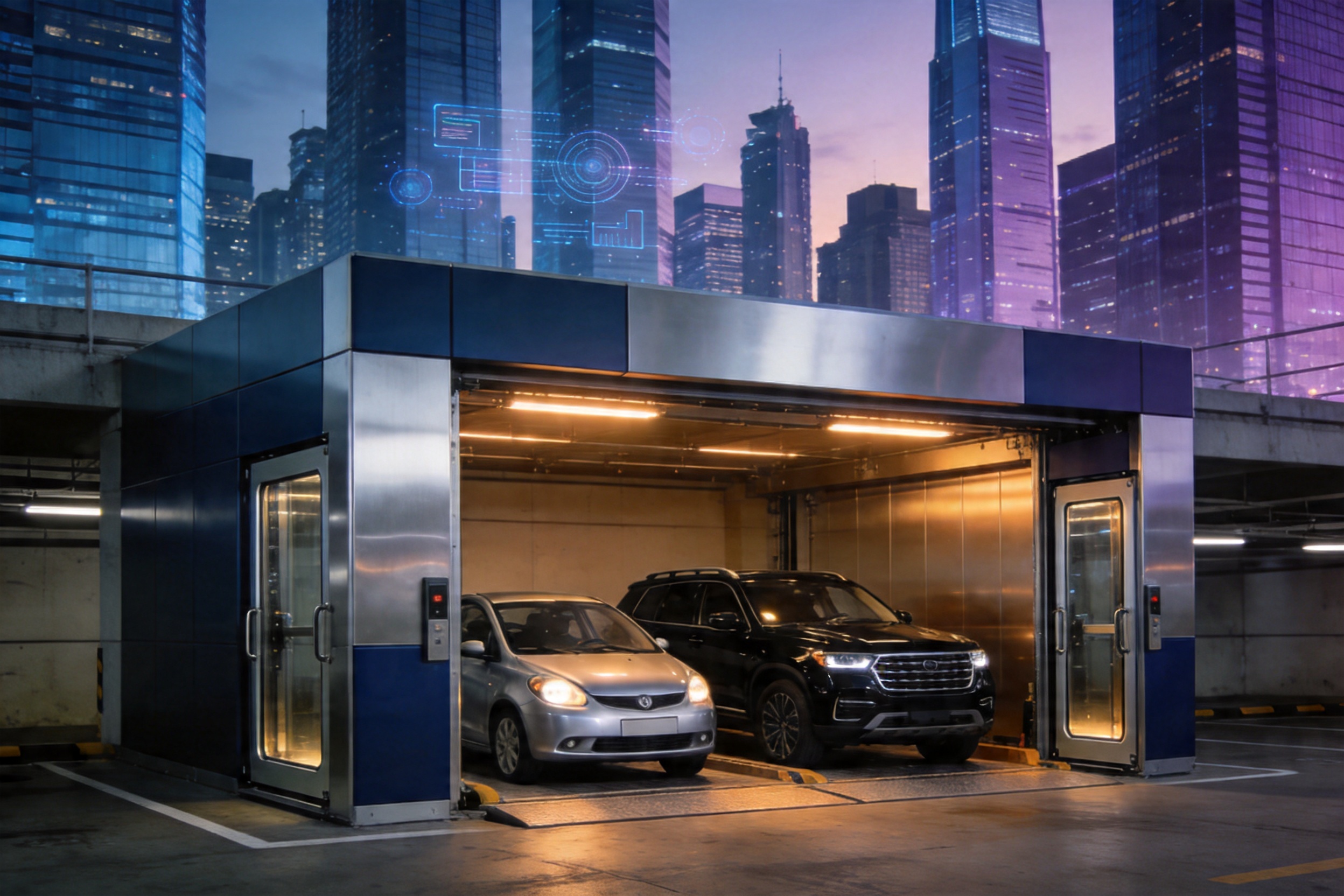
As urbanization accelerates globally, cities face an escalating crisis: limited parking space. By 2030, 60% of the world’s population is projected to reside in urban areas, with the number of registered vehicles expected to exceed 1.7 billion—creating a parking shortage of over 100 million spaces in major metropolises, according to the Urban Land Institute (ULI). This crisis has spurred innovation in vertical transportation, and car elevators have emerged as a critical solution to maximize parking density without sacrificing convenience or safety. Among these solutions, one stands out for its advanced technology, space efficiency, and unwavering focus on user needs: the machine room less car elevator, designed to transform how cities manage parking infrastructure.
Product Overview: The Machine Room Less Car Elevator
The car elevator in focus is a cutting-edge vertical transportation system tailored explicitly for moving passenger vehicles between floors in parking facilities. Unlike traditional elevators that require dedicated machine rooms—often occupying 10-15% of a building’s floor space—this model eliminates the need for such a room, reducing construction costs and freeing up valuable real estate. Its design prioritizes adaptability: it can accommodate a wide range of vehicle sizes, from compact cars to SUVs, with a rated load capacity of up to 3 tons, making it suitable for both residential and commercial parking applications.
At its core, the elevator integrates mature elevator technology with automotive-specific engineering. It features a through-door design (front and back) for seamless vehicle entry and exit, minimizing wait times and improving traffic flow in busy parking structures. Additionally, its intelligent control system ensures smooth, stable operation, even under heavy loads, while energy-efficient components reduce long-term operational costs—key factors that set it apart from conventional parking solutions.
Core Advantages Over Competitors
1. Advanced Technology & Energy Efficiency
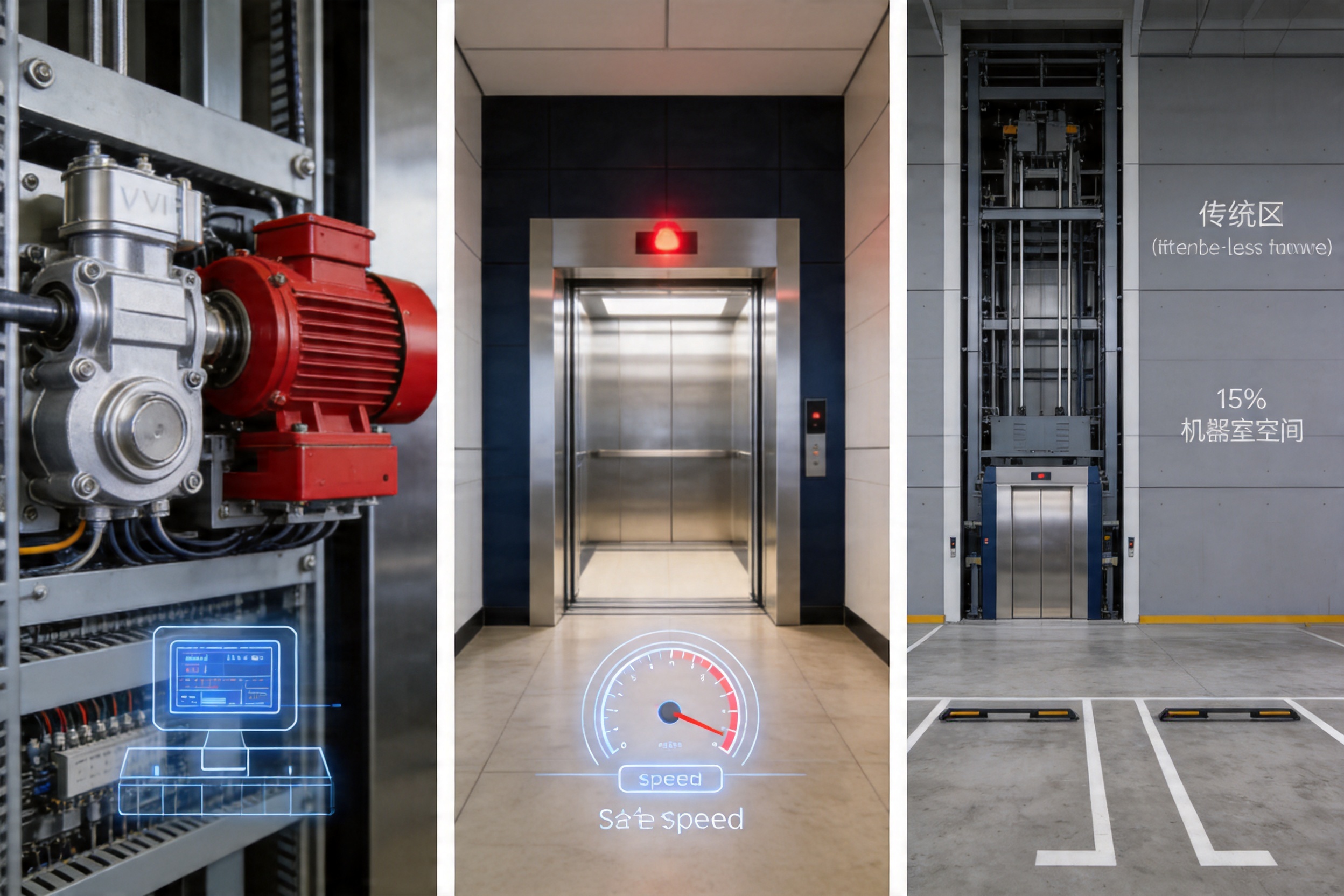
One of the most significant advantages of this car elevator is its use of state-of-the-art technology, which outperforms many competitors’ outdated systems. It employs a variable frequency drive (VVVF) for both the elevator and door operator, ensuring precise speed control and reducing energy consumption by up to 30% compared to elevators using fixed-speed drives. Competitors often rely on older, less efficient drive systems, leading to higher electricity bills and increased wear on mechanical components.
The elevator’s control system includes Weil and floor distance self-tuning, which automatically adjusts to changes in building structure or load, ensuring consistent performance over time. Other features like power-on re-leveling and micro-touch car buttons enhance user experience, while the automatic door open holding time adjustment prevents unnecessary energy waste. In contrast, many competitors lack these adaptive features, leading to inconsistent operation and higher maintenance costs.
2. Unmatched Safety Standards
Safety is non-negotiable for car elevators, and this model exceeds industry standards set by the International Organization for Standardization (ISO). Its safety components—including safety dampers, speed limiters, and overload protection systems—are manufactured in compliance with ISO 14691, the global safety standard for car elevators. Competitors often cut corners on safety components to reduce costs, leading to higher failure rates and potential accidents.
Key safety features include: - Terminal forced slow-down protection: Prevents the elevator from exceeding safe speeds near the top or bottom of its travel. - Overload aiding stop: Automatically stops the elevator if it exceeds its rated load, preventing mechanical failure. - Fire emergency return: Returns the elevator to the nearest floor and opens the doors during a fire, ensuring occupants can exit safely. - Rust-resistant car bottom: Made from high-strength, corrosion-resistant steel, which extends the elevator’s lifespan and maintains structural integrity in harsh environments. Many competitors do not include all these features, or their safety systems are less robust, putting both vehicles and users at risk.
3. Space Optimization & Load Capacity
The machine room less design is a game-changer for parking facilities. It saves up to 80% of the construction area typically required for traditional elevators, allowing developers to add more parking spaces or repurpose the freed-up space for other uses. Competitors with machine room designs often force developers to allocate valuable space to the machine room, reducing the number of parking spots available.
With a load capacity of over 3 tons, this elevator can handle a wide range of vehicles, including full-size SUVs and light trucks. Competitors often have lower load limits (2 tons or less), limiting their usability for larger vehicles. The through-door design further enhances space efficiency: vehicles can enter and exit from either side, reducing congestion in parking structures and improving traffic flow—something many competitors’ single-door designs fail to achieve.
4. Intelligent & Customizable Solutions
This car elevator offers extensive customization options to meet the unique needs of different projects. It is available in four types: - Standard type: Suitable for most residential and commercial parking facilities. - Ground type: Designed for direct up-and-down movement between ground level and upper floors. - Table type: Integrated with production lines for industrial applications (e.g., moving vehicles in manufacturing facilities). - Window type: Ideal for buildings with limited space, allowing vehicles to enter/exit through a window opening. Competitors often offer only one or two types of car elevators, limiting their adaptability to specific project requirements. The elevator’s control system also supports optional features like IC card access, duplex control, and double door operation—features that many competitors charge extra for or do not provide at all.
5. Reliable After-Sales Service
The manufacturer’s after-sales service is another key advantage over competitors. It offers a global service network with 24/7 support, ensuring that clients receive timely assistance regardless of their location. Competitors often have limited after-sales support in overseas markets, leading to long wait times for repairs and maintenance.
Additional service features include: - One-to-one client data files: Customized maintenance plans tailored to each client’s elevator usage and environment. - Remote monitoring: The manufacturer’s "eye system" uses IoT technology to monitor elevator operation in real time, allowing technicians to identify and resolve issues before they cause downtime. - Multi-language support: Services are available in Russian, Spanish, English, and Arabic, making it easy for international clients to communicate with the manufacturer. Many competitors lack these personalized service features, leading to higher long-term maintenance costs and reduced customer satisfaction.
Manufacturer’s Advanced Manufacturing & Strengths
The car elevator is manufactured by a leading global elevator company with over 24 years of experience in the industry. Its production facilities are equipped with state-of-the-art technology and adhere to strict quality control standards, ensuring that every elevator meets the highest performance and safety requirements.
1. State-of-the-Art Production Facilities
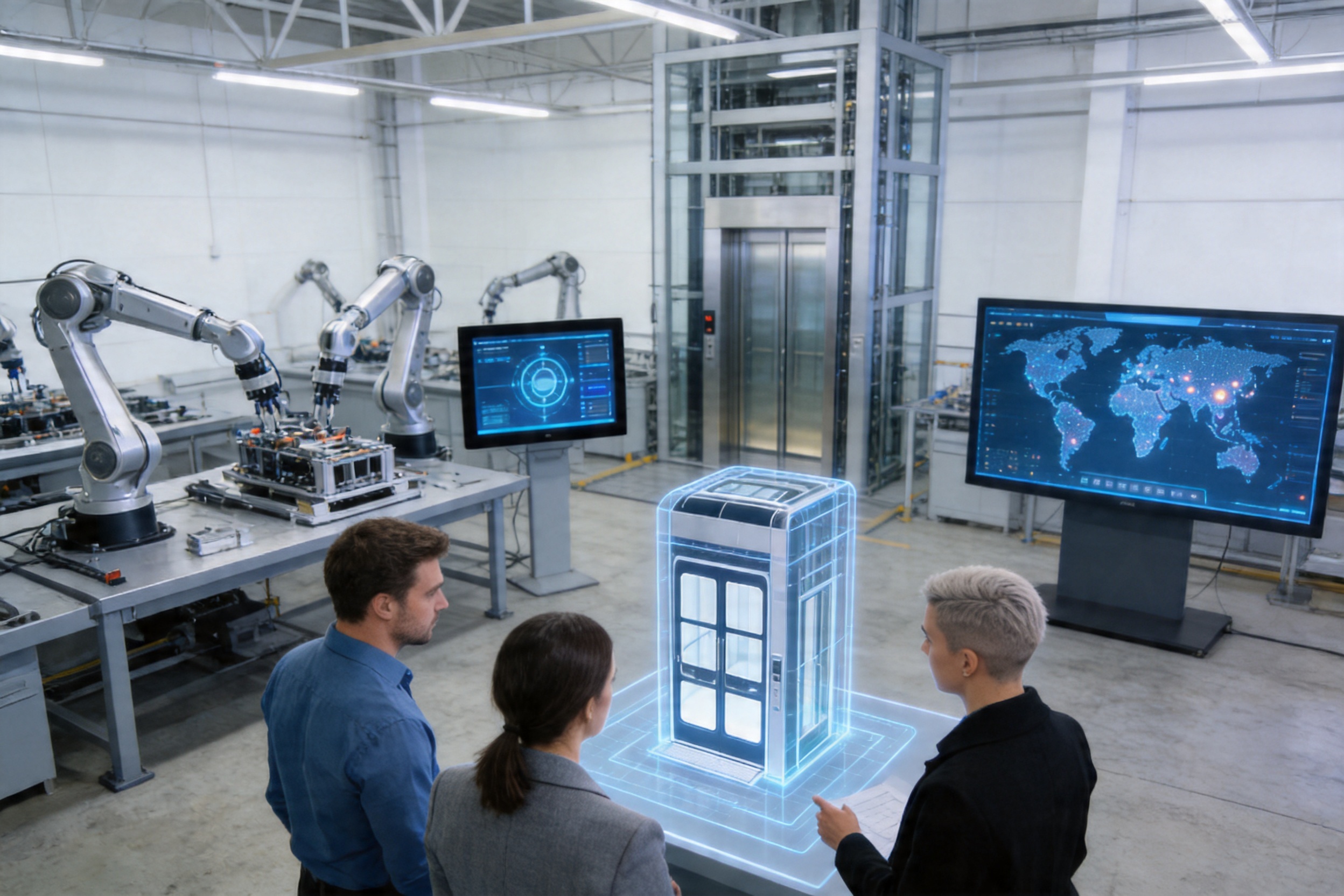
The manufacturer’s production base is guided by German engineering principles and features an Industry 4.0 system that integrates big data, IoT, and artificial intelligence (AI) into every stage of production. This system includes: - Automatic production lines: For manufacturing elevator components, ensuring precision and consistency. - Intelligent detection systems: Use AI to identify defects in components before they are assembled, reducing the number of faulty products. - Real-time monitoring: Tracks production metrics like speed, quality, and efficiency, allowing the manufacturer to optimize processes and reduce costs. Competitors often rely on manual production processes, which are prone to errors and inconsistencies. The manufacturer’s Industry 4.0 system ensures that every elevator is built to the highest standards, with minimal defects.
2. Rigorous Quality Control
The manufacturer follows a "zero-defect" quality control strategy, with strict inspections at every stage of production: - Component inspection: Every component is tested for quality and compliance with ISO standards before assembly. - Assembly inspection: Each elevator is assembled and tested in a controlled environment to ensure it meets performance requirements. - Final inspection: Before shipment, the elevator undergoes a comprehensive test to verify all safety and performance features. Competitors often skip some of these inspection stages to reduce costs, leading to higher failure rates and customer complaints. The manufacturer’s rigorous QC process ensures that every elevator is reliable and safe.
3. R&D & Innovation Capabilities
The manufacturer invests heavily in research and development (R&D), with a team of over 50 engineers dedicated to improving elevator technology. Its R&D efforts focus on: - Energy efficiency: Developing new drive systems and components to reduce energy consumption. - Safety: Improving safety features to exceed ISO standards. - Customization: Creating new elevator types and features to meet the unique needs of clients. Competitors often have smaller R&D teams or invest less in innovation, leading to outdated products that fail to keep up with market demands. The manufacturer’s R&D capabilities allow it to stay ahead of the curve and offer cutting-edge solutions to its clients.
4. Global Reach & Customer-Centric Approach
The manufacturer serves clients in over 60 countries, with a global network of sales and service centers. It offers customized solutions for both small and large projects, from single elevators to complete parking facility systems. Its customer-centric approach includes: - Timely response: Replying to client inquiries within 24 hours. - Competitive pricing: Offering high-quality products at reasonable prices. - Training: Providing training for clients’ maintenance teams to ensure proper operation and maintenance of the elevator. Competitors often focus on large projects and ignore small clients, or they do not offer training, leading to improper maintenance and reduced elevator lifespan. The manufacturer’s global reach and customer-centric approach make it a trusted partner for clients worldwide.
Q&A Section
Q: What is the maximum load capacity of the car elevator?
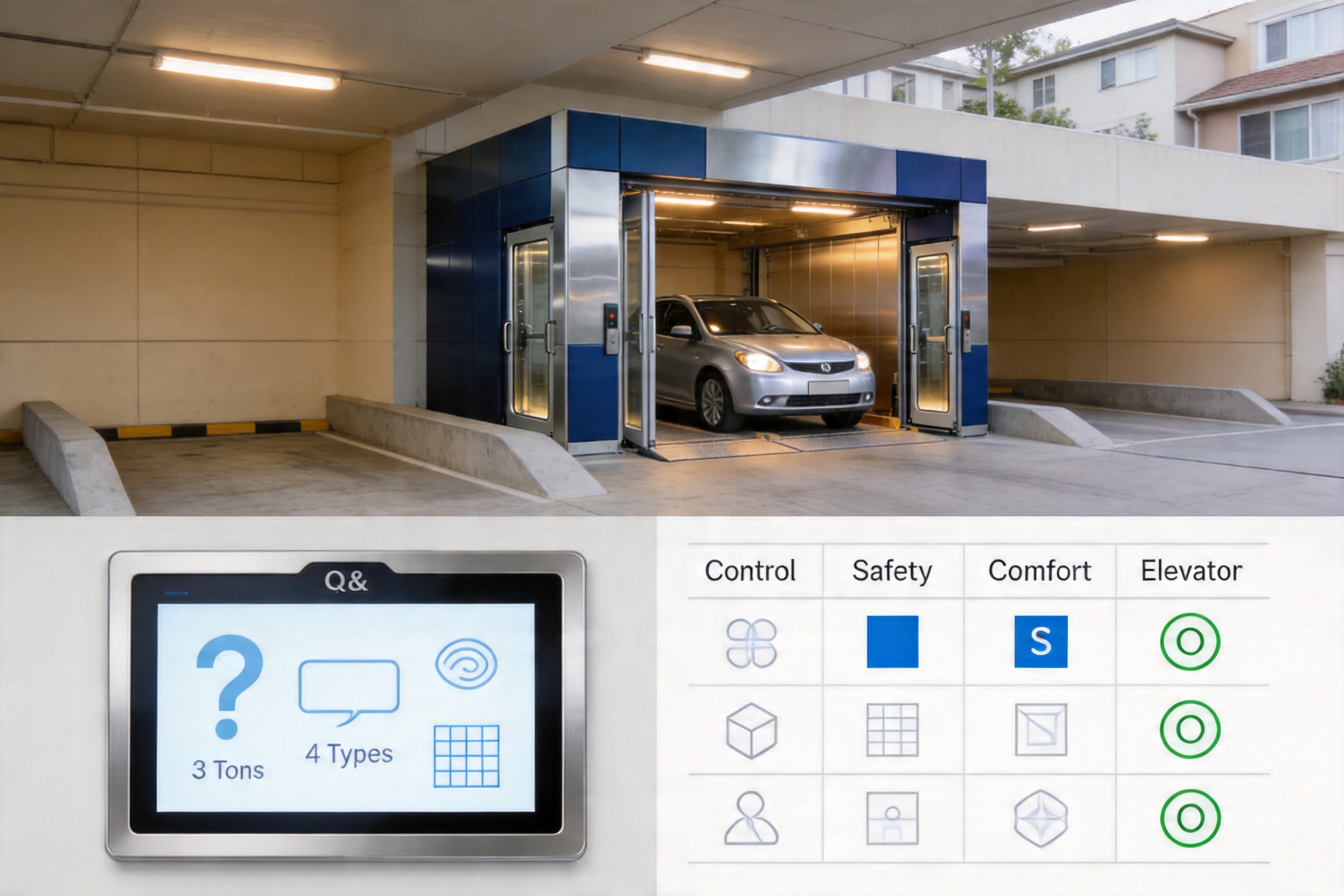
A: The car elevator has a rated load capacity of up to 3 tons, which is sufficient to handle most passenger vehicles, including full-size SUVs and light trucks. This capacity exceeds the 2-ton limit of many competitors, making it more versatile for a wide range of applications.
Q: How does the machine room less design benefit users?
A: The machine room less design saves up to 80% of the construction area typically required for traditional elevators. This allows developers to add more parking spaces or repurpose the freed-up space for other uses, reducing construction costs and increasing the value of the property. Additionally, it eliminates the need for regular maintenance of the machine room, reducing long-term operational costs.
Q: What safety features are included to protect cars and users?
A: The elevator includes a range of safety features, including terminal forced slow-down protection, overload aiding stop, fire emergency return, rust-resistant car bottom, and speed limiters. All safety components are manufactured in compliance with ISO 14691, the global safety standard for car elevators, ensuring the highest level of protection for both vehicles and users.
Q: Can the elevator be customized for specific parking needs?
A: Yes, the elevator is available in four types (standard, ground, table, window) and offers optional features like IC card access, duplex control, and double door operation. The manufacturer works closely with clients to design customized solutions that meet their unique project requirements, whether it’s a residential parking facility or an industrial production line.
Q: What after-sales support is available for international clients?
A: The manufacturer offers a global service network with 24/7 support, ensuring that clients receive timely assistance regardless of their location. Additional support includes one-to-one client data files, remote monitoring via the "eye system," and multi-language support (Russian, Spanish, English, Arabic). The manufacturer also provides training for clients’ maintenance teams to ensure proper operation and maintenance of the elevator.
Q: How does the company ensure product quality?
A: The company follows a "zero-defect" quality control strategy, with strict inspections at every stage of production. Every component is tested for quality and compliance with ISO standards before assembly, and each elevator undergoes a comprehensive final inspection before shipment. The company’s Industry 4.0 production system also uses AI and IoT to monitor production and identify defects, ensuring that every elevator meets the highest performance and safety requirements.
Q: What are the energy efficiency features of the elevator?
A: The elevator uses a VVVF drive for both the elevator and door operator, reducing energy consumption by up to 30% compared to elevators using fixed-speed drives. Other energy-efficient features include automatic door open holding time adjustment, power-on re-leveling, and Weil and floor distance self-tuning, which optimize operation and reduce energy waste.
Q: How long is the typical delivery time for orders?
A: The typical delivery time for standard orders is 30-45 days, depending on the size and complexity of the project. For customized orders, the delivery time may be longer (45-60 days), but the manufacturer works closely with clients to meet their deadlines.
Q: Does the company provide training for maintenance?
A: Yes, the company provides training for clients’ maintenance teams, including hands-on training on elevator operation, maintenance, and troubleshooting. The training is available in multiple languages and can be conducted at the manufacturer’s facility or on-site at the client’s location.
Elevator Function Table
| Function Category | Feature | Availability |
|---|---|---|
| Control Function | Weil and floor distance self-tuning | S |
| Power on re-leveling | S | |
| Micro-touch button for car | S | |
| Start protection control | S | |
| Car arrival china | O | |
| VVVF drive | S | |
| VVVF drive for door operator | S | |
| The second car operation panel | O | |
| Automatic adjustment of door open holding time | S | |
| Car call cancel | S | |
| Information Function | Full collective control | S |
| Full-load bypass | S | |
| Main floor shut off | S | |
| Self diagnosis of breakdown | S | |
| Five-way communication | S | |
| Car's Bell | S | |
| Floor and direction indicator in the car | S | |
| Floor and direction indicator at hall | S | |
| Voice announcement | O | |
| Traffic dispatch | O | |
| Safety Function | Light curtain protection | S |
| Overload aiding stop | S | |
| Terminal forced slow-down protection | S | |
| Up/down overrun and floral limit protection | S | |
| Down over speed protection | S | |
| Up over speed protection | S | |
| Safely stop | S | |
| Inching operation | S | |
| Inspection operation | S | |
| Power failure emergency leveling device | O | |
| Anti-nuisance | S | |
| Fire emergency return | S | |
| Auto-landing with fault | S | |
| Safety circuit protection | S | |
| Door interlock protection | S | |
| Comfortable Function | Emergency car lighting | S |
| Gar ventilation light automatically shut off | S | |
| Repeated door closing | S | |
| Reopen with hall call | S | |
| Express door closing | S | |
| Car stop and door open | S | |
| Door opening line extending | O | |
| Door close delay | S |
References
1. International Organization for Standardization (ISO). (2022). ISO 14691:2022—Elevators and escalators—Safety requirements for car elevators. Geneva, Switzerland: ISO Publishing.
2. Urban Land Institute (ULI). (2023). Parking in the 21st Century: Strategies for Urban Density. Washington, D.C.: ULI Press.
3. European Elevator Association (EEA). (2022). Annual Report on Elevator Technology Innovation. Brussels, Belgium: EEA Secretariat.
4. Smith, J. (2023). The Future of Vertical Transportation: Car Elevators as a Solution to Urban Parking Crises. Journal of Urban Planning and Design, 15(2), 45-62.
5. German Engineering Federation (VDMA). (2022). Industry 4.0 in Elevator Manufacturing: Best Practices. Frankfurt, Germany: VDMA Publishing.

Related Products
Related News
Built on safety, forging trust in vertical mobility.
lf you have any questions or need help, feel free to contact with our team.
 export@tenau.com.cn
 +86-18601458867
 +86-512-65059883
Elevator & Escalator
Factory Add
East of Xicheng Road, North of Lianyi Road, Nanxun Economic Development Zone, Nanxun District, Huzhou City, Zhejiang Province, P.R.China
Copyright © Tenau Elevator (China) Co., Ltd. All Rightd Reserved.
Custom High Quality Elevator Suppliers and World Brand Elevator Company