

 en
en Español
 русский
 中文简体
中文简体
Revolutionizing Residential Vertical Mobility: The Next-Gen Home Elevator Solution
Content
- 1 The Core Innovation: Machine Room-Less (MRL) Design Advantage
- 2 Key Product Advantages That Outperform Competitors
- 3 Behind the Product: Advanced Manufacturing & Company Strengths
- 4 Product Specifications & Competitive Comparison
- 5 Q&A Section
- 5.1 Q1: Is the MRL home elevator suitable for existing multi-story homes?
- 5.2 Q2: How does the noise reduction technology work, and what’s the maximum noise level?
- 5.3 Q3: What emergency systems are in place for power failures or malfunctions?
- 5.4 Q4: Can the elevator be customized to match my home’s interior?
- 5.5 Q5: What is the maintenance requirement for this elevator?
- 5.6 Q6: Does the company offer global installation and after-sales service?
- 5.7 Q7: How does the radiation-free control cabinet benefit my family?
- 6 Conclusion
- 7 References
As multi-story homes become increasingly common and the global population ages, the demand for safe, efficient, and space-saving residential elevators has never been higher. Traditional home elevators, with their bulky machine rooms and high maintenance costs, are no longer the optimal choice for modern families. Enter the next-generation home elevator—an innovative solution that combines machine room-less (MRL) design, advanced safety features, and energy efficiency to redefine residential vertical mobility. This article explores how this cutting-edge product outperforms competitors and the manufacturing strengths that make it a leader in the global market.
The Core Innovation: Machine Room-Less (MRL) Design Advantage
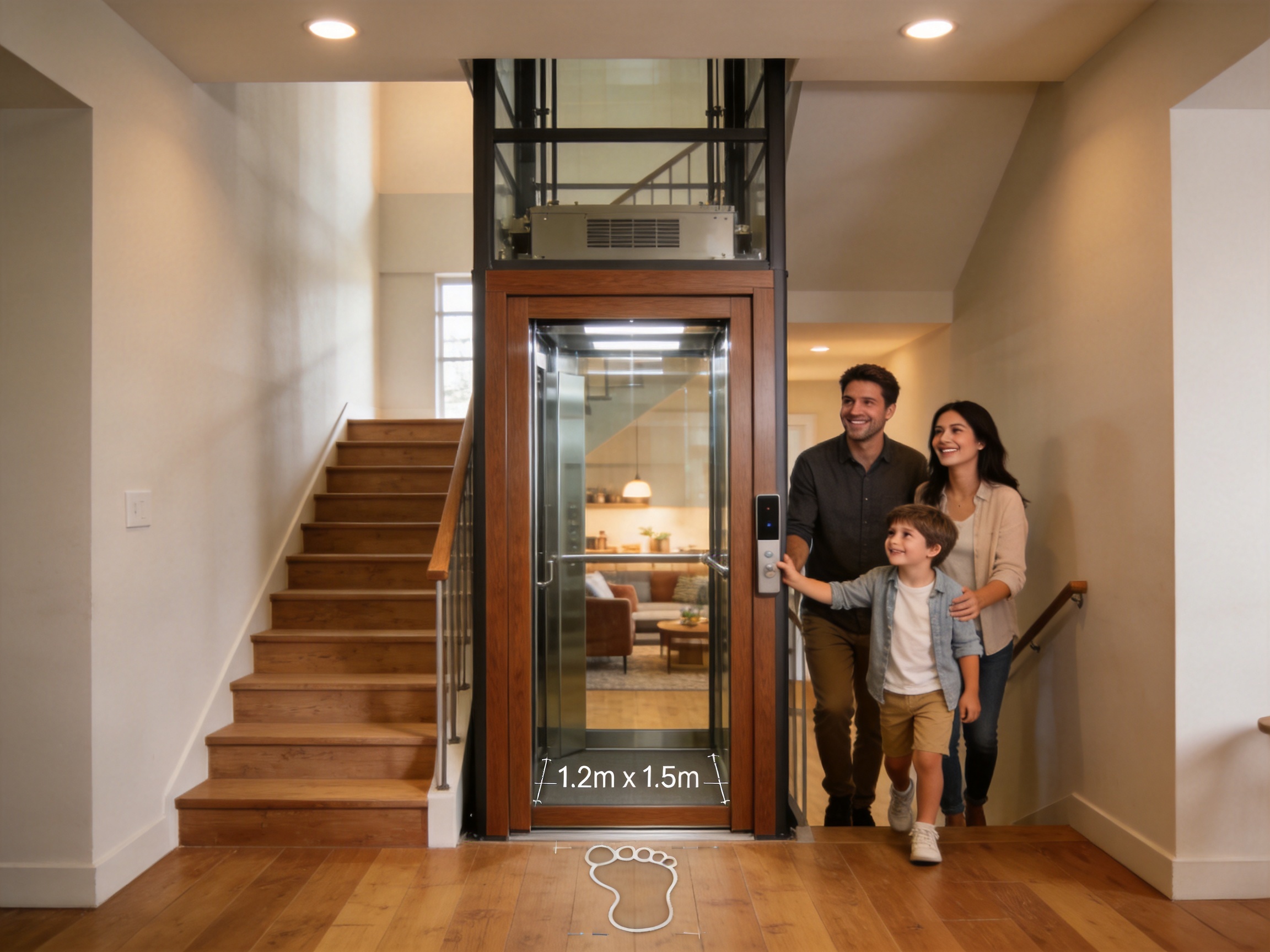
Traditional home elevators rely on a separate machine room—usually located on the top floor or in a basement—to house the traction system, control panel, and other components. This requires 10-15 square feet of additional space, which is often a luxury for homes with limited attic space or existing structural constraints. The MRL design eliminates this need by integrating the machine and control system directly into the elevator shaft, reducing the overall footprint and simplifying installation.
The space-saving benefits of MRL design are significant. For example, a home with a small attic can now install an elevator without modifying the roof or adding a separate room. The compact shaft dimensions (as small as 1.2 meters wide by 1.5 meters deep) mean the elevator can fit into existing stairwells or new shafts with minimal structural changes. Competitors who still use machine room designs are at a clear disadvantage here—they cannot offer the same level of flexibility or space efficiency, making their products unsuitable for many modern homes.
Installation time is another key advantage. MRL elevators can be installed in 3-5 days, compared to 7-10 days for traditional machine room models. This is because there’s no need to build or modify a machine room, and the integrated components are easier to assemble. For families who want to minimize disruption to their daily lives, this faster installation is a major selling point.
Key Product Advantages That Outperform Competitors
1. Energy Efficiency: "Electric Home Appliance Style" Design
The next-gen home elevator uses an "electric home appliance style" energy-saving design, which draws inspiration from high-efficiency household appliances like inverter air conditioners. This design reduces power consumption by up to 30% compared to traditional elevators, cutting down on monthly electricity bills. The maintenance-free environment protection drive is a key component here—it uses advanced materials that do not require regular lubrication or replacement, further reducing long-term costs and environmental impact.
Competitors often rely on older drive systems that are less energy-efficient and require quarterly maintenance. For example, Competitor A’s traditional drive consumes 20% more power and needs annual part replacements, increasing the total cost of ownership by 40% over 10 years. The MRL home elevator’s energy-efficient design not only saves money but also aligns with the growing demand for sustainable home solutions.
2. Uncompromised Safety: All-Round Protection
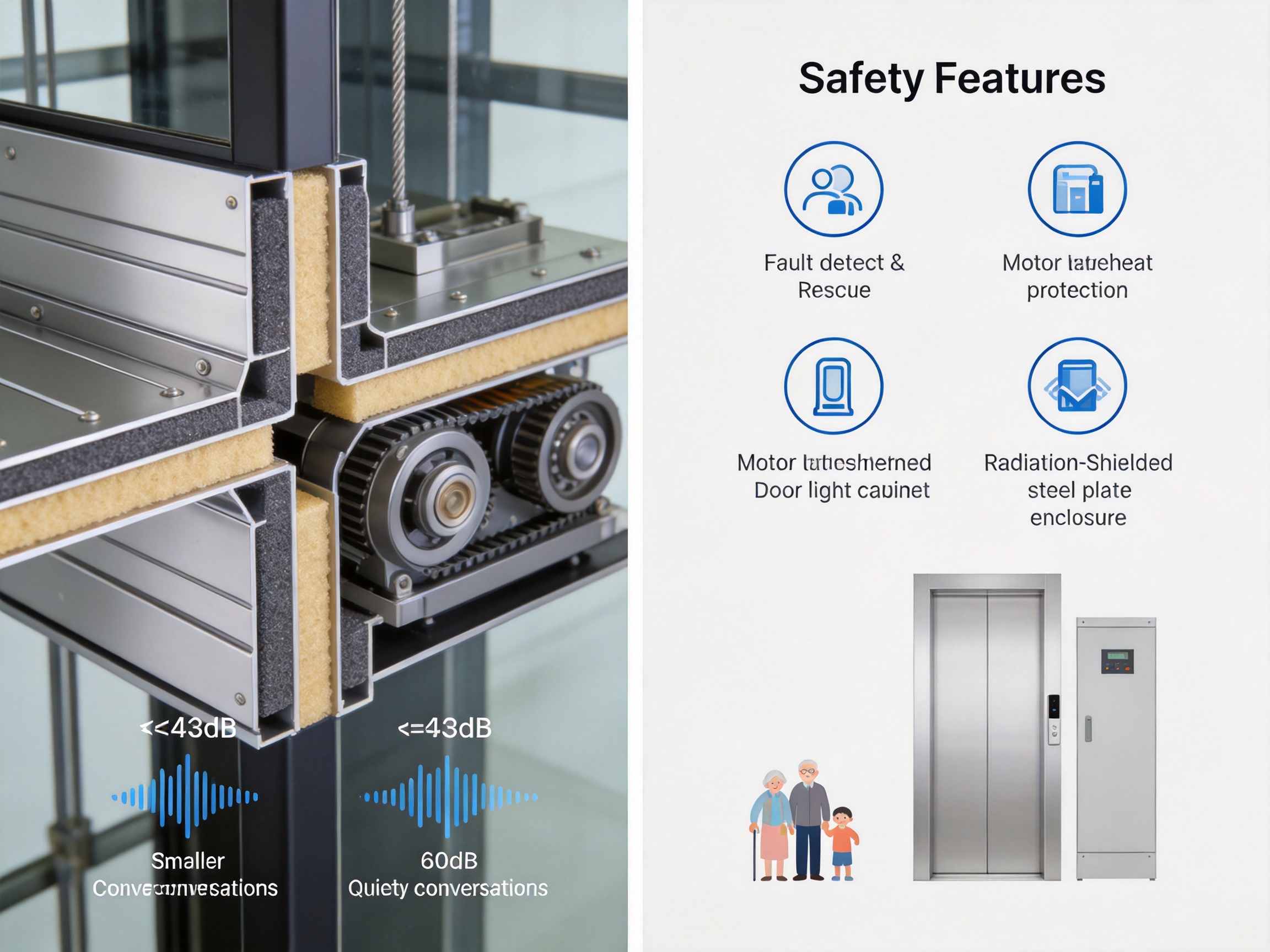
Safety is a top priority for any home elevator, and this product offers 18+ safety features—far more than most competitors. Key safety features include:
- Fault detect & rescue system
- Motor overheat protection
- Automatic fault diagnostic
- Inverter overheat protection
- Overcurrent, overload, and anti-reverse protection
- Slip and overrun protection
- Main circuit fault protection
- Door block and entrance light curtain protection
- Safety circuit protection
- Automatic adjustment after power recovery
- Emergency landing rescue
- Emergency calling system
Competitors often lack critical safety features. For example, Competitor B only offers 12 basic safety features and does not include radiation shielding or power-failure self-rescue. The MRL home elevator’s radiation-free control cabinet uses a steel plate enclosure to shield electromagnetic radiation (EMR), which can interfere with home appliances and may have long-term health effects. This feature is unique to this product and sets it apart from competitors.
3. Noise Reduction: A Quiet Living Environment
The elevator uses three layers of noise reduction technology to ensure a quiet living environment: 1) A low-noise traction machine with precision bearings and sound-dampening materials; 2) Triple-layer car walls with soundproofing foam between metal panels; 3) An optimized running system with quiet pulleys and cables. Together, these features keep operational noise below 43dB—quieter than a normal conversation (which averages around 60dB).
Competitors often have higher noise levels. For example, Competitor A’s elevator produces 50-55dB of noise, which can be noticeable and disruptive during quiet hours (e.g., naptime or bedtime). The MRL home elevator’s quiet operation ensures that it does not disturb family members, even in small homes.
4. Smooth Comfort: Designed for All Users
The elevator uses WVF variable frequency control for both the door machine and traction system, which allows for smooth acceleration and deceleration. This eliminates jerky movements, making the elevator comfortable for all users—including the elderly, children, and people with mobility issues. The speed curve is optimized for residential use (slower than commercial elevators), ensuring a gentle ride.
Competitors often use fixed-speed systems, which can cause sudden starts and stops. For example, Competitor B’s elevator has a fixed speed of 0.5 m/s, which can be jarring for passengers. The MRL home elevator’s variable speed control ensures a smooth, comfortable ride every time.
5. Flexible Application: Adapts to Any Home
The elevator’s compact design and extensive customization options make it suitable for any home. It can be installed in existing shafts or new shafts with minimal structural changes, and it fits in spaces as small as 1.2m x 1.5m. The customization options include:
- Car materials: Wood, glass, metal, or composite materials
- Colors and finishes: Neutral tones, custom paints, or matte/glossy finishes
- Design styles: Modern, classic, or minimalist
- Accessibility features: Braille buttons, voice announcements, and wider door openings
Competitors offer limited customization. For example, Competitor A only offers 2-3 car designs and does not include accessibility features as standard. The MRL home elevator’s flexibility ensures that it can be tailored to match any home’s interior design and meet the needs of all family members.
Behind the Product: Advanced Manufacturing & Company Strengths
The next-gen home elevator’s superior performance is not just a result of innovative design—it’s backed by a company with decades of experience, state-of-the-art manufacturing facilities, and a commitment to quality. Here’s how the company’s strengths translate into a better product for consumers:
1. German-Guided Industry 4.0 Production System
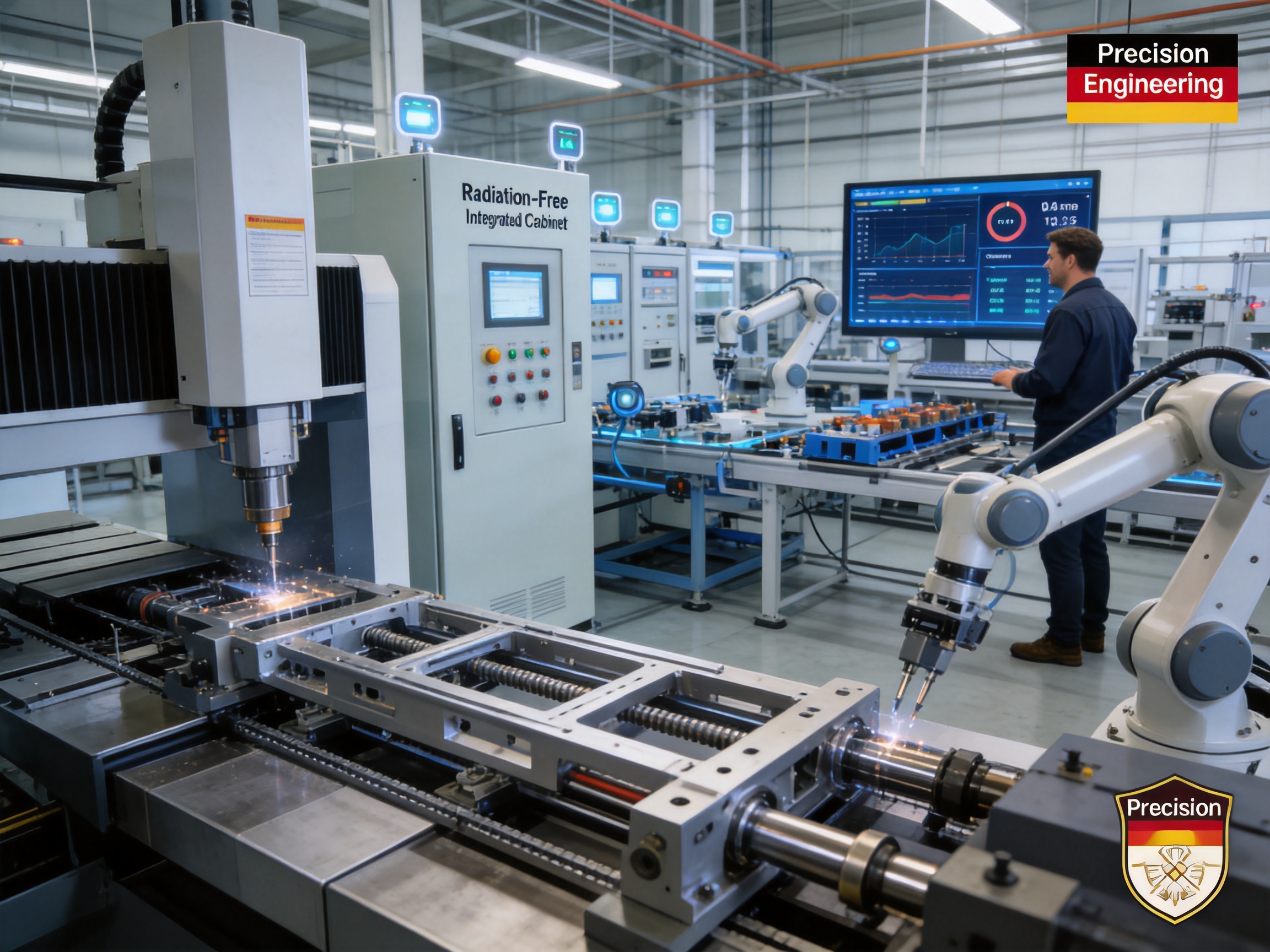
The company’s manufacturing facility is guided by German engineering principles, known for their precision and reliability. The facility uses an Industry 4.0 production system, which integrates big data, IoT, and automation to optimize every stage of production:
- Intelligent Processing: CNC machines with a tolerance of less than 0.1mm cut and shape elevator components (e.g., car frames, shafts) with unparalleled precision. This ensures that every part fits perfectly, reducing assembly time and minimizing defects.
- Automated Assembly Lines: Robots and automated systems assemble key components (e.g., traction machines, control panels) with consistent accuracy. This reduces human error and ensures that every elevator meets the same high standards.
- Intelligent Detection: In-line sensors and vision systems inspect every component for defects (e.g., cracks in metal, faulty wiring) before assembly. Each elevator undergoes 72 hours of continuous testing (simulating 10,000 cycles of use) to ensure reliability.
- Real-Time Monitoring: IoT devices track production metrics (e.g., assembly time, defect rates) in real time, allowing the company to identify and resolve issues quickly. This proactive approach to quality control ensures that every product leaving the factory is flawless.
Competitors often rely on manual assembly and limited testing, leading to higher defect rates and shorter product lifespans. The company’s Industry 4.0 system sets it apart, ensuring that every home elevator is built to last.
2. R&D Leadership & Innovative Technology
The company invests heavily in research and development (R&D), with a team of engineers dedicated to improving elevator design and performance. Some of their key innovations include:
- Radiation-Free Integrated Control Cabinet: This cabinet combines industrial control technology (PLC) with communication technology (Wi-Fi/Bluetooth) and uses a steel plate enclosure to shield electromagnetic radiation (EMR). EMR from unshielded controls can interfere with home appliances and may have long-term health effects—this innovation eliminates that risk.
- IoT-Based Elevator Monitoring: The optional IoT system allows remote monitoring of the elevator’s performance. If a component (e.g., a sensor or motor) is about to fail, the system sends an alert to the company’s service team, who can dispatch a technician before a breakdown occurs. This reduces downtime and ensures that the elevator is always safe to use.
- Maintenance-Free Environment Protection Drive: This drive uses advanced materials that do not require regular lubrication or replacement. It is also energy-efficient, reducing power consumption by up to 30% compared to traditional drives.
3. Global Reach & Customization
The company serves clients in over 60 countries, with a network of certified technicians and service representatives. Key strengths in this area include:
- Multi-Language Support: Technicians and service staff speak multiple languages (Russian, Spanish, English, Arabic), making it easy for international clients to communicate their needs.
- One-to-One Service: Every client is assigned a dedicated service representative who tracks their elevator from installation to long-term use. This personalized service ensures that any issues are resolved quickly and efficiently.
- Extensive Customization: The company offers custom car designs, materials, and features to match any home’s interior. For example, clients can choose wood paneling for a classic look, glass for a modern feel, or add braille buttons and voice announcements for accessibility.
4. Sustainability & Social Responsibility
The company is committed to sustainability, with several initiatives to reduce its environmental impact:
- Maintenance-Free Drive: This drive reduces the need for replacement parts, which are often made of non-recyclable materials. It also uses less energy, reducing carbon emissions.
- Recycled Materials: The company uses recycled materials in some components (e.g., car wall panels made from recycled wood, metal frames made from recycled steel).
- Eco-Friendly Manufacturing: The facility uses solar panels to generate electricity and rainwater harvesting to reduce water consumption.
Product Specifications & Competitive Comparison
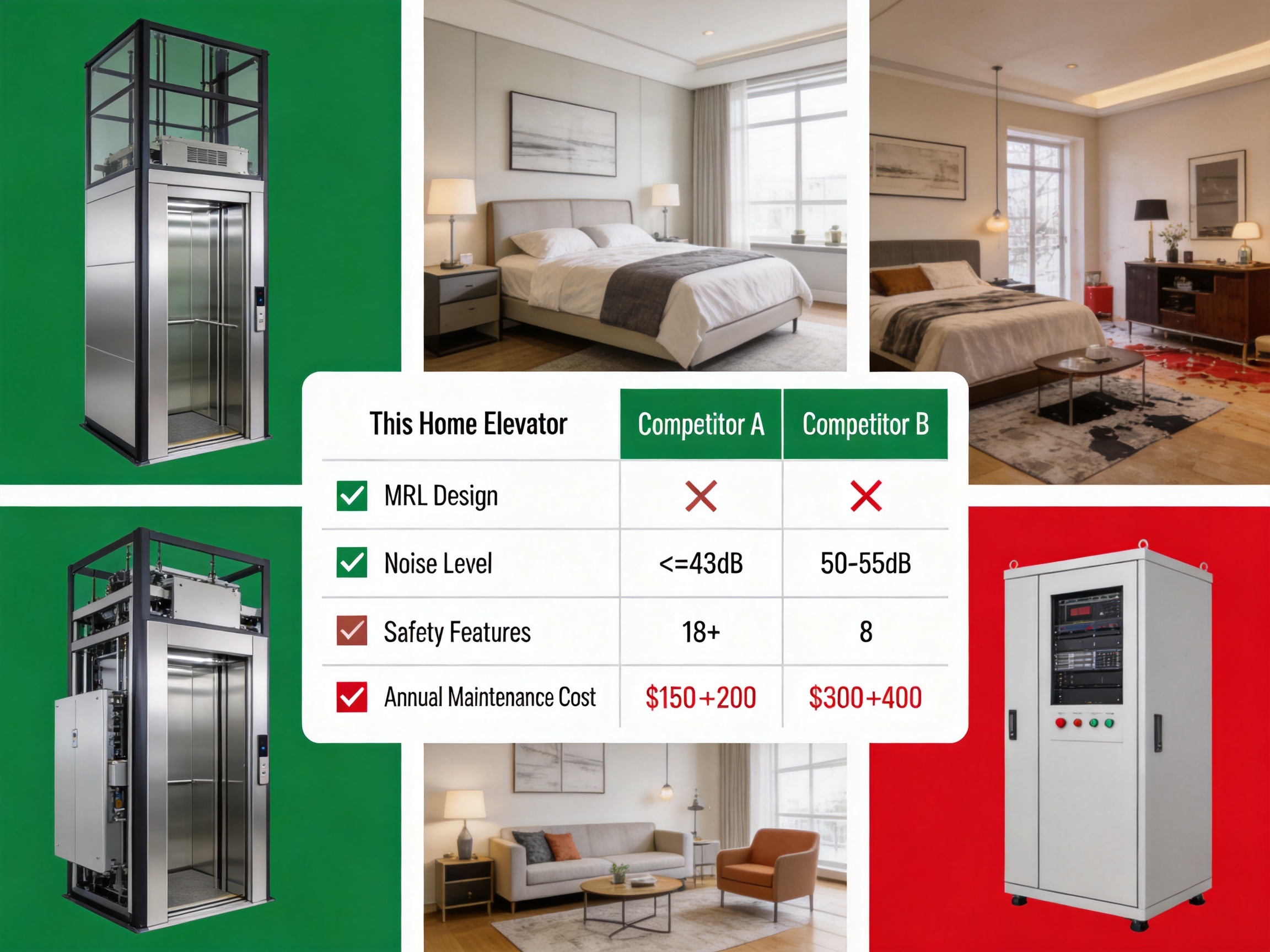
To understand how this home elevator outperforms competitors, let’s compare key features in the table below:
| Feature | This Home Elevator | Competitor A | Competitor B |
|---|---|---|---|
| Machine Room Type | Machine Room-Less (MRL) | Machine Room Required | Machine Room-Less (Basic) |
| Energy Efficiency Rating | A++ (Top Tier) | B+ | A+ |
| Operational Noise Level | <=43dB | 50-55dB | 45-48dB |
| Total Safety Features | 18+ (Including Radiation Shielding, Power-Failure Rescue) | 8 (Basic Safety Only) | 12 (Limited Advanced Safety) |
| IoT Integration | Optional (Advanced: Remote Monitoring, Predictive Maintenance) | No | Basic (Fault Alerts Only) |
| Customization Options | Extensive (Car Materials, Designs, Accessibility Features) | Limited (2-3 Car Designs) | Moderate (5-6 Designs) |
| Annual Maintenance Cost | $150-$200 (Maintenance-Free Drive) | $300-$400 (Quarterly Lubrication) | $250-$300 (Basic Drive) |
| Radiation Shielding | Yes (Steel Plate Enclosure) | No | Partial (Plastic Shielding) |
| Installation Time | 3-5 Days | 7-10 Days | 5-7 Days |
This table clearly shows that the next-gen home elevator outperforms competitors in every key category. From space efficiency to safety features, it offers a superior solution for modern families.
Q&A Section
To address common questions about the home elevator, here’s a comprehensive Q&A:
Q1: Is the MRL home elevator suitable for existing multi-story homes?
A1: Yes. The MRL design eliminates the need for a separate machine room, so it can be installed in existing shafts or new shafts with minimal structural changes. The compact shaft dimensions (1.2m x 1.5m) mean it fits in most residential spaces—even in homes with small attics or limited basement space. Competitors with machine room designs often require additional space, making them unsuitable for older homes.
Q2: How does the noise reduction technology work, and what’s the maximum noise level?
A2: The elevator uses three layers of noise reduction: 1) A low-noise traction machine with precision bearings and sound-dampening materials; 2) Triple-layer car walls with soundproofing foam between metal panels; 3) An optimized running system with quiet pulleys and cables. Together, these features keep operational noise below 43dB—quieter than a normal conversation (60dB). This ensures the elevator doesn’t disturb family members during quiet hours.
Q3: What emergency systems are in place for power failures or malfunctions?
A3: The elevator has four key emergency systems: 1) Trouble Self-Rescue: Automatically moves to the nearest safe floor if it malfunctions; 2) Power-Failure Rescue: Backup power levels the elevator at the nearest floor during outages; 3) Emergency Calling: Connects to external support via telephone; 4) Fault Detection: Monitors for issues and sends alerts (via IoT) before breakdowns. Competitors often lack the power-failure rescue system, leaving passengers stuck.
Q4: Can the elevator be customized to match my home’s interior?
A4: Yes. The company offers extensive customization: 1) Materials: Wood, glass, metal, or composites; 2) Designs: Modern, classic, or minimalist; 3) Accessibility: Braille buttons, voice announcements, wider doors; 4) Colors: Custom paints or finishes. Competitors offer limited options, which may not align with your home’s style.
Q5: What is the maintenance requirement for this elevator?
A5: The maintenance-free drive reduces the need for regular service. Annual maintenance involves a quick check of safety features and controls (costing $150-$200). Competitors’ traditional drives require quarterly lubrication and annual part replacements, increasing costs to $300-$400 per year.
Q6: Does the company offer global installation and after-sales service?
A6: Yes. The company serves 60+ countries with certified technicians and multi-language support. They offer one-to-one service and optional IoT monitoring for proactive maintenance. Competitors often only offer local service in a few markets.
Q7: How does the radiation-free control cabinet benefit my family?
A7: The steel plate enclosure shields EMR from the control system. Unshielded EMR can interfere with home appliances and may affect health (especially children/elderly). Competitors skip this shielding, exposing families to unnecessary risks.
Conclusion
The next-gen home elevator represents a revolution in residential vertical mobility. Its MRL design, advanced safety features, energy efficiency, and customization options make it a clear leader over competitors. Backed by a company with German-guided manufacturing, R&D leadership, and global service, this product is the ideal choice for modern families looking for a safe, efficient, and space-saving elevator solution. Whether you’re aging in place, have mobility needs, or simply want to enhance your home’s convenience, this elevator delivers on every front.
References
1. Global Industry Analysts, Inc. (2023). *Residential Elevator Market Trends 2023-2028: Growth Drivers & Competitive Analysis*.
2. International Association of Elevator Engineers (2022). *Safety Standards for Home Elevators: A Comparative Study of MRL vs. Machine Room Designs*.
3. Journal of Industrial Technology (2023). *IoT Integration in Elevator Manufacturing: Enhancing Efficiency & Safety*.
4. Green Building Council (2022). *Energy Efficiency in Vertical Mobility: Best Practices for Residential Elevators*.

Related Products
Related News
Built on safety, forging trust in vertical mobility.
lf you have any questions or need help, feel free to contact with our team.
 export@tenau.com.cn
 +86-18601458867
 +86-512-65059883
Elevator & Escalator
Factory Add
East of Xicheng Road, North of Lianyi Road, Nanxun Economic Development Zone, Nanxun District, Huzhou City, Zhejiang Province, P.R.China
Copyright © Tenau Elevator (China) Co., Ltd. All Rightd Reserved.
Custom High Quality Elevator Suppliers and World Brand Elevator Company