

 en
en Español
 русский
 中文简体
中文简体
Advanced Machine Room Less Passenger Elevator Solutions for Modern Buildings
Content
- 1 Why Machine Room Less Passenger Elevators Are Important
- 2 Core Product Positioning
- 3 Key Advantages Over Conventional Passenger Elevators
- 4 Technical Feature Overview
- 5 Safety as the Central Design Principle
- 6 Comfort and Ride Quality
- 7 Travel Efficiency for Busy Buildings
- 8 Manufacturing Strength and Production Capability
- 9 Industry 4.0 Intelligent Production
- 10 Quality Philosophy and Strict Control
- 11 Service and Maintenance Experience
- 12 Applications in Hotels
- 13 Applications in Business Buildings
- 14 Applications in High-Rise Buildings
- 15 Design Flexibility and Customization
- 16 How the Product Competes in the Global Elevator Market
- 17 Environmental and Operational Efficiency Considerations
- 18 Passenger-Centered Experience
- 19 Q&A Section
- 19.1 Q1: What is a machine room less passenger elevator?
- 19.2 Q2: Where is this passenger elevator most suitable?
- 19.3 Q3: What are the main advantages over a traditional machine room elevator?
- 19.4 Q4: How does the elevator improve passenger safety?
- 19.5 Q5: What is the purpose of the UCMP device?
- 19.6 Q6: How does remote monitoring help building owners?
- 19.7 Q7: Why is VVVF drive technology important?
- 19.8 Q8: Can this elevator support busy office traffic?
- 19.9 Q9: What manufacturing strengths support the product?
- 19.10 Q10: Why is after-sales service important for passenger elevators?
- 20 Conclusion
- 21 References
- 22 Product: Passenger Elevator
In modern building design, the passenger elevator is no longer treated as a simple vertical transportation device. It is a core part of the building experience, a daily safety system, a space-planning tool, and a visible symbol of construction quality. For hotels, business buildings, residential towers, commercial complexes, medical facilities, and high-rise developments, a reliable passenger elevator can influence traffic efficiency, user comfort, property value, and long-term maintenance cost. Among the many elevator types available today, the machine room less passenger elevator has become one of the most practical and forward-looking solutions because it removes the need for a traditional machine room and gives architects, developers, and owners more freedom in structural planning.
The passenger elevator introduced here belongs to the machine room less elevator category. Its purpose is to provide safe, smooth, efficient, and space-saving vertical transportation for buildings with higher requirements for construction design and passenger experience. By eliminating the influence of the machine room from the structural aspect, this elevator makes it possible to optimize building space, reduce architectural constraints, and create more flexible design schemes. It is especially suitable for hotels, business buildings, high-rise buildings, mixed-use projects, and other environments where safety, traffic efficiency, comfort, and intelligent operation are essential.
Tenau Elevator (China) Co., Ltd. presents this machine room less passenger elevator as a product supported by advanced manufacturing capability, strict quality control, intelligent production systems, and a strong service philosophy. The company is located in Huzhou City, Zhejiang Province, and operates as a professional elevator and escalator manufacturing enterprise serving overseas markets. With professional elevator and escalator production lines, automatic panel production equipment, industry 4.0 production concepts, and multilingual service capability, the company is positioned to provide customized elevator solutions for customers from many regions and application sectors.
Why Machine Room Less Passenger Elevators Are Important
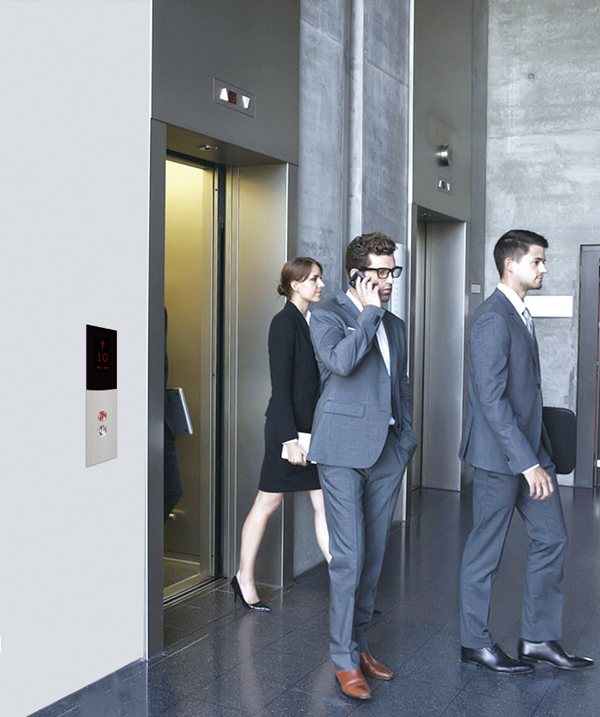
A traditional traction passenger elevator normally requires a dedicated machine room above or near the hoistway. This room occupies building space, adds structural considerations, and may increase design complexity. In contrast, a machine room less passenger elevator integrates the main traction equipment into the hoistway or related shaft area, reducing or eliminating the requirement for a separate machine room. This approach provides clear advantages for modern architecture, especially where every square meter of usable space matters.
The machine room less concept supports more efficient building planning. Developers can use the space that would otherwise be occupied by the machine room for other purposes, such as additional usable area, mechanical systems, rooftop design, or architectural features. This flexibility is valuable for hotels, office buildings, and high-rise commercial projects where space utilization directly affects economic returns. It also helps architects maintain cleaner rooflines and reduce structural restrictions caused by conventional elevator machine room layouts.
Another major value of machine room less design is its adaptability. Modern buildings often require customized elevator schemes because floor height, traffic flow, shaft arrangement, building function, and design aesthetics vary widely. A machine room less passenger elevator can offer more possibilities for construction space arrangement. This means it can be integrated into projects where traditional elevator solutions may be less convenient or may require additional structural changes.
Passenger expectations have also changed. People want elevators that start smoothly, stop accurately, open and close doors gently, operate quietly, and provide strong safety protection. They also expect reliable operation during peak traffic periods. A machine room less passenger elevator designed with variable frequency drive technology, intelligent dispatching, light curtain protection, overload protection, unintended movement prevention, and remote monitoring can meet these expectations while supporting building owners with easier management and improved operational transparency.
Core Product Positioning
This passenger elevator is designed for buildings that require a balance of space efficiency, safety, comfort, intelligent management, and high-quality appearance. Its machine room less structure reduces the architectural impact of elevator equipment and enables more freedom in building design. The product is suitable for hotels, business buildings, high-rises, residential developments, commercial properties, public buildings, and other projects where reliable passenger transportation is required.
The elevator is not merely a mechanical lifting device. It combines advanced drive control, intelligent door operation, safety monitoring, passenger protection devices, and service support into one integrated vertical transportation system. It is developed with a focus on personal safety, passenger comfort, travel efficiency, and long-term operational stability. These qualities are essential for buildings with heavy passenger traffic and continuous daily use.
Compared with many ordinary passenger elevators, this solution emphasizes the combination of space-saving construction and strong safety functions. It includes systems designed to prevent unintended car movement, protect the door from derailment after impact, detect passengers or objects at the entrance through infrared light curtain technology, and support remote monitoring through Internet of Things technology. These functions help reduce risk, improve maintenance response, and strengthen the overall safety level of the building.
In addition, the elevator provides a wide range of travel functions that improve daily convenience. Variable voltage variable frequency drive control supports smooth acceleration, steady running, and gentle stopping. The VVVF door operator supports sensitive and comfortable door movement. Functions such as automatic pass without stop, automatic adjustment of door opening time, express door closing, car arrival gong, and command register cancellation improve traffic flow and user experience in busy buildings.
Key Advantages Over Conventional Passenger Elevators
The first competitive advantage is architectural flexibility. By eliminating the traditional machine room requirement, the elevator reduces restrictions on building layout. This is especially valuable in high-rise developments, hotels, and business buildings where space planning must meet strict design, functional, and economic goals. A machine room less passenger elevator allows designers to think beyond conventional elevator structures and create more efficient building forms.
The second advantage is improved space economy. In property development, usable space is a measurable asset. Traditional machine rooms may occupy valuable roof or building space, while machine room less systems reduce this demand. The saved space can contribute to better building utility, reduced construction complexity, or improved architectural appearance. For developers and owners, this can translate into more efficient investment and stronger long-term value.
The third advantage is passenger comfort. The elevator uses VVVF drive technology to precisely adjust motor rotating speed. This helps create a smooth speed curve during start, travel, and stop. Passengers feel less vibration and less sudden motion. Smooth acceleration and deceleration are particularly important in hotels, office buildings, and premium residential towers because they directly influence the perceived quality of the building.
The fourth advantage is door safety and sensitivity. Door operation is one of the most frequent interactions between passengers and elevators. A precise VVVF door operator can make the opening and closing process gentler and more responsive. The infrared light curtain system detects people and objects in the entrance area, reducing the chance of contact during door closing. The anti-collision and anti-derail door protection device further strengthens door safety by helping keep the door on its normal track after impact.
The fifth advantage is intelligent monitoring. Remote monitoring through Internet of Things technology helps building managers observe elevator operation, collect data, identify faults, and support timely troubleshooting. Traditional elevator maintenance often depends heavily on scheduled inspection and passenger reporting. Intelligent monitoring adds another layer of visibility, making elevator management more proactive and data-driven. This is especially helpful in buildings with multiple elevators and high daily usage.
The sixth advantage is strong safety design. The elevator includes multiple protection functions, including overload holding stop, start protection control, inspection operation, fault self-diagnosis, repeated door closing, upper and lower final limit protection, downward overspeed protection, upward overspeed protection, and car accidental movement prevention. These features are intended to reduce operational risks and protect passengers under abnormal conditions.
The seventh advantage is traffic efficiency. In busy buildings, elevator efficiency can affect the entire user experience. Functions such as automatic pass without stop, direct parking, group control, duplex control, on-duty peak service, and off-duty peak service help reduce waiting time and improve dispatching logic. When properly configured, these functions allow the elevator system to respond more intelligently to passenger demand patterns.
Technical Feature Overview
The following table summarizes major features and their practical value for buildings, passengers, and owners.
| Feature | Function | Practical Benefit |
|---|---|---|
| Machine room less structure | Removes the need for a traditional machine room | Improves space utilization and supports flexible building design |
| VVVF drive | Precisely controls motor rotating speed | Provides smooth start, stable travel, and comfortable stop |
| VVVF door operator | Controls door motor speed accurately | Creates gentle, sensitive, and reliable door movement |
| UCMP protection | Prevents unintended car movement when doors are open | Strengthens passenger safety at landing areas |
| Internet of Things monitoring | Monitors and manages elevator operation remotely | Supports timely maintenance and safety management |
| Infrared light curtain | Detects passengers or objects at the elevator entrance | Reduces door closing risk and improves entry safety |
| Overload holding stop | Stops operation when car load exceeds preset value | Prevents unsafe travel under overload conditions |
| Group control | Coordinates three or more elevators | Reduces waiting time and improves traffic efficiency |
| Fault self-diagnosis | Records recent faults for inspection and repair | Improves troubleshooting speed and maintenance accuracy |
| Peak service modes | Adapts elevator dispatching during busy periods | Improves service during office start and end traffic peaks |
Safety as the Central Design Principle
Passenger elevator safety depends on many layers of protection. A reliable elevator must prevent unsafe movement, control speed, protect doors, detect obstacles, manage overload, and support maintenance personnel during inspection. This machine room less passenger elevator emphasizes safety as one of its main design principles, reflecting the expectation that personal safety is the first priority for elevator users.
The UCMP device for prevention of unintended car movement is a particularly important safety feature. When an elevator stops at a landing and opens its doors, any irregular movement of the elevator car without a valid command can create a serious hazard. The UCMP system is designed to trigger protection and arrest unintended movement, helping protect passengers while they enter or leave the car. This feature is essential in modern elevator safety engineering because landing-zone accidents can be among the most dangerous elevator incidents.
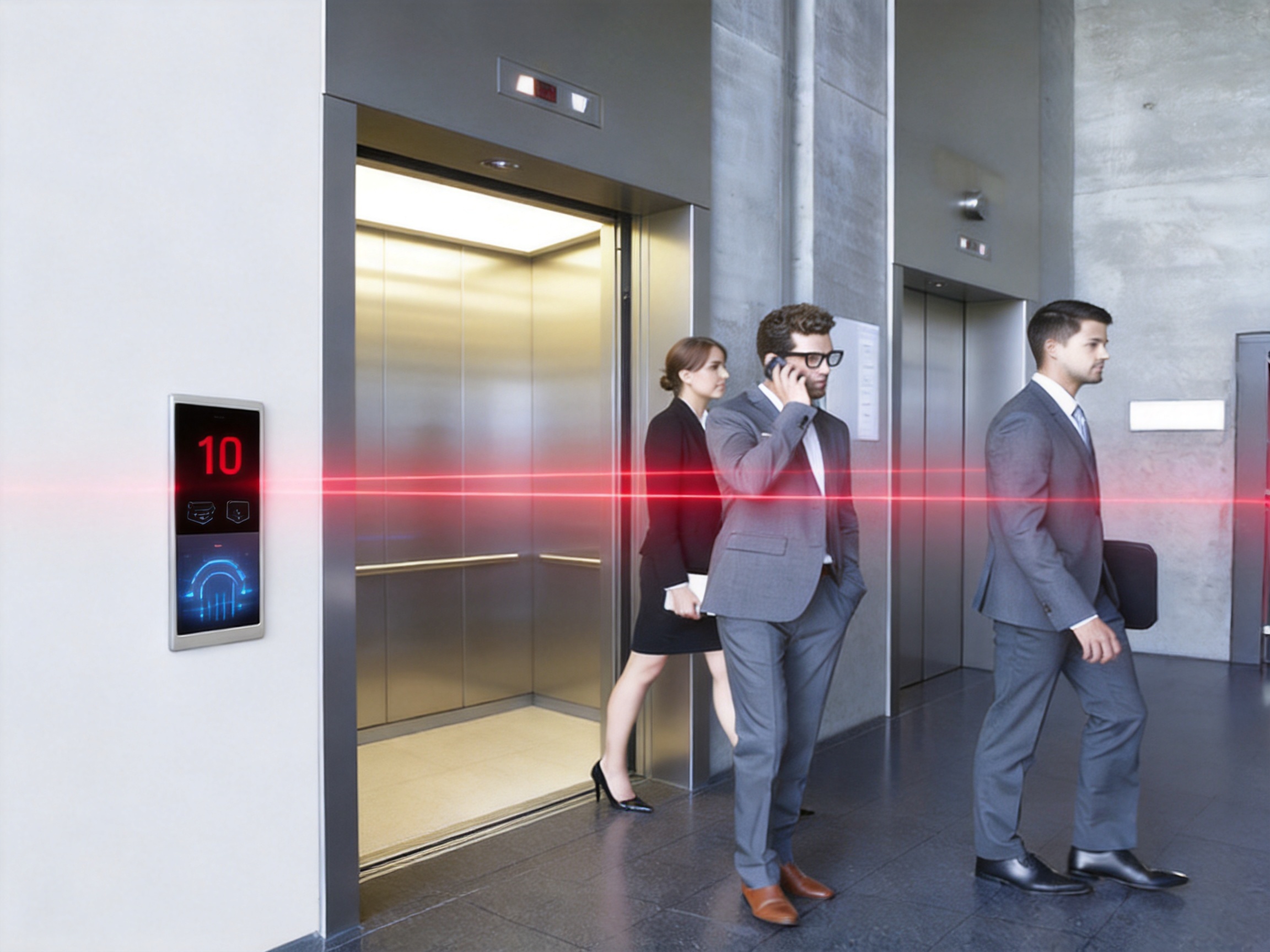
The infrared light curtain system adds another layer of passenger protection. It uses infrared detection at the elevator entrance to sense people or objects in the door area. If an obstacle is detected, the system can react quickly to reduce the risk of contact. Unlike older mechanical door edge systems that may require physical contact before responding, light curtain protection can identify obstacles across the door height, improving comfort and safety during boarding and exiting.
The device for prevention of collision and derailment of the car door is also valuable. Elevator doors are used thousands of times and may experience impact from luggage, carts, passenger movement, or accidental collision. A door derailment can create risk and disrupt service. By helping keep the door on its track after impact, this protective device supports both passenger safety and equipment reliability.
Overload holding stop protects the elevator from operating when the car is overloaded. If the load exceeds the allowed value, the buzzer rings and the elevator remains stopped at the same floor. This prevents the elevator from traveling under unsafe load conditions and helps preserve the traction system, braking system, and overall mechanical integrity.
Upper and lower final limit protection helps prevent the elevator from rushing upward beyond the safe range or moving downward beyond the safe lower limit when control abnormalities occur. Overspeed protection devices provide additional safety by responding when the elevator moves faster than the rated speed. Downward overspeed protection may cut off control power, stop motor operation, and activate safety gear if speed continues to increase. Upward overspeed protection can decelerate or brake the elevator when upward speed exceeds a safe threshold.
Fault self-diagnosis improves safety and maintenance efficiency. The controller can record recent faults, allowing technicians to identify recurring problems and restore operation faster. This is important because elevator downtime affects building operations and passenger confidence. A diagnostic record helps maintenance teams move from guesswork to evidence-based troubleshooting.
Comfort and Ride Quality
A passenger elevator must feel stable and comfortable throughout the ride. Even when an elevator is technically safe, poor ride comfort can make passengers feel uneasy. Sudden starts, uneven acceleration, vibration, abrupt stopping, and noisy door operation can reduce the perceived quality of the entire building. This machine room less passenger elevator uses precise drive and door control to improve ride quality.
The VVVF drive adjusts motor rotating speed with accuracy, allowing the elevator to generate a smooth speed curve from start to travel to stop. Instead of harsh acceleration or sudden braking, the car moves in a controlled manner. This reduces discomfort for passengers and creates a refined impression. In hotels and office buildings, where guests, clients, and employees use elevators frequently, this level of comfort contributes to the building’s professional image.
The VVVF door operator improves the passenger experience at every floor. Door movement is not a minor issue; it is one of the most noticeable parts of elevator operation. Gentle door opening and closing reduce noise, minimize impact, and help passengers enter and exit calmly. Sensitive door control also supports safety because the system can respond more precisely during door operation.
The automatic adjustment of door opening time is another useful comfort function. The elevator can adjust door-open duration based on the difference between landing calls and car calls. In practical terms, this means the elevator can provide more suitable door timing according to passenger movement needs. In a busy lobby, longer or smarter door timing may help boarding. In lighter traffic conditions, shorter door timing can improve efficiency.
Express door closing allows passengers to close the door immediately by pressing the door-close button when the elevator has stopped and opened. This can be useful when passengers want faster service and there is no need to wait for the full door-open duration. At the same time, door protection systems remain important to ensure safety during this process.
The car arrival gong provides audible confirmation that the elevator has reached a floor. This feature supports passenger orientation and accessibility. It is useful in hotels, business buildings, and public environments where passengers may be unfamiliar with the building or may rely on sound cues during travel.
Travel Efficiency for Busy Buildings
Traffic efficiency is a key measure of elevator performance. In a building with many occupants, even a technically advanced elevator can disappoint users if waiting times are long or dispatching is inefficient. This machine room less passenger elevator includes several functions designed to improve traffic flow and reduce unnecessary stops.
Automatic pass without stop improves efficiency when the car is crowded or when the load is close to the preset value. In that situation, the elevator may automatically pass additional landing calls because stopping would not provide useful service to waiting passengers if the car is already full. This helps passengers inside the car reach their destinations faster and allows the system to manage load distribution more effectively.
Independent running allows the elevator to ignore outer calls and respond only to commands from inside the car through a specific action switch. This function can be useful for special operating conditions, such as VIP service, goods movement under supervision, maintenance-related operation, or building management requirements.
Command register cancellation allows passengers to cancel a wrongly selected floor command by pressing the same button twice continuously. This function reduces unnecessary stops caused by accidental button presses, which improves travel efficiency and avoids inconvenience to other passengers.
Anti-nuisance protection is beneficial when the elevator has a light load and several unnecessary commands appear. If three or more commands are registered under certain light-load conditions, the system may cancel registered car calls to avoid unnecessary parking. This helps prevent misuse and improves system efficiency.
Direct parking can improve efficiency by allowing the elevator to level directly according to distance principles without crawling. Accurate direct parking reduces travel time and improves the feeling of precision. Open-door-in-advance functionality can further improve traffic efficiency by opening doors as the elevator decelerates and enters the door-open zone, where permitted by configuration and safety standards.
Group control is valuable in buildings with three or more elevators of the same model. The elevator group can automatically choose the most appropriate response to passenger calls. This reduces repeated parking, lowers waiting time, and improves overall traffic distribution. Duplex control provides similar coordination for two elevators, allowing them to respond to calls through computer dispatching and improve service efficiency.
On-duty peak service and off-duty peak service are especially important for office buildings. During morning arrival periods, upward transport from the home landing can become extremely busy. The system can continuously dispatch elevators to the home landing to satisfy on-duty peak demand. During off-duty periods, elevators can be dispatched to upper floors to serve passengers leaving the building. These functions help the elevator system adapt to predictable traffic patterns.
Manufacturing Strength and Production Capability
The performance of an elevator depends not only on design but also on manufacturing quality. Elevators include structural parts, control systems, traction components, doors, cabins, safety devices, electrical systems, and decorative elements. Each part must be manufactured and assembled with precision because the final product must operate reliably over a long service life. Tenau Elevator (China) Co., Ltd. supports its passenger elevator products with professional production lines, automatic equipment, intelligent manufacturing concepts, and strict quality control.
The company is located in Nanxun Economic Development Zone, Huzhou City, Zhejiang Province. This location is close to Shanghai, providing transportation convenience and connection to international trade channels. The company was established with a focus on the overseas market and has developed professional elevator and escalator production capability. During its initial setup stage, it already had professional elevator and escalator production lines, fully automatic panel production equipment, and a workforce of more than 300 people.
A major strength is the integration of manufacturing resources through the broader group production platform. Production bases share experience in escalators, passenger elevators, cargo elevators, and home lifts. This background gives the company broad product knowledge and practical experience across different vertical transportation categories. The accumulated experience in production, technology, and product development supports the company’s ability to serve customers in diverse markets.
The company emphasizes customized solutions rather than a one-size-fits-all approach. Elevator projects differ according to building type, passenger flow, local code requirements, design style, shaft size, travel height, speed requirement, and budget. A manufacturer with flexible engineering support can help customers select suitable configurations and create practical plans. This is especially important for international customers who may need multilingual communication, technical guidance, and responsive project coordination.
The company’s service capability includes communication in multiple languages, including English, Russian, Spanish, and Arabic. This matters because elevator procurement is technical and often requires clear discussion of specifications, drawings, production schedules, installation conditions, and after-sales support. Multilingual communication reduces misunderstanding and supports smoother cooperation with customers in different countries.
Industry 4.0 Intelligent Production
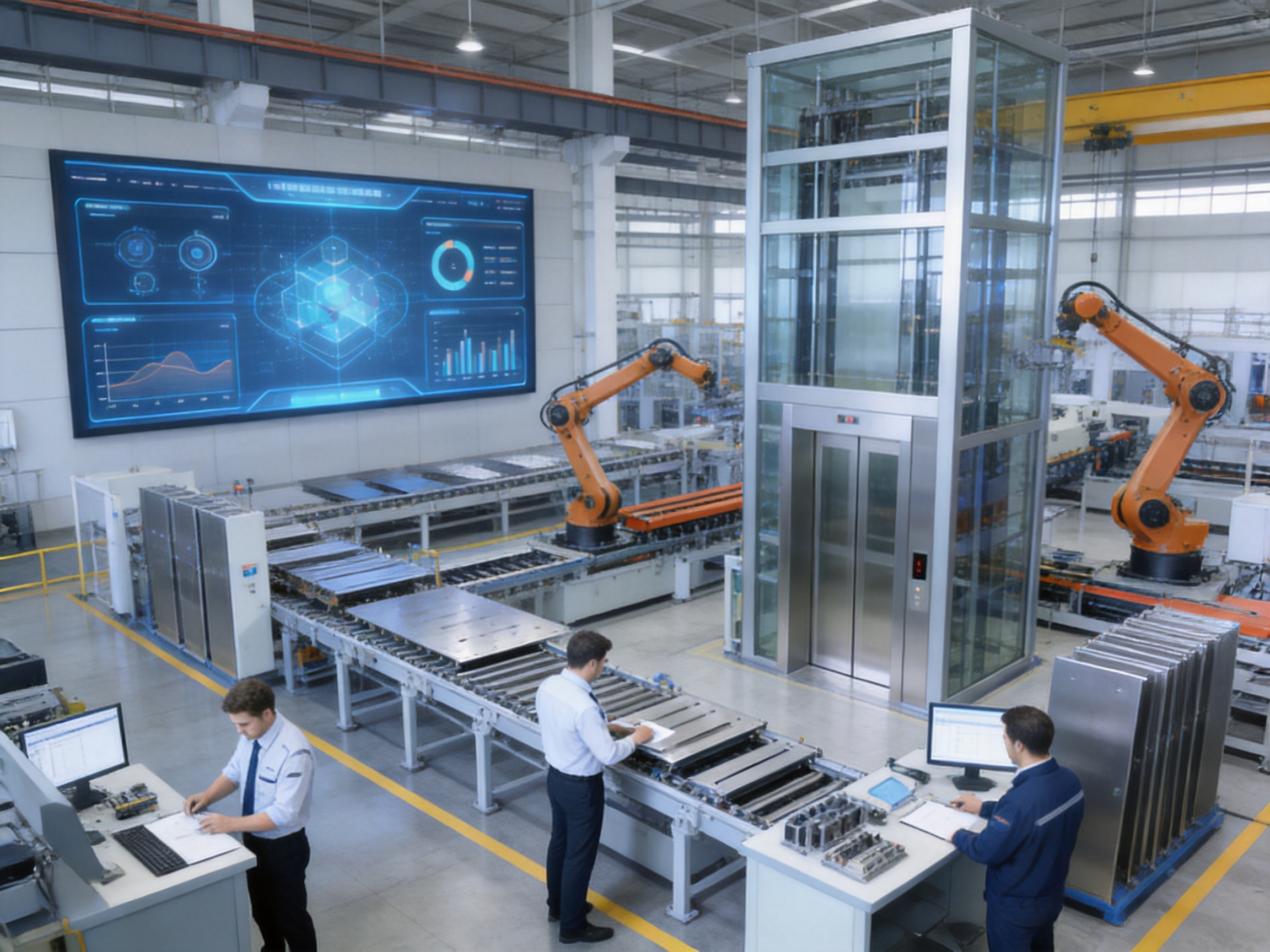
Modern elevator manufacturing increasingly depends on intelligent production systems. Precision, consistency, traceability, and efficiency are critical. Tenau has invested in an intelligent production base guided by modern industrial park design principles, combining design aesthetics, efficient operation, and green environment. The purpose is to create a production environment where work can be more efficient and manufacturing quality can be more stable.
The company’s industry 4.0 production system is described as integrating advanced automatic production equipment with big data and Internet of Things technologies. This production concept supports intelligent processing, intelligent production, intelligent detection, and intelligent monitoring of industrial procedures. In elevator manufacturing, these capabilities help ensure that components are processed accurately, production steps are monitored, and quality checks are supported by systematic data rather than only manual judgment.
Automatic panel production equipment is particularly relevant because elevator panels, doors, and cabin surfaces require precision and consistent appearance. Passenger elevators are not hidden machines; passengers directly see and touch the cabin, doors, operating panels, and decorative elements. High-quality panel processing contributes to better aesthetics, smoother assembly, and longer service life. Automated processing can reduce human error and improve repeatability.
Intelligent detection is important for quality assurance. Elevator components must meet dimensional, structural, and operational requirements. Detection systems can help identify deviations before they become field problems. When production data and quality inspection are linked, manufacturers can improve traceability, analyze root causes, and continuously improve processes.
Intelligent monitoring of production procedures helps improve management efficiency. By observing production status, equipment condition, and workflow data, managers can reduce delays, improve scheduling, and maintain more stable output quality. For customers, this means better delivery reliability and greater confidence in the consistency of the final elevator product.
Quality Philosophy and Strict Control
The company sets its strategic objective as high standard, high precision, and zero defect. This quality philosophy is important in the elevator industry because safety and reliability cannot be compromised. A passenger elevator operates repeatedly every day, often carrying people of all ages and physical abilities. Any weakness in design, manufacturing, installation, or maintenance can affect user safety and building operation.
The company’s working style emphasizes honesty, practicality, perseverance, teamwork, and the pursuit of excellence. These values are not abstract slogans when applied to elevator manufacturing. Honesty supports accurate communication with customers. Practicality supports realistic technical solutions. Perseverance supports problem-solving during complex projects. Teamwork is essential because elevator production involves engineering, procurement, processing, assembly, inspection, logistics, installation support, and service. The pursuit of excellence supports continuous improvement.
Strict quality control covers the whole process of production detection. This means quality is not only checked at the end of production but is built into the manufacturing flow. From material preparation to component processing, assembly, electrical configuration, safety device verification, and final inspection, each stage contributes to the final reliability of the elevator. A rigorous detection system helps prevent defects from moving forward in production.
This emphasis on quality provides an advantage over competitors that may focus mainly on low price. In elevator procurement, the cheapest initial cost is not always the best value. A poorly manufactured elevator can create higher maintenance costs, more downtime, passenger complaints, and safety concerns. A product built under strict quality control can provide stronger long-term value by reducing operational problems and supporting stable performance.
Service and Maintenance Experience
Elevator service does not end after delivery. Like other transportation equipment, an elevator requires regular maintenance to ensure safety, comfort, and performance. The company emphasizes a unified global service standard and maintenance process, with comprehensive inspection standards and a customer-focused service attitude. This service concept supports building owners throughout the product life cycle.
The service philosophy includes unified, exclusive, intelligent, and full-time support. Unified service means customers can expect consistent standards and maintenance processes. Exclusive service means customer data files and maintenance plans can be created according to specific project conditions. Intelligent service includes remote monitoring of elevator operation, allowing safety information to remain under observation. Full-time support means a 24-hour service team can respond to customer needs.
Remote monitoring improves service efficiency by allowing elevator status to be observed more continuously. In a traditional maintenance model, technicians inspect equipment at scheduled intervals or respond after users report a problem. With intelligent monitoring, data collection and abnormal condition alerts can help service teams identify issues earlier. This supports preventive maintenance and may reduce downtime.
For building owners, maintenance quality directly affects tenant satisfaction. In office buildings, elevator downtime can cause delays and frustration. In hotels, elevator problems can negatively affect guest impressions. In residential buildings, unreliable elevators can create daily inconvenience. A service system that combines regular inspection, data monitoring, and timely response helps protect the building’s operational reputation.
The company’s customer communication principle is to reply patiently, meticulously, professionally, and in time. For inquiries, it aims to provide professional and reasonable pricing. For new product needs, it communicates with customers, listens to views, and gives useful suggestions. For orders, it emphasizes fast completion and quality. This approach is important for international projects, where time zones, technical standards, and documentation requirements can make communication more complex.
Applications in Hotels
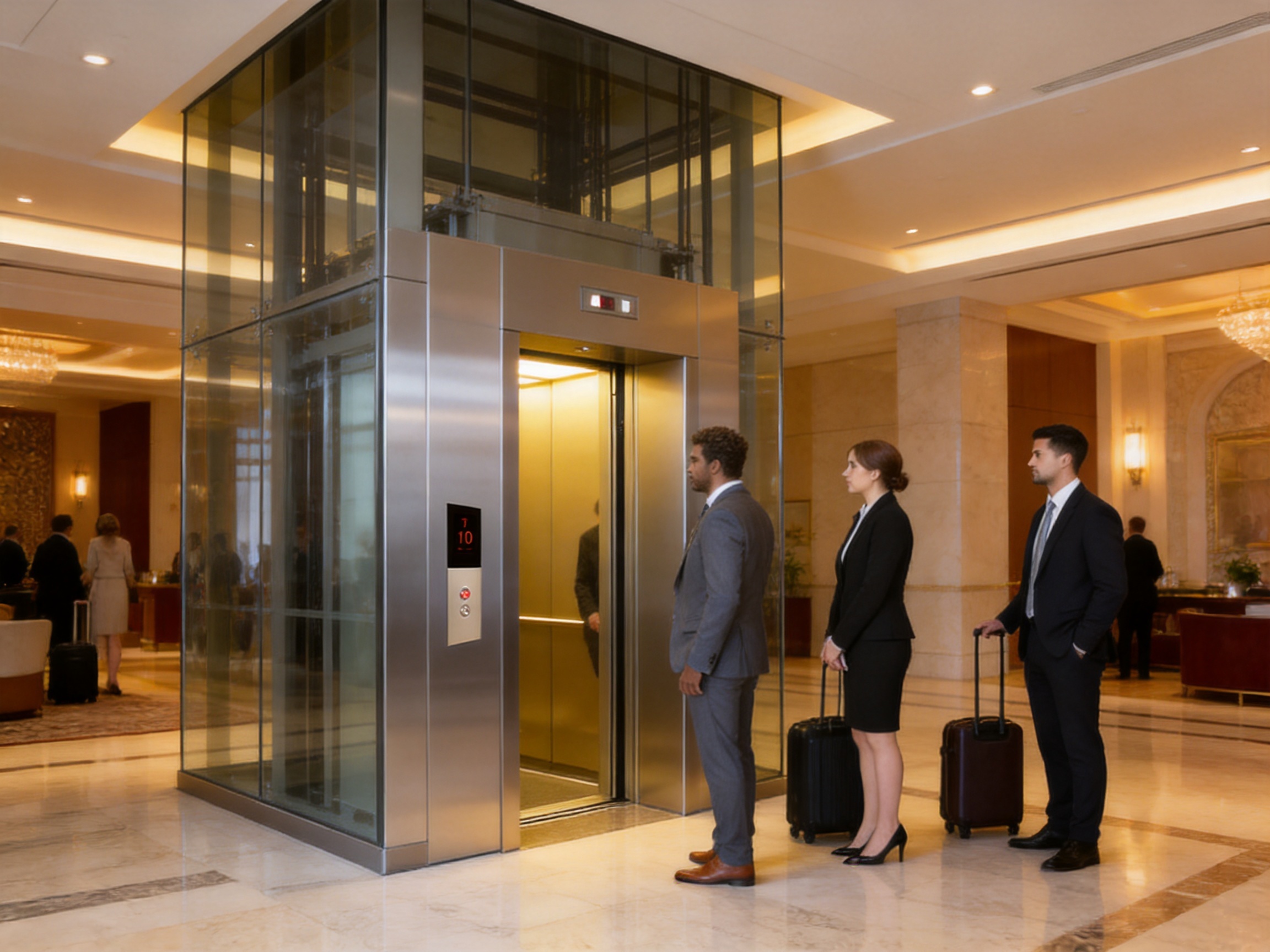
Hotels require passenger elevators that are safe, quiet, comfortable, and visually appropriate. Guests may use the elevator many times during a stay, often with luggage, children, or business materials. Elevator comfort becomes part of the hospitality experience. A machine room less passenger elevator is suitable for hotels because it supports smooth operation, refined door movement, and flexible building design.
The machine room less structure can help hotel designers optimize rooftop and mechanical space. In hotels with architectural design requirements, eliminating or reducing the machine room can support cleaner appearance and better use of upper-level areas. The elevator’s smooth VVVF drive and gentle door operator contribute to a premium feeling, while light curtain protection helps passengers with luggage enter and exit safely.
Hotels also benefit from intelligent monitoring and fault diagnosis. Elevator downtime in a hotel can affect guest satisfaction immediately. Remote monitoring, fault recording, and timely service response help maintenance teams address issues quickly. Arrival gong and clear door operation further support a comfortable and user-friendly guest experience.
Applications in Business Buildings
Business buildings often experience strong traffic peaks, particularly in the morning, at lunch, and after work. Elevator systems must handle concentrated passenger flow without excessive waiting times. This machine room less passenger elevator includes peak service functions, group control, duplex control, automatic pass without stop, and other traffic-management features that make it suitable for office environments.
During on-duty peak periods, elevators can be dispatched to the home landing to support upward traffic. During off-duty peak periods, elevators can be dispatched toward upper floors to carry passengers down. Group control can coordinate multiple elevators and select the most suitable response to calls. These functions improve efficiency and reduce crowding in lobby areas.
Business buildings also value professional appearance and reliable service. Smooth ride quality reflects positively on the building. Intelligent monitoring and maintenance support reduce operational risk. For property managers, a stable elevator system helps maintain tenant satisfaction and supports the building’s commercial value.
Applications in High-Rise Buildings
High-rise buildings place greater demands on elevator systems because travel distance, passenger volume, and service expectations are higher. A machine room less passenger elevator can provide flexible design benefits while supporting smooth travel and strong safety protection. Accurate speed control, reliable braking, overspeed protection, and final limit protection are especially important where travel height is significant.
In high-rise projects, space utilization is critical. Removing the traditional machine room can provide design advantages and reduce structural constraints. Traffic efficiency functions also become more important because long waiting times are more noticeable in tall buildings. Group control and peak service modes help improve service quality in multi-elevator arrangements.
Safety functions such as UCMP, light curtain protection, overload holding stop, fault self-diagnosis, and accidental movement prevention contribute to user confidence. High-rise passengers must trust the elevator completely. A system with layered safety design and intelligent monitoring supports that trust.
Design Flexibility and Customization
Every building has unique requirements. Passenger capacity, rated speed, cabin decoration, door opening type, control mode, shaft dimensions, travel height, landing quantity, and traffic pattern may differ from project to project. A manufacturer focused on customized solutions can provide better value than one offering only standard configurations. Tenau Elevator (China) Co., Ltd. states that its aim is to provide market and customers with customized solutions, whether for a single product or complete sets of equipment.
Customization is not only about appearance. It also includes technical configuration. For example, a hotel may need refined cabin decoration and quiet operation. An office tower may prioritize group control and peak traffic management. A residential building may prioritize safety, reliability, and maintenance economy. A commercial complex may require heavy daily use, accessibility features, and durable door systems. The machine room less passenger elevator can be configured to meet different needs.
Architectural flexibility is one of the most important customization benefits. Because the elevator does not require a traditional machine room, it can support more creative space planning. This is useful in new construction and may also be valuable in some modernization or renovation contexts, depending on building conditions and engineering feasibility.
How the Product Competes in the Global Elevator Market
The global elevator market is competitive. Buyers can choose from international brands, regional manufacturers, low-cost suppliers, and specialized engineering companies. To stand out, a passenger elevator must offer more than basic lifting capability. It must combine safety, comfort, intelligent features, manufacturing quality, responsive service, and competitive project support.
This machine room less passenger elevator competes strongly because it addresses several customer priorities at the same time. For architects, it reduces structural constraints. For developers, it supports space efficiency. For passengers, it provides smooth travel and safety protection. For property managers, it offers intelligent monitoring and maintenance support. For international buyers, the manufacturer provides multilingual communication and customized solutions.
Compared with suppliers that rely mainly on price competition, the product offers value through technology and lifecycle performance. Features such as UCMP protection, IoT monitoring, VVVF drive, VVVF door control, light curtain safety, group control, and fault self-diagnosis provide practical benefits that can reduce risk and improve operating quality. Over the life of a building, these advantages may be more important than a lower initial purchase price.
Compared with traditional machine room elevators, the machine room less structure gives a clear design advantage. It supports modern construction trends, where flexible space planning, clean architecture, and efficient resource use are increasingly important. This makes the elevator especially relevant for high-end commercial and hospitality projects.
Compared with manufacturers that provide limited after-sales support, the company’s emphasis on full-time service, remote monitoring, and individualized maintenance plans improves customer confidence. Elevators are long-term assets, and strong service support is essential for long-term satisfaction.
Environmental and Operational Efficiency Considerations
Modern building owners increasingly consider energy use, space efficiency, and sustainable operation. While elevator energy performance depends on final configuration and usage conditions, machine room less elevators can contribute to more efficient building design by reducing the need for additional machine room construction. Less dedicated equipment space can simplify architectural planning and may reduce materials associated with machine room structures.
VVVF drive technology can also support efficient operation by adjusting motor speed precisely according to movement requirements. Smooth control reduces unnecessary mechanical stress and may contribute to improved equipment longevity. Direct parking, automatic pass without stop, and traffic dispatch functions also help reduce inefficient travel patterns, which can contribute to better operational performance in busy buildings.
The company’s intelligent production base also reflects a modern manufacturing direction. The integration of efficient operation, green environment, intelligent processing, and intelligent monitoring supports more controlled production and better resource management. Manufacturing efficiency and product quality are connected: stable processes can reduce waste, rework, and inconsistency.
Passenger-Centered Experience
The best elevator systems are designed around the passenger. A passenger may not understand the technical details of drive systems, safety circuits, or dispatch algorithms, but they immediately notice whether the elevator feels safe, clean, responsive, and comfortable. This machine room less passenger elevator addresses the passenger experience through smooth motion, reliable doors, safety detection, clear arrival signals, and efficient travel.
For elderly passengers, smooth acceleration and deceleration reduce discomfort. For parents with children, light curtain door protection provides reassurance. For guests with luggage, gentle and responsive doors make boarding easier. For office workers, efficient dispatching reduces waiting time. For property owners, these passenger benefits translate into fewer complaints and better building reputation.
The elevator also supports passenger confidence through visible and invisible safety systems. Some safety functions, such as light curtains and overload alarms, are noticeable to users. Others, such as overspeed protection and unintended movement prevention, work in the background. Together they create a layered safety environment that helps passengers trust the equipment every day.
Q&A Section
Q1: What is a machine room less passenger elevator?
A machine room less passenger elevator is an elevator that does not require a traditional separate machine room. Its main traction and control arrangements are designed to reduce the architectural influence of the machine room, allowing more flexible building design and better space utilization.
Q2: Where is this passenger elevator most suitable?
It is suitable for hotels, business buildings, high-rise buildings, residential towers, commercial properties, and other projects that need safe, comfortable, efficient, and space-saving passenger transportation.
Q3: What are the main advantages over a traditional machine room elevator?
The main advantages include reduced machine room space requirements, greater architectural flexibility, improved space utilization, smooth VVVF drive performance, intelligent monitoring, advanced door safety, and strong traffic management functions.
Q4: How does the elevator improve passenger safety?
It uses multiple safety systems, including UCMP protection against unintended car movement, infrared light curtain protection, door anti-collision and anti-derail protection, overload holding stop, overspeed protection, final limit protection, fault self-diagnosis, and inspection operation mode.
Q5: What is the purpose of the UCMP device?
The UCMP device helps prevent unintended car movement when the elevator is stopped at a landing with doors open. If irregular movement occurs without a proper command, the protection system acts to reduce risk and protect passengers.
Q6: How does remote monitoring help building owners?
Remote monitoring through Internet of Things technology allows elevator operation data to be collected and observed. This supports automatic monitoring, timely troubleshooting, preventive maintenance, and improved safety management.
Q7: Why is VVVF drive technology important?
VVVF drive technology precisely controls motor rotating speed. It helps the elevator start smoothly, travel steadily, and stop comfortably. This improves ride quality and reduces mechanical stress.
Q8: Can this elevator support busy office traffic?
Yes. Functions such as group control, duplex control, on-duty peak service, off-duty peak service, automatic pass without stop, and direct parking help improve traffic efficiency in business buildings and other busy environments.
Q9: What manufacturing strengths support the product?
The product is supported by professional elevator production lines, automatic panel production equipment, intelligent industry 4.0 production concepts, big data and Internet of Things integration, intelligent detection, strict quality control, and experienced engineering support.
Q10: Why is after-sales service important for passenger elevators?
Elevators require regular maintenance throughout their service life. Strong after-sales service helps ensure safety, reduce downtime, maintain comfort, and protect the long-term value of the building.
Conclusion
The machine room less passenger elevator is a practical and advanced solution for modern buildings that require efficient space use, safe operation, smooth travel, and intelligent management. By eliminating the need for a traditional machine room, it gives architects and developers more freedom in construction planning. By using VVVF drive technology, VVVF door control, light curtain protection, UCMP safety devices, intelligent monitoring, and traffic dispatch functions, it provides a strong passenger experience and dependable building performance.
Tenau Elevator (China) Co., Ltd. strengthens the value of this product through professional manufacturing capability, intelligent production systems, strict quality control, customized solution support, multilingual service, and a full-life-cycle maintenance philosophy. Its production approach combines advanced automatic equipment, industry 4.0 concepts, big data, Internet of Things technology, intelligent detection, and rigorous quality inspection. These strengths help the company compete not only on product function but also on reliability, service, and long-term value.
For hotels, business buildings, high-rises, and other demanding projects, this machine room less passenger elevator offers a balanced combination of architectural flexibility, safety, comfort, and intelligent operation. It is designed for a market where elevator users expect more than transportation and where building owners require equipment that supports efficiency, reputation, and future-ready management. As cities continue to grow vertically and buildings become more sophisticated, machine room less passenger elevators will remain an important part of modern vertical transportation.
References
Elevator World. Technical Principles of Modern Traction Elevators.
International Organization for Standardization. Safety Standards and Performance Requirements for Lift Systems.
China Elevator Association. Development Trends in Machine Room Less Elevator Technology.
Building Transportation Engineering Handbook. Elevator Traffic Planning and Passenger Flow Management.
Industrial Automation Review. Industry 4.0 Applications in Mechanical Equipment Manufacturing.
Vertical Transportation Safety Guide. Unintended Car Movement Protection and Door Safety Systems.
Product: Passenger Elevator

Related Products
Related News
Built on safety, forging trust in vertical mobility.
lf you have any questions or need help, feel free to contact with our team.
 export@tenau.com.cn
 +86-18601458867
 +86-512-65059883
Elevator & Escalator
Factory Add
East of Xicheng Road, North of Lianyi Road, Nanxun Economic Development Zone, Nanxun District, Huzhou City, Zhejiang Province, P.R.China
Copyright © Tenau Elevator (China) Co., Ltd. All Rightd Reserved.
Custom High Quality Elevator Suppliers and World Brand Elevator Company