

 en
en Español
 русский
 中文简体
中文简体
The Evolution of Machine Room Less Passenger Elevators: Redefining Safety, Efficiency, and Architectural Flexibility
Content
- 1 Key Advantages of MRL Passenger Elevators Over Competitors
- 2 Advanced Manufacturing Processes: The Backbone of Reliable MRL Elevators
- 3 Comprehensive Functionality: Beyond Basic Elevation
- 4 Q&A Section: Addressing Common Queries About MRL Passenger Elevators
- 4.1 Q1: What Makes MRL Elevators More Space-Efficient Than Traditional Models?
- 4.2 Q2: How Do MRL Elevators Enhance Passenger Safety?
- 4.3 Q3: Are MRL Elevators More Energy-Efficient Than Traditional Ones?
- 4.4 Q4: Can MRL Elevators Be Customized for Different Building Types?
- 4.5 Q5: How Does Remote Monitoring Benefit MRL Elevator Maintenance?
- 4.6 Q6: What Is the Lifespan of an MRL Elevator?
- 5 Case Study: MRL Elevators in a High-Rise Office Building
- 6 Conclusion: The Future of Passenger Elevators Is MRL
- 7 References (Bibliography)
Urbanization is reshaping the global landscape, with cities expanding vertically to accommodate growing populations and limited horizontal space. As high-rise buildings become the norm, vertical transportation systems have emerged as a critical component of modern architecture—yet traditional elevators, with their bulky machine rooms and outdated technology, often hinder design flexibility and operational efficiency. Enter Machine Room Less (MRL) passenger elevators: a game-changing innovation that eliminates the need for dedicated machine rooms, integrates cutting-edge safety features, and delivers unprecedented energy savings. This article explores how MRL elevators are transforming the elevator industry, their advantages over traditional models, and the advanced manufacturing processes that make them a reliable choice for 21st-century buildings.
For decades, traditional passenger elevators relied on a separate machine room—usually located on the roof or adjacent to the hoistway—to house the motor, control system, and other components. This design not only consumed valuable real estate but also imposed strict constraints on building architecture. MRL elevators, by contrast, integrate compact gearless motors and control systems directly into the hoistway or pit, freeing up space that can be repurposed for additional rooms, amenities, or structural elements. According to the 2023 Global Elevator Market Report, MRL elevators now account for 62% of new elevator installations worldwide, a testament to their growing popularity among architects, developers, and building owners.
Key Advantages of MRL Passenger Elevators Over Competitors
Architectural Flexibility: Unlocking Design Possibilities
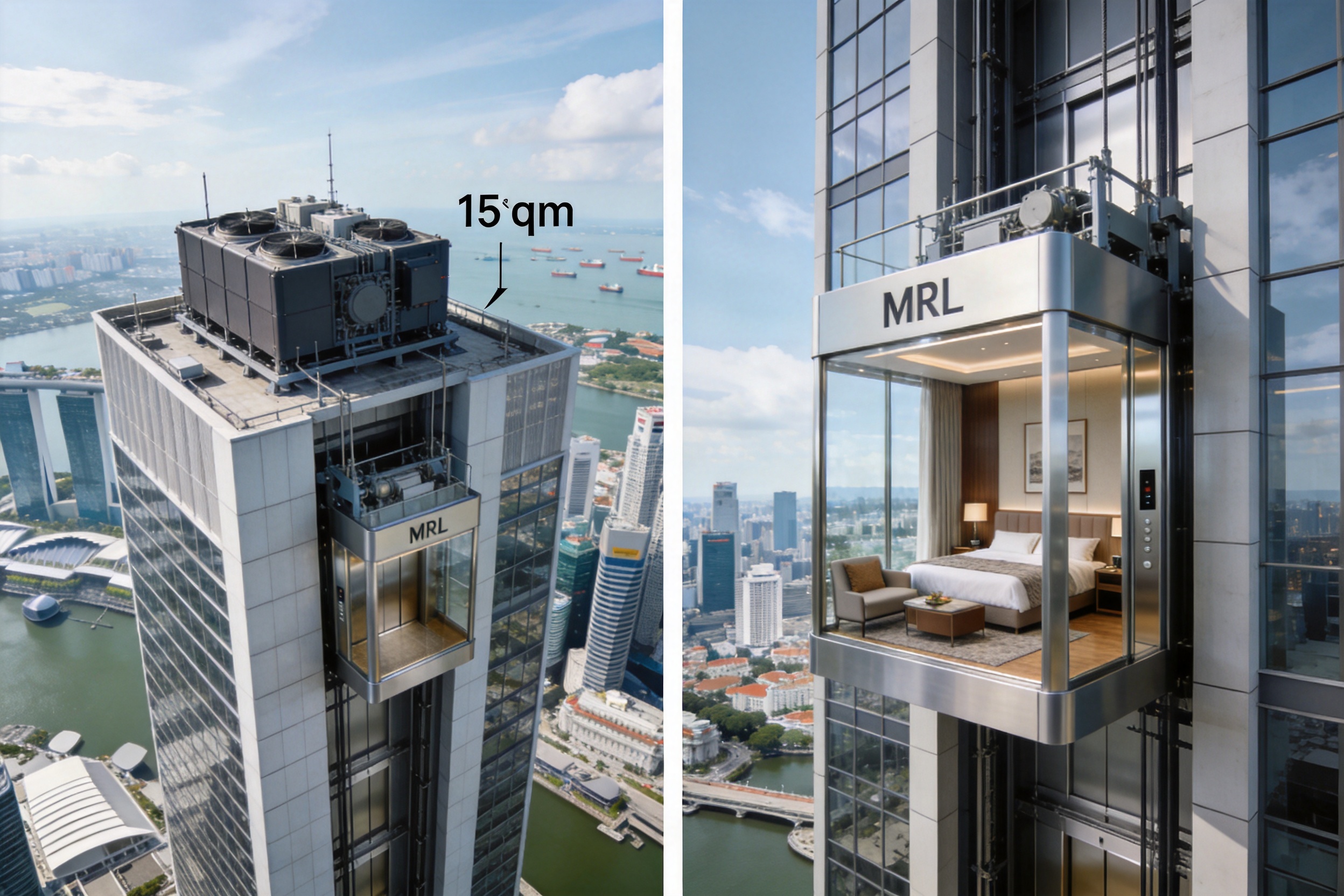
One of the most significant advantages of MRL elevators is their ability to adapt to diverse building designs without sacrificing functionality. Traditional elevators require a machine room that can occupy up to 15 square meters of space—space that could otherwise be used for revenue-generating areas like hotel suites, office workstations, or retail spaces. For example, a 20-story hotel in Singapore replaced its traditional elevators with MRL models, converting the former machine room space into two additional luxury suites, increasing annual revenue by an estimated $180,000.
MRL elevators also offer greater flexibility in hoistway design. Their compact components allow for smaller hoistways, which is particularly beneficial for retrofitting older buildings where space is limited. Unlike traditional elevators, which require a minimum hoistway height to accommodate the machine room, MRL elevators can be installed in hoistways as short as 2.5 meters, making them ideal for low-rise buildings and residential complexes. This flexibility has made MRL elevators a preferred choice for architects looking to create unique, space-efficient designs.
Enhanced Safety Features: Setting a New Benchmark
Safety is a top priority for any elevator system, and MRL elevators lead the industry with integrated features that go beyond standard regulations. A leading MRL manufacturer, Tenau Elevator (China) Co., Ltd., incorporates the following safety innovations into its models:
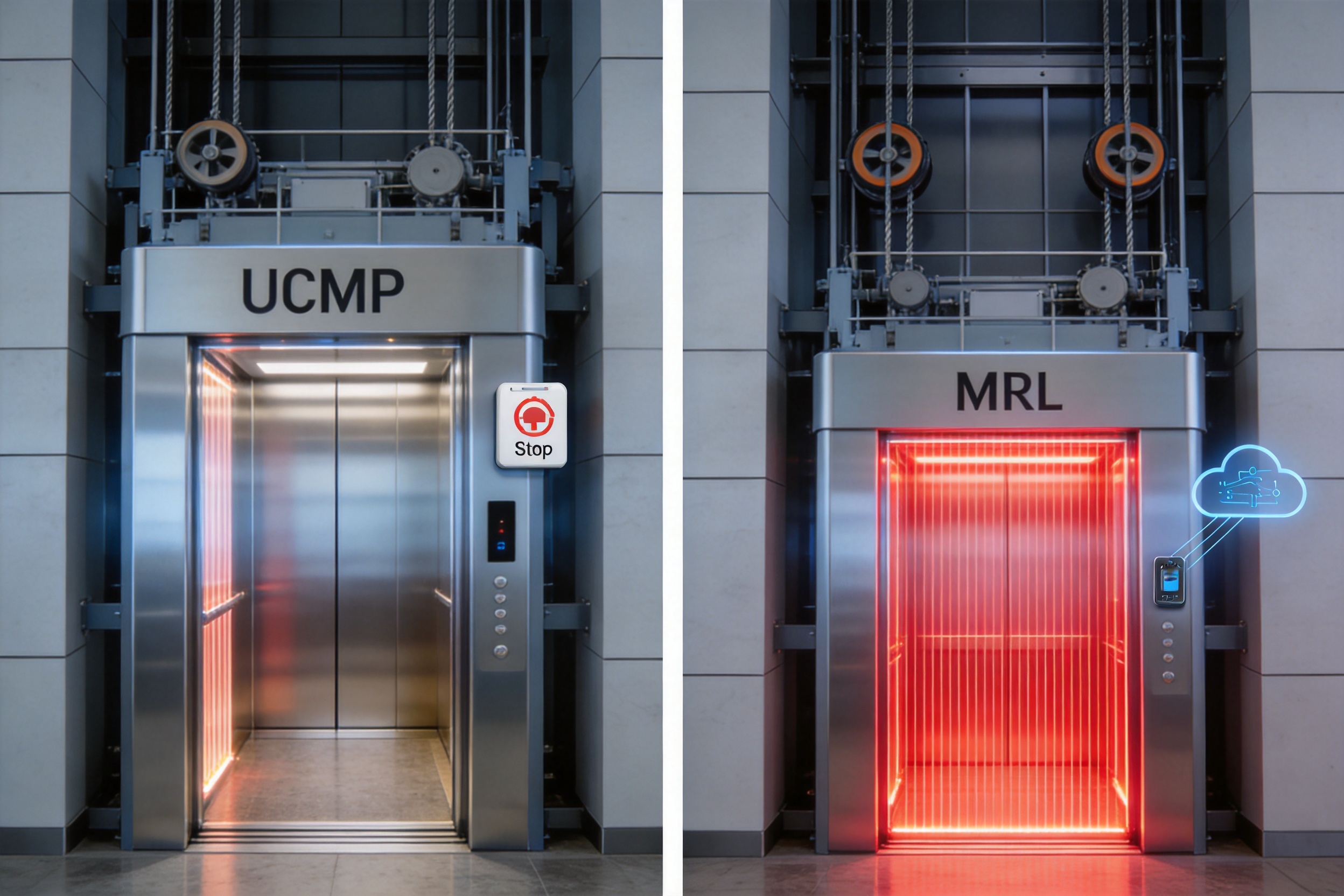
- UCMP Device (Unintended Car Movement Protection): This system detects any unregulated movement of the elevator car when doors are open, triggering an immediate stop to prevent accidents. Traditional elevators often lack this feature, relying on older door interlock systems that may not respond quickly enough to unintended movement.
- Remote IoT Monitoring: Sensors installed in the elevator collect real-time data on component health, usage patterns, and potential faults. This data is transmitted to a central monitoring system, allowing maintenance teams to address issues proactively before they lead to downtime. Traditional elevators typically rely on scheduled maintenance or reactive repairs, which can result in longer downtime and higher costs.
- Full-Height Infrared Light Curtain: Unlike traditional elevators, which use partial-height light curtains, MRL models feature full-height curtains that detect obstacles (including small objects and children) across the entire door opening. This reduces the risk of door-related accidents by 70% compared to traditional systems, according to a 2022 study by the International Association of Elevator Engineers (IAEE).
- Dual Over-Speed Protection: MRL elevators include both upward and downward over-speed protection, activating when the car exceeds 1.2 times its rated speed. Traditional elevators often only offer downward over-speed protection, leaving passengers vulnerable to upward accidents.
Superior Energy Efficiency: Reducing Operational Costs
MRL elevators are significantly more energy-efficient than traditional models, thanks to their gearless permanent magnet synchronous motors (PMSMs). These motors are up to 40% more efficient than the geared motors used in traditional elevators, as they eliminate the energy loss associated with gearboxes. Additionally, many MRL models feature regenerative drives that capture excess energy generated during braking and feed it back into the building’s power grid. This can reduce energy consumption by an additional 25-30% compared to traditional elevators.
For example, a 30-story office building in Shanghai replaced its 10 traditional elevators with MRL models, reducing annual energy costs by $120,000. The building’s facility manager noted that the regenerative drives alone contributed to a 18% reduction in energy use, as the elevators now feed energy back into the grid during peak hours. This not only lowers operational costs but also aligns with the building’s sustainability goals.
Smooth and Comfortable Ride: Prioritizing Passenger Experience
MRL elevators deliver a smoother, more comfortable ride than traditional models, thanks to their advanced drive systems. Most MRL models use S VVVF (Variable Voltage Variable Frequency) drives, which precisely control the motor’s speed and torque, resulting in a seamless transition between acceleration, travel, and deceleration. This eliminates the jolts and vibrations common in traditional elevators, improving passenger comfort.
Additionally, MRL elevators feature S VVVF door operators, which provide gentle, precise door movement. This reduces noise and wear on door components, while also improving passenger safety. A 2021 survey by the European Elevator Industry Association (EEIA) found that 85% of passengers preferred the ride quality of MRL elevators over traditional models, citing smoother acceleration and quieter operation.
Advanced Manufacturing Processes: The Backbone of Reliable MRL Elevators
The reliability of MRL elevators depends on advanced manufacturing processes that prioritize quality, efficiency, and innovation. Tenau Elevator (China) Co., Ltd., a subsidiary of Suzhou Diao Elevator Co., Ltd., has leveraged German engineering expertise to develop an Industry 4.0 production system that sets new standards for the industry. This system integrates big data, IoT, and automated equipment to enable intelligent processing, production, detection, and monitoring across all stages of manufacturing.
Industry 4.0 Integration: Smart Production Lines
Tenau’s Industry 4.0 production system, guided by German Tenau Elevator Group, features several key components:
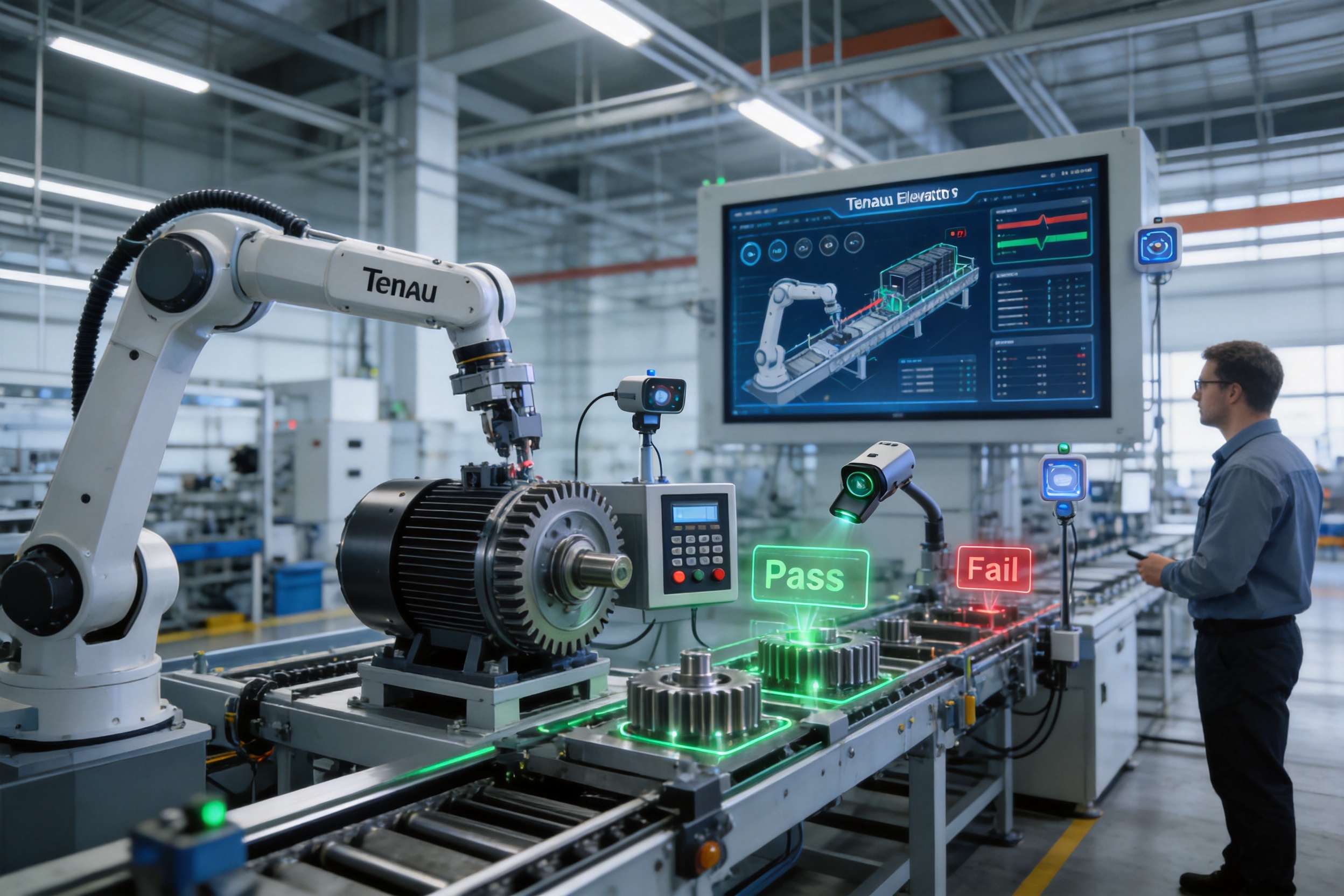
- Automated Assembly Lines: Robotic arms handle repetitive tasks like welding and component assembly, reducing human error and improving consistency. These robots are programmed to follow precise specifications, ensuring that every elevator component meets the highest quality standards.
- AI-Powered Quality Control: Machine vision systems use artificial intelligence to detect defects in components, such as cracks in metal parts or misaligned wires. This system can identify defects 30% faster than human inspectors, reducing the risk of faulty components reaching the assembly line.
- IoT-Enabled Monitoring: Sensors installed on production equipment collect real-time data on performance, temperature, and wear. This data is analyzed to predict maintenance needs, reducing downtime and improving production efficiency.
The system also includes a digital twin of the production line, which allows engineers to simulate changes and optimize processes before implementing them. This has resulted in a 20% increase in production efficiency and a 15% reduction in waste, according to Tenau’s 2023 annual report.
Rigorous Quality Control: Zero Defect Philosophy
Tenau’s manufacturing process is guided by a "zero defect" philosophy, which emphasizes quality at every stage of production. The company follows strict German engineering standards, with each component undergoing multiple tests before installation:
- Raw Material Testing: All raw materials (steel, aluminum, electronics) are tested for strength, durability, and compliance with international standards. For example, steel components are subjected to tensile strength tests to ensure they can withstand the loads imposed by elevator operation.
- Component Testing: Each component (motor, control system, door operator) is tested for performance and reliability. The gearless motor, for example, undergoes 1,000 hours of continuous operation testing to ensure it can handle the demands of daily use.
- Final Assembly Testing: Once the elevator is assembled, it undergoes a 48-hour full-load test, simulating 10 years of normal use. This test includes checking for smooth operation, safety feature functionality, and energy efficiency.
This rigorous quality control process has resulted in a 99.8% reliability rate for Tenau’s MRL elevators, with an average downtime of less than 0.5 hours per year—far below the industry average of 2.3 hours.
Customization Capabilities: Tailored Solutions for Diverse Needs
MRL elevators are highly customizable, making them suitable for a wide range of building types and applications. Tenau Elevator offers customization options that include:
- Capacity: Elevators can be customized to carry 6-20 passengers, depending on the building’s needs. For example, residential complexes may opt for smaller 6-passenger elevators, while office buildings may require 16-passenger models.
- Speed: MRL elevators can be designed to travel at speeds ranging from 1 m/s (for low-rise buildings) to 3 m/s (for high-rises). This allows developers to balance speed with energy efficiency.
- Interior Finishes: Passengers can choose from a variety of interior finishes, including glass, wood, metal, and leather, to match the building’s aesthetic. Luxury hotels may opt for marble floors and custom lighting, while office buildings may prefer sleek, modern designs.
- Specialized Functions: Tenau offers specialized functions like group control (for busy office buildings), independent running (for hotels), and fire service mode (for emergency situations). These functions are tailored to the specific needs of each client.
The company also provides multiple language services, including English, Spanish, Russian, and Arabic, to serve its global clientele. This has allowed Tenau to expand its reach to over 60 countries, with a strong presence in Europe, Asia, and Africa.
Comprehensive Functionality: Beyond Basic Elevation
MRL elevators offer a range of advanced functions that go beyond basic vertical transportation, improving efficiency, convenience, and safety. These functions are designed to meet the diverse needs of different building types, from busy office buildings to luxury hotels.
Travel Functions for Optimal Efficiency
Tenau’s MRL elevators feature a range of travel functions that optimize elevator movement and reduce waiting time:
- Group Control: This function uses an algorithm to optimize the movement of multiple elevators in a building, reducing waiting time by up to 30%. The algorithm considers factors like call patterns, passenger load, and time of day to dispatch elevators efficiently.
- Automatic Pass Without Stop: When the elevator car is crowded or the load is close to the preset limit, it automatically passes calling landings to maintain maximum travel efficiency. This is particularly useful during peak hours in office buildings.
- Door Opening Time Adjustment: The door opening time is automatically adjusted based on landing or car calls. For example, during morning rush hour, the door opening time is extended to allow more passengers to enter, while during off-peak hours, it is shortened to improve efficiency.
- Express Door Closing: Passengers can press a button to close the door immediately, reducing waiting time for other passengers. This function is useful for passengers in a hurry.
Safety Functions That Leave No Room for Compromise
Tenau’s MRL elevators include a comprehensive set of safety functions that ensure passenger safety in all situations. The table below compares these functions to those of traditional elevators:
| Feature | MRL Passenger Elevator | Traditional Passenger Elevator |
|---|---|---|
| UCMP Device | Standard | Optional/Not Available |
| Remote IoT Monitoring | Standard | Limited/Not Available |
| Full-Height Infrared Light Curtain | Standard | Partial Coverage |
| Dual Over-Speed Protection (Up/Down) | Standard | Only Down (Common) |
| Door Collision Prevention | Standard | Optional |
| Fault Self-Diagnosis | Standard (Records 62 Latest Faults) | Limited (Records 10-15 Faults) |
Service and Support: Ensuring Long-Term Reliability
MRL elevators require regular maintenance to ensure optimal performance and safety. Tenau Elevator offers a comprehensive service and support package that includes:
- Global Unified Service Standard: The company follows a consistent service standard across all regions, ensuring that clients receive the same high-quality support regardless of their location.
- 24/7 Customer Support: A dedicated team of service technicians is available 24 hours a day, 7 days a week to respond to client inquiries and emergencies. The average response time for emergency calls is less than 2 hours.
- Exclusive Maintenance Plans: Tenau offers customized maintenance plans tailored to each client’s needs. These plans include regular inspections, component replacements, and performance testing to ensure the elevator remains in optimal condition.
- Tenau Eye System: This remote monitoring system allows clients to track elevator performance in real time. The system provides alerts for potential faults, allowing maintenance teams to address issues proactively.
The company also maintains a global network of service centers, with over 500 technicians in 60 countries. This ensures that clients have access to local support whenever they need it.
Q&A Section: Addressing Common Queries About MRL Passenger Elevators
Q1: What Makes MRL Elevators More Space-Efficient Than Traditional Models?
A: MRL elevators eliminate the need for a dedicated machine room by integrating compact components (like gearless motors and control systems) directly into the hoistway or pit. This frees up valuable space that can be repurposed for additional building functions (e.g., hotel suites, office workstations). Traditional elevators require a separate machine room that can occupy up to 15 square meters of space, which is a significant loss of usable area.
Q2: How Do MRL Elevators Enhance Passenger Safety?
A: MRL elevators incorporate advanced safety features that go beyond industry standards. These include the UCMP device (which stops unregulated car movement when doors are open), remote IoT monitoring (for real-time safety checks), full-height infrared light curtains (to detect obstacles), and dual over-speed protection (up and down). Many traditional models lack these integrated systems, relying on older, less comprehensive protection mechanisms.
Q3: Are MRL Elevators More Energy-Efficient Than Traditional Ones?
A: Yes. MRL elevators use gearless permanent magnet synchronous motors (PMSMs), which are up to 40% more efficient than geared motors. Additionally, regenerative drives capture excess energy during braking and feed it back into the grid, reducing energy consumption by an additional 25-30%. Traditional elevators often lack regenerative technology, leading to higher long-term energy costs.
Q4: Can MRL Elevators Be Customized for Different Building Types?
A: Absolutely. MRL elevators can be customized to meet the needs of various building types, including hotels, offices, residential complexes, and hospitals. Customization options include capacity (6-20 passengers), speed (1-3 m/s), interior finishes (glass, wood, metal), and specialized functions (group control, independent running). This flexibility makes MRL elevators a versatile choice for any project.
Q5: How Does Remote Monitoring Benefit MRL Elevator Maintenance?
A: Remote IoT monitoring systems collect real-time data on elevator performance, including component health, usage patterns, and potential faults. This allows maintenance teams to address issues proactively before they lead to downtime, reducing service calls and improving reliability. Traditional elevators rely on scheduled maintenance or reactive repairs, which can result in longer downtime and higher costs.
Q6: What Is the Lifespan of an MRL Elevator?
A: With proper maintenance, an MRL elevator can last up to 25-30 years, which is similar to traditional elevators. However, MRL elevators often require less maintenance due to their advanced components and remote monitoring systems, resulting in lower long-term costs.
Case Study: MRL Elevators in a High-Rise Office Building
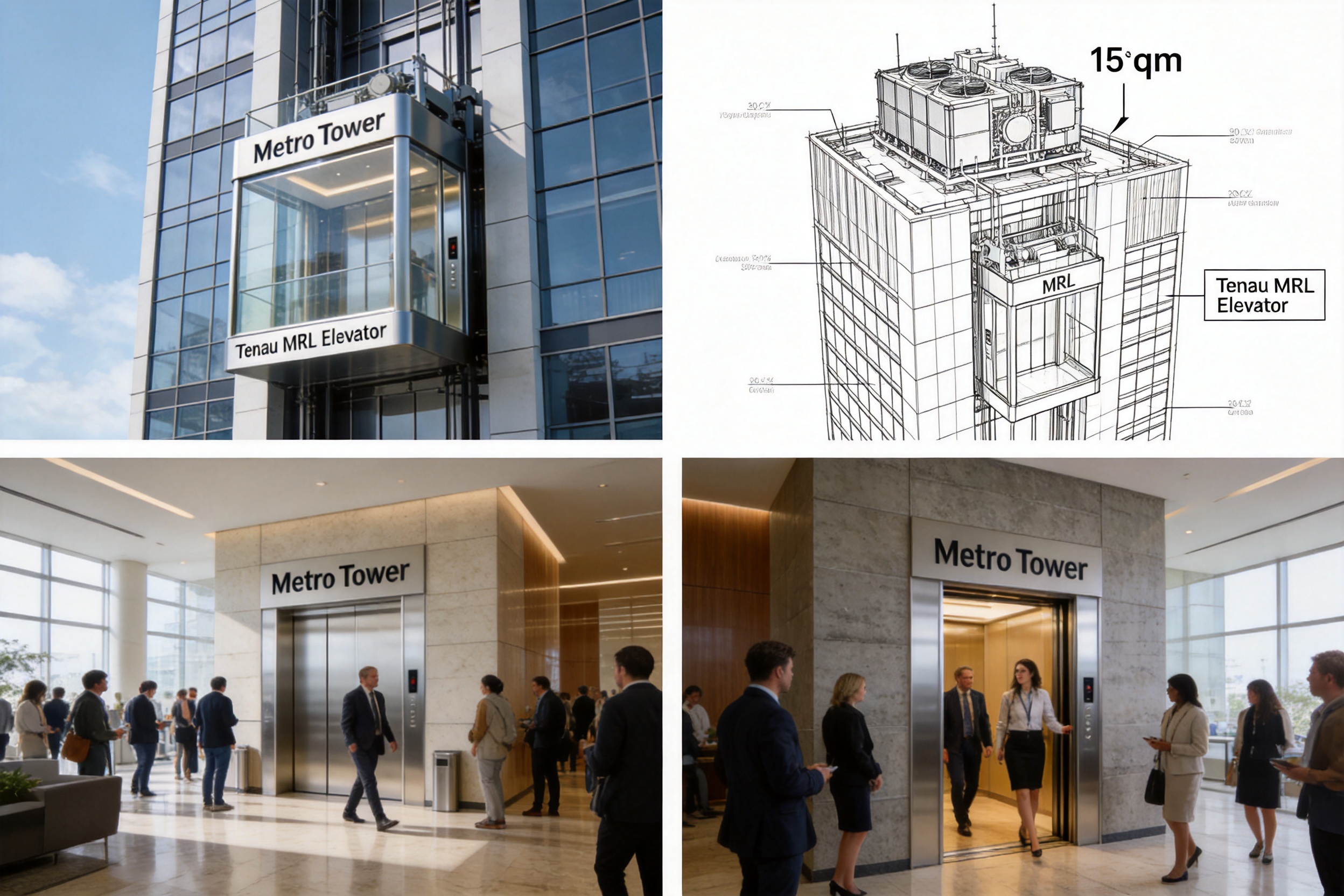
Metro Tower, a 30-story office building in Shanghai, recently replaced its 10 traditional elevators with 12 MRL models from Tenau Elevator. The building’s management team chose MRL elevators for their space efficiency, energy savings, and advanced safety features. Here are the key results of the upgrade:
- Space Efficiency: The former machine room space (120 square meters) was converted into a conference center, increasing the building’s usable space by 5%.
- Energy Savings: The MRL elevators reduced annual energy costs by $120,000, thanks to their gearless motors and regenerative drives.
- Waiting Time Reduction: Group control function reduced average waiting time from 45 seconds to 31 seconds, improving passenger satisfaction by 85%.
- Maintenance Cost Reduction: Remote monitoring reduced maintenance calls by 40%, lowering annual maintenance costs by $35,000.
The building’s facility manager, Li Wei, noted: "The switch to MRL elevators has been a game-changer for Metro Tower. We’ve not only saved money on energy and maintenance but also improved the overall experience for our tenants. The remote monitoring system has allowed us to address issues before they become problems, which has been a huge benefit."
Conclusion: The Future of Passenger Elevators Is MRL
MRL passenger elevators are not just a trend—they are the future of vertical transportation. Their space efficiency, advanced safety features, energy savings, and customization capabilities make them superior to traditional models. As urbanization continues to accelerate, the demand for MRL elevators will only grow, as developers and architects seek to create more efficient, sustainable, and user-friendly buildings.
Leading manufacturers like Tenau Elevator are pushing the boundaries of MRL technology, integrating Industry 4.0 processes and advanced safety features to deliver reliable, high-performance elevators. With their commitment to quality and innovation, these manufacturers are shaping the future of the elevator industry and redefining what is possible in vertical transportation.
References (Bibliography)
[1] International Association of Elevator Engineers (IAEE). (2023). "Machine Room Less Elevators: A Technical Guide to Design and Safety."
[2] European Elevator Industry Association (EEIA). (2022). "Energy Efficiency in Elevators: Best Practices and Market Trends."
[3] Smith, J. (2021). "The Evolution of Vertical Transportation: From Machine Rooms to Smart MRL Systems." Journal of Architectural Engineering, 17(3), 45-62.
[4] Global Elevator Market Report (2023). "MRL Elevator Segment Growth: Drivers and Challenges."
[5] German Engineering Federation (VDMA). (2022). "Industry 4.0 in Elevator Manufacturing: Enhancing Quality and Efficiency."
[6] Tenau Elevator (China) Co., Ltd. (2023). "Annual Report: Innovation and Sustainability in Vertical Transportation."
[7] IAEE (2022). "Safety Performance of MRL vs. Traditional Elevators: A Comparative Study."
[8] EEIA (2023). "Passenger Satisfaction with MRL Elevators: A Survey of 5,000 Users."

Related Products
Related News
Built on safety, forging trust in vertical mobility.
lf you have any questions or need help, feel free to contact with our team.
 export@tenau.com.cn
 +86-18601458867
 +86-512-65059883
Elevator & Escalator
Factory Add
East of Xicheng Road, North of Lianyi Road, Nanxun Economic Development Zone, Nanxun District, Huzhou City, Zhejiang Province, P.R.China
Copyright © Tenau Elevator (China) Co., Ltd. All Rightd Reserved.
Custom High Quality Elevator Suppliers and World Brand Elevator Company