

 en
 Español
 русский
 中文简体

TO-VM03 Elevator Landing Doors: Safe, Durable, and Efficient Entrance Solutions
Content
- 1 1. The Role of an Elevator Landing Door in a Complete System
- 2 2. Product Positioning of the TO-VM03
- 3 3. Main Advantages of the Product
- 4 4. Technical Considerations for Selecting the TO-VM03
- 5 5. Manufacturing Strengths Behind the Product
- 6 6. Quality Management and International Manufacturing Standards
- 7 7. Application Across Different Building Types
- 8 8. Installation and Commissioning Considerations
- 9 9. Maintenance and Long-Term Performance
- 10 10. Competitive Advantages Compared with Fragmented Door Supply
- 11 11. How to Plan a Successful Purchase
- 12 12. Sustainability and Lifecycle Value
- 13 13. Safety, Compliance, and Responsible Specification
- 14 14. Why Manufacturer Capability Matters
- 15 15. Recommended Evaluation Checklist
- 16 16. Frequently Asked Questions
- 16.1 Q1: What is the TO-VM03?
- 16.2 Q2: Can the TO-VM03 be used for different elevator applications?
- 16.3 Q3: Does the product include the complete elevator door system?
- 16.4 Q4: How does a landing door contribute to elevator safety?
- 16.5 Q5: Can the appearance of the landing door be coordinated with the building interior?
- 16.6 Q6: What information is needed before requesting a quotation?
- 16.7 Q7: Why is manufacturing technology important for landing doors?
- 16.8 Q8: What maintenance does an elevator landing door require?
- 16.9 Q9: Is the TO-VM03 suitable for hospital elevators?
- 16.10 Q10: Is the product suitable for high-speed elevators?
- 16.11 Q11: What advantages does an integrated elevator manufacturer provide?
- 16.12 Q12: How should international buyers begin a project discussion?
- 17 17. Conclusion
- 18 References
- 19 Product: TO-VM03
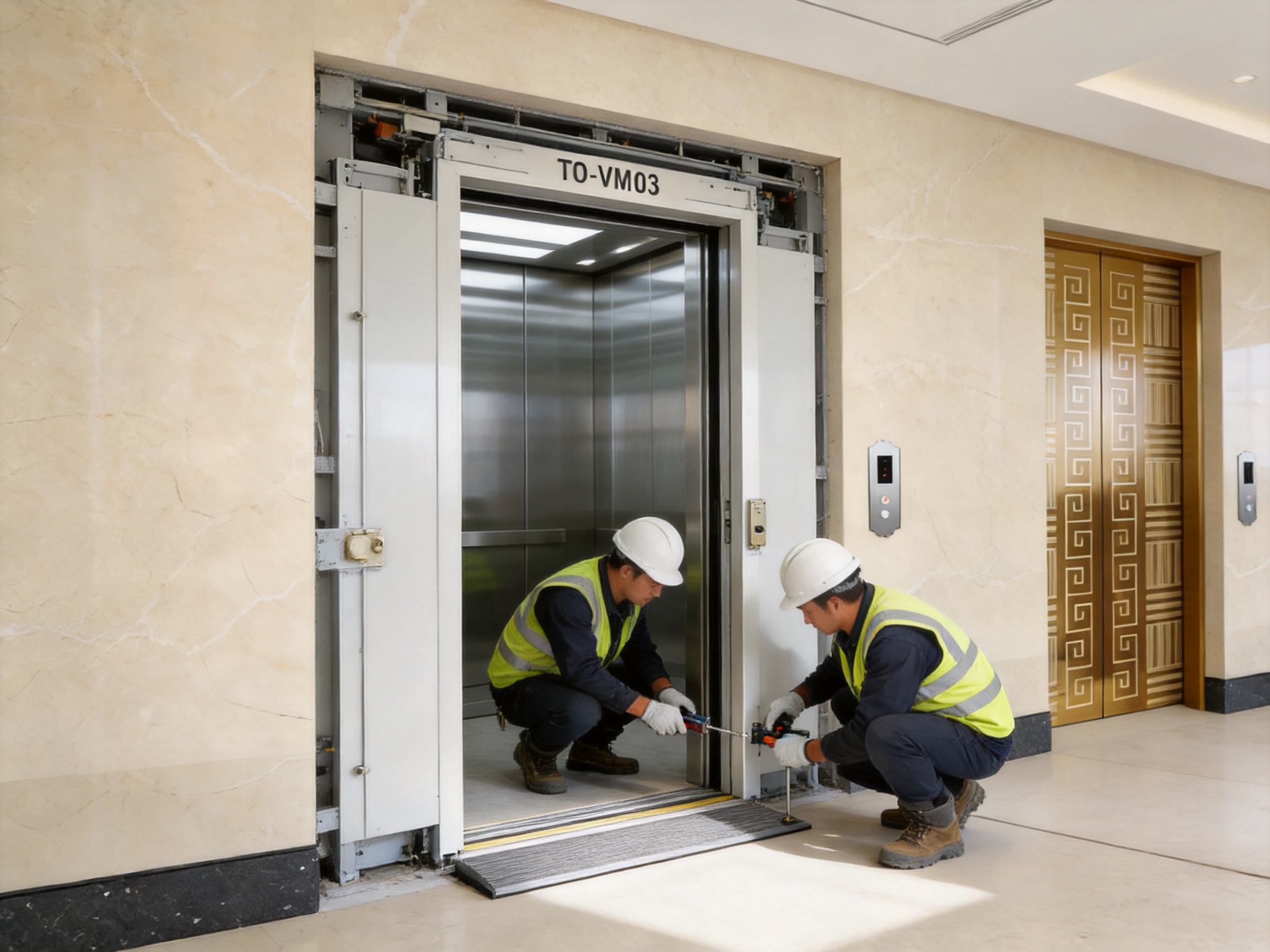
Elevator landing doors are among the most visible and most frequently operated components in a vertical transportation system. They provide the physical interface between each floor and the elevator shaft, protect passengers from access to the hoistway, contribute to fire and smoke separation, and influence the overall appearance of a building. For these reasons, selecting a suitable landing door is not simply a matter of choosing a decorative entrance. It requires careful consideration of safety, structural performance, operating reliability, compatibility, maintenance, environmental conditions, and architectural design.
The TO-VM03 elevator landing door is designed as a practical and adaptable entrance solution for modern elevator projects. It belongs to the elevator landing door product category and can be used in a broad range of building environments when correctly configured with the relevant elevator system, control system, shaft arrangement, and local code requirements. Its value lies in the combination of functional protection, coordinated design, manufacturing consistency, and the engineering capabilities of the company behind it.
Tenau Elevator (China) Co., Ltd. operates as a comprehensive elevator manufacturer integrating product design, research and development, manufacturing, marketing, installation, and after-sales service. The company supplies passenger elevators, hospital elevators, home and villa elevators, cargo elevators, car elevators, panoramic and observation elevators, high-speed elevators, escalators, moving walks, elevator parts, and cabin interiors. This broad product structure gives the TO-VM03 landing door an important advantage: it is developed within a wider elevator ecosystem rather than as an isolated component.
For developers, elevator contractors, architects, distributors, and facility owners, this integrated capability can simplify technical communication and support the coordination of landing doors with complete elevator packages. It also allows door design and production knowledge to benefit from experience across different elevator applications, including residential, commercial, medical, industrial, transportation, and specialized projects.
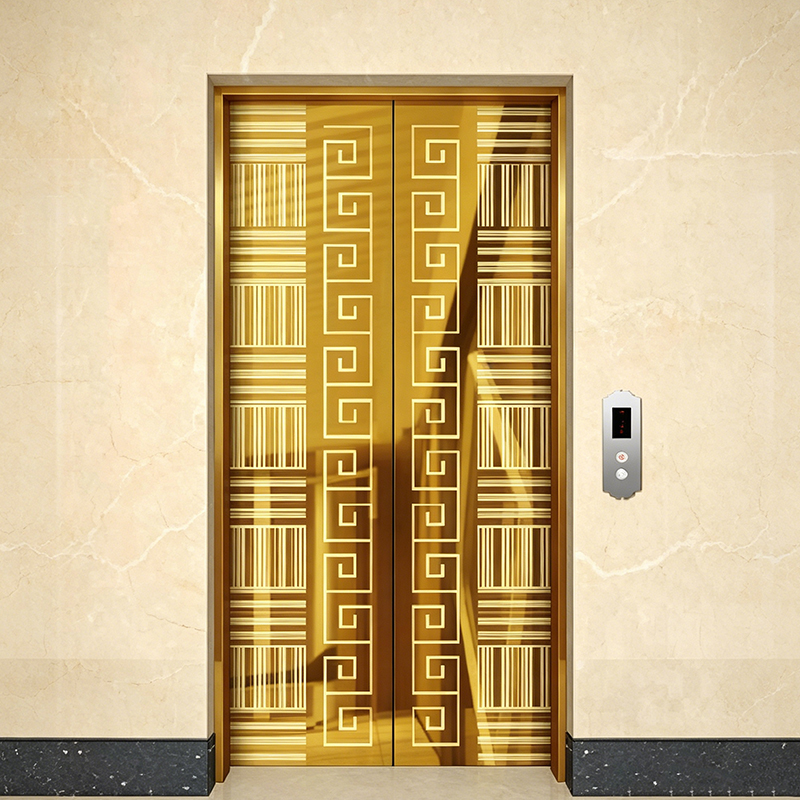
TO-VM03
1. The Role of an Elevator Landing Door in a Complete System
An elevator landing door is installed at each served floor and operates together with the car door. When the elevator is traveling, the landing doors remain closed and secured. When the car reaches the assigned floor and the control system confirms the correct stopping position, the landing door and car door unlock and open in a coordinated sequence. After passengers enter or leave, both doors close before the elevator begins its next movement.
This operating sequence appears simple to passengers, but it depends on precise interaction among multiple components. The landing door must align correctly with the car door, maintain stable movement along its guide system, engage with the locking mechanism, and provide reliable operation over a high number of cycles. Any inconsistency can lead to noise, premature wear, door reopening, delayed service, or an unsafe operating condition.
The landing door also functions as a barrier. It separates the public floor area from the elevator shaft and helps prevent accidental access to the hoistway. Its structure, locking system, frame, panels, sill, and associated hardware must therefore be selected and assembled as part of a coordinated safety system. The exact requirements depend on the elevator design, building use, local regulations, and applicable standards.
In busy buildings, doors may operate hundreds or thousands of times each day. A door intended for a residential building may experience a different duty cycle from one installed in a hospital, shopping center, hotel, airport, or industrial facility. A suitable product must therefore provide a balance of smooth operation, structural durability, maintainability, and aesthetic consistency.
The TO-VM03 is positioned as an elevator landing door solution for projects that require dependable floor entrances and coordinated architectural presentation. Rather than treating the landing door as a secondary accessory, a professional elevator manufacturer considers it part of the complete user experience and safety architecture of the elevator.
2. Product Positioning of the TO-VM03
The TO-VM03 is categorized as an elevator landing door. Its primary purpose is to provide a controlled and finished entrance at each elevator landing while working in conjunction with the elevator car door and the elevator control system. Depending on the project configuration, landing doors may be adapted to different opening arrangements, entrance dimensions, finishes, frame conditions, and building layouts.
A landing door solution must be selected according to the complete technical schedule rather than by product name alone. Important factors include the rated load and speed of the elevator, the number of floors, opening width and height, door opening direction, shaft dimensions, wall construction, sill support, fire and smoke requirements, traffic frequency, environmental conditions, and the selected cabin door system.
The TO-VM03 can be considered within this complete planning process. Its greatest value is not limited to its visible panel design. It is part of a manufacturing and engineering approach that supports coordinated elevator delivery. Through professional design, production control, and project communication, the landing door can be planned to match the performance and appearance requirements of the elevator installation.
For projects with multiple elevator types, a consistent landing door family can also help create visual unity. A building may include passenger elevators for daily transportation, service elevators for goods, hospital elevators for beds and medical equipment, or observation elevators for architectural presentation. Selecting landing doors from an integrated manufacturer can make it easier to coordinate finishes, dimensions, interfaces, and service procedures across the entire project.
3. Main Advantages of the Product
3.1 A Safety-Oriented Entrance Barrier
The most important function of a landing door is to maintain a secure separation between the occupied floor and the elevator shaft. The TO-VM03 is developed for use within a complete elevator safety system in which the landing door locking and monitoring arrangements prevent normal elevator travel unless the doors are properly closed and secured.
This safety function requires more than a strong door panel. The frame, sill, guide arrangement, locking device, door operator interface, electrical contacts, and installation tolerances must work together. A professionally manufactured landing door helps provide a stable basis for this coordinated operation.
Project engineers should always verify the applicable standards and certifications for the target market. The appropriate door configuration may differ according to local building codes, fire regulations, accessibility rules, and elevator standards. Tenau’s experience in international elevator manufacturing supports the technical coordination process, while the final selection and approval should be confirmed for each project.
3.2 Consistent and Smooth Door Movement
Passengers often judge an elevator by the way its doors move. A door that opens and closes smoothly, with controlled acceleration and deceleration, contributes to a perception of quality and reliability. Smooth movement also reduces shock loads on the guide system and limits unnecessary stress on mechanical components.
The TO-VM03 is manufactured as part of a coordinated landing door assembly. Dimensional control, guide alignment, panel fit, and hardware installation all influence movement quality. When these elements are produced and checked consistently, the door can be more readily adjusted during installation and maintained during service.
In contrast, inconsistent panel dimensions, uneven guide surfaces, inaccurate frame geometry, or poor hardware positioning can make commissioning more difficult. They may cause rubbing, vibration, abnormal noise, uneven closing, or repeated adjustment. Manufacturing discipline is therefore directly connected to the daily experience of passengers and technicians.
3.3 Compatibility with Diverse Elevator Applications
Elevator projects vary significantly in terms of use, traffic, space, appearance, and performance. A residential elevator may prioritize quiet operation and a refined finish. A hospital elevator may require a wide entrance and dependable operation under intensive use. A cargo elevator may require a robust configuration suitable for frequent loading activity. A high-speed elevator may require careful coordination between door operation and the overall dynamic performance of the system.
Because Tenau manufactures a wide range of elevator products, its landing door development is informed by diverse application requirements. The TO-VM03 can be evaluated as part of an elevator package for appropriate building types, subject to project-specific engineering. This makes the product relevant to passenger elevator projects, commercial buildings, hotels, residential developments, healthcare facilities, industrial sites, and other applications where a dependable landing entrance is required.
3.4 Coordinated Appearance
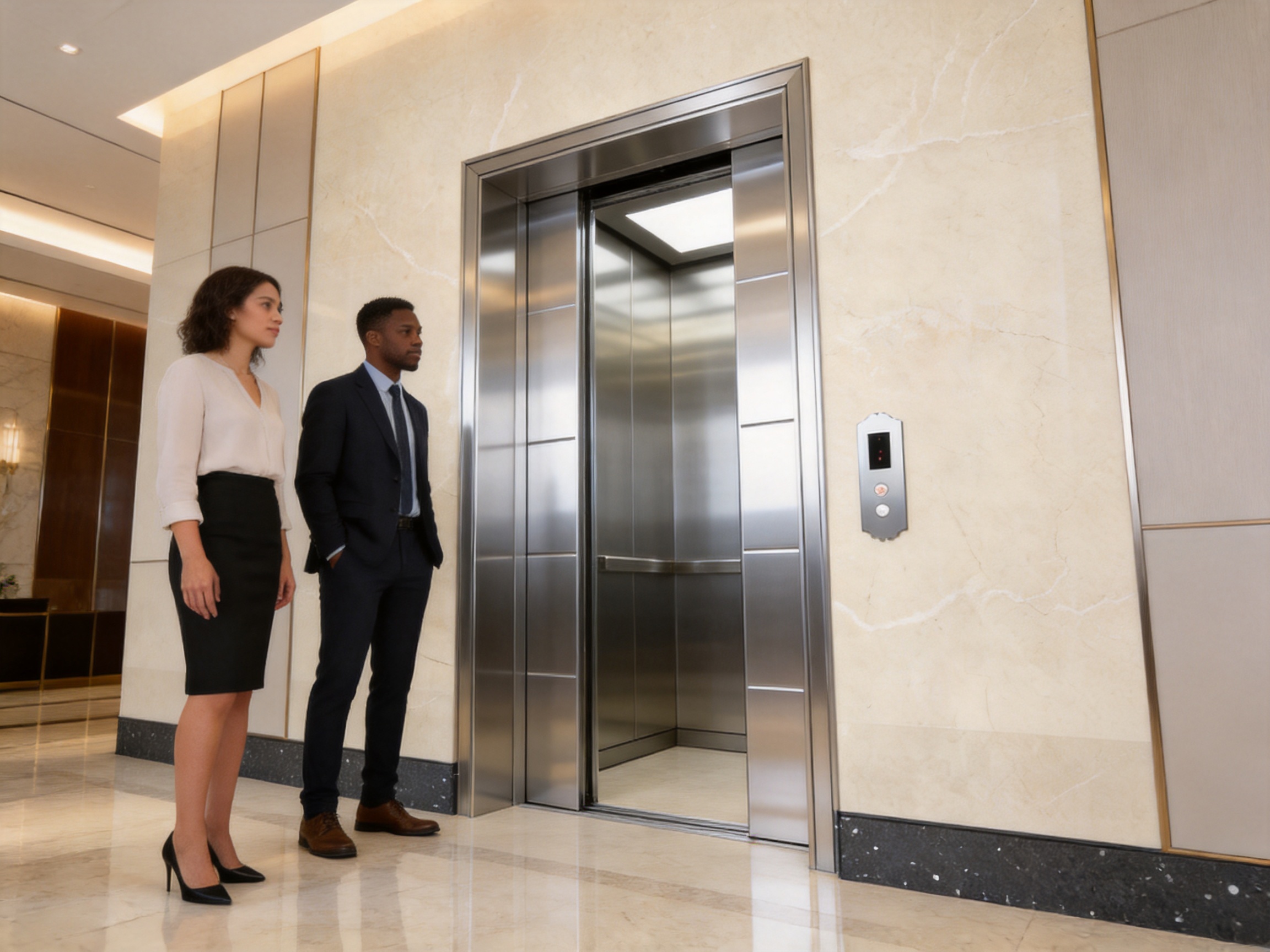
Landing doors occupy a prominent position in elevator lobbies. They are repeated across multiple floors and can strongly influence the architectural identity of a building. A technically reliable door that does not match the surrounding interior may reduce the perceived quality of the project, while a well-coordinated door can support a clean and consistent design language.
The TO-VM03 can be considered together with elevator cabin interiors, landing surrounds, indicator panels, handrails, and other elevator parts. This integrated approach allows designers and buyers to plan the elevator entrance as a complete visual assembly. Depending on the approved project specification, finish selections and decorative details can be coordinated with the interior design concept.
For residential and hospitality developments, a consistent door appearance can help create a premium impression. For hospitals and public buildings, a clear and orderly entrance can support intuitive wayfinding. For commercial and industrial buildings, a durable and professional finish can communicate operational reliability.
3.5 Maintainability and Service Convenience
Elevator landing doors are exposed to repeated operation, dust, accidental contact, cleaning activity, and sometimes impact from carts, luggage, beds, or goods. A maintainable design helps technicians inspect, adjust, clean, and replace components efficiently.
Maintainability depends on the accessibility of wear components, the availability of replacement parts, the clarity of installation documentation, and the consistency of the original assembly. A manufacturer that provides complete elevator products and after-sales support can help customers obtain coordinated technical assistance rather than relying on unrelated component suppliers.
For building owners, good maintainability can support predictable service planning. For elevator contractors, it can reduce commissioning time and simplify troubleshooting. For distributors, it can make technical support and spare-parts management more organized. These advantages are particularly important in markets where elevator downtime affects tenant satisfaction, business operations, or public access.
4. Technical Considerations for Selecting the TO-VM03
The product title alone is not enough to determine whether a landing door is appropriate for a specific elevator. A complete technical review should be conducted before ordering. The following considerations are especially important.
| Selection factor | Why it matters | Project information to confirm |
|---|---|---|
| Opening size | Determines the usable entrance and affects passenger, bed, vehicle, or cargo access. | Clear width, clear height, entrance arrangement, and tolerance requirements. |
| Door opening type | Influences shaft width, lobby circulation, and car-door coordination. | Center opening, side opening, telescopic arrangement, or other approved configuration. |
| Elevator application | Traffic intensity and load type influence durability and operating requirements. | Passenger, hospital, cargo, car, residential, high-speed, or specialized service. |
| Finish and appearance | Landing entrances should coordinate with the building interior. | Material, color, surface treatment, frame style, and decorative requirements. |
| Wall and shaft conditions | The door frame and sill require suitable structural support. | Wall thickness, finished floor level, shaft dimensions, and fixing method. |
| Safety requirements | Landing doors must function within the approved elevator safety system. | Applicable local codes, standards, locking requirements, and fire regulations. |
| Environmental conditions | Temperature, humidity, dust, and corrosive conditions affect material selection and service life. | Indoor or semi-outdoor location, coastal exposure, industrial atmosphere, and cleaning conditions. |
| Maintenance strategy | Service planning influences spare-parts and access requirements. | Local service capability, inspection schedule, replacement parts, and response expectations. |
These factors should be documented in the technical offer and confirmed through engineering drawings before production. Clear communication at this stage helps prevent problems involving entrance size, sill height, wall openings, decorative finishes, and car-door compatibility.
5. Manufacturing Strengths Behind the Product
A landing door’s performance is influenced by the manufacturing system that produces it. Tenau Elevator (China) Co., Ltd. describes itself as a professional comprehensive elevator manufacturer with capabilities covering design, research and development, manufacturing, marketing, installation, and after-sales service. This structure is valuable because it connects product development with actual installation and service experience.
5.1 Design and Research and Development
Elevator components cannot be designed independently from the complete system. The landing door must be considered alongside the car door, control cabinet, traction or drive system, shaft layout, landing fixtures, and building interface. A manufacturer with an integrated research and development function can evaluate these relationships more effectively than a supplier that only produces a single unrelated component.
Tenau reports capabilities in the design and development of low-speed, medium-speed, high-speed, and ultra-high-speed elevators. This range indicates experience with different operating conditions and project requirements. Although the exact configuration of the TO-VM03 must be confirmed for each order, its development within this broader technical environment supports more informed application matching.
Research and development also contributes to future improvement. Door systems can be optimized through analysis of operating cycles, installation feedback, component wear, noise, energy use, and user expectations. A continuous improvement process helps a manufacturer refine structures, interfaces, production methods, and maintenance procedures over time.
5.2 Industry 4.0 Intelligent Manufacturing
Tenau identifies German Industry 4.0 intelligent manufacturing as part of its production approach. In practical terms, intelligent manufacturing can connect production equipment, process data, quality records, material information, and manufacturing instructions. When properly implemented, this creates greater visibility across the production process.
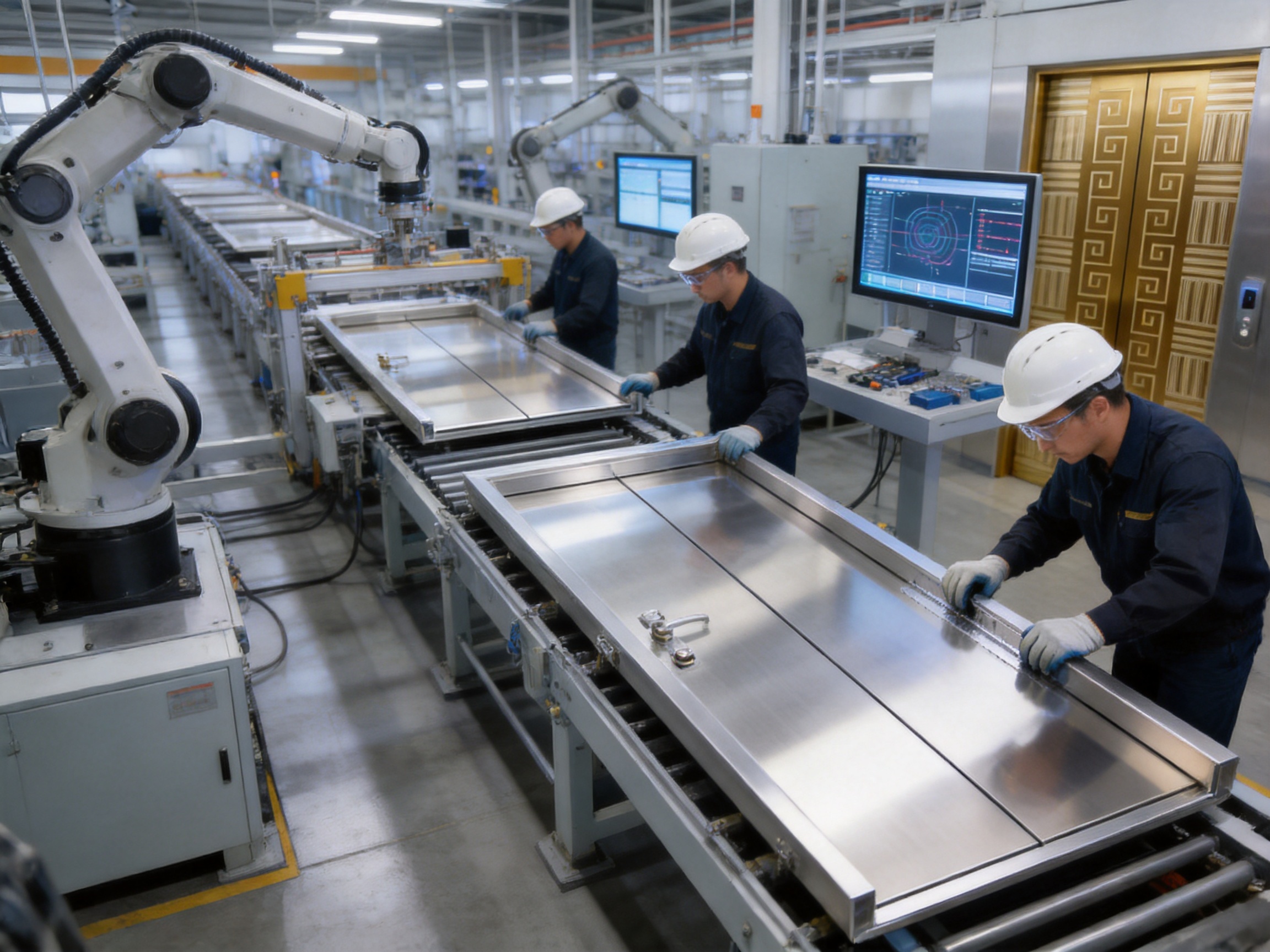
For elevator landing doors, such systems can support consistent cutting, forming, welding, finishing, assembly, and inspection. Digital production records can help identify the manufacturing status of an order and support traceability. Automated or semi-automated operations can reduce variation in repetitive tasks, while process monitoring can help detect deviations before products leave the factory.
Industry 4.0 is not simply a matter of installing modern machines. Its real value comes from combining equipment, people, software, quality methods, and management discipline. A landing door benefits when the entire workflow—from material receipt to final inspection—is organized around controlled and measurable processes.
5.3 Automated Production Lines
Automated production lines can improve repeatability in processes that involve repeated dimensions and large production volumes. They may support accurate material handling, standardized forming, controlled welding, consistent surface treatment, and efficient assembly. Repeatability is especially important when many landing doors are required for one building, because each floor must maintain the same appearance and interface dimensions.
Automation can also improve workplace safety by reducing the need for workers to perform physically demanding repetitive operations. At the same time, skilled technicians remain essential for process setup, quality verification, engineering judgment, final assembly, and problem resolution. The strongest manufacturing systems combine automation with human expertise rather than treating them as substitutes.
5.4 Big Data and Internet of Things Technology
Tenau reports the use of big data and Internet of Things technology within its manufacturing and management approach. These technologies can support production planning, equipment monitoring, quality analysis, and operational decision-making. Data collected across many production orders may reveal recurring defects, process bottlenecks, equipment maintenance needs, or opportunities for improvement.
For customers, the benefit is a more controlled and responsive production environment. Better data management can improve order coordination and help the manufacturer respond to quality trends. It may also support more systematic after-sales analysis when field information is returned to the factory.
Data technology must be supported by suitable management procedures. Accurate input, clear responsibility, secure information handling, and meaningful performance indicators are all necessary. When these conditions are present, data can contribute to more reliable manufacturing outcomes.
5.5 Full Closed-Loop Quality Control
Tenau describes a full closed-loop quality control system. The concept of closed-loop quality management is important because quality should not end with a final visual inspection. It should begin with requirements and continue through design, purchasing, production, assembly, testing, delivery, installation, and after-sales feedback.
For the TO-VM03, a closed-loop process can include reviewing the technical specification, verifying incoming materials, controlling production parameters, checking dimensions, inspecting surface condition, confirming assembly, recording test results, and addressing any nonconformity. Installation and service feedback can then be used to improve future products or processes.
This approach offers an advantage over a fragmented supply chain in which design, production, installation, and service are handled by unrelated parties. When information moves through one coordinated organization, recurring problems are more likely to be identified and addressed at their source.
6. Quality Management and International Manufacturing Standards
Tenau states that its management system complies with ISO9001, ISO14001, and OHSMS18001 standards. These standards represent important areas of organizational performance: quality management, environmental management, and occupational health and safety management. Their relevance extends beyond paperwork because each area influences the reliability and sustainability of the manufacturing operation.
6.1 ISO 9001 and Process Consistency
ISO 9001 focuses on a structured quality management system. In an elevator manufacturing environment, this can support controlled documents, defined responsibilities, supplier evaluation, production procedures, inspection records, corrective actions, and customer feedback processes.
For a landing door buyer, the practical benefit is greater confidence that the product is made within an organized system. A quality management system does not eliminate the need for project-specific inspection, but it provides a framework for reducing uncontrolled variation and responding to problems systematically.
6.2 ISO 14001 and Environmental Management
Environmental management is increasingly important in construction and building equipment procurement. ISO 14001 addresses the organization’s approach to identifying and managing environmental impacts. Relevant areas may include material use, energy consumption, waste, emissions, packaging, chemical handling, and legal compliance.
A manufacturer that considers environmental performance can help customers meet broader sustainability objectives. The environmental benefit of a landing door also depends on its service life, repairability, packaging, transportation, surface treatment, and eventual disposal. Durable products that remain functional for many years can reduce the need for premature replacement.
6.3 Occupational Health and Safety Management
OHSMS18001 is associated with occupational health and safety management. Manufacturing elevator doors involves metal processing, machinery, handling, finishing, assembly, and testing. A structured safety system helps identify workplace hazards and establish controls for employees and contractors.
Safe production supports business continuity as well as employee welfare. A stable factory workforce, orderly processes, and controlled operations can contribute indirectly to delivery reliability and product consistency.
7. Application Across Different Building Types
7.1 Residential Buildings
In residential projects, passengers often expect quiet, smooth, and visually refined elevator operation. Landing doors are repeatedly used by residents, visitors, delivery workers, and maintenance personnel. The TO-VM03 can be evaluated for residential applications where a coordinated entrance appearance and dependable daily operation are required.
Residential projects may also include limited shaft space, strict interior design requirements, and varying levels of traffic. Early coordination among the architect, elevator contractor, structural engineer, and manufacturer is important to confirm wall openings, sill positions, entrance dimensions, and finishing details.
7.2 Hotels and Commercial Buildings
Hotels, offices, shopping centers, and mixed-use developments usually place high demands on appearance and reliability. Elevator lobbies are part of the public circulation experience, and repeated door movement can make any defect highly visible. A consistent landing door design across all floors can support a professional interior presentation.
In commercial buildings, service interruptions can affect tenants and customers. Selecting a product from a manufacturer with engineering, installation, and after-sales capabilities can help simplify maintenance planning and technical communication.
7.3 Hospitals and Healthcare Facilities
Hospital elevators may transport patients in beds, medical equipment, staff, visitors, and supplies. Their doors often operate at a high frequency and must support efficient traffic flow. Wider openings, durable finishes, easy cleaning, and dependable operation are common project considerations.
The TO-VM03 should be matched to the complete hospital elevator specification, including the required entrance dimensions, operating cycle, impact considerations, hygiene requirements, and relevant healthcare building standards. A coordinated manufacturer can help align landing doors with hospital elevator cabins and control systems.
7.4 Cargo and Industrial Applications
Cargo and industrial elevators may be exposed to heavier use, wheeled loads, vibration, dust, and accidental contact. The door configuration must be selected according to the type of goods, loading equipment, operating frequency, and site conditions.
In these applications, practical durability and maintainability may be more important than decorative complexity. The landing door should be incorporated into a complete cargo elevator design with suitable protection, clearances, sill strength, and operating controls. The correct specification must be confirmed with the manufacturer and project engineer.
7.5 High-Speed and Specialized Elevators
High-speed elevators require close coordination of all moving and structural components. Door timing, acceleration, sealing, control response, and cabin pressure behavior may become increasingly important as speed rises. A landing door used in such a system should be selected as part of the approved high-speed elevator package rather than treated as a generic replacement component.
Tenau reports capabilities covering high-speed and ultra-high-speed elevator development. This broader competence can support the technical coordination required for specialized projects, subject to the final engineering design, testing, and approvals.
8. Installation and Commissioning Considerations
Even a well-manufactured landing door can perform poorly if it is installed incorrectly. Installation quality influences alignment, movement, locking, appearance, and long-term service life. The installation team should follow the approved drawings, method statements, and manufacturer instructions.
The wall opening should be checked before the frame is positioned. Measurements should include width, height, plumb, level, wall thickness, finished floor level, and the relationship between the landing entrance and the elevator guide system. Incorrect civil openings can lead to additional adjustment, visible gaps, uneven frames, or delays.
The door frame must be secured to a suitable structure. Fixing points should be adequate for the installation conditions, and the frame should remain square and plumb during final tightening. The threshold and sill area require particular attention because dirt, construction debris, water, and uneven floor finishes can interfere with door movement.
After the panels, guides, rollers, locks, and related components are installed, the door should be manually checked for free movement before power operation. The elevator contractor should then verify the interaction between the landing door and car door, including unlocking, opening, closing, reopening, leveling, and safety-device functions.
Commissioning should include repeated operating cycles and checks under realistic conditions. Abnormal sound, excessive vibration, uneven gaps, delayed closing, incomplete locking, or inconsistent reopening should be investigated before handover. The final acceptance process should follow the applicable local regulations and the approved elevator inspection requirements.
9. Maintenance and Long-Term Performance
Regular maintenance is essential for every elevator landing door. Maintenance personnel should inspect the door panels, guides, rollers, sill, locking device, electrical contacts, fixings, and surrounding structure according to the service schedule. Dust and debris should be removed from the sill and guide areas because contamination can increase resistance and cause irregular movement.
Door panels should not be used as support surfaces or subjected to impact from carts and equipment. Building occupants and cleaning contractors should receive suitable instructions, especially in hospitals, logistics facilities, hotels, and commercial buildings where heavy wheeled traffic is common.
Unusual noise or movement should be reported promptly. Continued operation with a misaligned panel, damaged roller, loose fixing, or defective locking component can increase repair costs and may create a safety concern. Only qualified elevator technicians should adjust or repair safety-related door components.
Replacement parts should be selected according to the original approved configuration. Substituting unsuitable rollers, locks, contacts, or panels may affect door timing and safety performance. Working with the original manufacturer or an authorized service organization can help preserve compatibility and technical traceability.
A good maintenance record should include inspection dates, identified issues, adjustments, replaced parts, test results, and recommendations. These records help facility managers identify recurring problems and plan preventive work before a failure affects elevator availability.
10. Competitive Advantages Compared with Fragmented Door Supply
When comparing landing door products, buyers should look beyond the initial unit price. A low purchase cost may be offset by installation delays, inconsistent dimensions, difficult commissioning, limited spare-parts support, or poor coordination with the elevator system. The overall value of the TO-VM03 should therefore be considered across its expected service life.
10.1 Integrated Product Knowledge
Tenau’s product portfolio includes complete elevator categories and related components. This integrated knowledge can improve communication between the landing door and other elevator subsystems. Customers can discuss entrance requirements with a manufacturer that understands passenger, hospital, cargo, car, panoramic, home, escalator, and high-speed applications.
10.2 Manufacturing Scale and Process Control
A large-scale manufacturing base, automated production lines, Industry 4.0 methods, and a closed-loop quality system can support repeatable production. This is particularly valuable for projects requiring many landing doors with matching dimensions and finishes.
10.3 International Market Experience
Tenau exports products to many countries and regions. International experience can help the company understand the importance of technical documentation, packaging, communication, installation coordination, and market-specific requirements. Buyers should still verify the exact compliance documents required in their jurisdiction, but international manufacturing experience provides a useful foundation.
10.4 Full Project Support
The company’s stated capabilities include design, research and development, manufacturing, marketing, installation, and after-sales service. This full-cycle structure can reduce the number of separate interfaces that a project team must manage. It may also make it easier to identify responsibility when technical questions arise during installation or operation.
10.5 Balance of Function and Appearance
Some landing door suppliers focus primarily on basic mechanical function, while others emphasize decoration without sufficient attention to long-term service. The TO-VM03 is positioned within a product approach that combines entrance safety, operational reliability, manufacturing consistency, and coordinated design. This balance is valuable for modern buildings where technical performance and architectural quality are equally important.
11. How to Plan a Successful Purchase
A successful landing door purchase begins with a complete project brief. The buyer should identify the building type, elevator quantity, service floors, rated load, speed, traffic pattern, opening dimensions, door arrangement, interior finish, shaft conditions, local regulations, and expected delivery schedule.
Technical drawings should be reviewed before production. The review should confirm the relationship between landing doors, car doors, wall openings, sill levels, landing finishes, and elevator indicators. Any decorative requirements should be documented clearly, including color, material, surface treatment, frame treatment, and visible joint details.
The buyer should also confirm the supply scope. Questions may include whether the price includes frames, sills, locking devices, electrical contacts, protective packaging, drawings, installation guidance, spare parts, commissioning support, and after-sales assistance. Clear scope definition reduces misunderstandings between the manufacturer, elevator contractor, and building project team.
For international projects, shipping and site conditions should be reviewed early. Packaging must protect panels and finished surfaces during transportation and storage. The receiving team should inspect the goods on arrival and report any visible damage or missing components promptly.
Finally, the buyer should establish a communication process. A designated technical contact, documented approval procedure, and agreed schedule for drawing confirmation can help maintain progress. These practices are particularly important when the project includes multiple elevator models or custom entrance requirements.
12. Sustainability and Lifecycle Value
Sustainability in elevator equipment should be considered across the entire lifecycle. The relevant questions include how efficiently the product is manufactured, how long it can remain in service, how easily it can be maintained, how much material is wasted, and whether components can be repaired or replaced instead of discarded.
Tenau’s stated environmental management approach and ISO14001 compliance provide a framework for addressing environmental responsibilities within manufacturing. The company also identifies safety and environmental protection as important missions. These commitments are relevant to buyers seeking suppliers that can support broader green-building and responsible procurement objectives.
A durable landing door can provide lifecycle benefits by reducing premature replacement and minimizing interruptions caused by avoidable failures. Efficient manufacturing can reduce material waste, while standardized components may simplify spare-parts planning. Proper maintenance extends service life and helps preserve the original performance of the elevator system.
Energy consumption is mainly associated with the complete elevator door operating system rather than the landing door panel alone. Nevertheless, smooth movement, correct adjustment, and appropriate control can help prevent unnecessary mechanical resistance and repeated operation. Good installation and maintenance therefore contribute to both reliability and responsible energy use.
13. Safety, Compliance, and Responsible Specification
Elevator landing doors are safety-related equipment. Product selection, installation, inspection, and maintenance must comply with the regulations and standards applicable to the project location. The buyer should request the relevant technical documents and confirm whether the proposed configuration satisfies the required approval pathway.
Important documents may include general arrangement drawings, installation instructions, wiring information, material details, test records, certificates, inspection documents, and maintenance recommendations. The exact documents depend on the market, elevator type, building authority, and project contract.
It is also important to distinguish between a product’s general capabilities and a specific project approval. A manufacturer may offer a broad range of configurations, but the final configuration must be engineered and validated for the selected elevator. This is especially important for fire-rated applications, hospitals, high-speed elevators, cargo elevators, and projects with unusual environmental conditions.
Responsible specification means selecting the correct product for the intended use, not merely choosing the most visually attractive or lowest-cost option. The TO-VM03 should be evaluated with the complete elevator system, the building design, the local authority requirements, and the long-term maintenance plan in mind.
14. Why Manufacturer Capability Matters
The performance of an elevator landing door is influenced by many activities that customers may not see: design review, material sourcing, tooling, production scheduling, operator training, equipment maintenance, inspection, packaging, logistics, installation, and after-sales response. A manufacturer’s organizational capability affects all of these areas.
Tenau’s description of its business reflects a vertically coordinated model. The company combines engineering and manufacturing with installation and after-sales service. It also operates within a large economic and manufacturing region in Zhejiang Province, supported by a professional team and a substantial production base.
Such capability can be especially valuable for overseas customers. Export projects require more than manufacturing a product. They require clear drawings, accurate packing lists, suitable documentation, communication across time zones, shipment coordination, technical support, and an understanding of local installation conditions. A supplier with international experience is better positioned to manage these requirements.
Manufacturer capability also supports product development. Feedback from installers and service teams can be returned to research and development. Production data can be reviewed alongside field performance. This creates the possibility of a practical improvement cycle in which products evolve based on real operating experience rather than design assumptions alone.
15. Recommended Evaluation Checklist
Before approving the TO-VM03 for a project, the purchasing and engineering teams may use the following checklist:
| Evaluation area | Questions to ask |
|---|---|
| Application | Is the door intended for a passenger, hospital, cargo, car, residential, high-speed, or other elevator? |
| Dimensions | Do the clear opening, frame size, sill level, and shaft conditions match the approved drawings? |
| System compatibility | Is the landing door compatible with the selected car door, operator, controller, locking system, and safety circuit? |
| Compliance | Have local standards, inspection requirements, fire regulations, and accessibility requirements been reviewed? |
| Appearance | Does the finish coordinate with the cabin, landing wall, indicators, and interior design? |
| Production | Are manufacturing controls, inspection procedures, and quality records available for the project? |
| Installation | Are drawings, instructions, fixing details, and commissioning procedures included? |
| Service | Are spare parts, maintenance guidance, technical support, and after-sales response defined? |
| Logistics | Are packaging, shipping, storage, delivery timing, and damage inspection procedures agreed? |
| Lifecycle value | Has the expected service life, maintenance schedule, and replacement strategy been considered? |
This checklist does not replace engineering approval, but it helps ensure that commercial and technical decisions are made from the same information. It can also improve communication between the building owner, architect, general contractor, elevator contractor, and manufacturer.
16. Frequently Asked Questions
Q1: What is the TO-VM03?
The TO-VM03 is an elevator landing door designed to provide a controlled and finished entrance at each elevator floor. It operates together with the elevator car door, door operator, locking system, control system, and other safety components. The final configuration must be confirmed according to the elevator project requirements.
Q2: Can the TO-VM03 be used for different elevator applications?
Landing doors must be selected according to the elevator type and operating conditions. The product can be evaluated for suitable passenger, residential, commercial, hospital, cargo, or other projects when the dimensions, duty cycle, safety requirements, and system interfaces are properly confirmed. Specialized applications may require different configurations or additional engineering.
Q3: Does the product include the complete elevator door system?
The exact supply scope depends on the quotation and project specification. Buyers should confirm whether the order includes the landing door panels, frame, sill, locking components, electrical contacts, associated hardware, documentation, and installation support. It is best to define the complete scope before production.
Q4: How does a landing door contribute to elevator safety?
The landing door separates the occupied floor from the elevator shaft and works with a locking and monitoring system. The elevator should not operate normally unless the landing doors are closed and secured according to the approved safety design. Proper installation, inspection, and maintenance are essential to preserve this function.
Q5: Can the appearance of the landing door be coordinated with the building interior?
Yes, the landing door should be planned together with the elevator cabin, landing surrounds, indicators, wall finishes, and other visible components. Available finishes and decorative details should be confirmed with the manufacturer for the specific project.
Q6: What information is needed before requesting a quotation?
Useful information includes the elevator type, rated load, speed, number of floors, entrance width and height, opening arrangement, shaft dimensions, wall conditions, landing finishes, environmental conditions, applicable standards, quantity, delivery location, and required schedule.
Q7: Why is manufacturing technology important for landing doors?
Manufacturing technology affects dimensional consistency, panel fit, movement quality, surface finish, assembly accuracy, and production repeatability. Automated production, Industry 4.0 methods, data management, and closed-loop quality control can reduce variation and support more reliable project delivery.
Q8: What maintenance does an elevator landing door require?
Maintenance generally includes inspection and cleaning of the sill, guide system, rollers, panels, frame, locking device, electrical contacts, and fixings. The door should be checked for smooth operation, abnormal sound, damage, alignment, and secure locking. Maintenance must be carried out by qualified elevator personnel according to the approved schedule.
Q9: Is the TO-VM03 suitable for hospital elevators?
It may be considered for hospital elevator projects when the selected configuration satisfies the required entrance size, operating frequency, durability, cleaning, safety, and healthcare facility requirements. Hospital applications should be reviewed carefully with the manufacturer and project engineer.
Q10: Is the product suitable for high-speed elevators?
High-speed elevator applications require specialized system coordination. The landing door should be selected as part of the complete high-speed elevator design and confirmed through the relevant engineering and testing process. Tenau reports capabilities in high-speed and ultra-high-speed elevator development, but project-specific approval remains necessary.
Q11: What advantages does an integrated elevator manufacturer provide?
An integrated manufacturer can coordinate landing doors with car doors, controllers, cabins, elevator structures, installation procedures, and after-sales service. This can reduce communication gaps, simplify technical support, and improve consistency across a complete elevator project.
Q12: How should international buyers begin a project discussion?
International buyers can prepare the technical schedule, drawings, quantity requirements, delivery location, target standards, and installation conditions. They should then request a project-specific proposal and confirm the configuration, documentation, compliance pathway, packaging, delivery, commissioning, and after-sales arrangements.
17. Conclusion
The TO-VM03 elevator landing door represents more than a visible entrance panel. It is an important part of the elevator safety barrier, passenger experience, architectural presentation, and long-term maintenance strategy. Its successful performance depends on accurate engineering, compatible system design, controlled manufacturing, professional installation, and regular service.
The product is supported by the broader capabilities of Tenau Elevator (China) Co., Ltd., a comprehensive elevator manufacturer with experience in design, research and development, manufacturing, installation, marketing, and after-sales service. The company’s reported use of Industry 4.0 intelligent manufacturing, automated production lines, big data, Internet of Things technology, and closed-loop quality control provides a strong manufacturing foundation for consistent elevator components.
Its stated compliance with ISO9001, ISO14001, and OHSMS18001 further reflects attention to quality management, environmental responsibility, and occupational health and safety. Combined with a broad product portfolio and international market experience, these strengths position the company to support projects that require coordinated elevator solutions rather than isolated components.
For buyers, the best results will come from evaluating the TO-VM03 as part of a complete elevator system. Confirming dimensions, application, finish, compliance, installation conditions, maintenance requirements, and supply scope at the beginning can reduce project risk and improve lifecycle value. When properly specified and installed, a professionally manufactured landing door can contribute to safe operation, dependable service, efficient maintenance, and a high-quality building environment.
References
1. Tenau Elevator (China) Co., Ltd., Company Information and Product Classification Materials.
2. ISO 9001, Quality Management Systems: Requirements.
3. ISO 14001, Environmental Management Systems: Requirements with Guidance for Use.
4. OHSMS18001, Occupational Health and Safety Management System Requirements and Guidance.
5. International elevator safety standards and national regulations applicable to landing doors, door locking devices, accessibility, fire protection, and elevator inspection.
6. General principles of elevator design, installation, commissioning, maintenance, and modernization.
7. Industry 4.0 manufacturing principles, industrial automation, production traceability, and data-supported quality management practices.
Product: TO-VM03

Related Products
Related News
Built on safety, forging trust in vertical mobility.
lf you have any questions or need help, feel free to contact with our team.
 export@tenau.com.cn
 +86-18601458867
 +86-512-65059883
Elevator & Escalator
Factory Add
East of Xicheng Road, North of Lianyi Road, Nanxun Economic Development Zone, Nanxun District, Huzhou City, Zhejiang Province, P.R.China
Copyright © Tenau Elevator (China) Co., Ltd. All Rightd Reserved.
Custom High Quality Elevator Suppliers and World Brand Elevator Company